






The Enigmatic World of UFOs: Demons or Something More?
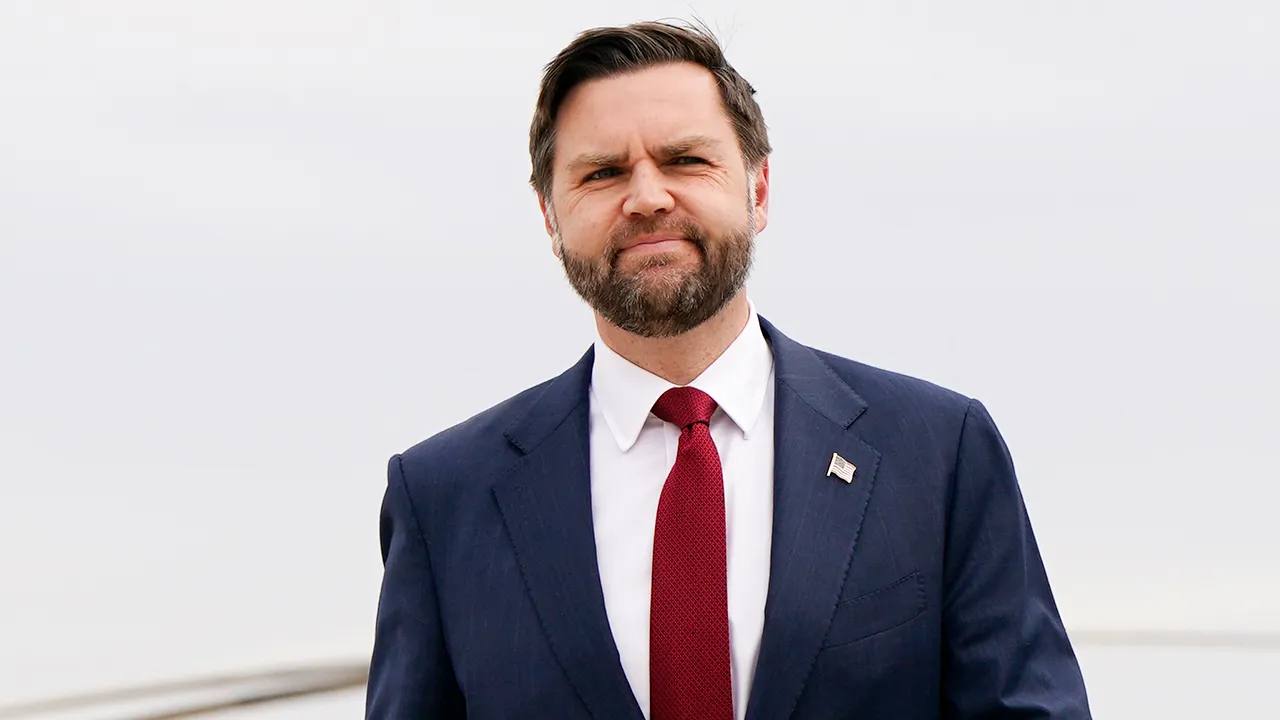
In the ever-expanding realm of unexplained phenomena, Vice President JD Vance has thrown a fascinating curveball into the ongoing UFO discussion. As a devout Catholic, Vance isn’t buying into the idea of extraterrestrial visitors buzzing our skies. Instead, he believes these mysterious aerial sightings and encounters are manifestations of something far more spiritual—and sinister. During a candid interview with conservative commentator Benny Johnson, the VP openly shared his view that what many call aliens are actually demons at play. This perspective isn’t just idle speculation; it’s rooted in Vance’s faith, which he credits as a lens for understanding the unknown. Johnson’s question about releasing all the UFO files kicked off a lively exchange, and Vance’s response was refreshingly straightforward: he’s all in on getting to the bottom of it, even if his interpretation leans toward the divine rather than the sci-fi. It’s a bold stance in an era when UFOs, now often referred to as Unidentified Aerial Phenomena (UAP), have gone from fringe fodder to mainstream fascination, especially with reports piling up from military pilots, civilians, and even satellite data. Vance’s backstory in the interview adds personal depth—he admitted he was “obsessed” with UFO files when he took office but got sidetracked by the whirlwind of other presidential priorities. Yet, he vowed to persevere, promising action amid calls for transparency. This isn’t just political theater; for many, Vance’s words echo a broader human yearning to explain the eerie anomalies that defy conventional science, from pulsating lights in the night sky to bizarre encounters that leave eyewitnesses shaken. As someone who’s navigated the halls of power, Vance’s take invites us to consider whether these enigmas are earthly puzzles or probes into the metaphysical battles of good and evil. In human terms, it’s reassuring to hear a leader acknowledge the inexplicable without dismissing it outright, tapping into age-old fears and wonders that unite believers across faiths.
Johnson’s probing line of inquiry dug deeper into Vance’s beliefs, highlighting a clash between skepticism and spiritual insight. “You gonna release all the UFO files?” the commentator asked, and Vance quipped back with characteristic humor, “Ah, we’re workin’ on it.” It wasn’t a no, but a pragmatic “yes, in time.” He elaborated that his initial obsession with the files faded under the weight of governing, where issues like national security and economic recovery demanded immediate attention. But this delay doesn’t equate to dismissal—in fact, Vance’s commitment to uncovering the truth underscores a balanced approach: methodical investigation without succumbing to hysteria. Imagine being in President Trump’s orbit, surrounded by classified dossiers and high-stakes decisions; it’s no wonder that conspiracies swirl like dust in a desert storm. Vance’s promise to “get to the bottom” of the matter resonates with everyday folks who’ve puzzled over declassified Pentagon videos, where tic-tac-shaped objects outmaneuver fighter jets at impossible speeds. For those who’ve glimpsed unexplained lights themselves, his words offer a thread of hope amid the uncertainty. Johnson’s conversation isn’t just news fodder; it’s a reminder of journalism’s role in bridging the gap between official secrecy and public curiosity. In a world saturated with fake news and deepfakes, genuine exchanges like this help humanize leaders, showing Vance not as a distant policymaker but as someone grappling with the same cosmic questions we all ponder late at night. Whether he’s right or not, his willingness to share a Catholic worldview—the notion that “celestial beings” could be spirits rather than ETs—adds a layer of empathy to a sterile government topic, making it relatable for religious Americans wrestling with modernity’s mysteries.
Delving into the spiritual dimension of Vance’s commentary, he painted a picture of the unknown that harks back to ancient texts and doctrines. Prompted further by Johnson, Vance explained that these “celestial beings who fly around, who do weird things to people” aren’t margin notes in a sci-fi novel but echoes of Christian teachings on good versus evil. He contrasted the urge to label everything extraterrestrial with a more profound truth: every major world religion, from Christianity to others, acknowledges “weird things out there” that science can’t always quantify. For Vance, this personal epiphany springs from his faith, where the supernatural is as real as gravity. He described his instinctual pivot to a Christian framework when facing “extra-natural phenomenon,” emphasizing the balance between benevolence—like guardian angels—and malevolence, manifesting perhaps in haunting sky apparitions. Vance even quoted a clever twist on Milton’s Satan: the devil’s greatest trick is convincing us he doesn’t exist. This insight ties UFO sightings to a narrative of spiritual warfare, where phenomena like drone swarms or nuclear-linked sightings in 2025 reports become symbols of eternal struggles. It’s not about denying science; it’s about enriching it with soul. For many people, Vance’s words alleviate the fear of isolation in the universe, offering a comforting, communal perspective. Think of how stories of eerie encounters passed down from generation to generation—grandpa’s tale of a glowing orb or a pilot’s close call—find new meaning here. In humanistic terms, this view empowers individuals to interpret the cosmos through their values, transforming cold statistics into personal narratives of faith and resilience.
Shifting gears to the political arena, Vance’s remarks dovetail with President Donald Trump’s recent bold declaration on UFO transparency. Just last month, Trump announced via Truth Social that he’d instruct the Secretary of War and other agencies to release government files on aliens, UAPs, and UFOs. His post, a flurry of excitement and patriotism, declared the move due to “tremendous interest,” promising to unveil everything from ancient cover-ups to modern mysteries. “GOD BLESS AMERICA!” he signed off, framing it as a historic act of openness. This isn’t Trump’s first foray into the topic; his presidential style has always thrived on drama, drawing from purported insiders like Bob Lazar’s stories of secret Area 51 bases or congressional hearings on UAPs. For the public, Trump’s pledge feels like a breakthrough in an 80-year pattern of secrecy, as hinted in explosive documentaries probing a global cover-up. Imagine the anticipation: families debating over dinner what these files might reveal, from benign foreign tech to the profound implications of first contact. Yet, it’s Vance’s spiritual lens that adds nuance, suggesting that even Trump’s fiat—rooted in his own evangelical leanings—might intersect with metaphysical questions. In a human context, this administration push reflects a societal shift; no longer are UFOs the domain of kooks or tabloids. With veterans coming forward about sightings linked to nuclear facilities or drone incidents stunning experts, the stakes feel personal. Trump’s tweet, viral and unfiltered, bridges the administrative ivory tower with everyday intrigue, humanizing bureaucracy as it grapples with the elephant in the room—what if the sky isn’t just empty anymore?
Building on the momentum of Trump’s announcement, it’s worth noting the broader landscape of UFO-related developments that have captivated experts and the public alike. Reports from 2025, as outlined in various analyses, detail stunning revelations: swarms of drones mimicking UFO behavior, sightings tethered to nuclear sites evoking Cold War paranoia, and expert testimonies pointing to anomalies beyond human engineering. Authors and filmmakers, like those behind probing documentaries, argue for an eight-decade cover-up, weaving tales of withheld data that could rewrite history. Vance’s demon hypothesis fits neatly here, as it parallels narratives of interdimensional intrusions rather than interstellar invasions. For instance, historical accounts in religions worldwide—including demonic possessions or angelic apparitions—mirror modern reports of abductions or mind-altering encounters. Stunning experts isn’t just hyperbole; declassified videos and whistleblower revelations suggest phenomena that warp physics, prompting questions about spiritual phenomena disguised as technology. In humanizing these stories, think of the families affected: a farmer warding off nightly lights, or a scientist haunted by unexplained data. The Fox News app’s new audio feature allows listeners to dive into these articles while commuting, turning passive reading into immersive experiences. This innovation democratizes access, making complex topics like Vance’s views or file releases feel approachable, like a podcast chat among friends brainstorming the unknown. It underscores how media evolves to meet public demand, fostering deeper engagement with mysteries that once seemed confined to sci-fi reels.
Ultimately, as Vance and Trump’s actions signal a potential dawn of disclosure, we stand at a crossroads of science, faith, and governance. Vance’s assertion that UFOs might be demons invites a reflective pause: in an age of AI, satellites, and global connectivity, are we rediscovering ancient truths through modern windows? His Catholic roots, echoing his verbal cues of earnest conviction, humanize a figure often viewed through political lenses, revealing a man who believes in unseen forces battling in our skies. Trump’s executive nod to transparency promises not just files, but dialogue—perhaps leading to policies that integrate spiritual perspectives into national security talks. For everyday people, this isn’t abstract; it’s about reconciling personal beliefs with collective uncertainties. As we await those elusive documents and ponder Vance’s “weird things,” the story of UFOs evolves from fear-mongering to a tapestry of human inquiry..downloading the Fox News app for on-the-go updates epitomizes this shift, ensuring that whether scrolling or listening, we’re all part of the conversation. In the end, whether these mysteries unveil extraterrestrial wonders or spiritual signs, they remind us of our shared quest for understanding, blending the celestial with the earthly in a narrative as old as humanity itself. May we approach it with open minds and guarded hearts, ever vigilant against tricks—demonic or otherwise—that divide us from the truth.