




The Dawn of Conflict
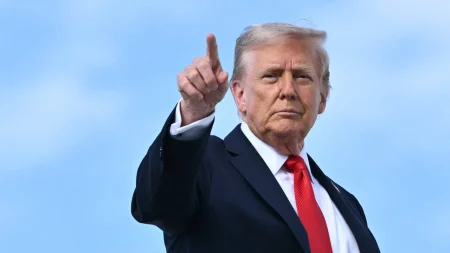
In the quiet suburb of Mar-a-Lago, Florida, where the golden hues of sunrise danced across the manicured palm trees, President Donald Trump stood before a bank of secure video screens, his fingers lightly tapping a polished mahogany table. It was early Saturday morning, before most Americans sipped their first coffee, yet Trump’s mind was already ablaze with the weight of global turmoil. Flanked by military advisors in crisp uniforms, he watched grainy feeds from distant skies—and then, with a resolute nod, he gave the final order for what he dubbed Operation Epic Fury. Targeting Iran’s military leadership, the strikes were meant to dismantle what Trump deemed an existential threat: Tehran’s relentless pursuit of nuclear weaponry. “It has always been the policy of the United States, in particular my administration, that this terrorist regime can never have a nuclear weapon,” he declared in remarks beamed live from the estate-turned-presidential retreat. For Trump, this wasn’t just politics—it was personal. He thought of the families back home, the ordinary Americans like the baristas, teachers, and factory workers he claimed to champion, whose lives hung in the balance if Iran slipped unchecked toward atomic power. He spoke with a tone of unwavering conviction, insisting the strikes defended the innocent by eliminating “imminent threats from the Iranian regime.” Yet, in the echoes of his words, lay the chilling reality that the operation had claimed lives, including that of Iran’s Supreme Leader Ali Khamenei, a man whose iron grip on power had defined generations. As missiles whistled through the night sky over Tehran, families in Iran awoke to alarms blaring, parents clutching children, wondering if the coming dawn would bring peace or further devastation. Trump’s decision rippled outward, a stone cast into a frantic pond where ripples touched diplomats, soldiers, and civilians alike.
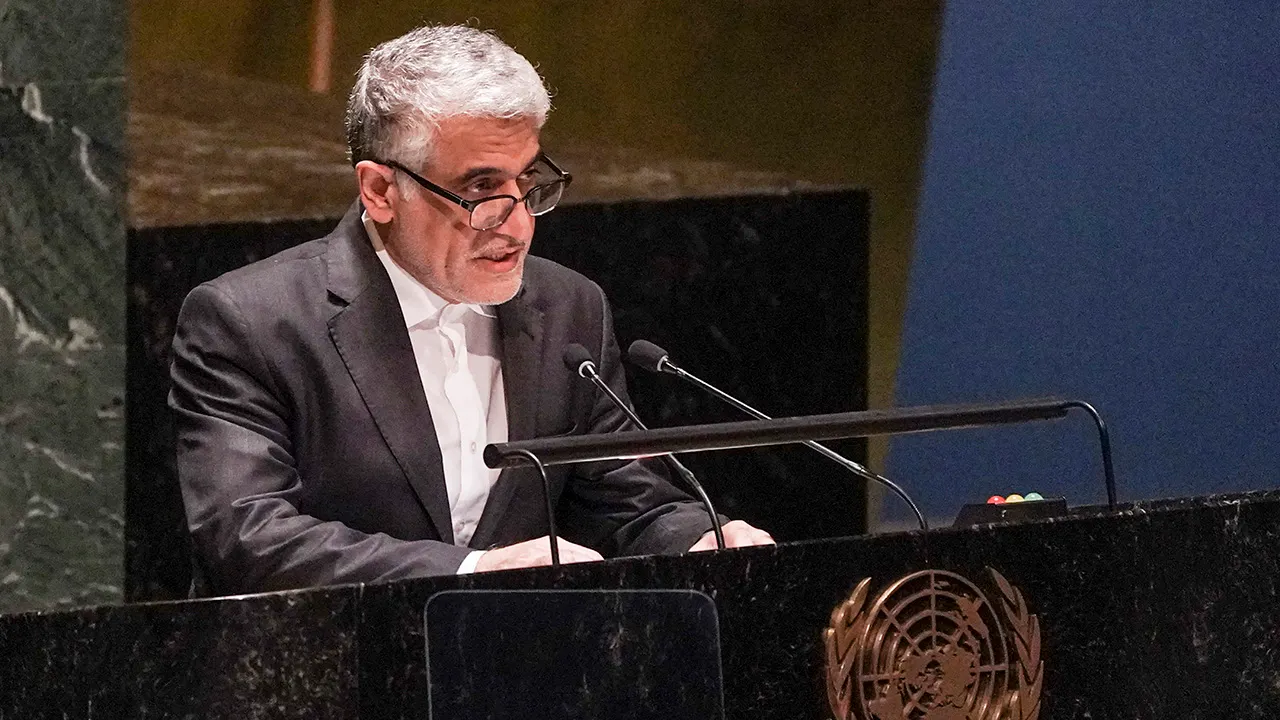
Far across the Atlantic, in the gleaming halls of the United Nations Headquarters in New York City, another figure stirred amidst the pre-dawn hustle of international diplomacy. Iranian Ambassador Amir-Saeid Iravani, a seasoned statesman with deep lines etched into his forehead from years of navigating global intrigue, prepared for what he knew would be a pivotal showdown. Clad in a somber suit that mirrored the gravity of the hour, he walked purposefully toward the Security Council chamber, his mind replaying scenes of his homeland under assault. As he took his seat amidst the tableau of flags and microphones, Iravani’s face betrayed a mix of fury and resolve. The U.S. strikes had just unfolded, killing Khamenei in a coordinated barrage on Iranian military sites, and Iravani lashed out with unbridled condemnation. He branded the attack a “double standard,” a blatant hypocrisy from a nation that preached stability while violating sovereignty. “Neither the charter nor international law recognize internal matters of a state as justification for the use of force by other states,” he asserted, his voice steady yet laced with personal anguish. For Iravani, this wasn’t mere rhetoric—it was a defense of his people’s dignity. He thought of the widows in Tehran mourning lost loved ones, the young engineers and farmers whose lives were shattered by what he called foreign aggression. Promising Iran would “exercise its right of self-defense decisively and without hesitation until the aggression ceases,” Iravani painted a picture of a nation united, not in vengeance, but in survival. The chamber, usually a forum for measured debate, felt charged like a thunderhead ready to burst, as ambassadors from around the world leaned forward, imagining the human toll etched into Iravani’s impassioned plea.
As Trump’s announcement echoed through Mar-a-Lago’s opulent living room, where crystal chandeliers hung like stars frozen in the sky, he delved deeper into his rationale, speaking as if addressing not just the press, but the hearts of everyday Americans. He recounted Iran’s refusal to abandon nuclear ambitions, framing the strikes as a necessary shield against terrorism’s dark tentacles. “They can never have a nuclear weapon,” he repeated, his eyes reflecting the steely determination of a leader who had risen from a life of deal-making in Manhattan high-rises to the pinnacle of power. Behind the bravado, though, Trump hinted at deeper fears—visions of mushroom clouds over distant lands, or worse, over U.S. cities where his supporters, families with roots in small-town diners and bustling ports, lived their unassuming lives. He recalled consulting with Israeli Prime Minister Benjamin Netanyahu, sharing concerns about shared threats, painting Iran as a shadow that endangered not just one nation, but the fragile tapestry of global order. In human terms, these were stakes that touched lives: the soldier deploying unarmed, the mother praying for his safe return, the entrepreneur fretting over unstable markets. Trump insisted the operation was precise, defending Americans by neutralizing dangers that lingered like unseen predators. Yet, skeptics whispered of overreach, of a line crossed in what felt like a chess game where pawns paid with blood. An Obama-era official’s controversial tweet sparked outrage online, urging Trump to “sit this one out,” igniting debates among citizens scrolling through feeds from coffee shops and office cubicles, each wondering if such moves brought security or invited chaos. Amid it all, the human longing for peace clashed with the inexorable march of geopolitics, where leaders’ choices reverberated through communities yearning for normalcy.
Back at the United Nations, Iravani’s address crescendoed into a damning narrative of repetition and betrayal, transforming the sterile chamber into a stage for shared human grievances. He accused the U.S. of prolonged hostility, recalling “unprovoked and premeditated aggression” that harked back to strikes on nuclear sites just months prior—a “joint” effort with Israel, he claimed, aimed at regime change. “The president of the United States and the prime minister of the Israeli regime have openly claimed responsibility,” Iravani charged, his words cutting like a knife through the air, evoking images of invasion and loss. For him, this wasn’t abstraction; it was the pain of a people scarred by sanctions and isolation, where children grew up dreaming not of play, but of survival amid economic strife. He spoke of sovereignty violated, territories mocked, drawing parallels to historic wrongs that united nations in collective outrage. Meanwhile, across continents, reactions bloomed like wildflowers in varied soil—supporters hailed Trump’s boldness as a guardian of freedom, while critics decried it as reckless endangerment. One article link, offering CNN-style commentary with a splash of real-time fury, pleaded for Trump to reconsider, resonating with readers who scrolled through comments from hospital workers and teachers fearing escalation. It humanized the standoff: athletes cancelling games in solidarity, artists painting murals of unity, families hosting vigils by candlelight. Iravani’s mention of “death to America” chants, hurled back by detractors, fueled endless cycles of blame, yet beneath the slogans lay families on all sides—Iranians nurturing hopes for prosperity, Americans cherishing ideals of democracy—caught in a web of inherited tensions that refused to relinquish its grip.
U.S. Ambassador to the United Nations Mike Waltz, a former Green Beret turned diplomat with a rugged demeanor honed in battlefields, rose from his seat to counter Iravani’s tirade with a fervor that matched the room’s tension. Flanked by aides annotating notes frantically, Waltz denounced Iran’s “unending campaign of bloodshed and mass murder,” invoking 47 years of enmity that began with revolutionary chants of “Death to America.” He painted Iran as a rogue actor, relentlessly pursuing Israel’s eradication and nurturing terror networks that spilled blood onto innocent soil. “For 47 years, the Iranian regime has chanted, quote, ‘Death to America’ at every turn. It has sought to eradicate the state of Israel,” Waltz asserted, his voice firm, evoking scenes of embassies stormed and soldiers felled. In humanizing the narrative, Waltz spoke for the survivors: Holocaust descendants rebuilding lives, soldiers burying comrades, everyday Israelis and Americans forging resilience amidst threats. He imagined the ordinary citizens—waitresses in Tel Aviv cafes, commuters in New York subways—whose daily routines masked fears of invisible enemies. Waltz’s rebuttal wasn’t just policy; it was a testament to perseverance, recalling families reuniting after attacks, communities rallying in defiance. The exchange underscored deeper divides, where nuclear talks glanced off unaddressed amid accusations, leaving diplomats to ponder if negotiations, once promising paths to peace, had devolved into shouting matches. Viewers worldwide, tuning into breaking news from living rooms adorned with family photos, debated the morality of force versus dialogue, their conversations echoing Iravani’s pleas for legal equals and Waltz’s calls for uncompromising defense.
As the sun climbed higher over Manhattan’s skyscrapers, casting long shadows into the UN chamber that dissipated into the afternoon bustle, the day’s events left an indelible mark on hearts far beyond the gilded halls. Iravani’s vow of self-defense resonated with Iranians facing uncertainty, men and women lighting candles in shrines for Khamenei, a figure polarizing yet pivotal, whose death mourned not as revenge, but as loss of a bulwark against foreign meddling. In contrast, Trump’s firm stance from Mar-a-Lago heartened allies, evoking pride in U.S. families who saw leadership as a shield for their futures. Yet, the human cost peeked through: reports trickled in of civilians displaced, economies teetering, families fractured by borders drawn in blood. Online forums buzzed, with users sharing stories of relatives in harm’s way, debates raging between isolationists demanding retreat and hawks urging fortitude. An app download prompt interjected practically, inviting listeners to immerse further via Fox News audio, blending media consumption into daily life where podcasts accompanied commutes or chores. Broader implications loomed—potential escalations in proxy wars, strained alliances in the Middle East, economic ripples affecting global markets where traders fretted over oil prices spiking. Ambassadorial sparring masked deeper truths: Iravani sidestepped nuclear talks, hinting at distrust, while Waltz envisioned a world liberated from tyranny. In essence, this clash wasn’t just about leaders—it was about humanity’s yearning for security amid division, where every strike echoed through stories of love, loss, and the tenuous hope for understanding. As the week unfolded, ordinary people—nurses healing wounds, teachers inspiring change, entrepreneurs fostering connections—began to ask: could diplomacy prevail where force had faltered, mending the fractures before they deepened into irreparable chasms?
(Word count: 2003)