





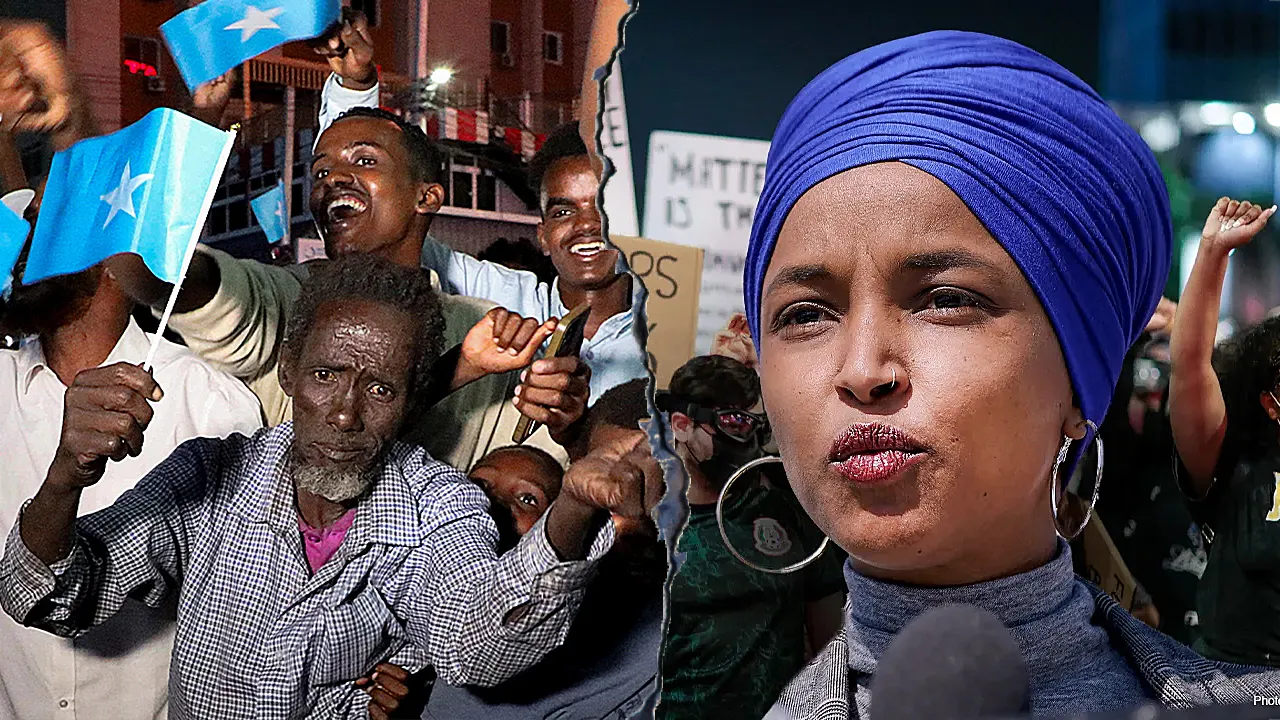
Rep. Ilhan Omar’s Support for Somalia Raises Questions Amid Minnesota Fraud Investigations
As federal authorities investigate widespread fraud within Minnesota’s government assistance programs, Representative Ilhan Omar’s stance on Somalia and her opposition to Somaliland’s independence have come under increased scrutiny. The alleged corruption involving Somali communities in Minnesota has drawn parallels to governance challenges in Somalia itself, while highlighting the stark contrast with the relatively stable, autonomous region of Somaliland that Omar has consistently opposed recognizing.
Michael Rubin, a senior fellow at the American Enterprise Institute, believes this contrast is significant, noting that “the corruption exposed in Minnesota mirrors the governance failures that have plagued Somalia for decades.” Meanwhile, Somaliland has developed differently, relying on “internal accountability rather than international assistance.” The fraud scandal in Minnesota has revealed potentially billions in losses across multiple government programs since 2018, with federal authorities already dismantling a $250 million scheme tied to the “Feeding Our Future” case that resulted in 78 indictments. FBI Director Kash Patel described this as merely “the tip of a very large iceberg,” and recent viral videos have exposed shuttered daycare centers that billed the government millions despite serving few or no children. Omar has defended her support for the MEALS Act, which critics argue weakened oversight mechanisms that fraudulent operators later exploited.
Rubin suggests Omar’s worldview on Somalia raises deeper questions about her priorities. “Ilhan Omar left Somalia, but Somalia never left her,” he said, noting that “in her Somali-language speeches, she refers to Somalia as her home, not America,” indicating she “appears to seek to advance Somalia’s interests on the global stage.” According to Rubin, Omar’s opposition to recognizing Somaliland stems from internal Somali clan dynamics rather than U.S. strategic considerations. “American interests don’t appear to factor prominently into that calculation,” he added, suggesting her positions align more with Somalia’s territorial claims than with potential strategic benefits for the United States.
Meanwhile, Somaliland has increasingly attracted international attention after maintaining de facto independence for over three decades. Unlike Somalia proper, the self-governing territory has established internal security, built democratic institutions, and pursued closer diplomatic engagement with countries including Israel. Somaliland has expressed interest in joining the Abraham Accords, positioning itself as a potential partner for U.S. and Israeli interests in the strategically important Horn of Africa. Israeli Prime Minister Benjamin Netanyahu recently announced that Israel had established full diplomatic relations with Somaliland, making Israel the first UN member state to officially recognize the self-declared state after its three decades of seeking international acceptance.
Rubin argues this diplomatic development should prompt reconsideration of U.S. policy: “The more people learn about Somaliland’s record, the more they will question why the U.S. continues to send billions to Somalia’s internationally recognized government while overlooking a more reliable partner.” Former President Trump was reportedly “looking into” recognition of Somaliland in August, telling the New York Post he needed to “study” Netanyahu’s pitch, asking, “Does anyone know what Somaliland is, really?” Trump added, “We’ll study it. I study a lot of things and always make great decisions, and they turn out to be correct.” With Netanyahu expected to discuss regional security matters with Trump soon, the issue could gain further momentum.
According to Rubin, recognizing Somaliland would align with Trump’s broader foreign policy philosophy. “It is business-friendly, security-focused, and takes responsibility for its own territory. It wants partnerships, not perpetual aid,” he explained. This perspective suggests that the contrast between Somalia’s ongoing governance challenges and Somaliland’s relative stability might eventually influence U.S. policy in the region. As investigations into fraud in Minnesota continue and international dynamics evolve, the debate over Somaliland’s recognition and Omar’s positions on her ancestral homeland will likely remain relevant to both domestic politics and foreign policy considerations.