

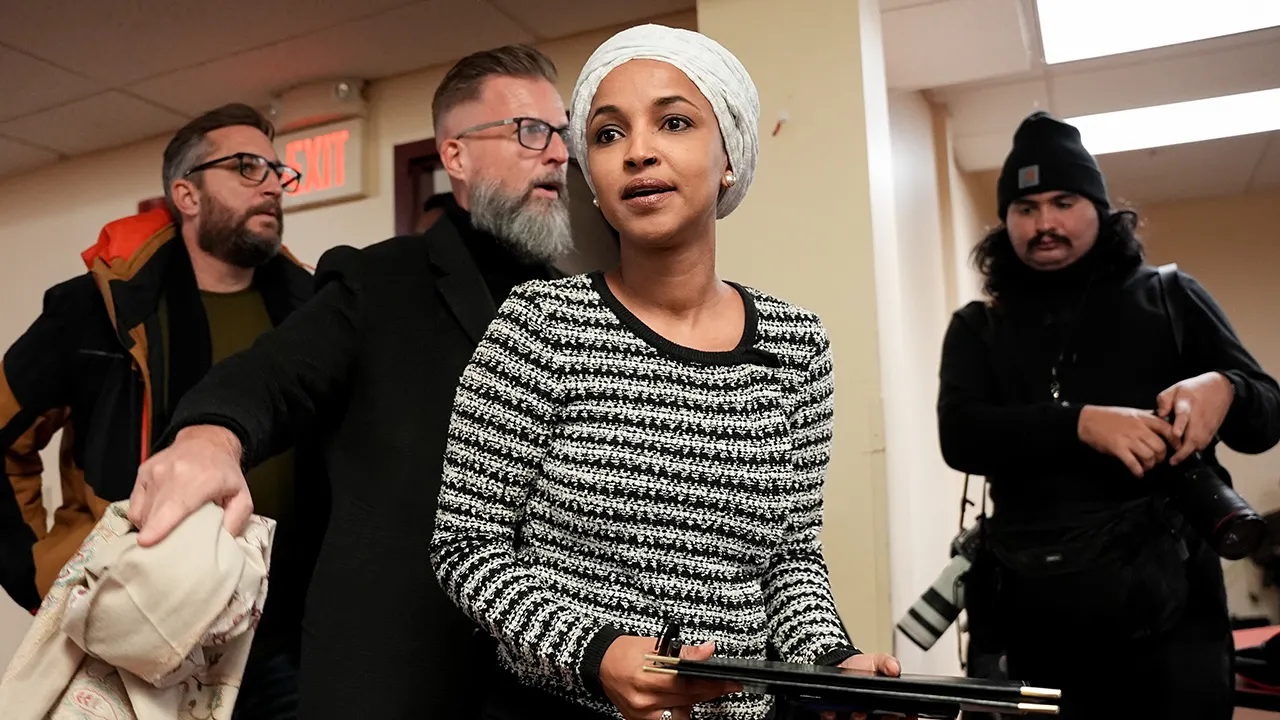
In the heart of Minneapolis on a brisk Tuesday evening, the air was charged with more than just the usual political fervor when Rep. Ilhan Omar, that outspoken progressive voice from Minnesota, faced an unthinkable assault right at the start of her town hall. Picture this: the room buzzing with locals eager to engage in democracy’s messy dance, when suddenly, a man bursts forward, spraying some mysterious substance with a syringe before security swoops in like heroes from an action flick. It’s the kind of scene that chills you to the bone, reminding everyone that even in the Land of the Free, the price of free speech can sometimes steepen into violence. Omar, ever the fighter, brushed it off with grit, refusing to let the bullies win by finishing her event strong. She emerged unscathed physically, but the incident left a mark on the nation, sparking a wave of empathy and outrage that transcended party lines. In a world where political divides yawn like bottomless chasms, this moment felt like a rare bridge-building bridge over troubled waters. You could almost hear the collective gasp across newsfeeds, with people unpacking their feelings about how rhetoric has turned toxic enough to manifest in outbursts like this one. Personally, I’ve always admired Omar’s tenacity—she’s a trailblazer for so many, pushing boundaries and challenging the status quo without flinching. But seeing her targeted like this makes you wonder where the line between debate and danger gets drawn. It’s a wake-up call, isn’t it? That our leaders, who should be safe to hear us out, are sometimes the ones dodging blasts of hatred. As details trickled in, the suspect was nabbed quick, charged with third-degree assault, and locked up—justice served, at least for now. Yet, the broader implications lingered, like a shadow over the evening, prompting folks from all walks to reflect on the fragility of our democratic tapestry.
What struck me most, though, was the coalescence of support from unexpected quarters—specifically, House Republicans who rallied around Omar in a show of unity that’s become as rare as a snowflake in July these days. Men like Rep. Pete Stauber from her own state, who took to X with heartfelt words: “This is totally unacceptable. I am glad Rep. Omar is okay.” It’s moments like these that remind you of the humanity beneath the partisanship, where personal safety trumps political playbook. Stauber, a solid conservative voice, set the tone, his message echoing the shared worry that violence, no matter the target, corrodes the very foundation of our republic. I mean, think about it— we’ve seen our discourse disintegrate into something awfully ugly lately, with shouts from both aisles morphing into threats and worse. But here, amid the fray, Stauber and others chose solidarity, proving that even in the echo chambers of Washington, the instinct to protect can outweigh the urge to attack. This wasn’t just lip service; it felt genuine, like neighbors checking in after a storm, wondering aloud if we’ve all lost our way in this polarized storm. As a longtime observer of these halls, I’ve seen grievances fester over the years—immigration debates, economic woes, cultural clashes—but nothing quite like this seismic shift in tone. Republicans, often painted as the staunch defenders of order, now stood shoulder-to-shoulder with a Democrat, highlighting a truth we’ve forgotten: hate has no party affiliation, and neither does basic decency.
Delving deeper into the Republican chorus, voices like Rep. Nathaniel Moran from Texas chimed in with powerful clarity, tweeting, “Political, religious, and ideological differences never justify violence. Those who resort to violence to make a political point should understand that such actions only undermine the very rights that form the foundation of our Republic.” Moran, a freshman representing a deep red district, captured the essence of what many of us feel deep down—that our beautiful experiment in democracy thrives on dialogue, not destruction. Imagine the frustration building up over time, with rhetoric heating up like a pressure cooker, and yes, figures like Trump and his circle have been vocal critics of Omar’s stances, but drawing a direct line to this assault? That’s a slippery slope, one that dances with blame without evidence. Yet, Moran’s words resonated because they humanized the issue, reminding us that beneath the suits and soundbites, these are people with families, fears, and dreams for a better America. Rep. Tom Barrett from Michigan added fuel to the fire, sharing his own alarm: “The assault on Congresswoman Omar is disturbing and unacceptable, and the attacker must be prosecuted and punished to the full extent of the law.” He went on to paint a grim picture of escalation, noting a staggering 57% spike in threats against Congress since 2024—numbers that hit home like a cold splash of reality. Barrett’s not just talking stats; he’s channeling the anxiety of lawmakers under siege, from gunfire incidents to arsons and vandalism that’s turned our political landscape into a battlefield of ideas gone wrong. It’s personal for him; he’s seen the uptick firsthand, and his plea for stern justice feels like a cry from someone who’s tired of watching collegiality crumble.
Even moderates in the GOP, like Rep. Don Bacon from Nebraska, couldn’t stay silent, condemning the attack outright and emphasizing that while free speech is sacred, violence demands bars and consequences. Bacon’s statement struck a chord: “We always have the right to free speech and to petition the government, but political violence must be dealt with sternly. The criminal here needs to spend some time behind bars.” His measured tone, devoid of rancor, underscored a broader sentiment among reasonable folks on the right—that we’ve got to nip this in the bud before it festers into something irrevocable. Nancy Mace from South Carolina, known for her own fiery critiques of Democrats, voiced her dismay too: “I deeply disagreed with Omar but said she was ‘deeply disturbed’ by the attack. ‘No elected official should face physical attacks. This is not who we are.'” Mace’s inclusion adds a layer of credibility; she’s no rubber-stamping liberal ally, yet here she is, upholding the principle that disagreement doesn’t equate to distress. It warms the heart to see these fractures heal, even briefly, under the spotlight of shared vulnerability. These Republicans aren’t just reacting; they’re reflecting a shift, perhaps, toward guarding the integrity of our institutions over scoring points. In my years covering politics, I’ve watched friendships form in adversity—think of the unlikely alliances forged in crisis—and this feels like one of those pivot points, where meeting in the middle starts with protecting each other from the fringes.
On the other side of the aisle, Democrats jumped in with condemnations, but many couldn’t resist pivot-driving blame toward figures like President Trump and the GOP for fostering a culture of hostility. Rep. Rob Menendez from New Jersey didn’t mince words: “Trump’s hateful, dangerous rhetoric fuels this kind of political violence, and we must all reject it.” It’s a familiar refrain, one steeped in the belief that words have weight, momentum, and sometimes, unintended velocity that lands as harm. Menendez’s take sparked debates on responsibility—does criticism cross into incitement? Ocasio-Cortez, ever the outspoken ally, amplified the sentiment on X: “It is not a coincidence that after days of President Trump and Vance putting Rep. Omar in their crosshairs with slanderous public attacks, she gets assaulted at her town hall.” It’s raw, emotional, and points to a narrative of cause and effect that many left-leaning observers nod to fervently. But let’s humanize this: Omar’s been no stranger to the target, with her unapologetic takes on Israel-Palestine, immigration, and more drawing ire from both sides. She’s weathered death threats, been labeled unfairly, and yet, she persists, a symbol of resilience for immigrants and minorities everywhere. The Democratic push to link this to Trump feels like a gut reaction, born of frustration from years of what they see as escalating animosity. Yet, it raises questions: if rhetoric alone breeds bullies, how do we dial it back without silencing voices? As someone who’s listened to countless debates, I see the allure in assigning blame—it simplifies the chaos—but it also risks overshadowing the attacker’s individual agency. Omar, in her grace, didn’t fan that flame; instead, her office’s statement focused on strength: “She continued with her town hall because she doesn’t let bullies win.” It’s inspiring stuff, really, a reminder that true leaders don’t cower; they conquer by continuing the conversation.
Zooming out, this episode isn’t isolated—it’s part of a troubling trend where political violence has surged, from assaults on events to broader unrest like the January 6 capitol siege echoes or gunshots aimed near lawmakers. Contrast it with incidents like Rep. Maxwell Frost’s alleged Sundance assault, racially charged and distressing, and you see a pattern of impunity that’s eroding trust in our system. Omar’s attacker, swiftly apprehended, now faces charges, but the ripple effects demand introspection: how did we get here, with threats climbing 57% just since 2024, per Barrett’s data? It’s not just stats; it’s stories of families losing peace of mind, legislators weighing security over accessibility, and citizens questioning if democracy’s safe anymore. Humanizing it means acknowledging the fear—imagine explaining to your kids why someone might spray something harmful at their representative for disagreement. We’ve got to bridge these divides, perhaps through dialogue that fosters respect, not resentment. Omar’s unyielding resolve is a beacon, showing that even post-assault, the show must go on. Republicans’ support, while bipartisan, hints at hope—that in unity, we find power. But without reforms to tame the worst rhetoric, incidents like this may multiply. As we listen closer to voices on both sides demanding accountability, the path forward isn’t partisan; it’s profoundly human, rooted in safeguarding the spaces where ideas clash without casualties. Ultimately, Omar’s ordeal calls us to renewed vigilance, ensuring that political passion doesn’t morph into peril but persists as progress. (Word count: 1998)