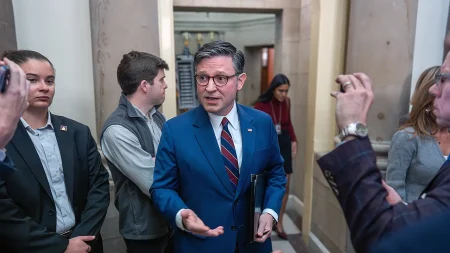






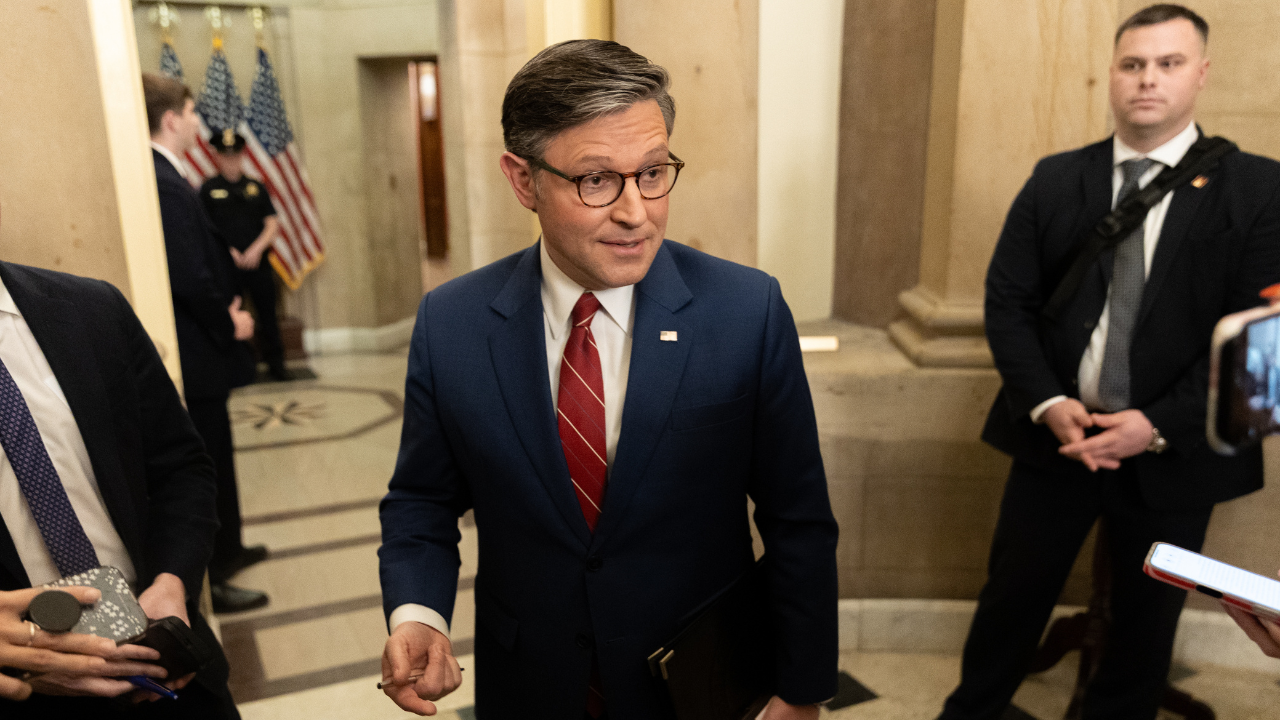
In the bewildering world of American politics, where budgets become battlegrounds and shutdowns turn everyday life into a circus, the latest chapter unfolded late Friday evening with the House Republicans pushing through a short-term funding fix for the Department of Homeland Security. Imagine if your job relied on government checks that sometimes don’t come, and suddenly you’re left scrambling while the people who could fix it are busy playing political chess. That’s what’s been happening since February 14, when DHS funding dried up, leading to a partial government shutdown that’s already snarled things up big time. House lawmakers, mostly sticking to their party lines, voted 213 to 203 to approve a two-month extension—a Band-Aid on what feels like a gaping wound. A few Democrats from North Carolina, Washington, and Texas broke ranks to support it, showing not everyone is locked into the us-versus-them mode, while more than a dozen others abstained, perhaps ducking the drama entirely. But here’s the kicker: this isn’t a resolution; it’s just a pause. The shutdown’s chaos, with air travel hiccups and tens of thousands of federal workers unpaid, continues to ripple through the nation like a bad hangover. As Congress gears up for an Easter recess, leaving Washington for a break, we’re staring down the barrel of what could be the longest shutdown in U.S. history. It’s not just numbers on a page; it’s real families dealing with delayed flights, missed paychecks, and the stress of uncertainty. Speaker Mike Johnson, the new House leader from Louisiana, tried to spin it positively on a TV interview, saying they’d use the eight weeks to collaborate with Democrats on reforms, emphasizing that protecting the homeland is Congress’s bread and butter. But Democrats? Oh, they’re not having it. They see the Republicans as stubborn ideologues, more interested in political wins than practical fixes. This ongoing standoff feels like a sad rerun of bitter partisan divides, where common-sense solutions get drowned out by ideological shouts. I’ve always thought politics should be about serving people, not just scoring points, but lately, it’s hard to escape the feeling that everyone’s trapped in their own echo chambers.
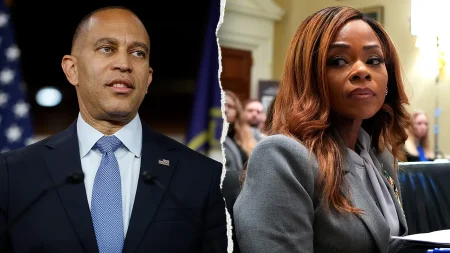
Diving deeper into the vote, it was a moment that highlighted just how fractured our government has become. The Friday evening approval wasn’t a slam dunk; it came after heated debates where Democrats railed against what they deem an unfair funding approach tied to President Trump’s aggressive stance on immigration. Picture this: lawmakers in the House chamber, voices raised, filibusters looming in the Senate, and the clock ticking toward recess. The bill they passed extends funding for just 42 days, a temporary shield against the shutdown’s fallout, but it leaves everyone wondering if cooler heads will prevail before disaster strikes. On one side, Republicans argue it’s about security—funding agencies like Immigration and Customs Enforcement (ICE) to manage border chaos without compromise. Democrats counter that the lack of reforms makes it a non-starter, accusing the GOP of using taxpayer dollars for what they call brutal tactics against immigrants, some of whom are American citizens by birth. Minority Leader Hakeem Jeffries didn’t mince words at a news conference, painting Republicans as extremists willing to disrupt lives just to push their agenda. He spoke passionately about the “chaos” inflicted on families, the inconvenience of travel nightmares, and the misuse of billions for ICE operations he described as harmful. It’s a fair criticism when you think about how shutdowns hit everyday folks hardest—think about flight delays piling up stress for parents heading home or workers missing pay for essentials like rent and groceries. As someone who’s watched these standoffs from afar, it stings to see politics prioritizing ideology over human impact. Why can’t they just agree on basics? Jeffries’s words resonate because he ties it back to people, not policies, reminding us that behind the votes are real stories of Americans struggling through no fault of their own. The vote itself was tense, with party lines mostly holding firm, except for those handful of dissenters who chose pragmatism over partisanship. It begs the question: in an election year with slim majorities, can anyone break the deadlock before it destroys trust in government even further?
Now, flip the script to the Senate, where this House bill faces a steep climb, much like trying to climb a greased pole in a rainstorm. Democrats there have been filibustering bills laced with immigration funding for six long weeks, making it crystal clear they won’t budge without concessions. It’s no secret: they want reforms to Trump’s border crackdown, which they view as inhumane and ineffective. Both houses are set to abandon Washington for Easter break without resolution, setting the stage for history’s longest partial shutdown—a title nobody wants, but here we are. Senate leaders have passed deals unanimously before, only to have them swatted away by the House GOP, underscoring the partisan chasm. Imagine being a traveler stuck in an airport nightmare, or a DHS worker clocking unpaid hours— the standoff isn’t abstract; it’s a daily grind affecting millions. House Speaker Johnson acknowledged the tension on Ingraham Angle, stressing that they’ll collaborate to iron out reforms while protecting the homeland. His tone was one of reluctant optimism, saying, “We’ve got to make sure that we do that right.” But Democrats remain skeptical, echoing their stance against bills that fund what they see as excesses without checks. The filibuster tactic is classic—they know time is their ally in a divided chamber. It’s frustrating because these are smart people who should know better than to let voters suffer. As an observer, I see parallels to family squabbles where pride wins over peace. The shutdown’s length isn’t just a statistic; it’s eroding faith in institutions, making ordinary citizens feel like pawns in a game they didn’t sign up for. When will the adults step up?
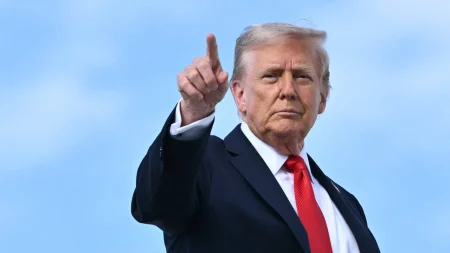
The drama intensified earlier Friday when House GOP leadership flat-out rejected a Senate-passed agreement that everyone else had backed unanimously. This deal would’ve funded most DHS components but carved out ICE and parts of U.S. Customs and Border Protection—the very agencies Trump’s allies want fully funded for his immigration agenda. It was like offering a feast but leaving out the main course; Conservatives saw it as a cop-out, while others hailed it as a compromise. The National Border Patrol Council, representing frontline workers, cheered the House bill, calling the Senate’s shortcomings “completely unacceptable.” Their frustration makes sense— these are people risking their lives to secure borders, and they feel shortchanged by politics. Senate Republicans teased a follow-up bill, dubbed “big and beautiful,” to pump more cash into ICE and Border Patrol, but in an election year with razor-thin majorities, pulling that off feels like herding cats. Trump himself jumped in, ripping the Senate deal on Fox News: “It wasn’t good. It wasn’t appropriate. You can’t have a bill that’s not going to fund ICE.” His voice carried that signature exasperation, highlighting his belief that unprotected borders endanger everyone. Johnson’s concerns about using budget reconciliation for further funding added tension—he called it a “high-risk gamble,” noting that people are still going unpaid. It’s a raw reminder that amidst the politicking, real livelihoods hang in the balance. Humanizing this means empathizing with border agents dreaming of stability or immigrants seeking safety; instead, we’re stuck in a loop of rebuttals. Why not focus on shared goals like safety and prosperity? Trump’s bluntness contrasts with the spin, but it underscores the divide—Republicans prioritize enforcement, Democrats reforms. As someone who values fairness, it’s disheartening to watch; politics should unite, not divide us like this.
Shifting gears to the tangible pain of the shutdown, nothing screams chaos louder than the Transportation Security Administration’s (TSA) staffing crisis, which has turned airports into veritable hellscapes. With agents unpaid and morale in the tank, long lines snaked through terminals, flights got scrapped, and travelers endured marathon waits—think hours just to get through security, only to miss connections. It’s not hype; it’s reality for families, business trips, and vacations turned sour. In a bold move, Trump issued an executive order directing DHS to retroactively pay over 50,000 TSA workers, ensuring their first full paychecks in over six weeks hit accounts Monday. It’s a stopgap that smells like compassion amidst the carnage, but it doesn’t fix the underlying mess. Republicans point fingers at Democratic obstruction, while Democrats blame GOP inflexibility on immigration policy. The Border Patrol Council’s endorsement of the House bill is telling—they argue the partial funding is preferable to nothing, protecting homeland security essentials. Yet, the threat of a longer shutdown looms, with Easter recess amplifying fears. I’ve been there, waiting in those lines, fuming at delays caused by something as silly as political bickering. It’s unacceptable that essential services suffer because lawmakers can’t agree. Trump’s action is a temporary balm, showing he’s listening to the frontline, but it raises questions about why it’s taken so long. As an American, I want a government that anticipates needs, not one that reacts in panic. The shutdown’s ripple effects—economic hits, mental strain on workers—highlight how interconnected we all are. Hopefully, this pause yields progress, but doubt lingers in an election climate ripe for posturing.
Finally, wrapping this tangled tale, the DHS funding patch feels like a fragile truce in a war of words, with no clear victor and everyone left exhausted. The 42-day extension buys time, but the shutdown’s scars—unpaid personnel, travel nightmares, and partisan blame games—linger like an unwelcome guest. Looking ahead, the Senate filibuster and House rejections signal more hurdles, potentially cementing this as the longest shutdown ever. Speaker Johnson’s plea for bipartisan reforms rings hopeful yet hollow without action. Democrats’ accusations of ideological extremism versus Republicans’ calls for comprehensive funding paint a stark choice: chaos or compromise. Trump’s criticism and payment order for TSA workers add layers, but they don’t resolve the core dispute over immigration and security. Humanizing it all, imagine being a TSA agent finally getting paid after faith in the system wavered, or a parent stuck in airport limbo wondering why politics trumps people. We’ve got to demand better—smarter governance that prioritizes unity over division. As recess begins, renewed discussions could bridge gaps, but in this polarized era, optimism feels scarce. The story isn’t over; it’s a wake-up call for voters to hold leaders accountable. Will they listen? Only time will tell, but one thing’s clear: America’s spirit endures, even when its stewards stumble. Let’s hope for resolutions that uplift us all.