






House Moves to Repeal Senate’s Controversial Arctic Frost Measure in Government Funding Bill
In a bold legislative maneuver, the House of Representatives is attempting to force the Senate’s hand by attaching a repeal of the controversial Arctic Frost repayment measure to a critical $1.2 trillion federal funding package. This strategic move comes as Congress faces a looming January 30 government shutdown deadline. On Thursday, House lawmakers voted unanimously to roll back the Senate GOP-led provision that would allow Republican senators to sue the federal government for up to $500,000 if their phone records were seized by former Special Counsel Jack Smith. The House’s decision places significant pressure on the Senate, which must now either accept the repeal along with the larger spending bill or amend it at the risk of running out of time before the shutdown deadline.
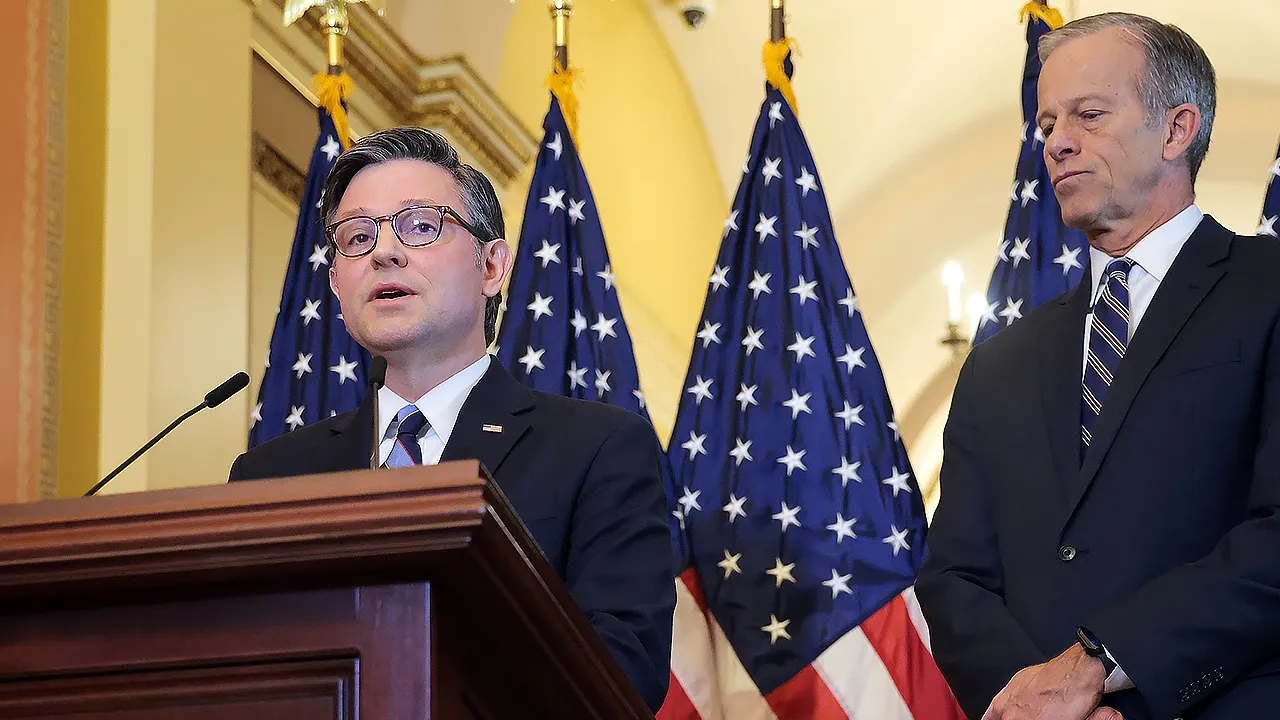
The Arctic Frost provision has been a point of contention since it was first included in last November’s government funding package that ended the longest shutdown in U.S. history. Senate Majority Leader John Thune (R-S.D.), with approval from Senate Minority Leader Chuck Schumer (D-N.Y.), added this measure during bipartisan negotiations. Many House Republicans were caught off guard by its inclusion, expressing frustration over using taxpayer dollars to benefit a small group of lawmakers. Rep. Ralph Norman (R-S.C.) called the measure “ridiculous” and suggested that if Senate leadership objects to its repeal, “let them own it.” This isn’t the House’s first attempt at eliminating the provision; a similar vote passed unanimously late last year but was never taken up by the Senate.
The funding package at the center of this dispute would keep several critical departments running for the remainder of the fiscal year, including the Department of War, Department of Education, Health and Human Services, and Department of Homeland Security. While the Arctic Frost provision specifically allows only senators directly targeted in Smith’s investigation to sue the government, it has faced opposition from lawmakers on both sides of the aisle. Senator Thune defended the measure by arguing that members were effectively “spied on” by the Department of Justice, stating that such actions “demand some accountability” and that the provision serves as protection for “the institution of the Senate and individual senators going into the future.”
Despite broad bipartisan support for repealing the provision, attempts to eliminate it in the Senate have consistently been blocked by Senator Lindsey Graham (R-S.C.), who remains its strongest advocate. Senator Gary Peters (D-Mich.) recently attempted to get rid of the law before the Senate’s weeklong break, asserting that the policy “is simply wrong” and “goes against everything that we’re supposed to be doing as elected representatives.” Graham defended the provision by arguing that his rights, along with those of seven other senators, were violated when they weren’t notified that their records had been seized as part of the probe. “If you cannot hold your government accountable for violating your rights or potentially violating your rights, you have a very dangerous government,” Graham stated during floor debate, adding, “I am no better than anybody else, but I’m certainly as hell no worse than anybody else.”
The inclusion of the repeal provision in Thursday’s government funding bill caught many by surprise, as it had not been part of the legislation when it advanced out of the House Rules Committee. It was only offered by Committee Chairwoman Virginia Foxx (R-N.C.) on the House floor shortly before voting began on a procedural hurdle. This last-minute addition represents a strategic calculation by House leadership, gambling that the Senate will be unwilling to risk a government shutdown over this particular issue. The unanimous House vote to repeal suggests strong conviction across party lines that the Arctic Frost provision represents poor policy that unfairly benefits a small group of lawmakers at taxpayer expense.
As the $1.2 trillion funding package heads to the Senate, the chamber faces a difficult choice: accept the House’s repeal of a measure that some senators feel strongly about preserving, or risk the political consequences of potentially triggering a partial government shutdown. This standoff highlights the ongoing tensions between the two chambers of Congress and demonstrates how procedural maneuvers can be employed in high-stakes budget negotiations. The outcome will not only determine the fate of the Arctic Frost provision but could also set precedents for how similar disputes are handled in future funding battles. With the January 30 deadline approaching rapidly, both chambers face mounting pressure to resolve their differences and ensure the continued functioning of critical government departments and agencies.