





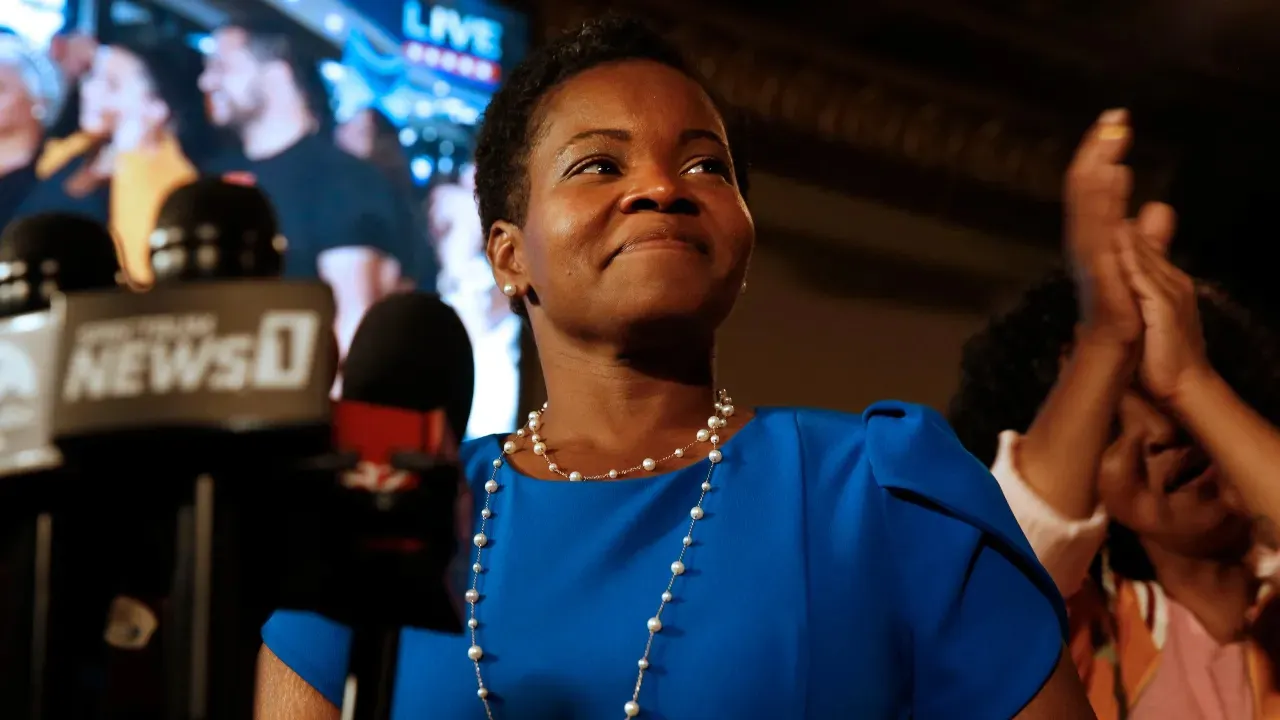
Let me tell you about this wild political saga unfolding in New York right now—it’s like a real-life thriller with twists, turns, and a bunch of colorful characters vying for power. Imagine this: It’s the heart of the Empire State, where big-city energy meets small-town dreams, and politics feels more like a heated family feud than a polished debate. New York Lt. Gov. Antonio Delgado is throwing down the gauntlet in a gutsy move, launching what many see as a longshot bid against his own boss, Gov. Kathy Hochul, as she gears up for re-election. Delgado’s no shrinking violet; he’s stepping out from under her shadow to chase the Democratic primary nomination from the left, betting big by picking a fiery, far-left ally as his running mate. Her name’s India Walton, a self-described democratic socialist who’s no stranger to shaking things up. Picture her: a dynamic force with a knack for rallying the underdog crowd, someone who’s climbed from grassroots activism to national spotlight faster than you can say “progressive powerhouse.” Delgado announced it all on Wednesday, positioning Walton as the embodiment of the bold, change-making spirit he says New Yorkers crave. In his statement, he painted her as a beacon of courage, unafraid to buck the system and champion everyday families over corporate giants. It’s a strategic play, folks—a nod to the progressive wing that’s itching for more radical shifts, especially as primaries heat up. Critics are already whispering that this could either electrify the base or explode in their faces, but Delgado’s all in, framing it as a moral crusade against the status quo.
Now, let’s rewind a bit and get into the backstory on India Walton, because hers is the kind of tale that reads like a rags-to-riches (or bulls-to-red-flags) drama. She’s got roots deep in Buffalo, that gritty Rust Belt spot where blue-collar grit meets progressive fervor. Back in 2021, Walton burst onto the scene like a comet, shocking everyone by upsetting incumbent Mayor Byron Brown in the Democratic primary. It was hailed as a seismic win for the DSA crowd—the Democratic Socialists of America—proving that progressive firebrands could topple the establishment. News outlets across the country ate it up, calling it a modern-day David-vs-Goliath story. You could hear the cheers from union halls to coffee shops: Here was a mom, a teacher turned activist, promising to rethink policing, housing, and economic equality from the ground up. But fast-forward to the general election, and the plot thickened. Brown, undeterred, ran as a write-in candidate and reclaimed his seat in a landslide. Walton’s campaign fizzled amid controversies and what some saw as overreaching promises. Still, she didn’t vanish; instead, she became a symbol for those who believe the left’s core message isn’t fading—it’s just evolving. Delgado sees her as the missing puzzle piece for his coalition, bringing that fresh, unapologetic energy to a ticket that he hopes will inspire disillusioned progressives to rally around him.
Of course, no story like this is complete without diving into the baggage that comes with being a trailblazer in politics, and Walton’s got her share. It’s the kind of stuff that makes you pause and wonder about resilience versus recklessness. Back in 2014, she made headlines for a not-so-pleasant chapter: an arrest for second-degree harassment. From what she shared with local news, it stemmed from a tense dust-up with a fellow student at a children’s hospital over some disagreement. She described it as a heated moment where she politely asked to hash things out like adults, but the other person felt threatened—perhaps exaggerating the fear given Walton’s petite stature (she’s all of 4-foot-11) and the fact she was sidelined on disability for surgery at the time. Thankfully, the charges were dismissed in court, and Walton chalked it up to a misunderstanding. Then, just a year later, came another scrape: a ticket for aggravated unlicensed operation during a traffic stop, adding to her record. If that weren’t enough, her financial history raised eyebrows too. In 2003, the Erie County Department of Social Services slapped her with a fraud case related to food stamp assistance—details of which were murky but led to scrutiny. A year after that, she and her then-husband faced a state-issued tax warrant for unpaid back taxes. Official documents reveal it took them five long years to square up the penalties and interest. It’s the stuff of whispered campaigns: legitimate challenges or glaring red flags? Walton and her supporters frame it as the hardships of fighting systemic inequality, but opponents use it as ammunition. Delgado’s team, when contacted by Fox News, kept mum—no comments before deadline. Yet, in a human sense, these moments paint Walton as someone who’s lived through the cracks of the system, emerging tougher and more determined, even if it makes her a polarizing pick.
Zooming out, let’s talk about where Delgado’s gamble fits in the broader New York primary landscape, because this race is far from a quiet backroom deal—it’s a full-blown battle royale. Kicking off his campaign back in June, Delgado became a rare breed: a lieutenant governor defying his governor to duke it out for the top spot. It’s unconventional, almost rebellious, and mirrors the kind of intraparty drama that’s tearing at Democratic coalitions nationwide. By plucking Walton from the progressive fringes, he’s signaling a pivot to energize the left-wing base, hoping to transform his longshot into something viable. But reality bites hard, as shown in the latest Siena University poll: Hochul’s cruising with a whopping 53-point lead over Delgado. She remains the moderate anchor in the party, appealing to suburban voters and pragmatic centrists, while he embodies more radical change. This pairing with Walton might draw in younger, activist crowds, but could alienate the establishment. Over the next week, the plot could thicken if New York City Mayor Zohran Mamdani, another democratic socialist, throws his hat behind Hochul—a potential game-changer, given Hochul’s earlier backing of his own mayoral win over Andrew Cuomo’s comeback and Republican Curtis Sliwa. Mamdani reportedly plans an endorsement soon, repaying the favor and bolstering Hochul’s centrist fortress. It’s a reminder that politics isn’t just about policy; it’s about alliances, grudges, and the human ego. Despite the odds against him, Delgado’s narrative keeps evolving, turning his ticket into a living conversation about New York’s soul: do we lean into tested stability or embrace bold upheaval?
Meanwhile, Kathy Hochul isn’t sitting idle; she’s counterpunching with her own announcement that same Wednesday, assembling a powerhouse duo of her own. Her choice for running mate? Council Member Adrienne Adams, a seasoned New Yorker who served as the speaker of the city council from 2022 to 2025. Hochul touted it as an all-female ticket—the first for a major party in Empire State history—infusing it with a sense of historic Progress and unity. In her presser, the governor wove a heartfelt tale: Adams, raised by two union workers, knows the grind of hard labor and advocating for the “little guy.” It’s the kind of personal touch that resonates, painting their partnership as a blueprint for inclusive leadership focused on fairness, education, and economic recovery. If they win, Adams would shatter another glass ceiling as New York’s first Black lieutenant governor, adding layers of symbolism to what Hochul calls “the next chapter.” The move isn’t just symbolic; it’s a direct appeal to diversity and strength, contrasting sharply with Delgado’s edgier pick. Hochul’s campaign thrives on competence and steadiness, winning plaudits from moderates while dodging the ideological extremes that could splinter the base. As primary season ramps up, it’s clear this choice fortifies her defenses, making her ticket feel like a well-oiled machine ready to weather storms—be it endorsements from allies like Mamdani or whispers of dissent from the progressive flank.
And let’s not forget the Republican side of the ring, because this isn’t a one-party show; it’s a full New York knock-down-drag-out. On the GOP ticket, Nassau County Executive Bruce Blakeman is looking like the presumptive nominee, riding a wave of momentum after Donald Trump threw his endorsement into the mix back in December. Trump, ever the dealmaker, jumped on board when fellow Rep. Elise Stefanik bowed out of the race, anointing Blakeman as the MAGA standard-bearer. It’s a smart pick: Blakeman’s got that local flavor, promising to tackle crime, immigration headaches, and job flight with a straight-talking conservatism that echoes Trump’s populist playbook. In a recent jab at Hochul’s lineup, Blakeman blasted her choice of Adams, labeling it “radical” for welcoming migrants, defunding the NYPD by a billion bucks, and allegedly driving businesses out of state. It’s classic campaign warfare—accusatory, personal, and designed to energize the Trump base without alienating centrists. Blakeman’s positioning himself as the outsider disruptor, criticizing the Democratic infighting while offering a hardline alternative. Trump’s seal of approval isn’t just symbolic; it brings national media attention and potentially crucial votes in a swingy state. Meanwhile, the broader GOP campaign trail buzzes with energy, from grassroots rallies to digital skirmishes, as party faithful gear up for what could be a pivotal 2026 showdown. In the human drama of it all, Blakeman represents the everyman voter fed up with Democratic battles and longing for decisive action. This race isn’t just about policy debates; it’s a testament to New York’s divided heart—ambition versus pragmatism, idealism versus reality. As the polls tighten and endorsements fly, one thing’s clear: in the Empire State, politics isn’t spectator sport; it’s a visceral, human epic where each character chases their version of glory. Remember, you can now listen to Fox News articles to catch all the latest twists in real-time!