




A Tragic Clash Between Gun Rights and Law Enforcement in Minneapolis
The recent fatal shooting of Alex Jeffrey Pretti by Border Patrol agents in Minneapolis has ignited a complex debate at the intersection of gun rights, protest activities, and law enforcement authority. Pretti, a 37-year-old Minneapolis resident with no criminal record and a legal permit to carry a firearm, was shot during what officials describe as a protest against an immigration enforcement operation. According to the Department of Homeland Security, Pretti approached Border Patrol agents while armed with a 9mm pistol and “violently resisted” when they attempted to disarm him, resulting in the use of deadly force. The incident has created a notable divide between gun rights organizations regarding how to interpret the circumstances of the shooting and what broader implications it might have for armed citizens exercising multiple constitutional rights simultaneously.
The Minnesota Gun Owners Caucus responded with immediate concern about the incident, emphasizing that Pretti appeared to be legally armed with proper permits at the time of the confrontation. Their statement stressed that many critical facts remain unknown about what actually triggered the deadly encounter, noting “there has been no evidence produced indicating an intent to harm the officers.” The organization called for a thorough and transparent investigation, while underscoring their position that “every peaceable Minnesotan has the right to keep and bear arms—including while attending protests, acting as observers, or exercising their First Amendment rights.” Their perspective highlights the tension between lawful gun ownership and how armed citizens may be perceived by law enforcement during politically charged situations.
In stark contrast, the National Rifle Association took a decidedly different approach in their public response, directing criticism at Minnesota’s Democratic leadership, particularly Governor Tim Walz. The NRA’s statement claimed that “radical progressive politicians” had been inciting violence against law enforcement officers “simply trying to do their jobs.” Their message emphasized the need for a “robust and comprehensive investigation” while urging “political voices to lower the temperature” to ensure safety for both citizens and law enforcement. This response reflects the organization’s broader alignment with law enforcement interests and suggests skepticism about the circumstances that led Pretti to be present at an immigration enforcement operation while armed.
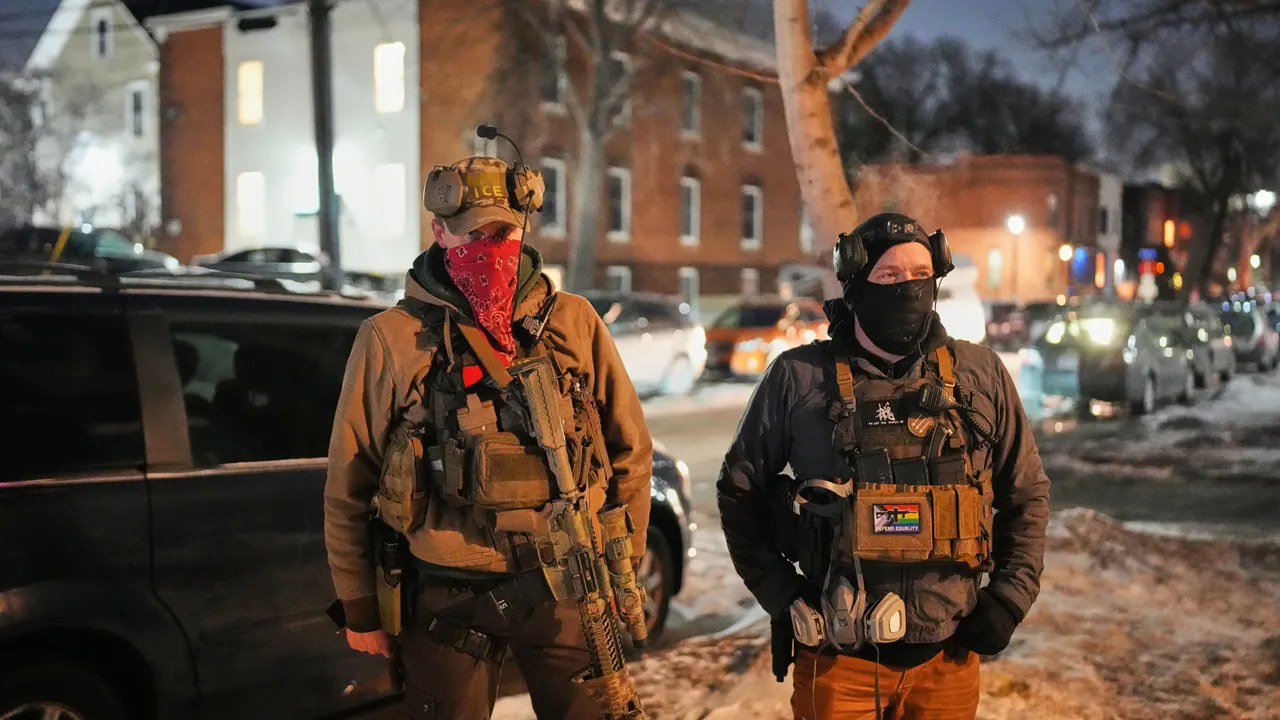
The incident occurs against a backdrop of heightened tensions surrounding immigration enforcement in Minnesota, where previous incidents have included alleged racial profiling of U.S. citizens by ICE agents and another recent violent confrontation where a federal officer reportedly had a finger bitten off during an anti-ICE protest. These contextual elements suggest an escalating environment of mutual distrust between immigration enforcement agencies and some community members who oppose their operations. The presence of what were described as “armed community response” members patrolling near the shooting scene the evening after Pretti’s death further illustrates how the incident has intensified community concerns about both government overreach and personal safety.
The fundamental questions raised by this tragedy extend beyond the specific circumstances of Pretti’s death to touch on broader constitutional principles. At what point does armed protest or observation cross into threatening behavior from law enforcement’s perspective? How should officers respond when encountering armed individuals at protest situations? When do Second Amendment rights potentially complicate the exercise of First Amendment activities? The competing statements from gun rights organizations highlight how even groups with presumably shared core values can diverge significantly in their interpretation of such incidents, especially when political alignments and views on law enforcement authority enter the equation.
As the Department of Homeland Security leads the investigation with FBI assistance, the competing narratives around this incident reveal deep divisions in American society regarding the proper balance between government authority and individual rights. For supporters of the Minnesota Gun Owners Caucus position, the case represents a concerning potential infringement on the rights of law-abiding gun owners to be present at politically contentious situations. For those aligned with the NRA’s perspective, it highlights the dangers of what they perceive as anti-law enforcement rhetoric that can lead to dangerous confrontations. What unites both perspectives is the recognition that the full facts matter tremendously, and that how we balance these competing interests has profound implications for both civil liberties and public safety in an increasingly polarized America.