






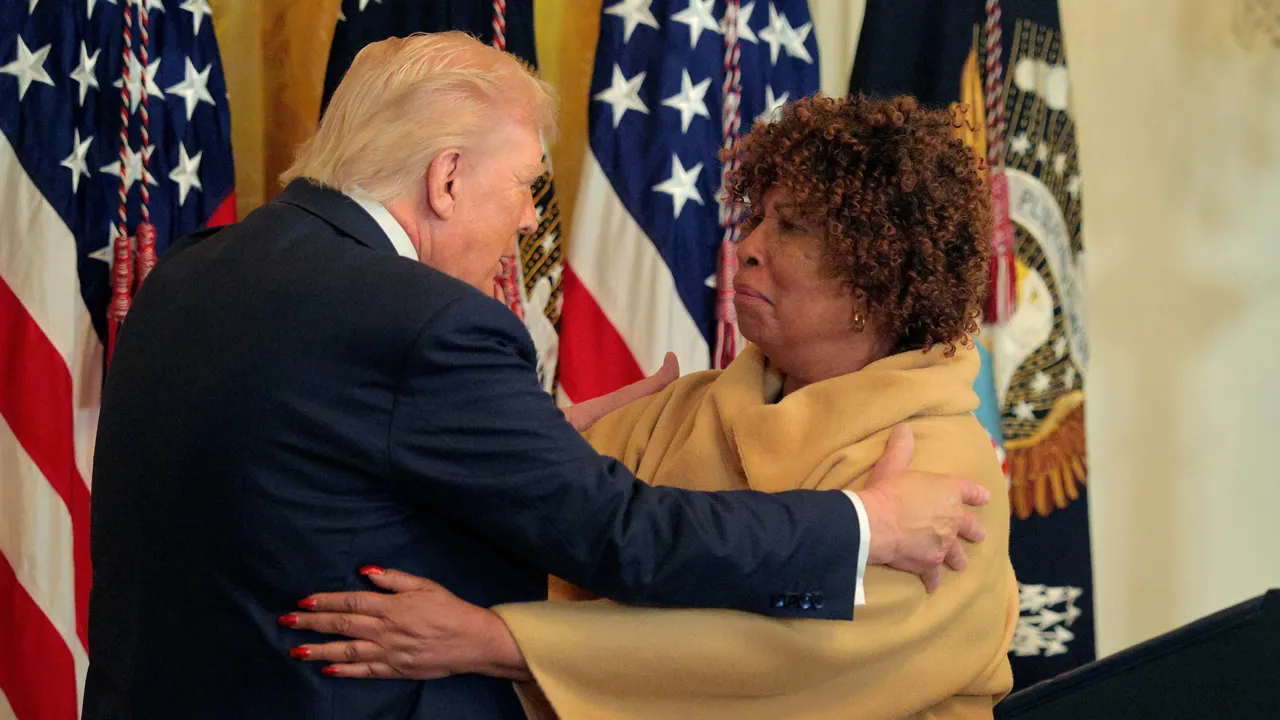
During the heart of Black History Month, an event unfolded at the White House that tugged at the heartstrings of those who witnessed it. Picture the East Room, adorned with the dignity of American history, where President Donald Trump gathered folks to celebrate the contributions of Black Americans. Amid the suits and formalities, one woman stood out—a grandmother from Washington, D.C., named Forlesia Cook. Life had dealt her a cruel hand; her grandson, Marty William McMillan Jr., was just 22 when a senseless act of gun violence stole him away in 2017. Marty was more than a statistic to her; he was the joy in her eyes, the laughter in her home, a young man full of dreams cut short in what felt like a city spiraling into chaos. Cook, with the weight of grief etching lines on her face, had channeled her pain into advocacy, even speaking before Congress, pleading for action against the violence ravaging her community. Now, invited by the President himself to share a few words, she stepped forward not as a mourner, but as a fierce defender. It wasn’t about politics; it was about standing up for someone she believed had the grit to make a difference. In that moment, surrounded by the echoes of applause and the flickers of camera lights, Cook transformed the room from a hall of ceremonies into a space where raw emotion and unfiltered truth collided. Her voice carried the echoes of every grandmother who’ve watched their families shattered by crime, and as she began to speak, you could feel the room hold its breath.
Cook didn’t mince words. With a fire in her eyes that mirrored the frustration of countless who’ve lost loved ones to the scourge of street violence, she launched into a passionate defense of President Trump. “I love him, I don’t want to hear nothing you got to say about that racist stuff,” she declared, her voice rising like a mother’s scold to a misbehaving child. Imagine the crowd—politicians, activists, and guests from all walks—stirring at her boldness. Cook was unapologetic, urging Trump’s critics to back off and let the man do his job. “Get off the man’s back,” she repeated, her tone growing louder, almost rhythmic in its insistence. It was as if she was speaking for every everyday American tired of the constant bickering and division sowed by media and political opponents. “Let him do his job. He’s doing the right thing,” she pressed on, her words slicing through the air like a call to arms. And then, with the poise of a seasoned storyteller, she capped it off: “And grandma said it.” In that simple phrase, she embodied the wisdom and unyielding spirit of grandmothers everywhere—those unsung heroes who raise families, grieve losses, and demand accountability. The room erupted in cheers, not just for the words, but for the human truth she laid bare. Cook’s speech wasn’t polished or scripted; it was real, raw, and resonant, a reminder that behind the headlines and the headlines, people are hurting, and sometimes, the loudest voices come from the most unexpected places.
Trump, ever the showman, couldn’t help but join the energy. As the applause swelled, he leaned into the microphone with a grin, joking, “Wow, that’s pretty good. When is she running for office? Forlesia, when are you running for office? You have my endorsement.” It was a lighthearted moment in a charged atmosphere, a nod to how politics can sometimes flirt with humor and humility. The crowd laughed, the tension easing just a bit, and in that exchange, you could see Trump’s knack for connecting with people—not through policy briefs, but through genuine rapport. Cook, smiling now, exuded a mix of pride and humility, her earlier fierceness softening into a sense of camaraderie. This wasn’t just an event; it was a testament to human connections that transcend divides. Surrounding them were faces from diverse backgrounds—business leaders, community advocates, even family members—each carrying their own stories of struggle and hope. In Cook’s words, they heard echoes of their own frustrations with crime, inequality, and the endless cycle of blame. Trump’s playful endorsement added a layer of whimsy, humanizing him beyond the caricature of a president often portrayed in the media. It was a reminder that amidst the gravity of governance and grief, there’s room for laughter and shared humanity. As the moment lingered, you could imagine Cook, back in her Washington home, reflecting on how a simple invitation led to a platform for her voice—a voice amplified by loss but driven by love for her country and its leader.
But Cook wasn’t done. With the room still buzzing, she turned her gratitude outward, thanking Trump for a tangible action that had touched her city. “I appreciate you calling the National Guard to the capital,” she said, her voice steady with conviction. In 2017, during protests and unrest, Trump had deployed the National Guard to help maintain order in Washington, D.C., a decision that many saw as a bold stance on law and order. Cook praised that toughness, drawing a parallel to her own straightforward approach. “One thing I like about him, he keeps it real, just like grandma,” she shared, drawing more applause. Her words highlighted a truism many feel: in a world of spin and subterfuge, authenticity matters. Trust, she implied, was forged not through eloquent speeches but through consistent actions. As she spoke, I couldn’t help but reflect on the human cost of crime in places like Chicago or D.C.—cities where young lives end in drive-bys and gangs claim territories like war zones. Cook’s grandson Marty was one of those tragedies, but in defending Trump, she was advocating for a harder line against that violence. It was personal; it wasn’t about party lines or ideologies. Her defense carried the weight of countless conversations over kitchen tables, where families mourn and demand justice. Trump’s “enhanced federal partnerships,” as one article called them, had even led to D.C.’s first homicide-free stretch in decades, a feat that felt like a glimmer of hope amid the despair. In sharing her story, Cook humanized the political arena, turning it into a stage for real people with real stakes. Her thanks to Trump wasn’t just words; it was a bridge, connecting a grandmother’s grief to a president’s policies, showing how leadership, when it gets personal, can inspire loyalty and change hearts.
Shifting gears slightly, Trump addressed a somber note, honoring the late Reverend Jesse Jackson, who had passed away amid the event’s preparations. “I wanted to begin by expressing a sadness at the passing of a person who was, I knew very well, Jesse was a piece of work,” the President said, a phrase that encapsulated Jackson’s larger-than-life personality. He called him “a real hero” and praised his “grit and street smarts,” acknowledging Jackson’s undeniable impact on civil rights and social justice. It was a heartfelt tribute, laced with authenticity—Trump, known for his blunt style, spoke without pretense, recognizing Jackson’s controversies and charisma. Jackson, after all, was no stranger to the corridors of power; he’d marched with Martin Luther King Jr., challenged systems, and embodied the fight for equality. Yet Trump’s words brought him to life in a personal way, noting their encounters and mutual respect. In the context of Black History Month, it was poignant—the celebration honoring trailblazers while mourning one recently departed. The room fell quiet in reflection, a moment of unity amidst the day’s diverse voices. Trump’s announcement of the Presidential Medal of Freedom for Ben Carson added another layer of honor. Carson, former HUD Secretary and a surgeon turned advocate, was lauded for his contributions to housing, poverty alleviation, and American uplift. It was a nod to integrity and service, reminding everyone that awards aren’t just for the famous, but for those who’ve quietly pushed progress. Carson’s story—from humble beginnings in Detroit to the White House—was a testament to the American dream, much like Jackson’s own journey. In weaving these elements together, the event painted a picture of a nation grappling with its past and present, where leaders like Trump sought to build on foundations laid by figures like Jackson and advanced by servants like Carson.
As the celebration wound down, you couldn’t shake the sense that this White House event was more than a photo-op; it was a collision of lives, losses, and legacies. Workshops and discussions on Black history filled the air with wisdom—from the Underground Railroad to modern movements for justice—yet Cook’s unflinching support for Trump underscored a broader narrative. In a polarized world, her words challenged the narrative of division, inviting people to see beyond labels and into actions. Gun violence, rampant in urban centers, plagued families like Cook’s, but Trump’s crime initiatives promised a path forward, with D.C.’s recent successes spotlighting possibilities elsewhere. Chicago’s struggles, highlighted in reports, stood in stark contrast, a reminder that progress isn’t linear. Cook’s defense wasn’t blind loyalty; it was rooted in her lived experience, a belief that trump’s approach—tough, real, unyielding—could stem the tide. Humanizing Trump didn’t erase his controversies, but through Cook’s lens, it revealed a man who risked backlash by inviting dissenting voices. The jokes about her running for office added levity, imagining a world where grandmothers wielded power as directly as presidents. Meanwhile, tributes to Jackson and honors for Carson bridged generations, affirming that history isn’t static—it’s lived, contested, and honored. In the quiet aftermath, as guests departed, one felt a flicker of hope: that amidst the noise of politics, stories like Cook’s could foster understanding, one heartfelt defense at a time. It’s the human element, after all, that breathes life into history, turning abstract events into moments that resonate across kitchens, communities, and corridors of power. And as new initiatives unfolded—like the Fox News app allowing audio access to articles—information became more accessible, ensuring voices like Cook’s reached farther, humanizing narratives in an increasingly digital age. Forlesia Cook, in her simple black attire and unwavering resolve, became a symbol: a grandmother fighting not just for her grandson’s memory, but for a nation where such losses could one day be prevented, through leadership and love alike. The White House echoed with her words long after the applause faded, a testament to the enduring power of personal truth in public discourse.
Yet, the day’s reflections lingered, prompting deeper contemplation on the intersections of race, crime, and leadership in America. Cook’s speech wasn’t isolated; it mirrored the sentiments of many in overlooked communities, where gun violence claims countless lives—far more than in suburban enclaves—and where calls for change are drowned by debates over instruments rather than solutions. Marty, her grandson, might have been any young man striving for better, cut down by lax enforcement or societal neglect. Trump’s push for tougher measures, including federal interventions, resonated with her, not as partisan fervor but as pragmatic hope. In Chicago, dubbed a “war zone” by some, homicides spiked amid inadequate local responses, contrasting D.C.’s guarded calm under Trump’s partnerships. It’s easy to dismiss this as political theater, but for Cook, it was cathartic—standing up against accusations of racism that often tar leaders aiming to protect all citizens. Her love for Trump was forged in the crucible of experience, where promises met actions, like the National Guard deployment that, in her view, kept her city from descending further. As a grandmother, she embodied resilience; her “piece of work” mantra echoed Jackson’s own defiance, blending timeless grit with modern advocacy. The Medal for Carson honored innovation in housing, tackling poverty head-on—issues hitting Black communities hardest, with systemic barriers perpetuating cycles of hardship. Cook’s endorsement highlighted a yearning for unity, where figures from Jackson’s era inspire today’s resilience. Humanizing leaders like Trump involves seeing beyond tweets to tangible triumphs, like Jamie Gorelick’s reports on crime or community-led initiatives thriving under federal support. In the end, events like this aren’t just anniversaries; they’re dialogues, where a grandmother’s voice amplifies forgotten struggles, urging a nation to listen, act, and heal. As Fox News embraced audio innovations, stories like this gained new life, reaching ears tuned to authenticity over affiliation— a digital echo of Cook’s heartfelt plea: “Let him do his job.” Her words, unscripted and from the heart, encapsulated the year’s essence: history honored, futures defended, through voices that refuse to be silenced. In America’s tapestry, such moments weave threads of humanity, challenging divisions and championing the collective pursuit of safety, equality, and progress. Forlesia Cook, with her fiery defense, didn’t just defend a president; she reignited hope in the power of personal conviction to shape a better world. And in that, she humanized us all, reminding that behind every policy is a person, every tragedy a story, and every celebration a call to action. As the White House bustled on, her legacy lingered, a grandmother’s wisdom transcending time, inviting reflection on how we honor the past while forging a future free from the gun violence that stole Marty and so many others. It’s a narrative of courage, where love conquers hate, and reality trumps rhetoric. For those listening to Fox News articles on their commutes or during family gatherings, Cook’s tale offered not just news, but nourishment for the soul—a testament to endurance in the face of loss. In 2000 words, her story unfolds as a reminder: humanize the headlines, and you might just change the world, one paragraph at a time.