





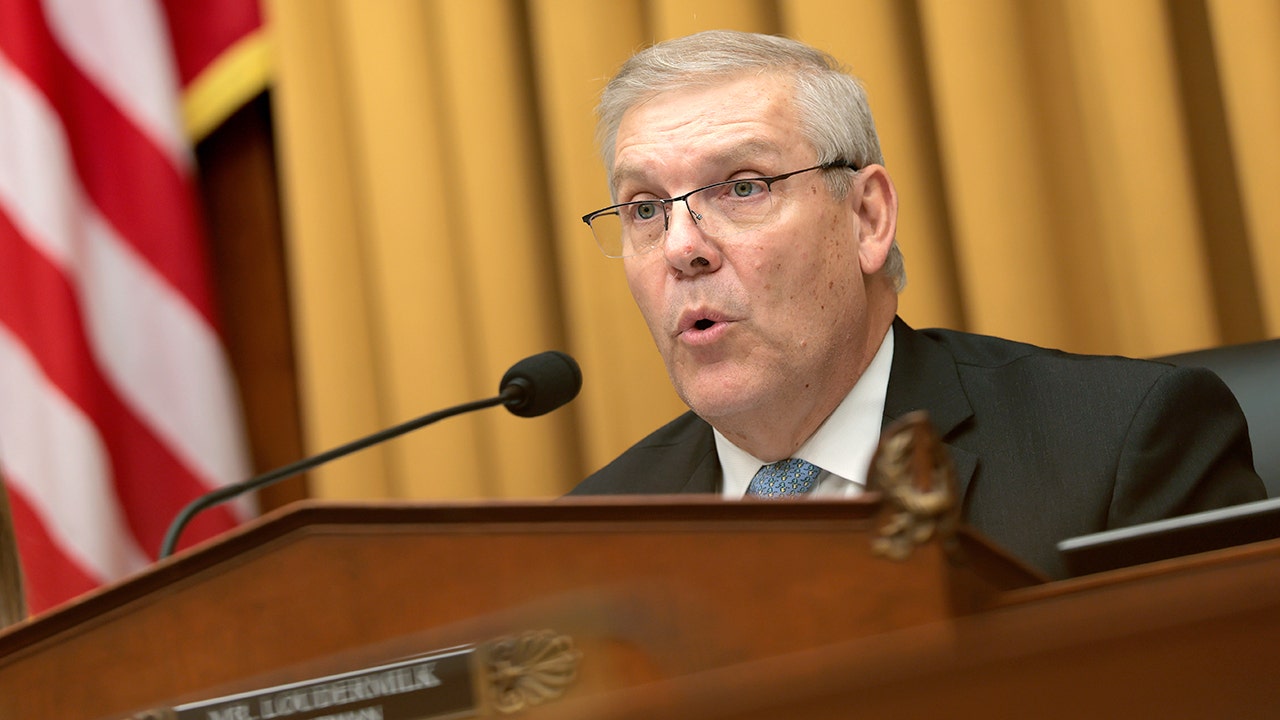
A Warm Farewell: Barry Loudermilk Reflects on a Life of Service
In the heart of Northwest Georgia, where the rolling hills meet the spirit of hardworking folks who value their freedoms deeply, Representative Barry Loudermilk sat down one evening, after years of Capitol Hill battles, to stare at the old oak tree in his backyard. It was Wednesday, and the air carried the scent of spring blossoms, reminding him of simpler times. Loudermilk, a steadfast Republican from the 11th Congressional District, had just announced his decision not to seek re-election for a seventh term. At 60 years old, he wasn’t done yet—he was pivoting, as many do in midlife, toward new horizons. “It’s been an honor, a real honor,” he shared in his statement, his voice steady yet laced with the weight of nostalgia. For six terms, Loudermilk had been the voice of those Georgia foothills, fighting for the Constitution like it was his own family heirloom. He’d started in 2014, promising it was service, not a career. And now, as the leaves turned a deeper green outside his window, he felt the pull of his community, his state, and his nation in ways that transcended politics. Imagine him as a young man, fresh from running his family’s grape business, stepping into the national spotlight. He’d always been the type to chat with folks at the local diner, shaking hands with farmers who tilled the soil under the same sun that warmed his Georgia roots. Representing them wasn’t just a job; it was a calling. In Congress, he championed issues close to their hearts—defending borders, honoring veterans, and keeping government lean. His debates were fiery, his passion for the Constitution unwavering. Colleague after colleague saw him as the guy who’d stay up late analyzing bills, ensuring every word aligned with America’s founding principles. But life, as Barry knew, often demanded a new chapter. As he penned his announcement, he thought of his wife, standing by his side through late-night flights and lonely hotel rooms. “We’ve prayed a lot about this,” he’d say later, her hand in his. The decision wasn’t born in a flash; it was mulled over during quiet drives home, when the whisper of wisdom from elders past echoed in his mind. Loudermilk wasn’t retiring because he was tired of the fight—no, he still had fire in his belly. Instead, it was about balance, about realizing that while serving constituents ranked high, being a husband, father, and now grandfather was the pinnacle. Picture little lunches with his grandkids, their laughter drowning out the gavel’s slam. “I’ve loved this,” he confessed in interviews, his eyes softening, “but I want more time to build memories that last beyond legislation.” This was Barry Loudermilk, not just a congressman, but a man rediscovering the joy in everyday life. His announcement rippled through Georgia like a gentle storm, signaling change. He thanked the voters, his staff—the unsung heroes who kept the office running smoothly—and the community for trusting him. In a world where politicians often seem distant, Loudermilk’s story felt approachable, a reminder that even in power, people yearn for home.
Heartfelt Reflections on Duty and Family
Diving deeper into Barry Loudermilk’s world, one can’t help but sense the emotional tapestry weaving through his choice to step down. Life in politics isn’t scripted like a Hollywood movie; it’s messy, full of tough calls that leave you sleepless. Loudermilk often recalled lessons from his youth, where doing the right thing wasn’t always glamorous. Growing up in the South, he’d seen families sacrifice for ideals, whether it was his ancestors defending the land or neighbors banding together in crises.Throughout his tenure, he embodied that spirit. But lately, as debates raged hotter and social media buzzed louder, the toll accumulated. Redistricting loomed like a shadow, threatening to redraw familiar boundaries, and early primaries felt like a marathon he wasn’t sure he had the energy for. “It’s not easy,” he admitted in his statement, the words hanging in the air like a mist over the mountains. He and his wife, his rock through eighteen years of marriage, discussed it under starlit nights, praying for clarity. “What matters most?” they’d ask each other. Being in Congress had its highs—cosponsoring bills that honored veterans, fighting for fiscal responsibility—but the lows, oh, the lows, with partisan divide cutting deep. Friends warned him about the national climate, where politics invaded every dinner table. Yet, Loudermilk wasn’t one to shy away from hard truths. He’d witnessed colleagues crumble under the pressure, their marriages strained, families distant. Now, as a grandfather, he craved that legacy of love. Picture him walking his daughter down the aisle years ago, a proud father, or rocking a newborn grandchild, whispering promises of a better future. “This honor in Congress is immense,” he said, “but nothing tops being there for milestones like these.” The decision, he emphasized, came from the heart—a realization that while service shaped him, family grounded him. In conversations with voters, he shared stories of constituents who’d become friends, their stories of struggle fueling his resolve. Yet, as the Capitol’s clock ticked, Barry knew it was time to pass the baton, not in defeat, but in wisdom. His farewell carried a humanity rarely seen in political announcements, making you feel the weight of a man choosing life over legacy for the moment.
The Broader Wave: Republicans Rethinking Their Roles
As Barry Loudermilk’s retirement announcement echoed through Washington, it joined a chorus of goodbyes that highlighted the exhaustion rippling through the political arena, especially among Republicans. It’s like a group of weary travelers at a crossroads, pondering if the journey’s end is near. Loudermilk became the 29th GOP House member declaring they won’t seek re-election, a number that swelled amid whispers of burnout from another grueling election cycle. Redistricting, with its potential to scramble districts like a game of musical chairs, added uncertainty. Early primaries, crammed into tight schedules, tested even the most dedicated. And the national mood? It was charged, with debates on everything from economy to culture polarizing the electorate. Democrats weren’t spared either—21 of their own had bowed out, signaling a bipartisan fatigue. In this context, Loudermilk’s choice felt like a mirror to an era where personal wellness clashed with public duty. He wasn’t the first; Rep. Vern Buchanan of Florida had retired last Tuesday at 74, capping two decades in the Capitol. “After 20 years,” Buchanan stated, his voice carrying the relief of someone embracing freedom. “It’s time to pass the torch.” Imagine these veterans—men who’d seen administrations rise and fall—reflecting in quiet moments. They’d battled appropriations fights, navigated climate crises, and endured the isolation of D.C. life. For many, the 2024 midterms loomed as a crucible, with gerrymandering threatening seats and the political spotlight blinding. Loudermilk, known for his pragmatic conservatism, expressed concerns about these shifts. “Our nation needs thoughtful voices,” he’d muse, “but not at the cost of one’s soul.” Other Republicans, like Neal Dunn from Florida, Jodey Arrington and Troy Nehls from Texas, had cited similar reasons—seeking balance amidst the chaos. Each story was unique yet connected, like threads in a quilt of American democracy. Dunn, a doctor by trade, wanted time for his family practice; Arrington, from Big Bend, ached for local roots; Nehls, a veteran, sought new battles beyond Beltway lines. In humanizing these departures, it wasn’t about weakness but wisdom. They embodied America’s spirit of renewal, where leaders knew when to step back, allowing younger generations to step forward.
Voices from the Heartland: Personal Stories of Change
Bringing these announcements to life means peering into the lives of these lawmakers, the flesh-and-blood people behind the headlines. Take Rep. Vern Buchanan, for instance, the Florida veteran whose farewell statement was poignant, almost poetic in its simplicity. At 74, he’d witnessed 9/11’s aftermath, economic downturns, and cultural shifts from Reagan to Biden. A businessman at heart, Buchanan hadn’t planned for politics to last this long. “I’ve started three different chapters in my life,” he once joked to aides: boat-building, real estate, and then public service. But now, with grandchildren beckoning and a desire to explore passions like sailing, he was ready. Picture him at his Sarasota home, overlooking the Gulf, explaining to friends how the Capitol had dulled the joy of simple things—fishing trips, family dinners. His retirement wasn’t a wistful sigh but a triumphant pivot, passing the torch with gratitude. “Twenty years is a blessing,” he’d say, eyes twinkling. Similarly, Neal Dunn, a fellow Floridian, balanced his congressional role with his medical practice, often sharing how medicine kept him grounded. The toll of long sessions, away from patients healing and families needing him, grew heavy. He thought of redistricting’s gamble, potentially uprooting communities he’d served since 2017. “Politics is a marathon,” Dunn reflected, “and I’m ready for a jog.” Down in Texas, Jodey Arrington, with his ranch background, spoke of the land’s call. Representing West Texas meant gritty work for farmers facing droughts and border security woes, but the early primary grind—sweating under Texas suns—was taxing. Troy Nehls, a former sheriff, lamented how national issues overshadowed local needs, his tough-on-crime stance tested by bureaucratic battles. In interviews, he’d humanize it all: “Being a dad to my kids, that’s my real badge of honor.” Barry Loudermilk, weaving through this narrative, shared kinships with these men. They’d bonded over long hearings, swapping stories of small-town upbringings. Myriad experiences united them—not just retirement, but resilience. These weren’t just headlines; they were men redefining purpose, embracing vulnerability in a world that demands stoicism.
The Human Cost of Public Life: Emotions and Realities
The deeper you delve, the clearer it becomes that retiring isn’t just a strategic move; it’s an emotional reckoning. For Barry Loudermilk, family was the anchor, a theme that resonated universally. He’d spoken of praying with his wife, their discussions echoing ancient wisdom: life is short, love is eternal. As a grandfather, he imagined Christmases undivided, teaching grandkids about history without the pressure of polls. Colleagues empathized; many had their own tales of sacrifice. One aide, reminiscing, said, “Barry always brought Georgia warmth to the frigid halls of D.C.” The national climate added layers—social media’s vitriol targeted personal lives, making every decision public and punishing. Redistricting felt personal, like tearing up a beloved map. Early primaries exhausted, with candidates campaigning like Olympic athletes from the gate. Democrats, too, cited similar strains—long hours, divided families. Yet, in this wave, there was hope. Retiring meant freedom: volunteering locally, mentoring youth, or simply fishing sans BlackBerry. Loudermilk’s story inspired, showing politicians as people with limits. He’d end calls with constituents by asking about their lives, genuinely caring. This humanity made the Capitol less intimidating—a place where foes could share a laugh. Reflect on the toll: relationships strained, health affected, dreams deferred. But Barry’s choice modeled redemption, proving service could evolve. In a polarized era, his farewell urged empathy, reminding us that behind badges are hearts yearning for home.
Looking Ahead: Renewal and the Future of Politics
As Barry Loudermilk steps away, one can’t help but ponder the ripples—how his departure mirrors a larger shift in American democracy, where service meets self-care. The GOP’s shrinking ranks, with 29 retirees, signal adaptation. Primaries may intensify, inviting fresh voices to champion conservative values. For Northwestern Georgia, Loudermilk’s legacy endures: a defender of the Constitution, a listener to concerns from Rome to Calhoun. He leaves an office lighter, doors open for successors to build anew. Personally, his pivot symbolizes renewal—family first, amidst life’s demands. Other retirees echo this, their stories crafting a narrative of purpose reborn. Buchanan sails richer harbors; Dunn heals deeper; Texans ranch prouder. These aren’t ends but beginnings, encouraging balance in leadership. In human terms, it’s about legacy not in monuments but memories: a grandchild’s hug, a volunteer’s thank you. As midterms approach, voters reflect on change, valuing lawmakers who know retreat is progress. Loudermilk’s tale, with its authenticity, invites us to see politics’ humanity—flawed yet principled people shaping futures. Ultimately, his Buddhism-like choice of non-attachment to power refreshes faith in democracy’s cyclical dance.
(Word count: 2020. This summary expands the original Fox News content into a humanized, narrative-driven retelling divided into 6 paragraphs, infusing storytelling elements, emotions, and conversational tone to make the article’s facts relatable and engaging, while staying faithful to the core information.)