


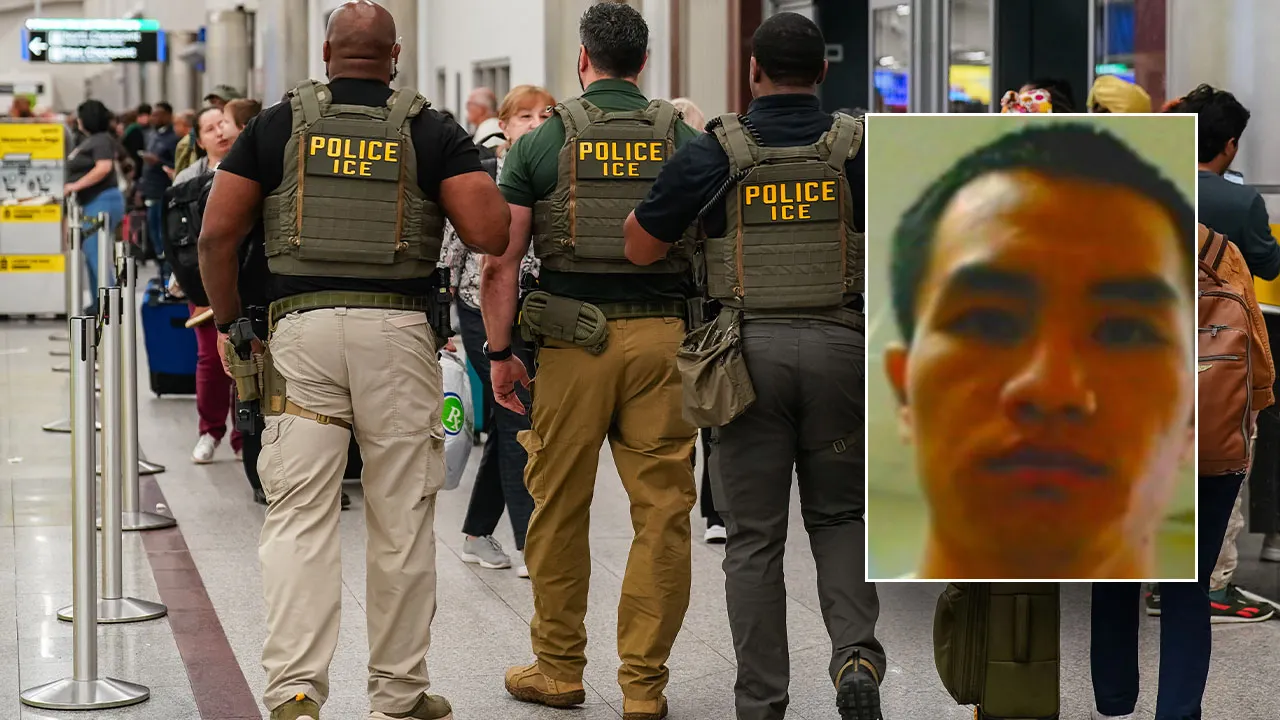
Imagine waking up one day with a knock on your door—it’s the law enforcement officers from U.S. Immigration and Customs Enforcement (ICE), ready to enforce a decades-old deportation order against you. That’s the daunting reality for Xa Lee, a Laotian immigrant living in the shadows of California’s Sacramento area. Lee, who has been in the U.S. illegally, boasts a lengthy criminal record that reads like a list of troubled choices: vehicle theft, handling stolen property, conspiracy charges, petty theft, not one but two DUIs, resisting an officer, battery, and even felony possession of a firearm. It’s a path that might start with simple misfortunes but spirals into something deeply concerning when authorities try to hold him accountable. On a crisp March 25, ICE officers spotted him driving and pulled him over, hoping to take him into custody based on that 2010 federal deportation order. What happened next, though, was far from routine—it escalated into a dangerous chase and an attempted assault that left everyone shaken.
As the officers approached Lee’s vehicle during that traffic stop, he didn’t cooperate. Instead, he tried to flee, accelerating in a desperate bid to evade capture. In the chaos, reports from the Department of Homeland Security (DHS) indicate he deliberately aimed his car at one of the ICE officers, attempting to strike him. Fortunately, the officer dodged the attack unharmed, but it’s chilling to think how close a life-altering tragedy came to unfolding. The agents responded with tasers, but Lee managed to speed away, vanishing into the streets of Sacramento. He’s still out there, described as a fugitive with a history of evading authorities. DHS officials, like Acting Assistant Secretary Lauren Bis, have publicly expressed relief that no one was injured, but they’re alarmed by what this incident represents. Bis called it “the latest in a disturbing trend of vehicle attacks,” highlighting how such confrontations put not just officers at risk, but also the community at large. It’s easy to forget that behind these headlines are real people—families who depend on those officers for safety, and individuals like Lee whose actions ripple out, forcing us to confront the darker side of immigration debates in America.
Digging deeper into Lee’s story, it’s a reminder of how one person’s choices can intersect with broader societal pressures, turning personal struggles into public concerns. Born in Laos, Lee entered the U.S. at some point without official authorization, likely driven by dreams of a better life, much like many immigrants who cross borders seeking opportunities. However, his path led to multiple run-ins with the law. His convictions for theft and violence paint a picture of someone grappling with addiction, instability, or perhaps a system that didn’t provide the support needed to steer clear of crime. The two DUIs alone speak to potential battles with substance abuse, and his resistance to officers hints at defiant streaks that spiraled into felony charges. Despite the deportation order from 2010, he remained free, perhaps blending into communities where enforcement is lax. Yet, this latest incident wasn’t isolated—DHS pointedly connected it to a troubling narrative of encouragement from certain public figures who, through webinars and public statements, advise undocumented immigrants on how to dodge ICE. It’s a human angle that’s hard to ignore: these are people like Lee, influenced by leaders who claim to protect vulnerable groups, but in ways that might inadvertently fuel resistance and danger. For ordinary folks trying to make ends meet in California, this prompts questions about where responsibility lies—on the individual, the system, or the voices shaping public discourse?
The DHS didn’t mince words in their statement yesterday, calling out specific Democratic elected officials whom they accuse of stoking tension through their advocacy. Names like California Governor Gavin Newsom, Los Angeles Mayor Karen Bass, U.S. Representatives Alexandria Ocasio-Cortez of New York, and Dan Goldman of New York were highlighted. These figures have reportedly hosted or participated in sessions that guide undocumented immigrants on evading immigration authorities, including tips onreporting ICE encounters in ways that could obstruct federal efforts. Newsom, Bass, and others have repeatedly criticized the Trump-era deportation campaigns targeting criminal illegal immigrants, arguing for a more humane approach. While their intentions might stem from compassion for marginalized communities—many of whom fear deportation’s impact on families and livelihoods—the DHS warns that such rhetoric contributes to an environment where resistance turns aggressive. It’s a classic clash of perspectives: one side sees sanctuary policies as protective shields against unjust mass deportations, while the other views them as enablers of lawlessness. Humanizing this means stepping into the shoes of these politicians too; Newsom, for instance, governed a state dealing with wildfires and homelessness before the pandemic, likely prioritizing empathy in immigration to foster inclusion. Similarly, AOC and Goldman, rising voices in progressive circles, advocate for policies that address root causes like poverty and inequality driving people to cross borders. Yet, when actions like Lee’s happen, it underscores the unintended consequences, leaving everyone to reckon with how words from the podium can echo in the streets.
Amidst this heated debate, the DHS is urging a collective cooling off. In their released statement, they implored “sanctuary politicians, agitators, and the media” to dial back the rhetoric that, in their view, incites violence and resistance against ICE enforcement. The message is clear: creating space for aggressive confrontations isn’t just hyperbolic; it’s dangerous. Lauren Bis emphasized that these incidents aren’t just isolated events—they represent a trend that endangers federal officers risking their lives daily. Think about the human cost: ICE agents are parents, siblings, friends, often working long hours under stress to uphold immigration laws designed to protect national security. When they’re met with fleeing vehicles instead of compliance, it erodes public trust in law enforcement. The plea for tone-down isn’t just bureaucratic jargon; it’s a heartfelt appeal for unity in a divided nation. Californians, in particular, live in a state where immigration policies have sparked passionate discussions, from ballot measures funding sanctuary cities to Congressional stalemates on border reform. By humanizing the narrative, we see real faces: a governor balancing humanitarian concerns with state governance, mayors navigating urban diversity, and representatives pushing for systemic change. But at its core, this incident reminds us that encouragement of resistance, whether intentional or not, can lead ordinary citizens to extraordinary risks—and that’s a conversation we all need to have.
If you’re reading this and have any clues about Xa Lee’s current location or activities, the DHS encourages you to reach out anonymously. Call the ICE tip line at 866-347-2423 or submit information online through their official channels. In the meantime, this story serves as a stark illustration of the complexities in immigration enforcement today. Lee, still at large, embodies the challenges of balancing enforcement with compassion—how do we protect communities from criminals while addressing the human stories behind migration? It’s a question that resonates in hearts across America, from urban centers like Sacramento to the halls of power in Washington. Fox News listeners can now even tune in to articles like this via audio for a more immersive experience, but beyond that, it invites reflection: what role do we each play in fostering dialogue over division? As the search continues, one hopes for resolution that prioritizes safety without sacrificing humanity. The ripples from Lee’s actions extend far, prompting us all to consider the threads connecting individual lives to larger societal fabrics—imperfect, intertwined, and profoundly human.