






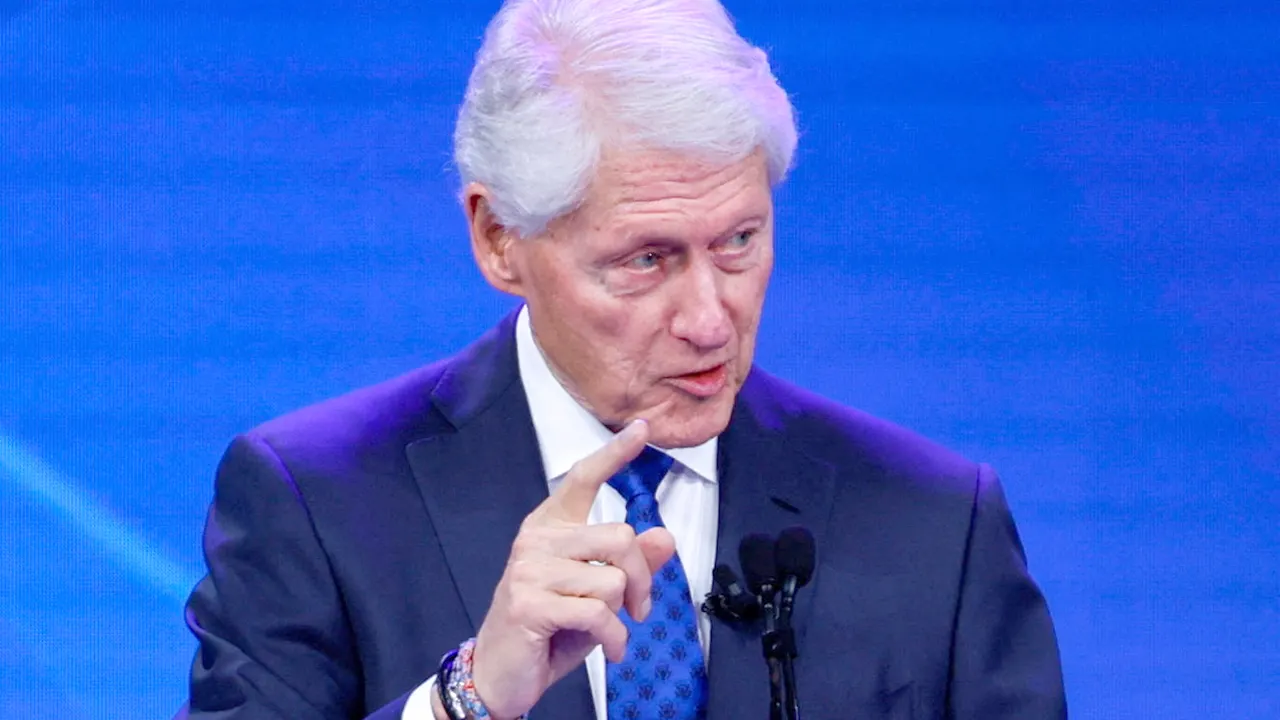
In the cozy, snow-blanketed hamlet of Chappaqua, New York, history unfolded in a way that could reshape how power is scrutinized in America. Picture this: a charming village nestled among wooded hills, home to former President Bill Clinton and his wife Hillary, who traded the White House for quieter days here after 2001. But on this chilly winter day, the spotlight wasn’t on their idyllic life—it was on Capitol Hill’s reach extending into their living room, so to speak. Bill Clinton, the 42nd president, testified under subpoena before the House Oversight Committee in an already-unprecedented twist of separation of powers. Never before had a congressional committee hauled in a former president for deposition outside Washington. It wasn’t about allegations of wrongdoing against him directly, but about his ties to Jeffrey Epstein, the convicted sex offender whose web of connections with the elite keeps unraveling. Republicans on the committee, led by Kentucky’s James Comer, hailed this as a potential game-changer, setting a precedent that could one day boomerang onto figures like current President Donald Trump. You could almost feel the weight of it—most congressional dramas play out in Capitol buildings, presidential ones at 1600 Pennsylvania Ave., but this one sprouted from a hillside arts center overlooking the Saw Mill River. It made the whole affair feel both absurdly ordinary and monumentally extraordinary, like dragging the ghosts of office into the daylight.
Just the day before Bill’s testimony, Hillary Clinton, herself a former First Lady, Senator, and Secretary of State, faced the same panel in a marathon closed-door session. She sat there for nearly six hours, fielding questions about Epstein’s world of private jets and shady dealings. When asked, she insisted she never encountered the man, never stepped foot on his infamous island or joined his globe-trotting crew. “I do not recall ever encountering Mr. Epstein,” she stated flatly, distancing herself from any personal entanglements. Bill, meanwhile, had openly admitted knowing Epstein and even traveling with him—details that fueled the Republicans’ curiosity. The venue? Not some sterile Capitol room, but the chic Chappaqua Performing Arts Center, a white-columned gem locally dubbed ChappPAC. It underscored how serious yet surreal this all was, turning what should have been a dry oversight probe into something approaching a civic theater production. Getting the Clintons here took seven months of wrangling, Comer grumbled, a testament to the clout of wealth and power. For a committee chasing Epstein’s shadow empire, the Chappaqua setting humanized the high-stakes drama, reminding everyone that even ex-presidents aren’t always untouchable—they just live in picturesque places with Greek architecture.
Inside those walls, the deposition morphed into a spectacle, with lawmakers treating it like a reality show audition. Representative Lauren Boebert from Colorado was caught snapping photos of Hillary during the session, later joking it was for Her blue suit, which she posted to conservative outlets. “I admire her blue suit. So I wanted to capture that for everyone,” she quipped, brushing off critics. But Democrats like Arizona’s Yassamin Ansari blasted it as a “clown show,” accusing Republicans of prioritizing photo ops over facts. Then came Bill’s turn, and the mood reportedly ratcheted up—from calmer waters to choppy ones. Representative Nancy Mace from North Carolina claimed Hillary had been “screaming” unhinged, while Florida’s Anna Paulina Luna, speaking off-the-record vibes, speculated outside the center that Epstein wasn’t just a pervert but ran an “intelligence gathering operation,” possibly a “honey pot” scheme with foreign allies. Of course, she offered zero proof, but it fed the conspiracy fires. Questions veered wildly, with Hillary later venting about detours into UFOs and Pizzagate—a disgusting online hoax from the 2016 election that falsely accused Democrats of running a child-trafficking ring from a D.C. pizza joint, even inspiring a deranged shooting there. The heart of it, though, was probing how Epstein leveraged his elite ties to shield his crimes, shining a light on big names like Bill and Trump. It felt personal, raw—like neighbors gossiping, except these neighbors could launch investigations.
Sitting through all this, I couldn’t help but imagine the Clintons’ perspective: two larger-than-life figures yanked from retirement to relive past associations under oath. Bill testified he didn’t recognize the woman in that infamous jacuzzi photo from Epstein’s pad, sticking to his story without embellishment. The topics were narrowed to Epstein’s manipulation of power players, but the gossip factor loomed large. One rep, Suhas Subramanyam from Virginia, grumbled they’d deposed the “wrong president,” implying Trump should be next. Meanwhile, Comer’s team argued they had evidence like emails linking Bill to Epstein. Even Comer noted Bill’s cooperation contrasted with those months of evasion. It reminded me of people talking politics at a bar—laced with accusations, denials, and that undercurrent of “what if it were me?” Ep stein’s operation, Luna suggested mid-deposition, might have been about spying, using sex as bait, a theory that echoes whispers about how the rich and powerful often blur lines between friendships and schemes.
President Trump, watching from afar, showed a mix of empathy and edge when asked. “I don’t like seeing him deposed. But they certainly went after me a lot more than that,” he said, a nod to his own battles. Pressed on “Epstein files,” he shrugged, “I don’t know anything about the Epstein files. I’ve been totally exonerated.” Republicans backed him up: Comer called him exonerated “from all the evidence I’ve seen,” and Mace echoed that Epstein’s victims themselves cleared him. Democrats, led by California’s Robert Garcia, saw red, calling for Trump and even First Lady Melania to testify next, accusing Republicans of hypocrisy. “There’s a precedent now,” Garcia warned, potentially turning this into a November election wedge if Dems flip the House. It felt like a mirror: Clinton’s deposition could pave the way for polling forth about Trump’s own Epstein brushes, revealed in released docs. Separation of powers, the Constitution’s backbone, is sacred, but this blurred it—presidents testifying rarely, and never deposed post-tenure before. One expert mused that small towns like Chappaqua might become footnotes in history, pivotal spots where big scandals get unpacked.
Looking back, this whole Chappaqua circus wasn’t just about Epstein; it was a peek into America’s messy democracy, where power’s friends get subpoenaed and politics mixes with personal drama. The Clintons walked out claiming vindication, but the precedent hangs like a snow cloud—will future ex-presidents face this? Could it extend to Trump, whose Epstein connections, including that infamous 1992 dinner or Palm Beach visits, keep surfacing? It’s humanizing, really: these aren’t just names in headlines; they’re people with homes, families, past lives. Bill and Hillary, once the epitome of political royalty, now emblematic of how no one, even retirees in quaint villages, escapes scrutiny forever. As the Oversight probe grinds on, Chappaqua might become synonymous with accountability’s new frontier, a reminder that history’s echoes bounce off unexpected hillsides. And who knows, maybe one day, listening to news like this will feel as natural as chatting over coffee—turning political theater into everyday reckoning.