



Florida CAIR Chapter Takes Stand Against DeSantis’s Terrorist Organization Designation
In a bold move that has stirred significant controversy across Florida, Governor Ron DeSantis has issued an executive order classifying the Council on American-Islamic Relations (CAIR) and the Muslim Brotherhood as “foreign terrorist organizations.” This unprecedented state-level designation has prompted immediate pushback from CAIR’s Florida chapter, which announced plans to challenge the governor’s order in court. During a news conference, Hiba Rahim, CAIR-Florida’s deputy executive director, framed the governor’s action as part of a troubling historical pattern, drawing parallels to past discrimination against Jewish, Irish, and Italian American communities. “We are very proud to defend the founding principles of our Constitution, to defend free speech,” Rahim stated, emphasizing the organization’s commitment to democratic values despite the governor’s actions.
The confrontation highlights deepening tensions between the Republican governor and Muslim civil rights organizations in Florida. Rahim suggested that DeSantis’s unwavering support for Israel played a significant role in the designation, noting that CAIR’s advocacy work has sometimes created “discomfort” for the U.S. ally. Nevertheless, she made it clear that CAIR has no intention of backing down from its mission or principles in the face of what they view as governmental overreach. Governor DeSantis, for his part, appears equally determined, telling reporters that the designation was “a long time coming” and that he welcomes CAIR’s legal challenge. The governor also indicated this executive order represents just “the beginning,” suggesting more actions may follow when Florida’s legislature reconvenes in January.
The practical implications of DeSantis’s order are substantial for the organizations named. State agencies are now prohibited from awarding contracts, employment opportunities, or funds to CAIR, the Muslim Brotherhood, or any groups deemed to have provided material support to these organizations. This sweeping directive effectively cuts off these groups from participating in state-funded activities or partnerships. Attorney Miranda Margolis, speaking at CAIR’s Tampa news conference, sharply criticized the order, arguing that DeSantis had overstepped his authority by unilaterally designating a nonprofit organization as a terrorist entity. “This designation is without legal or factual basis and constitutes a dangerous escalation of anti-Muslim political rhetoric,” Margolis asserted, setting the stage for what promises to be a contentious legal battle.
The Florida governor’s action follows a similar proclamation by Texas Governor Greg Abbott, suggesting a potential trend among conservative state leaders. CAIR has already challenged Abbott’s designation in federal court, arguing it violates both the U.S. Constitution and Texas law. The organization has received support from Muslim and interfaith groups who have called for Abbott to rescind his order. These state-level designations raise important questions about federalism and the separation of powers, as traditionally, Foreign Terrorist Organization classifications fall exclusively under the authority of the U.S. State Department, not individual states. CAIR’s legal challenge in Florida will likely center on this jurisdictional question, along with First Amendment and due process concerns.
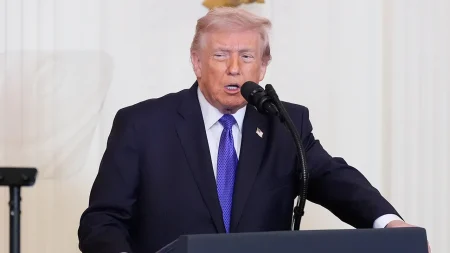
The timing of DeSantis’s order is particularly noteworthy, coming shortly after President Donald Trump issued his own executive order to begin a federal process considering the designation of certain Muslim Brotherhood chapters as foreign terrorist organizations. This alignment between state and federal Republican leaders suggests a coordinated approach to addressing these Islamic organizations, though through different governmental mechanisms. For CAIR, which describes itself as a Muslim civil rights organization, these designations represent an existential threat to their operations and mission. Founded in 1994, CAIR has long positioned itself as an advocate for Muslim Americans’ civil liberties, frequently speaking out against discrimination and Islamophobia in American society.
As this legal and political drama unfolds in Florida, it raises profound questions about religious freedom, civil liberties, and the boundaries of state power. Critics of DeSantis’s order argue it represents dangerous governmental overreach that specifically targets Muslim Americans and their advocacy organizations. Supporters, meanwhile, view it as a necessary security measure aligned with the governor’s broader agenda. What’s certain is that this conflict will likely set important precedents regarding states’ authority to make terrorist designations and the constitutional protections afforded to religious and advocacy organizations. As CAIR prepares its legal challenge and DeSantis signals his readiness for a courtroom battle, Floridians and Americans nationwide will be watching closely to see how this significant clash between governmental authority and civil liberties is ultimately resolved.