


Federal Judge Temporarily Blocks Trump Administration’s Childcare Subsidy Freeze
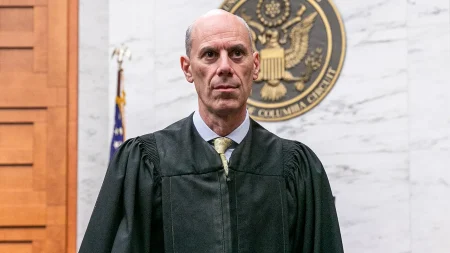
In a significant development affecting thousands of American families, U.S. District Judge Arun Subramanian has temporarily halted the Trump administration’s attempt to cut off childcare funding to five Democratic-led states. The Biden appointee’s ruling doesn’t settle the ultimate question of whether the funding freeze is legal, but it preserves the “status quo” for at least two weeks while both sides present their arguments. This interim decision represents a pivotal moment in the ongoing tension between federal oversight and state autonomy in administering crucial social service programs.
The funding freeze, announced earlier this week by the Department of Health and Human Services (HHS), targeted several essential support programs in California, Colorado, Illinois, Minnesota, and New York. At stake are billions in federal dollars for the Child Care and Development Fund, the Temporary Assistance for Needy Families program, and the Social Services Block Grant – all lifelines for vulnerable families across these states. HHS Deputy Secretary Jim O’Neill defended the action by emphasizing that families “deserve confidence that these resources are used lawfully and for their intended purpose,” pointing to concerns that benefits might be reaching individuals without legal immigration status. This reflects the administration’s broader focus on tightening controls around public assistance programs and ensuring they exclusively serve legally eligible recipients.
The affected states mounted a swift legal challenge, arguing that the federal government overstepped its authority and created “operational chaos” by abruptly cutting off funding. Collectively, these five states receive more than $10 billion in federal support for these critical programs that provide childcare assistance, temporary financial help, and social services to families in need. The immediate nature of the freeze threatened to disrupt services to countless children and families who depend on this support for basic necessities and childcare that allows parents to work. Many families caught in this political crossfire have no connection to the alleged fraud but would nonetheless suffer from the sudden loss of services.
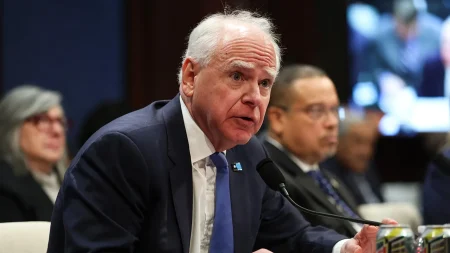
For Minnesota in particular, this funding freeze comes amid heightened scrutiny over its administration of federal assistance programs. The state has been under investigation for potential widespread fraud in various federally funded initiatives, with Senate Republicans characterizing discovered improprieties as just the “tip of the iceberg.” The controversy has placed Governor Tim Walz’s administration under pressure to address allegations of inadequate oversight while simultaneously fighting to maintain essential services for the state’s most vulnerable residents. This case represents a larger national debate about the balance between preventing fraud and ensuring that legitimate beneficiaries don’t lose access to critical support programs.
New York Attorney General Letitia James, who is spearheading the legal challenge, celebrated Judge Subramanian’s temporary restraining order as a “critical victory for families whose lives have been upended by this administration’s cruelty.” Her characterization frames the funding freeze as a political maneuver rather than a good-faith effort to address program integrity concerns. The strongly worded statement underscores the increasingly partisan nature of disputes over social welfare programs, with Democratic states positioning themselves as protectors of vulnerable families against what they view as punitive federal actions that disproportionately harm innocent beneficiaries.
As this legal battle continues to unfold, the real-world consequences hang in the balance for millions of Americans who rely on these programs. The court’s temporary intervention buys time for a more thorough examination of whether the Trump administration followed proper procedures in implementing the funding freeze and whether the evidence of fraud justifies such a sweeping response. Meanwhile, families who depend on childcare subsidies to maintain employment, temporary assistance to meet basic needs, and social services during times of crisis remain caught in the middle of a complex legal and political dispute. The ultimate resolution will likely set important precedents for federal-state relationships in administering social welfare programs and establish boundaries for how the federal government can respond to allegations of state-level mismanagement.