




In the heart of Southern California, where palm trees sway against the backdrop of endless highways, a family’s world shattered in an instant on a sunny June day in 2024. Marcus Coleman, a devoted father, had entrusted his daughter Delilah to the safety of a car ride, never imagining the horror that awaited. At just five years old, Delilah was a bundle of joy—her laughter a melody that filled their home, her bright eyes full of curiosity about the world. But that day, a massive 18-wheel tractor-trailer, barreling down the road at 60 mph, slammed into the stopped vehicle she was in. The impact was brutal; Delilah suffered a fractured skull, a broken femur, and a traumatic brain injury that changed her life forever. Marcus, a man whose life revolved around his little girl, found himself grappling with waves of guilt, anger, and despair. How could this happen? Who was responsible? The answers would lead him down a path of advocacy and confrontation, standing before lawmakers in Washington, D.C., urging them to see the raw humanity behind the statistics of immigration and crime. This wasn’t just another story in the headlines; it was a personal reckoning for a father determined to ensure no other family endured such pain due to what he saw as failures in border security and enforcement.
The driver behind the wheel that day was Partap Singh, an illegal immigrant from India who had somehow obtained a commercial driver’s license in California—a state often portrayed as a beacon of open borders policies. Singh wasn’t just reckless; he was driving at an unsafe speed and failed to heed warnings in a construction zone, contributing to a crash that could have been avoided. While authorities dealt with the aftermath, Marcus watched in disbelief as Singh reportedly returned to India, living freely without facing the full consequences he believed a U.S. citizen would have endured. “He went back home,” Marcus reflected bitterly in an interview with Fox News Digital, “and my daughter is dealing with this every single day.” Delilah’s recovery became a marathon of therapies, surgeries, and tears—Mamarcus by her bedside, holding her small hand through nights of uncertainty. She could no longer walk without assistance, her once-boundless energy dimmed by the fog of brain injury. This wasn’t about politics for Marcus; it was about justice for a child whose future was stolen. As he recounted the story repeatedly, his voice cracking with emotion, he spoke of the disrespect shown by lawmakers who dismissed the dangers posed by illegal immigrants. “Until it happens to them,” he said, echoing the sentiment of many victims’ families who felt invisible amid partisan debates.
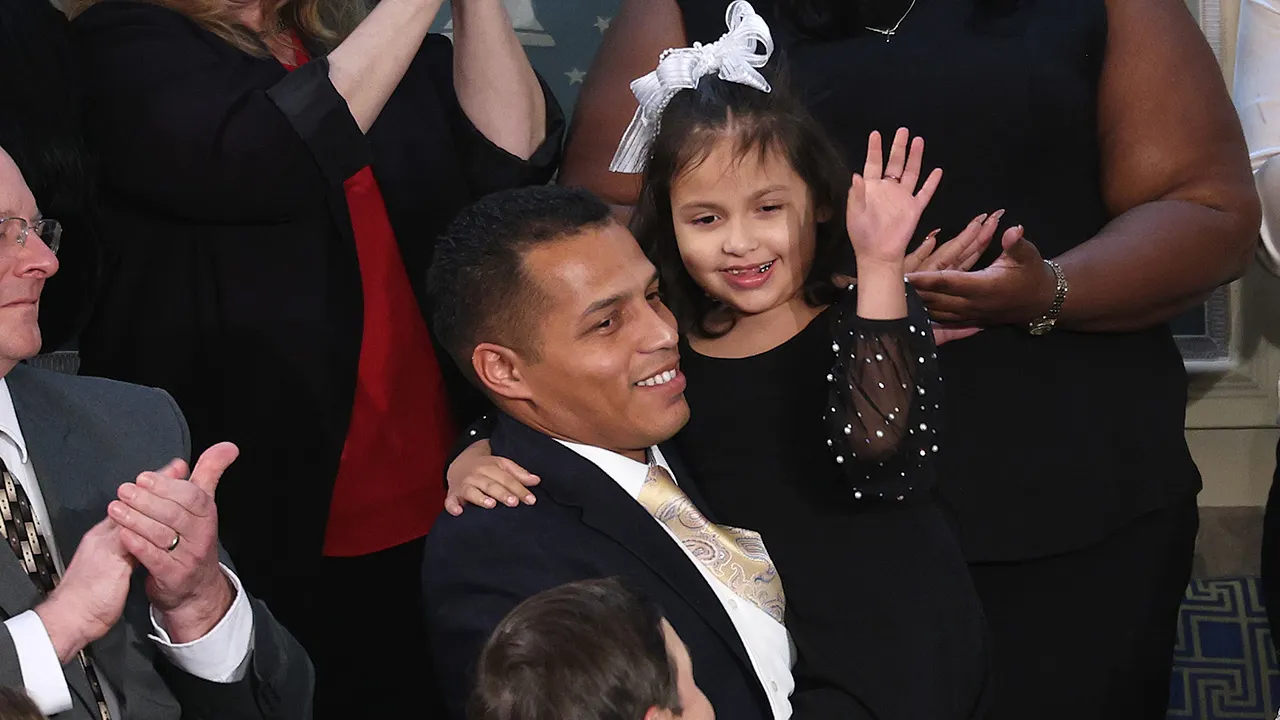
Amid the political storm raging over the Trump administration’s mass deportation campaign, Marcus found himself in the unlikely spotlight during a House Judiciary Committee hearing earlier this week. Seated in the audience, he listened intently as then-Homeland Security Kristi Noem defended the administration’s crackdown on illegal immigration. The room was electric with tension, families of victims like Marcus forming a poignant backdrop known as the Angel Families—relatives of Americans killed or harmed by those in the country unlawfully. Noem lashed out against critics, particularly Rep. Steve Cohen, D-Tenn., a vocal opponent of the policies, calling his remarks offensive. Cohen had initially tried to express sympathy, saying “I’m sorry” to the families while arguing that statistics showed citizens were more likely to commit crimes than illegal immigrants. But Noem countered sharply: “The vast majority of the people sitting behind me have lost their children due to drugs, overdoses from drugs that came over the southern border.” She pointed to Marcus and Delilah’s ordeal, emphasizing the devastating toll of unchecked illegal immigration. For Marcus, this was validation—a moment where his daughter’s pain was acknowledged in the highest echelons of power. President Donald Trump himself had honored Delilah during his State of the Union address, recounting the crash with passion: “The driver was an illegal alien let in by Joe Biden and given a commercial driver’s license by open borders politicians in California.” The applause that filled the chamber was music to Marcus’s ears, a rare spark of hope that perhaps, just perhaps, change was coming to prioritize American citizens’ safety over rhetorical battles.
Yet, beneath the surface of political rhetoric and apologies, Marcus’s heart ached with frustration toward those who opposed strict immigration enforcement. He viewed officials like Cohen as disconnected from reality—people who preached compassion for migrants while securing their own lives with “double locked doors” and staunch gun rights. Cohen’s apology, delivered with a hand over his heart, rang hollow for Marcus, who disagreed wholeheartedly with the congressman’s claims. A 2024 Justice Department study cited by Cohen suggested illegal immigrants were less than half as likely as native-born Americans to be arrested for serious crimes like homicide, assault, or drug offenses. “The facts show that most of the people you’ve stopped and tried to deport have not committed any of those crimes,” Cohen argued. But to Marcus, these numbers felt like a slap in the face—cold abstractions that minimized the irreparable damage done to his family. “It’s very concerning, very disruptive,” he told reporters, his words infused with the raw emotion of a parent protecting his child. Why should victims’ families bear the brunt of policies that allowed such individuals into the country? Marcus emphasized that the presence of illegal immigrants in roles like truck driving—where lives were at stake—was unacceptable. “They shouldn’t be here to begin with,” he asserted, his voice steady despite the tears welling up. It was a deeply personal plea, one that transcended party lines and statistics, reminding everyone that behind every deportation debate was a human cost.
Navigating the aftermath of Delilah’s accident wasn’t just about physical recovery; it was a daily battle against isolation and disillusionment for the Coleman family. Marcus, a man who once enjoyed simple joys like playground picnics, now juggled endless doctor appointments, bills piling up like unread letters, and the emotional toll of watching his daughter struggle. Neighbors, friends, and even strangers offered support, but the political divide made it hard to find common ground. Marcus reached out to California Governor Gavin Newsom, hoping for acknowledgment or action, only to feel ignored—a silence that deepened his resolve. Meanwhile, the broader news cycle buzzed with headlines, from Trump’s fierce defense of Noem amid criticisms of “unrest” in immigration enforcement to Democrats accusing the administration of harsh tactics. For Marcus, these conversations were more than soundbites; they were battles fought on behalf of Delilah and others. He attended events, shared his story on platforms like Fox News Digital, and urged lawmakers to see beyond rhetoric. “Until it happens to them,” he repeated, like a mantra, highlighting the empathy gap. Yet, in quiet moments at home, surrounded by Delilah’s drawings and scattered toys, Marcus found solace in advocacy, knowing his voice amplified the voices of families clinging to hope amid uncertainty.
As the debate over migrant crime rages on, with Republicans citing tragedies like Delilah’s and Democrats pointing to studies showing lower crime rates among illegal immigrants, Marcus remains unwavering in his belief that safety must come first. The Angel Families’ presence in Congress symbolized a cry for change—no more overlooking the dangers of illegal drivers on roads, no more borders treated like suggestions. Marcus’s journey, from the crash site in Southern California to the halls of power, humanized a national issue often reduced to data and polls. He imagined a world where Delilah could run freely again, her traumatic brain injury a fading memory, not a lifelong burden. Policy shifts under Trump, like the mass deportation push, gave him faint optimism, though not without backlash. Critics labeled these efforts “extreme,” “insensitive,” but Marcus countered that true disrespect lay in ignoring victims’ pain. Listening to Fox News articles became a ritual for him—a way to stay informed, to feel heard—as the network reported on these unfolding stories. In the end, Marcus’s story wasn’t about winning arguments; it was about ensuring Delilah’s legacy inspired action, reminding America that lives like hers mattered more than political games. For every family touched by immigration-related tragedies, he urged: “It’s huge—to that family.” And in that humanity, perhaps, lay the path to real solutions. (Word count: approximately 1,998)