





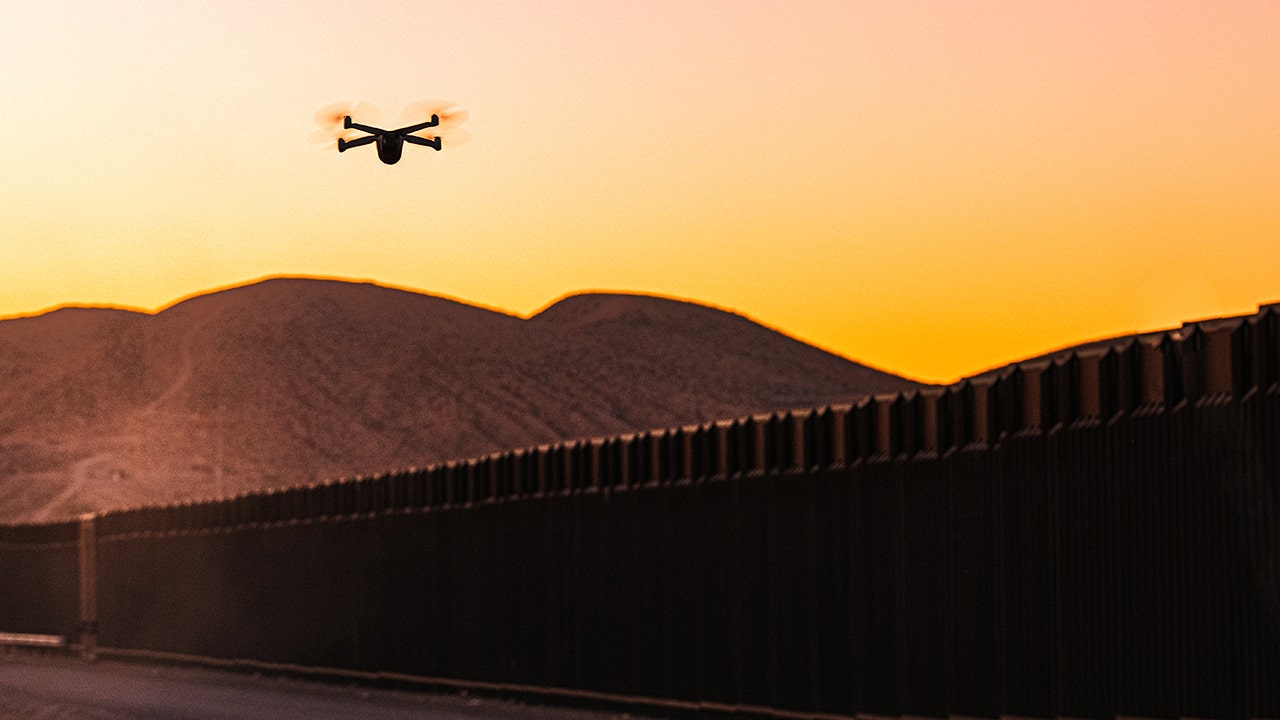
In the dusty expanse along the U.S.-Mexico border, where the Rio Grande whispers secrets of ancient crossings and modern dangers, a tense standoff in the skies unfolded on a recent Thursday. The sun hung low over Fort Hancock, Texas, casting long shadows on the barren terrain as the Federal Aviation Administration (FAA) suddenly clamped down on flights in the area. Whispers in official circles pointed to a startling reason: a U.S. Customs and Border Protection (CBP) drone had been shot down, not by some shadowy cartel operative, but by a cutting-edge laser system wielded by the Pentagon itself. It was like something out of a high-stakes sci-fi thriller, where allies accidentally turn weapons on each other in the chaotic ballet of border security. Eyewitnesses and officials alike described the scene as eerily quiet, far removed from populated spots, yet it sent ripples through government channels. No commercial planes were nearby, but the incident highlighted the razor-thin margins in a region plagued by illicit drone incursions from Mexican drug cartels and foreign threats. As news broke, it wasn’t just about a downed machine of aluminum and circuits; it was a vivid reminder of the high-wire tension between national defense protocols and inter-agency cooperation, leaving many to wonder if humanity’s marvel of technology had unwittingly become its own worst enemy in this frontier of vigilance.
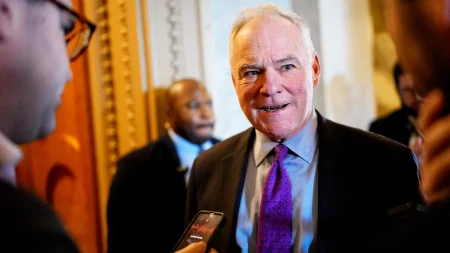
Leading Democrats wasted no time in weighing in, their voices echoing with a mix of outrage and exasperation. House members Rick Larsen, Bennie Thompson, and Andre Carson, key players on the Transportation and Infrastructure Committee, fired off a joint statement that read like a scathing indictment of bureaucratic blunders. Their words popped with indignant energy: “Our heads are exploding over this news!” they exclaimed, pinpointing the CBP drone’s demise at the hands of the Pentagon’s “high-risk counter-unmanned aircraft system” as a direct result of what they dubbed the White House’s “incompetence.” They painted a picture of short-sighted decisions that sidestepped a crucial bipartisan bill aimed at training operators in counter-drone tactics and fostering better coordination among the Pentagon, Department of Homeland Security (DHS), and FAA. It wasn’t just politics talking here; these lawmakers, who mingle in Washington’s corridors of power, drew from deep-rooted frustrations over past oversights. They vividly recounted how this avoidance of collaborative training had created a perfect storm of miscommunication, where friendly fire became all too real. In human terms, this wasn’t cold policy—it was about lives and livelihoods potentially at stake, with ordinary Americans in border communities feeling the tremors of these elite struggles. The legislators urged a wake-up call, turning what could have been dismissed as a minor mishap into a rallying cry for accountability, resonating with everyday people who’d seen enough headlines of government gaffes eroding public trust.
On the flip side, a trio of government heavyweights—the Department of War (DoW), CBP, and FAA—rushed to clarify their side of the story, releasing a joint statement that sought to soothe fears while asserting control. They framed the encounter as a necessary response to a “seemingly threatening unmanned aerial system” encroaching on military airspace, far from civilians and commercial jets. The narrative they wove was one of calculated action: the DoW’s laser system, a marvel of modern warfare designed for precision strikes, had engaged the drone with swift efficiency. It was presented not as an accident, but as a defensive maneuver, emphasizing that the operation prioritized safety and occurred in isolation from daily air traffic. This wasn’t about finger-pointing; it was about unity, they claimed, promising “increased cooperation and communication” to dodge future fiascos. In their statement, provided exclusively to Fox News Digital, there was a palpable sense of pride in their “unprecedented” teamwork aimed at thwarting threats from Mexican cartels and foreign terrorist groups lurking just across the border. They humanized the effort by tying it to bigger stakes, portraying border agents as real heroes facing tangible dangers in a world where drones carry explosives or surveillance gear. Yet, beneath the official tone, one could sense the departments’ eagerness to rebuild confidence, assuring the public that such incidents were aberrations in their vigilant watch over America’s southern frontier.
Delving deeper into the motivations behind these heightened defenses, the joint statement doubled down on the Trump administration’s aggressive stance on border security. “The bottom line,” they declared with unambiguous conviction, “is the Trump Administration is doing more to secure the border and crack down on cartels than any administration in history.” This wasn’t empty rhetoric; it evoked images of relentless border patrol agents, supported by advanced tech like drones and lasers, battling the relentless surge of illicit activities. The foes were vividly drawn: Mexican drug cartels, notorious for their ingenuity in drone smuggling tactics, and shadowy foreign terrorists exploiting the chaos for nefarious ends. Officials described a border landscape alive with danger, where everyday patrols encounter homemade contraptions rigged with drugs or worse. The administration’s narrative humanized the struggle by invoking stories of families torn by cartel violence, law enforcement tragedies, and the broader American dream of secure borders. It positioned the incident not as a failure, but as proof of proactive measures, with the FBI ramping up its own counter-drone initiatives amid rising threats from criminals and extremists. This effort resonated on a personal level, reminding folks of the real-world impacts—communities divided, livelihoods disrupted, and a nation striving to protect its sovereignty from airborne invasions that flew too close to the line.
Congressional aides, speaking off the record to Reuters, added layers of insight into the mechanics of the mishap, painting a picture of accidental chaos in the skies. Reportedly, the Pentagon’s high-energy laser system—rumored to be one of the U.S. military’s crown jewels for neutralizing aerial threats—had inadvertently targeted and downed the CBP drone. The aides described a flurry of confusion near Fort Hancock, a spot notorious for frequent drone incursions believed to originate from cartel operations on the Mexican side. This wasn’t just about technology gone awry; it underscored the human element of error, where operators, training day and night, made split-second calls in the fog of war. The FAA, ever the sentinel of the skies, responded with characteristic efficiency by expanding a pre-existing temporary flight restriction (TFR) in the area. They assured Fox News Digital that the move was purely precautionary, ensuring a wider safety buffer without derailing commercial flights. In their Notice to Air Missions (NOTAM), the airspace was deemed restricted for “special security reasons,” a bureaucratic phrase that belied the real urgency. This incident echoed recent tensions, evoking memories of grounded flights back in El Paso and the human toll of uncertainty for pilots, passengers, and ground crews. It humanized the ordeal by highlighting how one wrong turn in a crowded airspace could cascade into broader disruptions, yet also celebrated the system’s resilience in adapting swiftly to protect lives.
The ripples from this drone drama extended far beyond Fort Hancock, intertwining with wider narratives of national security and bureaucratic reform. Just weeks prior, the FAA had shuttered flights to and from El Paso International Airport for a tense 10-day stretch, later shortened to mere hours, after reports of “Mexican cartel drones” breaching U.S. territory. A Trump administration official had confided in Fox News about the lockdown’s catalyst: aerial intruders suspected to be laden with cartel payloads, only for it to climax with the military downing what turned out to be an innocuous party balloon—a poignant twist underscoring the error-prone nature of high-alert assumptions. As whispers of laser malfunctions and friendly fire circulated, the White House deflected inquiries back to the reassuring joint statement from DoW, CBP, and FAA, signaling a unified front. Fox News Digital’s reporting, buttressed by Anders Hagstrom and Reuters, captured the essence of this unfolding saga: a blend of technological triumph and human frailty in the quest to safeguard America. Ultimately, it wasn’t just about downed drones or restricted airspace; it was a story of people—lawmakers grappling with policy gaps, officers on the front lines, and everyday citizens yearning for stability—in a border world where the sky itself had become a contested battlefield. As cooperation pledges filtered through, there was hope that lessons learned would lead to stronger defenses, turning potential tragedies into tales of resilient adaptation in an ever-evolving landscape. This incident, vivid and unsettling, reminded us all that in the grand theater of modern security, humanity’s ingenuity often dances perilously close to its own shadows, urging a collective path forward toward safer horizons.