





Melania Trump’s Bold Stand on Epstein: Clearing the Air and Championing Survivors
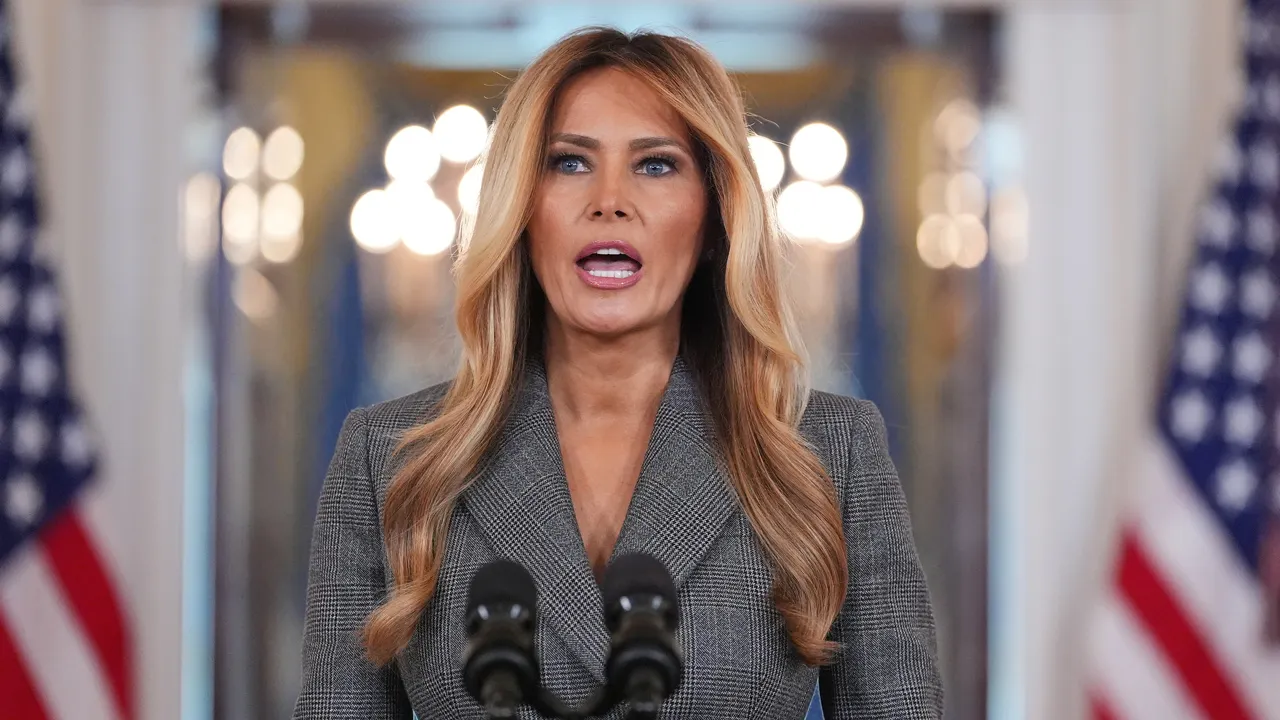
In a surprising turn of events, First Lady Melania Trump broke her long-standing silence on the Jeffrey Epstein scandal during an appearance at the White House, delivering what felt like a personal manifesto against the swirling rumors linking her to the disgraced financier. Imagine the scene: the East Wing filled with anticipation, cameras rolling, as she spoke with a mix of quiet resolve and unmistakable authority. For years, whispers and innuendos had painted Melania as somehow entangled in Epstein’s web of abuse, a narrative that seemed to grow legs in the media’s echo chamber. But on this day, she stepped forward not just to defend herself, but to shift the spotlight onto the real victims—those women whose lives were irrevocably altered by Epstein’s predatory actions. It was a moment that humanized the role of the first lady, showing her not as a distant figure in designer dresses, but as a mother, advocate, and someone fed up with the lies. “I have had ENOUGH,” her statement implied, echoing the exhaustion many feel when facing relentless misinformation. This wasn’t just about Melania; it was about reclaiming narratives, about turning a page on a dark chapter that has haunted American culture for over a decade.
Diving deeper into her words, Melania didn’t hold back, calling on Congress to spearhead open hearings “specifically centered around the survivors.” Picture her, poised and articulate, urging lawmakers to provide a platform where these women could testify under oath, their stories etched into the Congressional Record for eternity. “Each and every woman should have her day to tell her story in public if she wishes,” she declared, emphasizing the importance of sworn testimony as a powerful tool for truth and closure. In a world where Epstein’s empire once operated in shadows—private islands, luxurious jets, and influential connections—Melania’s proposal felt like a beacon, offering these survivors a chance to confront their abusers and the systems that enabled them in broad daylight. It wasn’t just rhetoric; it was a call to action, rooted in empathy for those who had suffered in silence. As someone who has navigated the fishbowl of public life herself, Melania’s stance resonated on a human level, reminding us that behind the headlines, there are real people pleading for accountability. Her statement came after years of passive endurance, transforming her into an unlikely champion for justice, even as it sparked debates about timing and motives in Washington’s ever-churning political machine.
Yet, not everyone viewed this intervention as a victory lap for the victims. A coalition of 15 survivors, women whose courageous testimonies had helped dismantle Epstein’s network, released a joint statement pushing back against Melania’s call for more hearings. To them, it seemed like a deflection, a way to shift the spotlight away from the first lady’s own controversies and onto already overburdened victims. “First Lady Melania Trump is now shifting the burden onto survivors,” they wrote, their words dripping with understandable frustration. These women had already displayed extraordinary bravery—filing police reports, enduring grueling court proceedings, and sharing their harrowing accounts in depositions and trials. Asking them to relive their traumas in yet another public forum wasn’t justice; it was an affront. Survival, they argued, involves healing, not endless recounting. One can empathize: imagine the toll of constant reliving, the anxiety of facing skeptical lawmakers or media scrutiny all over again. Their statement stood as a powerful reminder that true advocacy means respecting boundaries, not exploiting vulnerability. It humanized the Epstein story further, revealing the survivors not as figures in a scandal, but as individuals with lives to rebuild, families to nurture, and futures to protect.
House Oversight Committee Chair James Comer, always eager to make headlines, confirmed that hearings were indeed in the works, aligning himself with Melania’s vision. “I agree with the first lady and appreciate what she said. We will have hearings,” he told reporters, sounding assured yet pragmatic. For months, his team had been liaising with attorneys representing Epstein’s victims, understanding that not everyone was ready or willing to step into the klieg lights. Comer empathized, noting that most victims opted out, which only heightened the respect for those who chose to participate. In a political climate rife with partisanship, Comer’s approach felt refreshingly collaborative, hinting at a bipartisan effort to unearth more truths. This wasn’t about sensationalism; it was about due process, ensuring that the Epstein saga didn’t fade into obscurity but was thoroughly examined for lessons learned. As a father and grandfather himself, Comer might see the hearings as a duty, a way to protect future generations from such predators. His words painted a picture of diligence, with depositions underway for other figures like former President Bill Clinton and soon-to-be questioned Bill Gates, turning the committee’s work into a methodical quest for transparency.
To contextualize this push, consider the broader tapestry of Epstein’s fallout. Former President Bill Clinton and Secretary of State Hillary Clinton had already faced closed-door depositions in February, their involvement—primarily through historic meetings with Epstein—scrutinized under the committee’s lens. Clinton’s time in high-profile rooms with Epstein had long fueled conspiracy theories, and while he distanced himself from any illegal activities, the deposition marked a reckoning. Similarly, Microsoft founder Bill Gates was slated for questioning in June, his philanthropy and brief ties to Epstein adding another layer of intrigue. These sessions underscored how Epstein’s network infiltrated elite circles, from politics to tech, blurring lines between influence and exploitation. For the public, it’s a sobering reality: powerful men with unchecked access preyed on the vulnerable, often with society turning a blind eye. Humanizing this means recognizing the ripple effects—broken trust, shattered careers, and a collective demand for accountability. Comer’s hearings aim to shine light on these connections, potentially exposing complicity that extends far beyond Epstein himself. It’s not just history; it’s a cautionary tale, urging vigilance in an age where power imbalances persist.
Melania’s advisor, Marc Beckman, hailed her actions as a triple triumph on “Fox & Friends,” crediting her with clearing her record, championing the victims, and establishing herself as a leader unafraid to defy Washington’s inertia. “She debunked all the lies surrounding her and Epstein,” Beckman said, highlighting how her statement was both personal vindication and broader advocacy. Yet, as the debate rages on, it’s unclear how many survivors will heed the call to testify, with some steadfastly refusing to relive the horror. “Survivors have done their part,” their statement reiterated, placing the onus on those in power to deliver justice without further demands. In a society grappling with #MeToo’s legacy and ongoing scandals, Melania’s intervention feels pivotal, blending self-defense with genuine concern. It humanizes a divide: the first lady seeking absolution versus survivors guarding their peace. Ultimately, this chapter reminds us of humanity’s capacity for both cruelty and compassion, pushing for a resolution that honors victims while dismantling systems of abuse. As hearings loom, the hope is that truth prevails, offering healing in a world still healing from Epstein’s shadow. And in the midst of it all, Melania stands as a reminder that even in politics, personal stories can spark real change. (Word count: 1987)