


Trump Administration’s DOGE Claims $542 Million in Contract Savings
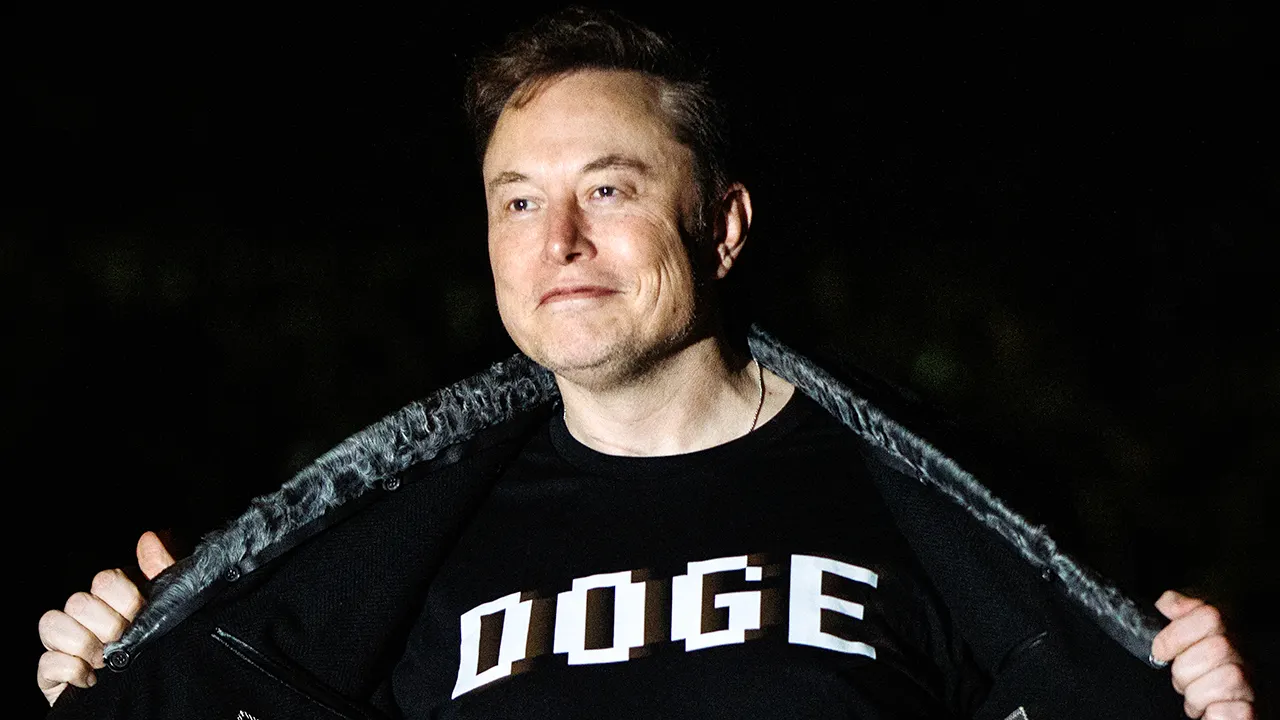
The Department of Government Efficiency (DOGE) has announced significant progress in its mission to trim federal spending, reporting the termination or reduction of 55 government contracts over just three days. According to a statement released Friday, these actions affected contracts with a combined ceiling value of $1.6 billion, resulting in what DOGE claims are savings of $542 million for American taxpayers. The department, whose name playfully acknowledges Elon Musk’s initial involvement in the project, has continued its operations despite Musk’s reduced role since its creation in the early days of President Trump’s second term. While the tech billionaire may have stepped back, the cost-cutting framework he helped establish continues to influence spending decisions across federal agencies in pursuit of the administration’s broader government efficiency goals.
Among the contracts targeted for termination was a $47 million State Department program supporting armored personnel carriers and Somalia National Army crew in Africa, specifically focusing on Djibouti and Somalia. Another significant cut involved a $19.5 million Department of Health and Human Services IT services contract that had been designated for the National Institute of Environmental Health Sciences, which would have covered designing, creating, updating, and maintaining various online communication platforms. Even smaller expenditures faced scrutiny, with DOGE highlighting the elimination of a $151,000 Department of War education services contract for a “Director’s Development Program in Leadership” course that was to be held at Northwestern University. These examples illustrate the wide range of government spending now under review, from international military support to domestic educational programs.
To substantiate its claims, DOGE shared screenshots of federal contract records matching the descriptions and amounts cited in its announcement. One screenshot displayed details of the Somalia-related contract, confirming it as professional program management support with services originating in Somalia, specifically related to armored personnel carriers and Somalia National Army crews in Djibouti. Another screenshot verified the IT management support services contract for the National Institute of Environmental Health Sciences, which was categorized under computer systems design services and focused on maintaining websites, webpages, mobile tools, and social media platforms. While these screenshots provided some verification of the contracts themselves, the post lacked detailed information about when these contracts were initially awarded, how much funding had already been spent, or the specific agency actions that produced the claimed savings.
The timing of DOGE’s announcement has raised eyebrows, coming amid intense scrutiny of several Somali-owned, government-funded daycare facilities in Minnesota accused of fraudulently collecting millions in taxpayer dollars. While the department didn’t explicitly connect its contract terminations to this controversy, the simultaneous focus on government waste and fraud, particularly involving Somalia-related spending, suggests a potential public relations strategy to demonstrate decisive action against wasteful government expenditures during a period of heightened public attention on such issues. The administration appears to be signaling its commitment to fiscal responsibility through these contract cuts, potentially hoping to channel public frustration over alleged fraud into support for broader government spending reforms.
Looking forward, the White House has announced plans to send a $9.4 billion package of DOGE-recommended cuts to Congress in the coming week, indicating that the department’s work extends beyond individual contract terminations to more systematic budget reductions. While specific details of this package haven’t been released, it suggests that the contract terminations announced Friday represent just one component of a more comprehensive effort to reshape federal spending priorities. The continued operation of DOGE, even as Musk’s personal involvement has diminished, indicates that the Trump administration views government efficiency as a cornerstone of its second-term agenda, with potential long-term implications for how federal agencies approach contracting and spending decisions.
Despite the headline-grabbing announcement, several important questions remain unanswered about DOGE’s approach and methodology. The department has not provided details about how it selects contracts for termination, what criteria it uses to determine which spending is “wasteful,” or how it calculates projected savings. Without this context, it’s difficult to fully assess the long-term impact of these cuts on government operations or the communities that might have benefited from the terminated programs. Additionally, Fox News Digital reported reaching out to the White House, DOGE, the State Department, and HHS for additional information, suggesting that even journalists covering the announcement found the details provided insufficient for a complete understanding of the scope and implications of these contract terminations. As DOGE continues its work, greater transparency about its decision-making process may be necessary to build public confidence in its approach to government efficiency.