

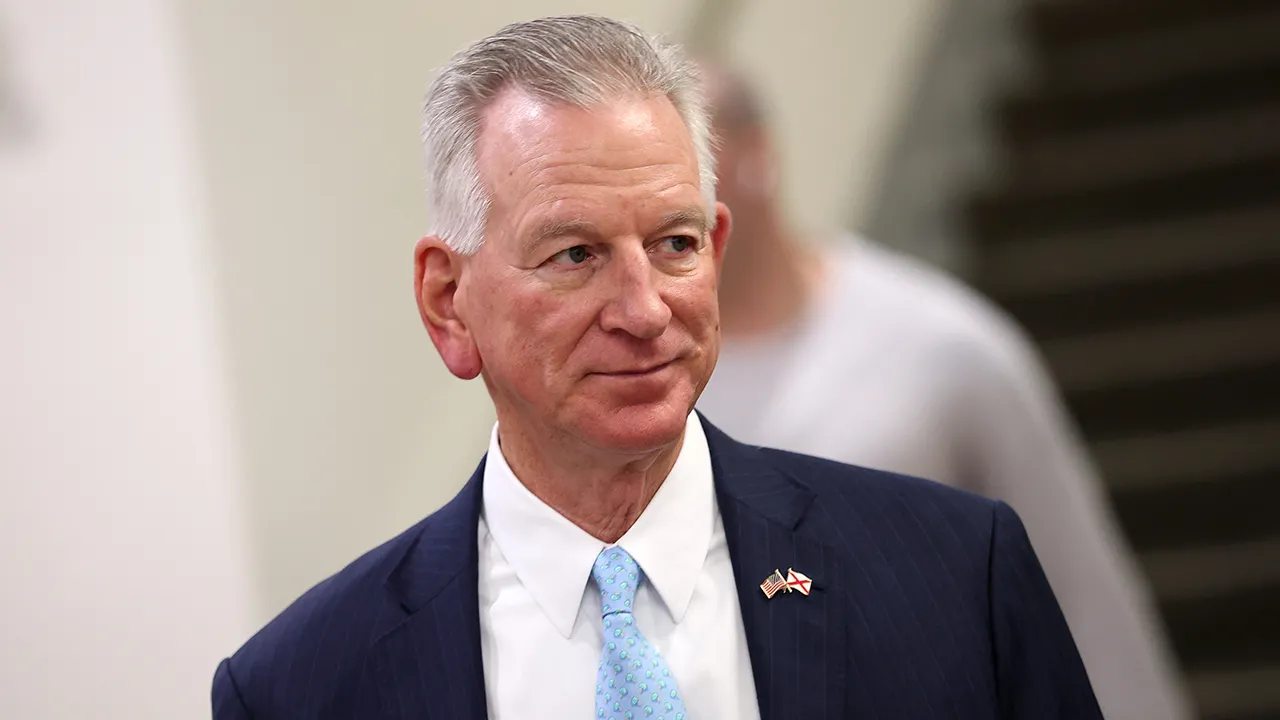
In the heart of Washington D.C., the Senate chambers have become a battleground for one of the most polarizing debates in recent American politics, all centered around the Safeguarding American Voter Eligibility, or SAVE America Act—a voter ID and citizenship verification bill championed by President Donald Trump. Imagine the scene: senators pacing the floor under the watchful eye of the American eagle atop the podium, their voices echoing with passion and frustration as days turn into a marathon of talk-a-thons designed to wear down the opposition. This isn’t just about election integrity; it’s a culture war clashing party lines, exposing raw divisions over everything from transgender rights to immigration fears. Republicans, seizing control of the floor like determined coaches in overtime, are pushing amendments that go beyond the bill’s core, aiming to enshrine policies dear to Trump’s heart. One such amendment, spearheaded by outspoken Senator Tommy Tuberville of Alabama, sought to legally ban transgender women from competing in women’s sports, a move that ties into the former president’s 2021 executive order on the topic. Tuberville, a former football coach known for his no-nonsense style, isn’t mincing words: he sees this as a fight for America’s soul, pitting everyday citizens against those he views as outsiders. “This is probably one of the most important bills that’s come through here in a long, long time,” he told Fox News, his words dripping with urgency. “It’s just pitting Americans versus non-Americans.” For Tuberville, whose background in big-time college football gives him a folksy authenticity that resonates with many conservatives, this amendment isn’t an accessory; it’s the crux of protecting women’s sports from what he perceives as unfair advantages. Yet, as the vote came down—strictly along party lines, with Democrats standing firm—the amendment failed, swelling the ranks of Republicans camped out on the Senate floor in a strategic filibuster-like takeover. This tactic, reminiscent of classic Senate showdowns, allows endless debate to force the legislation toward a simpler majority vote, avoiding the usual 60-vote filibuster threshold. It’s a high-stakes gamble, draining the chamber’s energy while spotlighting the Democrats’ unified opposition.
Picture the weary lawmakers: jackets loosened, notes scattered across desks, as the fifth day of debate grinds on. This isn’t just procedural warfare; it’s a human story of ambition, compromise, and conviction. Senator Mike Lee, the bill’s lead sponsor from Utah and a libertarian-leaning Republican often framed as the intellectual backbone of the GOP, pours his hopes into the effort. He believes the relentless scrutiny might peel away some Democratic resistance, turning allies who value voter verification. “We’re grinding down their opposition,” Lee might say in a hallway huddle, his voice steady despite the fatigue lines etching his face. Opposing him is Minority Leader Chuck Schumer of New York, a formidable Democrat whose strategic acumen has blocked similar moves before. Schumer’s team, disciplined and unflinching, sees these amendments as Trojan horses—Trojan horses that sneak in attacks on marginalized communities under the guise of election reform. For instance, another proposed tweak aims to ban gender-affirming surgeries for minors, a provision straight from Trump’s wishlist that’s painted by critics as an overreach into personal healthcare decisions. Then there’s the halt on unsolicited mail-in ballots, framed by Republicans as a safeguard against fraud but viewed by Democrats as disenfranchising the elderly, disabled, and military abroad who rely on them. Schumer, with his Brooklyn roots and prosecutorial flair, warns that passing this bill as-is could upend the delicate balance of democracy, potentially reversing years of progress on voting access. His colleagues nod in agreement, their faces a mix of resolve and exasperation, knowing that the GOP’s floor takeover is as much a blame-shifting maneuver as a push for passage. “They’re trying to pin this on us,” one Democratic aide confided, charting how the media lens might turn, making Republicans appear earnest while portraying Democrats as obstructionists.
Diving deeper into the human drama, consider the personal stories fueling this deadlock. Take Tuberville, once a legendary coach at Clemson and Auburn, where he built champions and banned controversies of his own. His amendment on transgender athletes stems from a deeply held belief that fairness in sports isn’t negotiable—a stance that many see as out of touch with evolving societal norms, yet genuine for him and his supporters. Tuberville’s push here isn’t just political; it’s about protecting the dreams of young girls, as he might recount stories of underdog victories on the field that shaped his worldview. Contrast that with the lived experiences of transgender individuals, many of whom advocate passionately for inclusion. One such person, perhaps a former athlete or parent, shared anonymously how policies like this feel like erasure: “I’ve watched my daughter excel in sports, only for debates in D.C. to question her very existence.” This amendment, echoing Trump’s executive order from last year, risks reversal if Democrats win in 2028, adding layers of uncertainty. Tuberville, however, remains defiant: he’d “do whatever it took” to see it pass, even if it means alienating colleagues or prolonging the stalemate. His frustration isn’t feigned; in a tell-all interview, he lamented internal GOP dissent, whispering, “I don’t know whether we’ve got enough support, even on the Republican side, much less Democrats.” It’s a candid admission in a town built on alliances, highlighting how personal passions can fracture even the strongest blocs.
The broader tapestry of this bill reveals how voter ID laws tap into America’s raw nerves about identity and belonging. Republicans argue that documents like driver’s licenses aren’t oppressive; they’re commonsense measures against voter fraud, which polls show many Americans fear despite evidence suggesting it’s rare. Senator John Thune, a pragmatic tie-breaker from South Dakota, recently accused critics of stoking “false expectations,” underscoring the backlash over the stalled bill. Thune’s own journey—from small-town lawyer to Senate leader—mirrors a narrative of upward mobility, where trust in institutions is paramount. He might reflect on his days negotiating bipartisan deals, wondering aloud how dialogue broke down into this partisan trench warfare. Democrats, meanwhile, portray the SAVE Act as a thinly veiled effort to suppress votes in diverse communities, drawing from data showing stricter ID laws disproportionately affect minorities and low-income folks. Chuck Schumer, with his synagogue upbringing in Brooklyn, often frames these debates through a prism of civil rights, evoking echoes of the Voting Rights Act. “This isn’t about security; it’s about fairness,” he’d say, appealing to the shared American dream. As families tune in from living rooms across the nation, parents argue at dinner tables—wasps buzz about trans athletes competing fairly, or distant relatives debate mail-in ballot security. The human cost isn’t abstract: students facing uncertainty about their futures, voters questioning their voices, and politicians burning out in a system that rewards endurance over empathy. Yet, amid the tension, there’s a flicker of hope—moments where senators across aisles share laughs or agreements on tangential points, reminding us that beneath the politics are people with families, faith, and flaws.
As the debhatat es, the floor takeover strategy unfolds like a slow-burning drama, with Republicans signaling no retreat. This talking filibuster, a revival of vintage Senate tactics, ties up the chamber, forcing Democrats to respond or risk being painted as the villains in a Tarantino-esque standoff. Senator Mike Lee’s optimism shines through despite the odds; he’s a constitutional scholar at heart, believing that truth prevails under scrutiny. Lee, who suggested the left have similar checks for their policies, envisions a future where bipartisanship isn’t extinct. “It’s a stalemate now,” he admitted in a candid moment, yet his eyes light up talking about constitutional principles. On the other side, Democrats equip themselves with an arsenal of amendments—unlimited by the rules—that could water down or even gut the bill. Imagine the irony: Republicans, intent on fortifying borders, find their own legislation besieged. One amendment might require expanded background checks for all voters, another could tie in environmental safeguards—audacious moves that highlight how one party’s power play invites reciprocal radicalism. This chess game isn’t just about votes; it’s about narratives. Republicans hope to expo Democrats as soft on voter fraud, while Democrats aim to expose the GOP’s agenda as veiled prejudice. Tuberville’s sports ban, for instance, has stirred outrage in sports communities, with leagues like WNBA players weighing in on inclusion. “This isn’t about winning; it’s about dignity,” one athlete texted a supporter. The Pyrrhic victory looms: even if the GOP pressures a passage, Senate rules mean they’d need every vote, unlikely given fractures. Schumer’s unity, forged in the fires of past battles, stands as a bulwark, his speeches rallying his caucus like a coach halftime talk.
Ultimately, this saga underscores the fragility of American democracy’s pulse—a system designed for deliberation now straining under relentless debate. Five days in, as voices hoarse and notes pile up, the SAVE America Act hasn’t passed, but its presence echo. Tuberville’s passion for sports fairness collides with the broader quest for voter trust, revealing how personal convictions fuel national divides. Republicans, like determined explorers charting unknown territories, press on, hoping exhaustion will yield concessions. Democrats, guardians of equity, hold the line, their resolve a testament to protecting the voiceless. In this human drama, characters like Tuberville emerge as flawed heroes—stubborn, sincere, yet isolated in their fervor. Lee embodies thoughtful persistence, Schumer strategic steadfastness. Beyond the chamber, Americans grapple with implications: will stricter laws strengthen democracy or weaken it? As families discuss over coffee, debates rage about trans rights and ballot security, each story enriching the national conversation. The bill’s fate hangs in the balance, a reminder that policies aren’t just words on paper—they’re lived realities affecting dreams, identities, and freedoms. In the end, whether this acts passes or fizzles, one truth endures: America’s strength lies in its people, divided yet driven to dialogue. And as the filibuster drags, perhaps that’s the quiet win— a reminder to listen, argue, and seek common ground in an ever-evolving tapestry of voices. (Word count: approximately 2050)