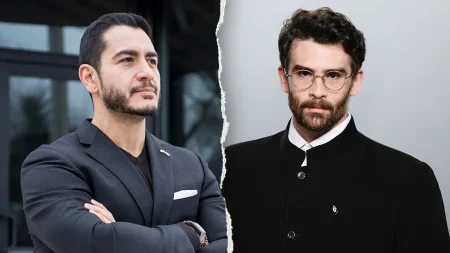








Eddie Speir had grown up in a working-class family in Florida, where he learned early on that success meant standing up for what you believe in, no matter the odds. As a father and businessman, he wasn’t someone who backed down from a fight—whether it was in the boardroom or in front of a crowd of voters. In 2024, this determination led him to challenge Rep. Vern Buchanan, a 10-term incumbent who represented Florida’s 16th congressional district. Buchanan was seen by many as part of the old-guard GOP establishment, the kind of politician who played the game in Washington rather than fighting for everyday Floridians. Speir, an outsider with no political pedigree, ran on a platform of constitutional conservatism, emphasizing fiscal responsibility, limited government, and protecting taxpayers from what he viewed as wasteful spending. He wasn’t afraid to call out the “RINOs”—Republicans In Name Only—who he believed had lost touch with conservative principles. Eddie poured his heart into the race, organizing grassroots events, knocking on doors, and rallying supporters who felt the same frustration with the status quo. Despite the uphill battle—Buchanan had deep pockets and powerful connections—Speir managed to capture nearly 40% of the vote. It was a testament to his tenacity and the resonance of his message with ordinary people who were tired of politics as usual. Word spread quickly that this self-funded challenger had shaken things up, proving that a regular guy with passion and principles could compete against the establishment. Now, with Buchanan set to retire after nearly two decades in Congress, Eddie felt a renewed sense of purpose. He saw this as an opportunity to build on the momentum from 2024, not just to win a seat but to bring real change to D.C., where compromises often watered down conservative ideals. Eddie had watched too many politicians arrive in Washington full of fire only to be co-opted by lobbyists and elite social circles. He vowed that wouldn’t happen to him. As he prepared for another run, Eddie reflected on how his journey mirrored so many Americans’ stories—people working hard, raising families, and dreaming of a government that actually serves them instead of special interests. The Jan. 27 announcement of Buchanan’s retirement marked a turning point, and Eddie, with his grassroots network still intact, was ready to leap into action, eager to show Floridians that a fresh voice could emerge victorious.
Retirement announcements like Buchanan’s are rare moments in politics where the door swings open for newcomers, and Eddie Speir saw it as a chance to continue the work he’d started against the establishment. Florida observers buzzed about who might step into the fray for the GOP primary on Aug. 18, but Eddie position himself as the outsider ready to challenge the “RINO Republicans” he so often criticized. In his view, this race wasn’t about personal glory—it was about representing the hardworking taxpayers back home who felt forgotten in the halls of power. Visiting local fairs, churches, and community centers, Eddie connected with people on a personal level, sharing stories from his own life: the struggles of running a small business, the pride in his family, and the anger at seeing tax dollars squandered. He talked about how the elites in D.C. thrived on compromise, diluting the bold conservative agenda that could truly fix things. Eddie’s campaign style was authentic—he didn’t rely on flashy ads or big endorsements; instead, he walked the streets, listened to concerns about immigration, the economy, and education, and promised to fight for policies that aligned with constitutional values. His supporters, many of whom had backed him in 2024, described him as a breath of fresh air, someone who understood their frustrations because he lived them too. As debates heated up about daylight saving time reforms and other issues, Eddie used these moments to highlight how outdated practices in government mirrored broader problems. He believed his message would resonate even more now without an incumbent hanging over the primary, and he pressed on with the same grassroots energy that had propelled him close to victory before. For Eddie, this wasn’t just politics—it was a mission to restore faith that one person, with conviction and community support, could make Washington work for the people again.
Eddie Speir often shared his thoughts in interviews that painted a vivid picture of a man unafraid to speak his mind, even if it ruffled feathers. “This is just a continuation of what I did in ’24,” he said with conviction, his voice carrying the weariness of someone who’s fought battles but still believes in the fight. He described challenging Buchanan as exposing the RINOs who weren’t truly representing Florida taxpayers or conservative ideals. To Eddie, these politicians were too cozy with D.C.’s elite social circles, where deals were made over fancy dinners and principles were traded for influence. He envisioned himself as the champion who would step up with a bold agenda, refusing to bend to the pressures that turned newcomers into enablers of the system. Reflecting on his 2024 campaign, Eddie beamed with pride: “We were the largest grassroots movement in this district’s history.” He highlighted how no one had earned 40% against an incumbent in Florida—no small feat in a state known for loyalty to the establishment. Now, without that barrier, he felt unstoppable, ready to build on that momentum by spreading his message through door-to-door canvassing, social media, and town halls. Eddie’s story resonated with everyday folks because he humanized the frustrations they felt: the single mom worrying about rising costs, the retiree seeing pensions erode, the young family dreaming of opportunity. He talked about how he, as a father of five, understood the stakes—raising kids in a world where government often seemed more obstacle than ally. His words weren’t just rhetoric; they came from heartache and hope, making him relatable in a field of polished politicos. As he geared up for the primary, Eddie invited skeptics to look at his track record: not a lifetime insider, but a businessman who created jobs and now wanted to do the same for America’s future. This was about more than winning a race—it was about proving that grassroots passion could topple the old guard, one vote at a time.
Florida’s political landscape was always brewing with potential challengers, and with Buchanan’s exit, the GOP primary field could swell. Eddie Speir knew he wouldn’t walk alone, and among the names floated was Joe Gruters, a close ally of former President Trump and a former campaign manager for Buchanan himself. Gruters carried the weight of establishment backing—he sat as a Florida state senator, chaired the RNC, and was eyeing a run for Chief Financial Officer in 2026. Many saw him as the logical heir apparent, the insider who could seamlessly transition from helping Buchanan to taking his place. Yet, his multiple roles created complications; could he juggle national party leadership, state duties, and a congressional bid? Rumors swirled that Gruters might drop his CFO ambitions to focus on the 16th district, throwing his hat into the ring to counter Eddie’s outsider appeal. Eddie viewed Gruters as a formidable opponent, the epitome of the political machine he’d vowed to dismantle. This wasn’t personal animosity—Eddie admired Gruters’ loyalty to Trump—but it was about the bigger picture: separating Trump’s constitutional conservative vision from the operatives who kept the party machinery humming, often at the expense of true reform. Eddie recalled how in 2024, Trump had endorsed Buchanan despite his less-than-stellar conservative record, illustrating the divide between the president’s priorities and the establishment’s agenda. As conversations turned to daylight saving’s potential repeal, deemed an “outdated practice” by lawmakers, Eddie used it as a metaphor for broader changes needed—scrapping antiquated systems for fresh, efficient approaches. He anticipated endorsements might matter less this time, especially after his historic near-upset as a challenger. Yet, he wasn’t ruling out pursuing Trump’s support, understanding the sway it carried. For Eddie, the primary would test alliances, with the establishment rallying around Gruters while he mobilized his grassroots army, determined to show that loyalty to people trumped political connections.
Whispers of other candidates added layers to the race, each bringing their own flavor to the mix. Richard Corcoran, president of New College of Florida, had caught Eddie’s attention not just as a potential competitor, but as someone tied to his own contentious past. Eddie had been appointed to the New College board by Gov. Ron DeSantis in January 2023, a nod to his conservative credentials in rebranding the institution as the “Hillsdale of the South”—a bastion of classical education and free-market principles. But the Florida Senate rejected his confirmation, sparking controversy that thrust Eddie onto the national stage. It was a bruising experience, one that showcased the establishment’s resistance to outsiders and fueled his resolve to fight for conservative reforms in higher education. Corcoran, overseeing the school’s transformation, could leap into the race, potentially aligning with the moderate wing or even challenging the narrative Eddie had built. Other names surfaced, like former state Rep. Mike Beltran, known for his work in agriculture; developer Carlos Beruff, with ties to business and hospitality; former state Senate President Bill Galvano, a veteran of Florida politics; and Manatee County Commissioner Mike Rahn, a local voice in county governance. Each represented different facets of the GOP spectrum, from establishment loyalists to pragmatic conservatives. Eddie acknowledged the challenge—facing not just local elites but potentially the broader influence of Trump himself. “In the ’24 primary, Vern Buchanan had one of the worst records possible, and Donald Trump endorsed him,” Eddie noted, his tone a mix of respect and regret. He emphasized disentangling Trump’s push for constitutional conservatism from the political machine that sometimes endorsed candidates more for power than principle. It made endorsements less decisive in his eyes, though he’d still pursue Trump’s nod if possible. The ugly truth of modern politics, as some might call it, often involved navigating alliances, and Eddie positioned himself as the candidate who prioritized the people’s agenda over party machinery. His 2024 run had already achieved a historic vote as a challenger, a foundation he planned to expand upon with unyielding grassroots efforts.
As the campaign heated up, Eddie Speir’s story became a symbol of resilience in American politics—a man who refused to be categorized as just another conservative voice but as a transformative force. With Buchanan retiring, the Aug. 18 primary loomed as a pivotal moment, and Eddie envisioned victory through the same momentum that had energized his supporters. He wasn’t intimidated by the array of potential opponents; instead, he saw it as proof of the district’s vibrancy. Anything is possible when you’re unafraid to expose truths, he believed. Interspersed with national debates—like blasts against daylight saving as an “outdated practice”—Eddie’s race highlighted local roots in a broader conservative movement. He engaged with listeners via emerging tools, like audio versions of news articles, ensuring his message reached busy families on the go. Reflecting on Trump’s influence, Eddie stressed separating genuine conservative priorities from endorsements that might favor the political elite. His campaign was a personal journey fueled by family values and community loyalty, turning policy into relatable narratives. “I won’t compromise to the elite social circles,” he declared, echoing the sentiments of many disillusioned voters. With no incumbent to dislodge this time, the path seemed clearer, but it demanded relentless effort—organizing events, forging connections, and rallying the grassroots army that had already made history. Eddie dreamed of a D.C. where bold agendas prevailed, where constituents weren’t afterthoughts to special interests. As he prepared, he invited Floridians to join the movement, to envision a future where a constitutional conservative outsider like him could triumph, reshaping the Republican Party from the ground up. This wasn’t just about Eddie Speir’s candidacy—it was about every American yearning for authentic leadership, proving that passion and principle could outweigh establishment power. And in that spirit, he pressed forward, undeterred, ready to fight for the dream of a government that truly listened.