



Operation “Angel’s Honor”: ICE’s Sweeping Effort to Honor Laken Riley’s Memory
In a significant move to address illegal immigration concerns, U.S. Immigration and Customs Enforcement (ICE) recently concluded a 14-day operation that resulted in the arrest of over 1,030 criminal illegal immigrants. Named “Operation Angel’s Honor” in tribute to Laken Riley, a Georgia nursing student who was murdered by Venezuelan illegal immigrant Jose Ibarra earlier in 2024, the operation represented one of the most concentrated efforts to enforce the newly enacted Laken Riley Act. This legislation, passed with bipartisan support and signed into law by President Donald Trump after he took office, requires mandatory detention of non-citizens charged with specific crimes including burglary, theft, larceny, shoplifting, assault on law enforcement officers, or any crime causing serious bodily injury or death. The operation’s name carries emotional significance, linking enforcement actions directly to a tragedy that helped galvanize support for stricter immigration policies.
Homeland Security Secretary Kristi Noem framed the operation as part of a broader effort to reverse previous immigration policies, stating that President Trump “empowered us to arrest and remove the millions of violent criminal illegal aliens unleashed on the United States by the previous administration.” Her comments reflect the current administration’s emphasis on connecting immigration enforcement to public safety concerns. “We can never bring Laken back, but we can do everything in our power to bring these heinous criminals to justice,” Noem added, highlighting the personal dimension of the enforcement actions. This messaging connects the abstract policy debates around immigration to concrete human impacts, particularly emphasizing the potential dangers posed by individuals who have entered the country illegally and subsequently committed serious crimes.
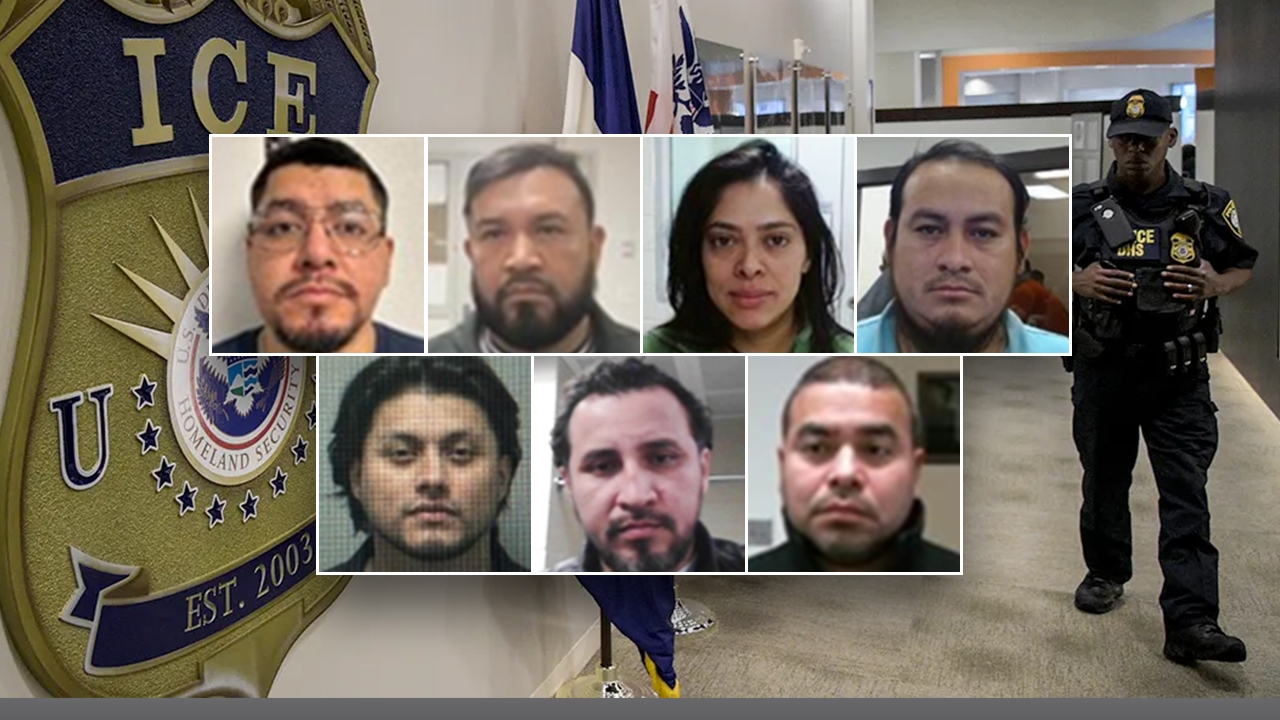
Among those arrested during the operation were several individuals accused of particularly troubling crimes, including those involving children. ICE highlighted cases such as Jamie Escobar-Mirales, a 37-year-old from Mexico arrested on two counts of child rape, and Javier Diaz-Cabrera, a 40-year-old Mexican national charged with illegal sexual contact with a victim under 13 and sexual assault of a minor under his guardianship. The agency also apprehended Evelyn Martinez-Rodriguez from Honduras, whose criminal history reportedly includes child torture and abuse, domestic violence, and public order crimes. By specifically highlighting these cases, ICE appears to be emphasizing the most egregious examples to demonstrate the necessity of their enforcement actions and potentially build public support for heightened immigration enforcement measures.
The operation further netted individuals with histories of violent crimes and long-standing removal orders. Fredy Garcia-Canan, a 34-year-old from Guatemala with an outstanding removal order, had been arrested previously for intentional bodily harm with a deadly weapon, criminal discharge of a firearm, and child endangerment. Another Guatemalan national, Brandon Barrientos-Garcia, had a history including assault by strangulation and breaking and entering with intent to terrorize or injure. Fernando Manzanares-Cruz from El Salvador, who had a removal order dating back to 2016, had been previously arrested for assaulting a pregnant victim, battery of a family member, and witness intimidation. Perhaps most striking was the case of Braulio Rosas-Ayala, a Mexican national who had been ordered removed by an immigration judge in 1999 but remained in the country for over two decades before being apprehended in this operation, highlighting long-standing challenges in enforcing deportation orders.
Acting ICE Director Todd Lyons contextualized the operation’s significance beyond mere enforcement statistics, emphasizing its symbolic importance. “We named this operation ‘Angel’s Honor’ in honor of the memory of Laken Riley, whose life was tragically cut short by illegal alien crime,” Lyons stated. By framing immigration enforcement in terms of crime prevention and victim advocacy, the agency appears to be attempting to shift the narrative around deportations from one focused on the immigrants themselves to one centered on potential American victims. “This operation, while a massive success, also serves as a solemn reminder of the profound impact that immigrant violence and crime can have on victims and their loved ones,” Lyons added, reinforcing the emotional framework for the enforcement actions and connecting them directly to public safety concerns rather than solely immigration status violations.
The conclusion of Operation “Angel’s Honor” represents a significant enforcement action under the new administration’s immigration policies, but also illuminates the complex intersection of law enforcement, immigration policy, and public messaging. With ICE asserting that its “mission is to ensure that no more Americans will fall victim to illegal alien crime,” the agency is positioning itself as a protective force rather than simply an enforcement body. This framing attempts to shift the emotional weight of deportation actions away from the immigrants themselves and toward potential victims of crime. The operation, while clearly focused on individuals with serious criminal histories, also serves as a powerful political statement about the administration’s priorities and approach to immigration enforcement – one that centers American victims and public safety concerns above other considerations in the ongoing national debate about immigration policy and enforcement.