





The Land Domain: A Critical Frontier in the US-China Military Competition
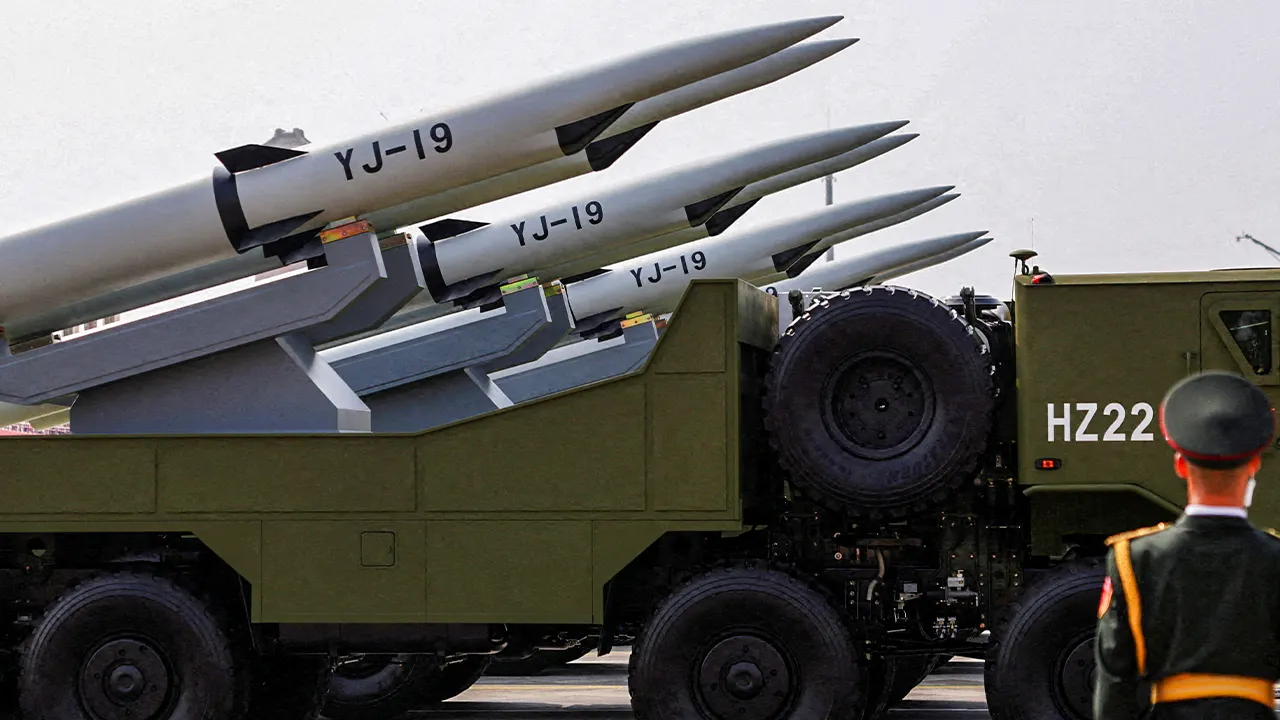
For decades, China has been quietly building a formidable land-based missile force designed with one primary goal: keeping the United States at bay during any potential conflict over Taiwan. This missile arsenal now poses a threat to every major American military installation across the Western Pacific. While much attention focuses on naval vessels and aircraft in discussions of US-China military competition, experts warn that the land domain has become the most overlooked—and potentially decisive—component of this strategic rivalry. Unlike traditional land warfare centered on tanks and troop movements, this competition revolves around missile ranges, access to foreign bases, and the ability to survive initial attacks. The People’s Liberation Army Rocket Force represents China’s solution to a critical military problem: how to counter American air superiority without matching it directly. Rather than attempting to build an air force capable of defeating the US in conventional air combat, China developed an alternative approach based on overwhelming land-based firepower designed to neutralize American bases and keep US aircraft and ships outside the combat zone.
The result of China’s strategic investment is now the world’s largest inventory of theater-range missiles, supported by hardened underground facilities, mobile launchers, and rapid “shoot-and-scoot” tactics specifically engineered to overwhelm American defense systems. Despite this numerical advantage, US forces maintain several critical edges that Beijing has not yet matched—particularly in targeting precision and operational survivability. American missiles are integrated into a sophisticated global surveillance network built on satellites, undersea sensors, stealth drones, and joint command systems refined through decades of actual combat operations. As Seth Jones of the Center for Strategic and International Studies notes, “The Chinese have not fought a war since the 1970s,” and they continue to face significant challenges in coordinating operations across different military branches. The United States has established multi-domain task forces in the Pacific specifically designed to integrate cyber capabilities, space assets, electronic warfare, and precision strikes—a level of coordination that analysts believe remains beyond China’s current capabilities.
The United States faces its own immediate challenge: limited missile stockpiles. Military experts estimate that American forces would exhaust their supply of long-range munitions after approximately one week of intense conflict over Taiwan. In response, Washington is rapidly expanding production of ground-launched weapons systems. The Army is deploying new Typhon launchers, High Mobility Artillery Rocket Systems, Precision Strike Missiles, and long-range hypersonic weapons with ranges exceeding 2,500 kilometers—all designed to threaten Chinese forces from substantially greater distances. If current plans proceed as intended, US forces will increase their inventory of long-range anti-ship missiles from approximately 2,500 today to around 15,000 by 2035. Meanwhile, America’s defensive strategy relies on layered systems: Patriot batteries protecting airfields and logistics centers, Terminal High Altitude Area Defense (THAAD) interceptors engaging ballistic missiles at high altitudes, and Aegis-equipped destroyers capable of intercepting missiles far from shore. Experts suggest the US must continue diversifying this defensive mix with more affordable options to counter China’s missile-heavy approach.
One of Washington’s most significant advantages lies beneath the ocean’s surface. American submarines can launch cruise missiles from virtually anywhere in the Western Pacific without depending on allied basing and without exposing their launch platforms to Chinese countermeasures—a stealth capability that China has not yet developed. Command integration represents another area where Beijing continues to struggle. US military units routinely train in multi-domain operations that coordinate air, sea, cyber, space, and ground-based elements seamlessly. In contrast, the People’s Liberation Army has far less experience coordinating forces across different service branches and continues to wrestle with organizational challenges, including the dual commander-political commissar structure within its missile brigades. Perhaps most consequentially, the United States benefits from a robust network of alliances. Japan, the Philippines, Australia, and South Korea provide strategic depth, intelligence sharing, logistics hubs, and potential launch points for American forces. China has no comparable network of regional partners, forcing it to operate from a much narrower geographic footprint. In modern missile warfare, factors like accuracy, systems integration, and survivability often matter more than raw numbers—and in these crucial areas, the United States maintains significant advantages.
The fundamental reality shaping this competition is geography. Missiles matter less than the locations from which they can be launched, and China’s ability to project power beyond its coastline remains significantly limited. As Jones observes, “They’ve got big power-projection problems right now. They don’t have a lot of basing as you get outside of the first island chain.” The United States faces its own version of this challenge, as long-range Army and Marine Corps missile systems require host-nation permission, effectively transforming diplomacy into an extension of military capability. Recent American agreements with the Philippines, along with expanded cooperation with Japan and Australia, reflect Washington’s efforts to position missile launchers within effective range without permanently stationing large ground forces in these locations. A US-China land conflict would not involve traditional armored divisions fighting for territory. Instead, the decisive factor would be whether missile units on both sides can fire, relocate, and fire again before being targeted and neutralized. China has invested heavily in survivability measures, dispersing its missile brigades across underground bunkers, tunnels, and hardened sites. Many units can launch and relocate within minutes, while decoys and deeply buried storage facilities make them difficult to neutralize. American launchers in the Pacific would face intense Chinese surveillance and long-range missile attacks, forcing the Pentagon to reinvest in capabilities it de-emphasized during two decades of counterterrorism operations: deception techniques, mobility, and hardened infrastructure.
Any American intervention in a Taiwan conflict would force Washington to confront a politically charged question: whether to strike missile bases on the Chinese mainland. Such strikes risk escalation, yet avoiding them surrenders significant tactical advantages. As Eric Heginbotham of MIT explains, “Yes, you can defend Taiwan without striking bases inside China, but you are giving away a significant advantage.” This delicate balance between operational effectiveness and escalation management highlights the complex reality of modern great power competition. A US-China clash would not be fought by massive armies but through a missile war shaped by geography, alliances, and survivability—a contest where diplomatic access and command integration matter as much as raw firepower. For the United States, success depends on building sufficient long-range missiles, securing necessary basing agreements, and ensuring launchers can survive initial attacks. For China, the question is whether its vast missile arsenal and continental depth can compensate for weaknesses in coordination, command structure, and combat experience. The side that can sustain operations longest under fire will ultimately control this critical domain—potentially determining the outcome of any future conflict in the Pacific.