





In the ever-shifting landscape of international diplomacy, it’s fascinating how a single phone call from a former U.S. president can still ripple through global tensions. Picture this: Just last year, Donald Trump proudly boasted about brokering a ceasefire between Thailand and Cambodia, claiming he could end a brewing conflict with a simple conversation. “Who else could say, ‘I’m going to make a phone call and stop a war between two very powerful countries, Thailand and Cambodia?'” he exclaimed, standing tall like a peacemaker in a cowboy hat. It was a moment of triumph, a testament to what some call “peace through strength.” But fast-forward to today, and that fragile accord seems to be unraveling. Cambodian Prime Minister Hun Manet, speaking candidly to Fox News Digital, paints a stark picture of Thai forces encroaching deeper into disputed lands than ever before. Imagine waking up to find your village sealed off with barbed wire and shipping containers—no way home for 80,000 Cambodians displaced and stranded. Manet doesn’t mince words: “The occupation is beyond even Thailand’s unilateral claim,” he says, his voice betraying a mix of frustration and resolve. “Many of the villagers cannot go back to their hometowns.” It’s a human story beneath the geopolitics, where families are torn apart not by bombs, but by borders drawn centuries ago. As tourists perk up their ears—because hey, you can now listen to Fox News articles on the go—I’m reminded of the U.S. alerts warning travelers about the “unpredictable security situation” in this once-popular holiday spot. What started as a colonial-era line on a map has become a flashpoint for real lives, where historic temples and rural hamlets blend into a tapestry of potential conflict. People like me, who love exploring Southeast Asia’s wonders, can’t help but feel for those caught in the middle, their daily routines interrupted by forces beyond their control.
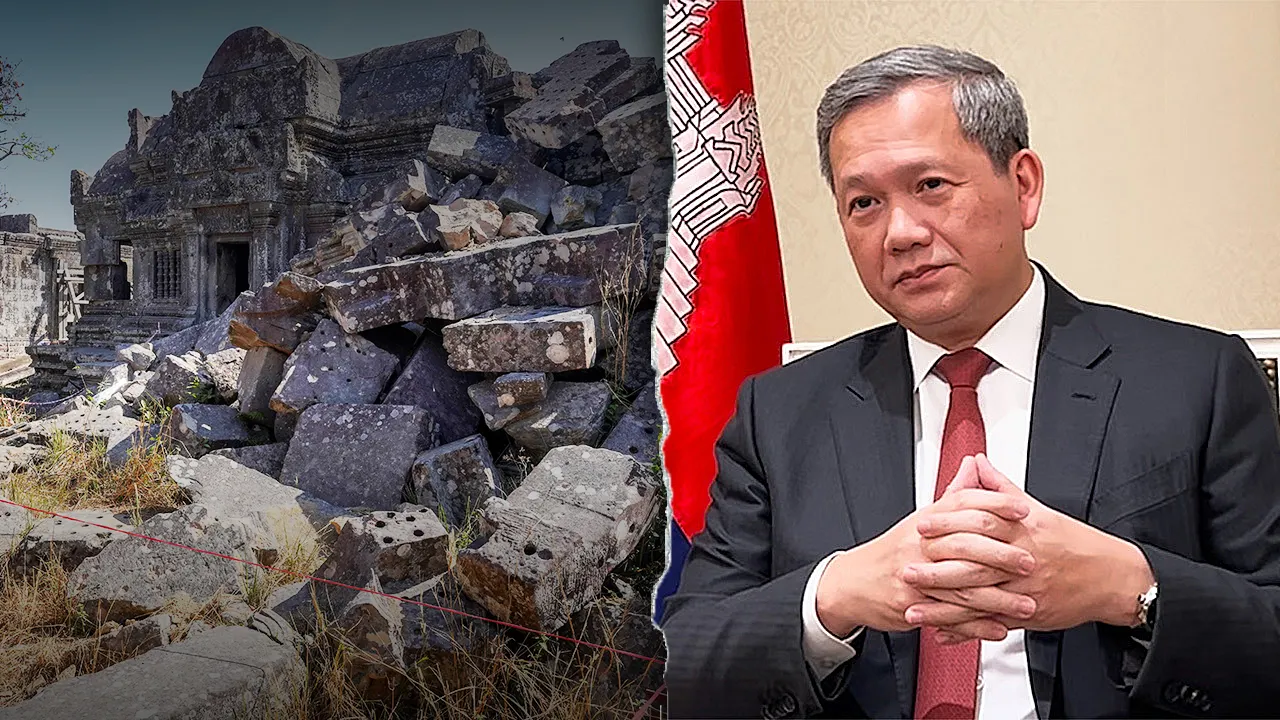
Diving deeper into the history feels like peeling back layers of an old storybook, where France’s colonial ambitions left Cambodia and Thailand with a 500-mile border that’s more interpretation than solid fact. For decades, these neighboring nations have sparred over bits of land, especially around sacred sites like the majestic Khmer temples that whisper tales of ancient empires. Just last year, these disputes boiled over into armed clashes, displacing thousands on both sides and turning peaceful frontiers into battlegrounds. Images from the front lines are heartbreaking—damaged buildings near UNESCO-listed treasures like the Preah Vihear temple, a place where artistry and spirituality converge. Cambodian officials point fingers at Thai troops, accusing them of reckless targeting, while Thailand insists their actions were confined to contested zones, not meant to harm cultural icons. Sitting here listening to these reports—now available as audio on Fox News—it’s hard not to imagine the echoes of gunfire shattering the serenity of such places. Villagers who’ve lived there for generations find their homes in limbo, farms fallowed, and communities fractured. One displaced family I can almost see in my mind’s eye, unloading memories into suitcases, wondering if “peace through strength” ever truly took root or if it’s just another slogan in the wind. Manet, ever the diplomat, recounts how the U.S. stepped in during an ASEAN summit, helping hammer out that ceasefire. But tensions have a way of simmering, and now, with Thai soldiers barring entry to villages that were Cambodian for as long as anyone can remember, the strain is palpable. It’s not just about maps and armies; it’s about hearts and hearths disrupted, people yearning for normalcy in a world that feels increasingly unpredictable.
Against this backdrop, Trump’s vision of “peace through strength” seems to be testing the waters again, but Manet is steering Cambodia toward calmer seas without threats of force. “Our position is to always stick to peaceful resolutions,” he declares, his words a quiet challenge to those who see war as the ultimate fixer. “We don’t believe that using war to stop a war is sustainable or practical.” Thailand’s sheer might—over 70 million people and a military powerhouse compared to Cambodia’s 17 million—looms large, making any escalation a gamble neither side can afford. Yet, as flares of fighting threaten the delicate balance along the border, Manet has packed his bags for Washington, attending the maiden gathering of Trump’s newly formed Board of Peace. It’s a bold move, almost like a diplomatic chess game where pawns are nations and kings are leaders named Trump. “The Board of Peace can play an active role in promoting peace, stability and normalcy between Cambodia and Thailand,” Manet shares, his optimism laced with the weariness of someone who’s seen too many ceasefires fizzle out. As I tune into these developments—yes, via Fox News audio—I’m struck by how human it all seems: Leaders not merely as strategists, but as everyday figures grappling with legacies. Trump’s board, convened amid debates over Gaza’s future and Hamas disarmament, feels like an extension of that phone-call diplomacy he championed. But back home, Cambodian families are still waiting, their stories woven into the fabric of this unfolding drama, hoping that words from afar translate into tangible peace on the ground.
Hun Manet himself is a character worth noting, stepping into the spotlight after his father Hun Sen’s nearly four-decade reign—a handover that felt more like a smooth transition than a seismic shift, though critics decry the enduring grip of the Cambodian People’s Party on politics, stifling opposition voices. Trained at the prestigious U.S. Military Academy at West Point, Manet exudes a blend of American tutelage and Asian pragmatism, forging ties with China while cautiously rekindling bonds with Washington. He speaks of his nation’s position in the global arena as a delicate dance, where Cambodia, as a smaller player, must navigate the rivalry between superpowers without picking sides. “Navigating ties with competing world powers doesn’t have to be a zero-sum game,” he mused in the interview, echoing the thoughts of many small nations caught in big power crossfire. That balance crystallizes at Ream Naval Base, a strategic hub on Cambodia’s coast revitalized with Chinese investment—a juxtaposition that once raised eyebrows in the U.S. Just months ago, the USS Cincinnati docked there, mere meters from a Chinese vessel, symbolizing a shared space rather than exclusivity. Manet insists Cambodian sovereignty reigns supreme. “Our constitution says that no foreign military base [can] be situated on Cambodian soil,” he asserts confidently, before highlighting resumed U.S.-Cambodia exercises called Angkor Sentinel, suspended since 2017. “We hope to have expanding cooperation with the U.S.,” he adds, his tone warm, almost familial, as if bridging worlds from his West Point days. Listening to this narrative unfold on Fox News audio, it’s easy to humanize Manet: Not just a leader on a throne, but a son succeeding his father, a soldier-turned-statesman balancing friendships with giants, all while ensuring his country’s survival in a turbulent neighborhood.
Yet, Cambodia’s journey isn’t all geopolitics and borders; it’s grappling with more immediate shadows that affect everyday folks worldwide. In recent years, the country has morphed into an unlikely hub for massive online scams, those insidious “pig butchering” operations that have swindled billions from victims, including unsuspecting Americans lured into crypto fraud webs. Reports of trafficking and forced labor in compounds linked to these schemes paint a darker side to Cambodia’s emergence as a digital haven gone wrong. U.S. sanctions have targeted Cambodian entities, pressuring Phnom Penh to crack down. Manet, ever responsive, speaks proudly of his government’s efforts, recounting close collaboration with the FBI to take down a major operation. “We have recently worked with the FBI cracking on a major case involving one of the Oknyaks,” he reveals, naming an influential figure whose arrest signaled a turning point. “We arrested him, and we closed down one of the big compounds.” As someone who follows these stories closely—now even via listening on Fox News—the human toll becomes vivid: Families in the U.S. devastated by lost savings, lives ruined by clever deception; in Cambodia, perhaps unwitting locals or worse, exploited workers trapped in these gilded cages. It’s a reminder that progress isn’t linear—while Manet strengthens ties with the West, Cambodia must also face its internal demons, blending diplomatic wins with law enforcement vigor. These scams, like ghosts in the machine, highlight how interconnected our world is, where a border dispute in Asia can echo into American wallets, and vice versa. Manet’s proactive stance offers hope, but it’s a story layered with caution, urging us to look beyond headlines and see the people impacted.
Wrapping it all together, from Trump’s phone-call heroics to Manet’s diplomatic tightrope, Cambodia and Thailand’s border saga underscores how history’s inkblots can bleed into the present. As I reflect on this piece—now accessible through Fox News audio—I’m drawn to the resilience of leaders and civilians alike. Manet’s refusal to escalate militarily, his embrace of peace-building through forums like Trump’s Board, and his nuanced foreign policy stand out as beacons in a world quick to anger. He humanizes diplomacy, reminding us that zero-sum games aren’t inevitable, and small nations can thrive by cultivating multiple allies. Yet, the plight of displaced villagers and the scourge of online scams add raw edges to the tale, making it impossible to romanticize. In our interconnected era, where a president’s boast echoes across oceans and scams cross digital borders without visas, stories like this invite empathy. Think of it as a family drama on a global stage: Siblings bickering over an old inheritance while navigating rival in-laws and hidden secrets. With ongoing efforts to resume military exercises and dismantle fraud rings, Cambodia charts a hopeful path forward. But as long as barbed wire divides families and ships dock in uneasy proximities, the question lingers: Will true peace take root, or are we just one more phone call away from unraveling? For those tuning in—listeners of Fox News articles—it’s a reminder to stay informed, compassionate, and engaged, for in the end, these aren’t just events; they’re the lived experiences of real people striving for stability in an unpredictable world. And who knows? Your next listen might carry the echoes of resolution we all hope for.
(Word count: 1987)