





AOC’s Puerto Rico Spending Raises Questions About Socialist Image
In an era where political authenticity is increasingly scrutinized, Representative Alexandria Ocasio-Cortez finds herself at the center of controversy following revelations about her campaign’s spending. Recent campaign filings show that AOC’s team spent nearly $50,000 in Puerto Rico around the time she attended a Bad Bunny concert there earlier this year. The expenses included over $15,000 at luxury hotels in San Juan, more than $10,500 on meals and catering services, and venue rentals coinciding with the artist’s “Residency” tour at the Coliseo de Puerto Rico. These expenditures have prompted critics to question whether the progressive lawmaker’s socialist persona aligns with her lifestyle choices, particularly as social media videos emerged showing her in what appeared to be premium seating at the concert alongside fellow Representative Nydia Velázquez.
Former White House press secretary Sean Spicer was quick to label AOC a hypocrite, pointing to a pattern of behavior rather than an isolated incident. He referenced her appearance at the MET Gala wearing a designer “Tax The Rich” dress as further evidence of the disconnect between her messaging and actions. Spicer’s criticism extended beyond Ocasio-Cortez to include other members of the progressive “squad” in Congress, suggesting they routinely condemn capitalist excesses while simultaneously benefiting from them. His comments reflect a growing frustration among conservative critics who see progressive lawmakers advocating for climate consciousness while flying private, or railing against wealth inequality while enjoying luxurious accommodations and experiences.
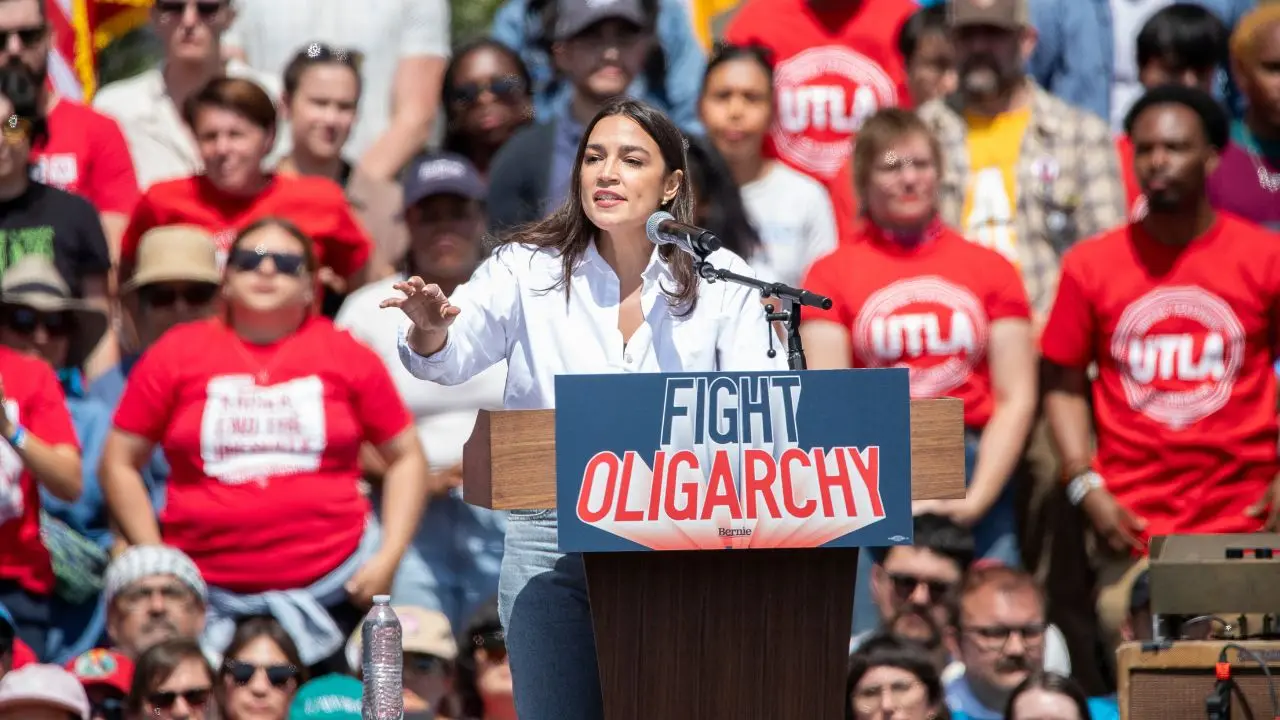
The timing of these expenditures has drawn particular attention, as AOC was documented visiting a housing development in Puerto Rico during the same trip to speak out against gentrification. This juxtaposition—between advocating for affordable housing one moment and apparently enjoying premium concert experiences the next—has become emblematic of the criticism she now faces. Bad Bunny’s concert series attracted numerous celebrities, including LeBron James, Penelope Cruz, and Austin Butler, placing AOC in the company of the entertainment and sports elite rather than the working-class constituents she claims to represent. Republican strategist Matt Gorman didn’t mince words in his assessment, suggesting that AOC’s spending habits align with what he considers a socialist tendency to “irresponsibly spend someone else’s money,” referring to campaign funds.
The scrutiny of AOC’s spending occurs within a broader context of examining how progressive politicians navigate wealth and privilege while advocating for economic justice. Florida congressional hopeful Michael Carbonara characterized the situation as “socialism for you, first-class living for her,” highlighting what he and others see as fundamental hypocrisy in her approach to politics and personal choices. The National Republican Congressional Committee went further, describing AOC herself as a “walking scam.” These reactions demonstrate how campaign expenditures can quickly become political liabilities, particularly for politicians whose brands are built around economic justice and challenging elite power structures. The controversy speaks to a perennial tension in progressive politics: how to advocate for systemic change while operating within existing systems that often reward and incentivize elite consumption.
For supporters of AOC, these criticisms may seem unfair or manufactured. They might point out that campaign events require appropriate venues and accommodations, and that effective political organizing sometimes necessitates spending that can appear extravagant when itemized in financial disclosures. They could argue that the focus on her personal consumption distracts from her policy positions and legislative efforts to address economic inequality. Some might contend that the real hypocrisy lies with critics who scrutinize AOC’s spending while saying little about the lavish lifestyles of corporate-backed politicians. Nevertheless, the controversy highlights the unique challenges faced by politicians who position themselves as outsiders challenging an entrenched system of privilege while simultaneously gaining access to resources and opportunities typically reserved for insiders.
The debate over AOC’s campaign spending reflects broader questions about authenticity in politics and the expectations placed on progressive leaders. In an age of increased transparency, where social media makes private moments increasingly public, politicians must navigate a complex landscape where their personal choices are scrutinized as extensions of their political beliefs. For AOC specifically, the challenge is particularly acute given her prominent position as a standard-bearer for democratic socialism in American politics. The criticism she faces raises important questions about the relationship between personal conduct and political advocacy: Can one credibly fight for economic justice while enjoying luxuries? Is there an inherent contradiction in using resources to build movements against inequality? And perhaps most fundamentally, how should politicians who advocate for systemic change operate within the very systems they seek to transform?
As this controversy unfolds, it serves as a reminder of the heightened scrutiny faced by politicians who challenge established power structures. For AOC and other progressive lawmakers, navigating the tension between personal choices and political messaging will remain a persistent challenge. While critics may see hypocrisy in her campaign spending, others might view it as an unavoidable aspect of operating within a political system that rewards visibility and connection. Regardless of one’s perspective on AOC’s specific expenditures, the debate highlights an enduring question in American politics: how to reconcile personal conduct with political ideals in a system where money, influence, and access remain deeply intertwined. As voters consider these questions, they must ultimately decide for themselves what standards of consistency they expect from their elected representatives, and whether authenticity requires perfect alignment between personal choices and political advocacy.