





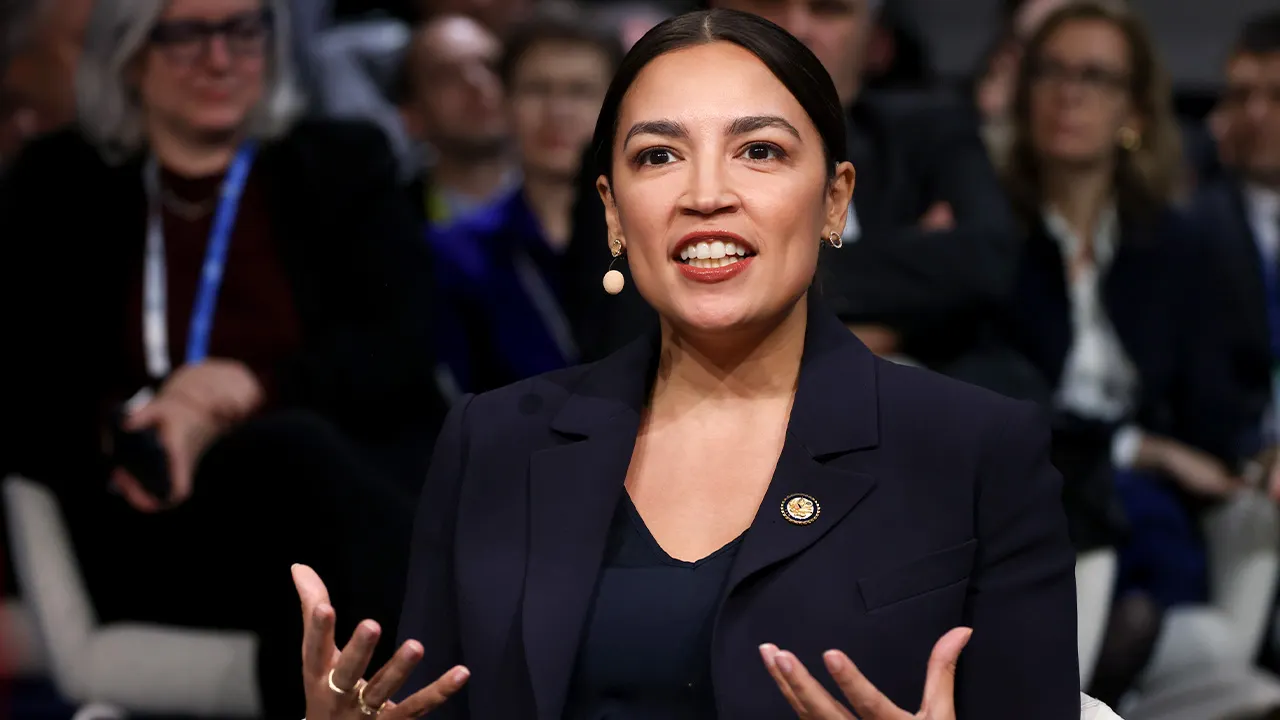
Rep. Alexandria Ocasio-Cortez, the outspoken Democratic congresswoman from New York, found herself in the spotlight once again after a seemingly straightforward question at the Munich Security Conference turned into a controversy that exposed the raw edges of U.S. foreign policy debates. On a crisp February evening in the heart of Germany, executives, diplomats, and journalists gathered to discuss global tensions, and AOC was there, representing America’s progressive voice. When asked point-blank about whether the United States would defend Taiwan if China invaded to enforce its “One China Policy,” she hesitated, her words tripping over each other like someone trying to navigate a dark room without a flashlight. “Um, you know, I think that this is such a, you know, I think that this is a um — this is, of course, a, um, very long-standing, um, policy of the United States,” she stammered, her voice betraying the weight she felt on her shoulders. It was a moment that reminded everyone that even seasoned politicians can stumble under the glare of international scrutiny, much like anyone else frozen by an unexpected pop quiz. She went on to emphasize the hope of avoiding confrontation through diplomacy, economics, and research, painting a picture of prevention rather than confrontation. But in a world hungry for clear declarations, her non-committal response sparked a firestorm on social media, where critics pounced, questioning her preparedness for the global stage. It wasn’t just about the words; it was about the perception that she lacked the poise expected from a major voice in American politics.
In the aftermath, as millions scrolled their feeds and shared clips, AOC took to Instagram Live late one night, her voice hoarse and her eyes reflecting what looked like genuine frustration. She wasn’t defending just her answer; she was pushing back against a system that she saw as unfairly judging her. “If you think I don’t understand foreign policy, because of out of hours of discourse about international affairs, I pause to think about one of the most sensitive geopolitical issues that currently exist on earth, I’m afraid the issue is not my understanding, but perhaps the problem is you’ve gotten adjusted to a president that never thinks before he speaks,” she said, pointing the finger at none other than Donald Trump. There was something humanizing in her emotion—raw, unfiltered, and coming from a place of defensiveness that many could relate to. We’ve all been in situations where we feel misunderstood, where our careful pauses are mistaken for ignorance, and our thoughtful deliberations are outshouted by impulsive judgments. AOC was channeling that universal struggle, transforming her Instagram Live into a confessional space where she rallied supporters while calling out the double standard. In a time of deep political divides, her words resonated with those who felt the media machine often amplifies perceived flaws, overlooking the context of expertise built over years of advocacy. Yet, as with any live moment, it also invited scrutiny, with some seeing it as deflection, while others applauded her for standing her ground in the face of relentless criticism.
Meanwhile, the conservative backlash intensified, led by figures like Vice President JD Vance, who wasted no time in seizing the opportunity to contrast his own sharp responses with AOC’s apparent hesitation. “I think it’s a person who doesn’t know what she actually thinks, and I’ve seen this way too much in Washington with politicians: Where they’re given lines and, when you ask them to go outside the lines they were given, they completely fall apart,” Vance declared during an in-studio interview on Fox News’ “The Story With Martha MacCallum.” His critique cut deep, portraying AOC as someone scripted for the spotlight but unprepared for the improv of real-world geopolitics. Vance didn’t hold back, labeling the moment “embarrassing” and suggesting she brush up on her reading before stepping onto such prestigious stages. It was a jab that echoed the broader skepticism among conservatives about progressive figures in leadership roles, especially amid whispers of AOC eyeing a potential 2028 presidential run. For onlookers, it felt like a classic political takedown, where personal ambition met public accountability—a reminder that in the cutthroat world of modern media, every stutter and pause can become fodder for campaigns. Yet, beneath the criticism lay a deeper conversation about what leadership really looks like in an era of rapid information and endless opinions.
As the dust settled, the incident underscored the complexities of U.S.-China relations and Taiwan’s fragile position as a self-governing island that Beijing claims as its own. Taiwan, with its robust democracy and technological prowess, represents a flashpoint that could redraw global maps if tensions escalate. AOC’s response, while evasive to some, reflected the Biden administration’s “strategic ambiguity” doctrine—a policy designed to deter aggression without committing to open-ended war. Diplomats and experts often praise this approach for maintaining flexibility, allowing alliances like the U.S.-Japan partnership to bolster deterrence without outright guarantees. But on that Munich stage, AOC’s words highlighted a generational divide: younger politicians like her sometimes prioritize dialogue and innovation over hawkish stances, aiming to prevent conflicts through networks of cooperation rather than military might. Her emphasis on economic tools, global research, and diplomatic maneuvering wasn’t just a deflection; it was a genuine philosophy shaped by her experiences advocating for social justice on the domestic front. In human terms, it’s understandable—she’s not a foreign policy hawk but a self-made activist who broke barriers in Congress, and asking her to articulate nuanced strategies on the fly is like expecting a marathon runner to dash a sprint without warning.
Yet, the fallout rippled beyond policy, touching on identity and media’s role in shaping perceptions. AOC, born to Puerto Rican parents and raised in the Bronx, has always been a symbol of change, but moments like this amplify the biases women and minorities face in politics. Critics accused her of being underqualified, while defenders argued it’s an attack on her confidence, reminiscent of how trailblazers are often scrutinized more harshly. Her emotional Instagram burst was a cry not just against Trump but against a culture accustomed to unthinking bluster dominating discourse. Imagine being a single mother running her own business in a tough neighborhood, then thrust into international debates—it’s easy to get overwhelmed. And for many, her response humanized the pressures of fame in the digital age, where a live video can undo weeks of preparation. Supporters flooded her comments with emojis and solidarity, turning the controversy into a rallying point for progressive causes. It reminded us that behind the headlines are real people grappling with immense responsibilities, often without the support system celebrities in Hollywood enjoy.
Ultimately, this episode isn’t just about one congresswoman’s misstep; it’s a snapshot of America’s evolving foreign policy landscape, where voices from diverse backgrounds challenge traditional norms. AOC’s critics may question her readiness, but her comeback showed resilience—a trait honed from years of grassroots organizing against odds. As 2028 looms, these moments will likely define campaigns, with candidates like Vance positioning themselves as no-nonsense alternatives to perceived inexperience. But in the broader tapestry, it invites reflection on what true understanding means in geopolitics: not just rote knowledge, but the empathy to navigate human conflicts without resorting to war. For everyday readers, it’s a reminder that politics isn’t confined to elites; it’s intertwined with our lives, from trade wars affecting jobs to global security shaping neighborhoods. And in humanizing AOC’s struggle, we see a mirror to our own vulnerabilities, encouraging us to approach debates with more grace and less judgment—a lesson that could foster better dialogue in these polarized times.
As Fox News continues to evolve, embracing the future of media, we’re excited to announce a new feature: You can now listen to our articles! For those who multitask on the go—commuting, working out, or simply enjoying a cup of coffee—audio versions bring the stories to life with professional narration, capturing the tone and urgency of each piece. Imagine digesting the latest on politics, economy, and culture without lifting your eyes from the road. Loved by busy professionals and families alike, this enhancement is available on our app and website, making information more accessible than ever. Whether you’re following breaking news or diving into in-depth analyses like this one on geopolitical tensions, listening ensures you stay informed on your terms. Download the Fox News app today and explore this seamless way to stay connected! This innovation reflects our commitment to meeting you where you are, blending technology with journalism to deliver trusted, compelling content straight to your ears. From the chaos of international conferences to the heart of American discourse, Fox News keeps you ahead of the curve, one listen at a time.
In reflecting on the broader implications, it’s clear that incidents like AOC’s response highlight the intricate web of politics where one falter can spark national conversations. Her stutter at Munich wasn’t isolated; it mirrored the inconsistencies in how foreign policy is communicated to the public. Americans, often divided by party lines, crave clarity, yet policymakers walk a tightrope between strategic silence and bold statements. Vance’s critique, while sharp, underscores the gamer mentality of politics—preparing for every curveball while calling out perceived weaknesses in opponents. For AOC, this could be a turning point, pushing her to refine her messaging or retreat from the international limelight to focus on domestic battles like climate and inequality. But in humanizing her journey, we recognize the pressures all leaders endure: endless travel, public scrutiny, and the weight of representing communities back home. It’s not uncommon for anyone in high-stakes jobs to have “off” days, whether a surgeon slipping under stress or a teacher facing a rowdy class. AOC’s story invites empathy, reminding us that growth comes from these bumps, not perfection. As the world watches China assert dominance, debates on Taiwan will persist, shaping alliances and potentially altering global power dynamics. Her cautious approach, emphasizing peace over provocation, resonates in an era weary of endless conflicts.
Moreover, the media’s amplification of the event—social media wildfire, cable news cycles, and live streams—demonstrates how digital platforms turn personal moments into spectacles. AOC’s late-night Instagram session became a communal gathering, where followers shared frustrations and jokes, turning criticism into bonding. Yet, it also exposed the double-edged sword of instant communication: empowering voices but amplifying missteps without context. Trump, mentioned vividly, represents that impulsive style she’s railing against—a stark contrast to her deliberate pauses. In everyday life, this relates to workplace emails gone wrong or public speeches flubbed, teaching us humility and preparation. As Vance hopes for AOC’s reflection, perhaps it’s a call for all to “read the book” before speaking, fostering informed discourse across divides.
Looking ahead, this controversy may influence 2028 narratives, with AOC’s potential candidacy now under a lens of competence. Supporters argue her grassroots roots prepare her uniquely for empathetic, inclusive leadership, while detractors see it as inexperience. Vance’s poised counterpoints position him as a steady hand, appealing to voters valuing decisiveness. But in human terms, politics remains a human endeavor, full of triumphs and stumbles. For Taiwan’s sake, may cooler heads prevail, with leaders like AOC advocating for innovations—be it through research alliances or economic levers—to avert crises. As audiences, engaging with stories like this not only informs but inspires to participate in democracy actively.
The Fox News app’s audio feature enhances this engagement, offering ways to consume news while multitasking—be it during morning runs or long drives. With crystal-clear narration and accessible formats, it’s revolutionized how we stay updated, ensuring stories reach diverse audiences. Imagine following the twists of international affairs as vividly narrated tales, bridging gaps and sparking conversations. We’ve partnered with experts to refine this tool, making it one of your go-to resources for on-the-move insights. Don’t miss out—download now and tune into the news that matters most.
In wrapping up, AOC’s moment at Munich serves as a poignant reminder of the fragility of pubic personas in politics. Her emotional defense, rife with real vulnerability, humanizes the superstars we sometimes idolize or villainize. Blaming the adaptation to unfiltered speech is a fair point, as Trump’s era normalized rapid-fire reactions over reasoned thought. Yet, Vance’s barbs highlight the expectations for precision, especially from aspirants eyeing the Oval Office. Taiwan’s defense dilemma lingers, a testament to diplomacy’s delicate balance. We, as observers, can learn to celebrate the efforts behind the scenes—the hours AOC references in “discourse about international affairs”—while demanding accountability.
This audio innovation at Fox News aligns with our mission to democratize information, allowing voices to be heard in every format. Listeners rave about the immersive experience, capturing the essence of reports without visual distractions. It’s not just news; it’s storytelling on your schedule, perfect for families or solo thinkers. Join the community embracing this change—unlock the app and listen to transform how you interact with current events. From political dramas to everyday inspirations, it’s all there at your fingertips. Here’s to informed, engaged citizens ready for what’s next.