


U.S. Withdrawal from Afghanistan: A Legacy of Failed Reconstruction and Unintended Consequences
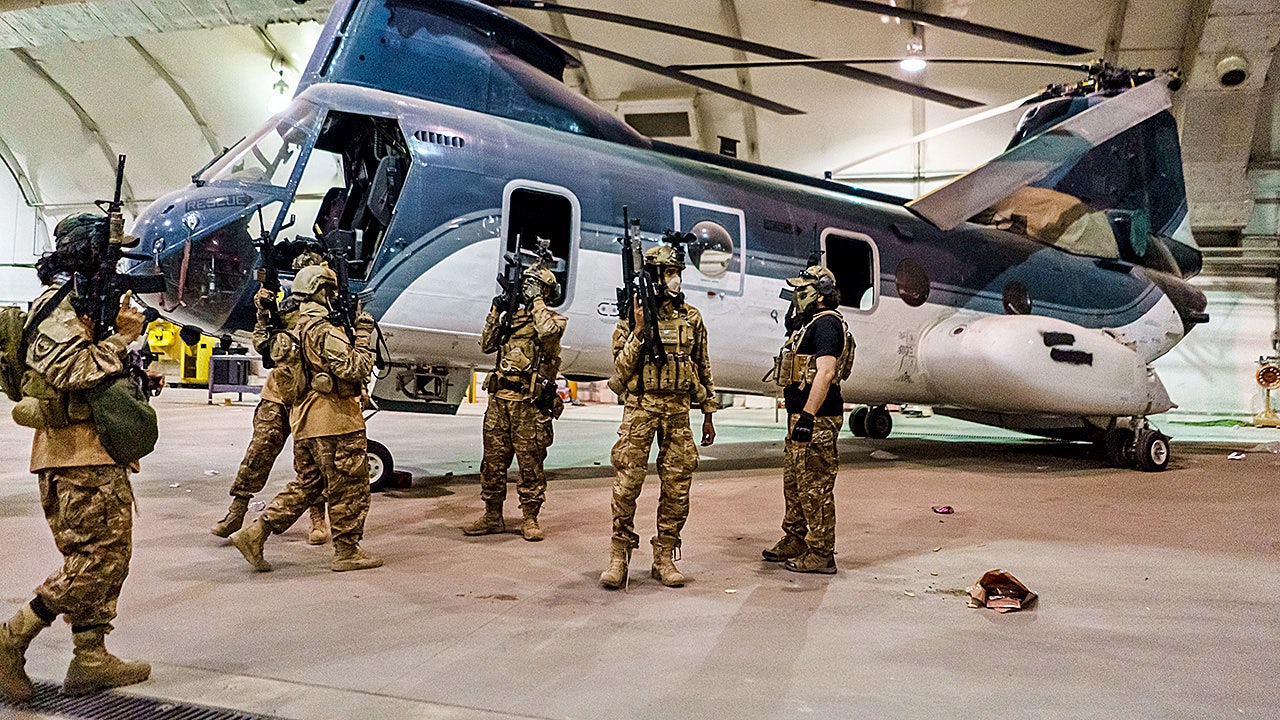
The recent Special Inspector General for Afghanistan Reconstruction (SIGAR) report paints a sobering picture of America’s 20-year involvement in Afghanistan, revealing that U.S. taxpayer-funded equipment worth approximately $7.1 billion now forms “the core of the Taliban security apparatus.” This 137-page final assessment concludes that despite Congress allocating nearly $144.7 billion between 2002 and 2021 for reconstruction efforts intended to bring stability and democracy to Afghanistan, the mission “ultimately delivered neither.” The chaotic withdrawal in August 2021 under the Biden administration left behind an arsenal of weapons, equipment, and facilities that were originally provided to the Afghan National Defense and Security Forces (ANDSF). Although the Department of Defense reported removing or destroying “nearly all major equipment used by U.S. troops,” a Pentagon watchdog confirmed that Afghan forces had 316,260 weapons valued at $511.8 million, plus ammunition and other equipment, when the former government collapsed. This massive transfer of military assets to Taliban control represents one of the most consequential unintended outcomes of America’s longest war.
The SIGAR report identifies multiple factors that contributed to the failure of U.S. efforts to transform Afghanistan. Acting Inspector General Gene Aloise highlighted how “early and ongoing U.S. decisions to ally with corrupt, human-rights-abusing powerbrokers bolstered the insurgency and undermined the mission,” directly hampering American goals for establishing democracy and good governance. Economic and social improvement initiatives similarly failed to create sustainable impact. Perhaps most tellingly, despite the nearly $90 billion invested specifically in security-sector assistance, Afghan security forces “collapsed quickly without a sustained U.S. military presence,” revealing fundamental flaws in America’s approach to building Afghan military capability and institutional resilience.
A critical error in America’s strategy was designing the Afghan security forces as a “mirror image of U.S. forces,” which created an unsustainable model requiring “a high degree of professional military sophistication and leadership” that couldn’t be maintained independently. This approach established deep dependencies that proved catastrophic once U.S. support was withdrawn. The report states bluntly that “the decision to withdraw all U.S. military personnel and dramatically reduce U.S. support to the ANDSF destroyed the morale of Afghan soldiers and police.” This psychological collapse, combined with logistical dependencies, explains the rapid disintegration of Afghan forces despite two decades of American training and equipment investments. The Taliban’s swift takeover was less a demonstration of their military prowess than an exposure of fundamental weaknesses in how the U.S. approached building Afghan security capacity.
The aftermath of the withdrawal reveals another layer of complexity in America’s relationship with Afghanistan. Despite the Taliban’s control, “the United States continued to be the nation’s largest donor, having disbursed more than $3.83 billion in humanitarian and development assistance” since the fall of Kabul in 2021. This ongoing financial relationship highlights the difficult ethical and strategic dilemmas facing U.S. policymakers. While providing humanitarian aid is morally imperative to help ordinary Afghans suffering under Taliban rule, these funds inevitably strengthen the very regime that U.S. policy officially opposes. Recent quarterly disbursements reached $120 million, demonstrating America’s continued economic entanglement with Afghanistan despite the political and military withdrawal.
SIGAR’s assessment offers a profound opportunity for reflection on America’s approach to nation-building and military intervention. The Afghanistan experience demonstrates how good intentions, substantial resources, and military might proved insufficient when applied through flawed strategies that failed to account for local realities. By creating institutions dependent on American support systems rather than building sustainable local capacity, the U.S. established conditions that made collapse inevitable once that support was withdrawn. The transition of U.S.-funded military assets to Taliban control stands as a stark symbol of how interventions can produce outcomes directly contrary to their intended purposes. This represents not just a failure of execution but raises fundamental questions about whether the objectives were achievable through the methods employed.
The legacy of America’s Afghanistan engagement will likely influence foreign policy debates for generations. Beyond the immediate humanitarian concerns for Afghans living under Taliban rule, the failure of the reconstruction effort raises profound questions about America’s capacity to transform foreign societies through military intervention and economic assistance. The billions spent, lives lost, and ultimate outcome in Afghanistan suggest a need for humility in foreign policy objectives and a more nuanced understanding of the limits of external influence in reshaping other nations. As policymakers and citizens reflect on these lessons, the equipment now in Taliban hands serves as a tangible reminder of how even well-intentioned interventions can strengthen the very forces they were meant to defeat, leaving a complex legacy that extends far beyond the physical withdrawal of American forces.