


2025: A Year of Political Reshaping and Democratic Resurgence
In what was traditionally considered an “off-year” for elections, 2025 proved to be anything but quiet on the political front. The year served as a critical staging ground for the upcoming 2026 midterm battles, offering insights into the shifting political landscape under President Donald Trump’s second administration. Despite not carrying the same intensity as the turbulent 2024 presidential race, this year’s electoral contests captured significant national attention and provided important indicators of what lies ahead in the fight for congressional control.
Perhaps the most consequential development was President Trump’s ambitious mid-decade congressional redistricting initiative, launched in June with the straightforward goal of redrawing maps in Republican-controlled states to strengthen the GOP’s razor-thin House majority. Beginning with Texas, where Governor Greg Abbott called a special legislative session to pass new maps potentially adding five Republican-leaning seats, the effort quickly expanded to other red states like Missouri, North Carolina, and Ohio. The redistricting push triggered an immediate Democratic response, most notably in California, where voters passed Proposition 50, temporarily bypassing the state’s nonpartisan redistricting commission to allow the Democratic-dominated legislature to potentially create five more Democratic-leaning districts. This high-stakes cartographical chess match spread across the country, with Florida potentially delivering up to five more Republican seats, while Democrats eyed opportunities in Illinois and Maryland. The battle saw mixed results for Republicans – a victory when the Supreme Court approved Texas’ new map, but setbacks in Utah, where a judge rejected GOP-drawn districts, and in Indiana, where Republican senators defied Trump by rejecting a redistricting bill.
An October scandal in Virginia’s statewide elections demonstrated how quickly political fortunes can shift when Democratic attorney general nominee Jay Jones found himself embroiled in controversy after texts surfaced where he compared a Republican lawmaker to Hitler and Pol Pot. The explosive revelations threatened to derail not only Jones’ campaign but also former Rep. Abigail Spanberger’s gubernatorial bid as Republicans tried to link her to Jones’ inflammatory comments. During a chaotic debate, Republican nominee Winsome Earle-Sears repeatedly pressed Spanberger to call for Jones to end his campaign, which Spanberger refused to do while condemning his remarks as “absolutely abhorrent.” Surprisingly, despite the national headlines generated by the scandal, Democrats swept to convincing victories in Virginia, with Spanberger defeating Earle-Sears by 15 points and Jones himself securing a 6-point win over Republican incumbent Jason Miyares – demonstrating the limited impact of the controversy on election outcomes.
The year also marked an unexpected Democratic overperformance at the ballot box, beginning just eight days into Trump’s second term when Democrat Mike Zimmer flipped a Republican state Senate seat in Iowa – in a district Trump had carried by 21 points just months earlier. This victory sparked a pattern of Democratic success in special elections and off-year contests nationwide. Despite persistent inflation, Democrats maintained laser focus on affordability issues and secured major victories, including winning both gubernatorial races in New Jersey and Virginia by double-digit margins. The Democratic winning streak continued through year-end with the party capturing the Miami mayoralty for the first time in 25 years and flipping a Georgia state House seat. The Democratic National Committee proudly highlighted that Democrats had won or overperformed in nearly 90% of key races (227 out of 255) throughout 2025. However, these victories occurred against a backdrop of historically low approval ratings for Democrats in Congress – a Quinnipiac University survey showed only 18% approval, the lowest in 16 years – indicating persistent challenges despite electoral successes.
A growing tension within the Democratic Party emerged as centrists and progressives clashed over candidate selection and messaging strategy. Though Democrats overperformed in a special congressional election in Republican-dominated Tennessee, losing by only nine points in a district Trump had carried by 22, many centrist Democrats argued that nominee Aftyn Behn was too far left for the district, especially after Republicans attacked her past comments on defunding the police. Similar concerns surfaced when progressive champion Rep. Jasmine Crockett launched her Senate campaign in red-leaning Texas, with moderate groups like Welcome PAC arguing that Democratic success in such states requires centrist candidates capable of building ideologically diverse coalitions. The center-left Third Way organization was particularly pointed in a post-Tennessee election memo, stating: “If far-left groups want to help save American democracy, they should stop pushing their candidates in swing districts and costing us flippable seats” – highlighting the strategic divide over whether to prioritize winning competitive seats or advancing progressive priorities.
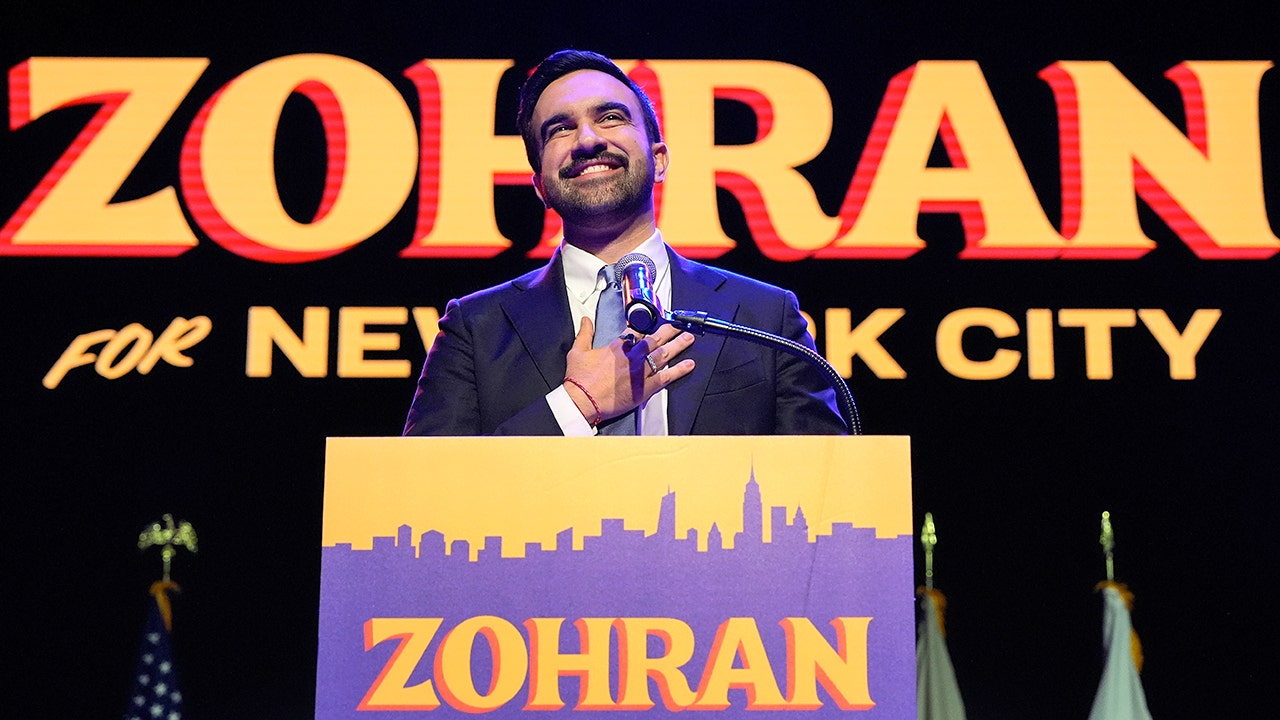
The most seismic political story of 2025 was undoubtedly Zohran Mamdani’s stunning victory in New York City’s Democratic mayoral primary on June 24. The 34-year-old socialist state lawmaker defeated frontrunner former Governor Andrew Cuomo and nine other candidates in a result that sent shockwaves across the country’s political landscape. Mamdani’s primary upset, followed by his general election victory, energized the progressive left while simultaneously providing Republicans with ammunition to portray Democrats nationwide as extremists. President Trump had repeatedly labeled Mamdani a “communist” during the campaign, but somewhat undercut that narrative with a surprisingly cordial Oval Office meeting with the mayor-elect in late 2025. As the first Muslim mayor of America’s largest city, Mamdani’s victory represented both the growing influence of progressive politics in Democratic strongholds and the complex dynamics playing out within the party as it prepares for the crucial 2026 midterm elections.
These five significant political developments in 2025 – Trump’s redistricting initiative, the Virginia texting scandal, Democratic electoral overperformance, intra-party tensions over candidate selection, and Mamdani’s groundbreaking mayoral victory – collectively shaped a year that was far from quiet on the campaign trail. As the political world now turns its attention fully toward the 2026 midterms, these events provide crucial context for understanding the strategies, strengths, and vulnerabilities of both parties heading into another high-stakes electoral battle for control of Congress.