

The Heartbreaking Tragedy of a Winter Haven Crash
In the quiet suburbs of Winter Haven, Florida, a seemingly ordinary Wednesday evening shattered lives in an instant. Just before 8:30 p.m., the air filled with the frantic sounds of 911 calls from Faith Baptist Church, where a group of children had been enjoying a church event. Among them were two young boys, brothers or cousins perhaps, full of innocent energy as they attempted to cross Crystal Beach Road. Unbeknownst to them, a dark-colored mid-sized SUV barreled toward them from the north, its driver fleeing into the night without stopping. The older boy, a 10-year-old with boundless curiosity for the world around him, survived but endured unimaginable pain—a broken arm, a shattered femur, and a compound skull fracture that left him in critical but stable condition at the hospital. Doctors worked tirelessly, piecing together his little body, while his family grappled with nightmares of what might have been. But for the younger child, 8-year-old with dreams of soccer matches and ice cream cones, there was no recovery. He succumbed to his injuries, leaving a void in his community that echoed louder than the church bells announcing the next service. Witnesses, still reeling from the horror, described the vehicle speeding away, and scattered parts from its underside lay as grim evidence on the asphalt. Surveillance footage captured a sequence of vehicles: a southbound truck oblivious to the chaos, and then the SUV turning east, its path diverging from help and responsibility. This wasn’t just an accident; it was a poignant reminder of how one reckless moment could erase a child’s future, painting pictures of lost birthdays, unfulfilled promises, and grieving parents staring at an empty bedroom. The investigators, hardened by years on the job, knew this case demanded justice, not just for closure but to honor the life cut short—a boy whose smile might have lit up a classroom or chased fireflies in the park. They pieced together the timeline, learning that shortly after the incident, the vehicle vanished, but leads began to emerge as they delved deeper into the night’s events.
Victoria Johnson’s Arrest and Surprising Courtroom Demeanor
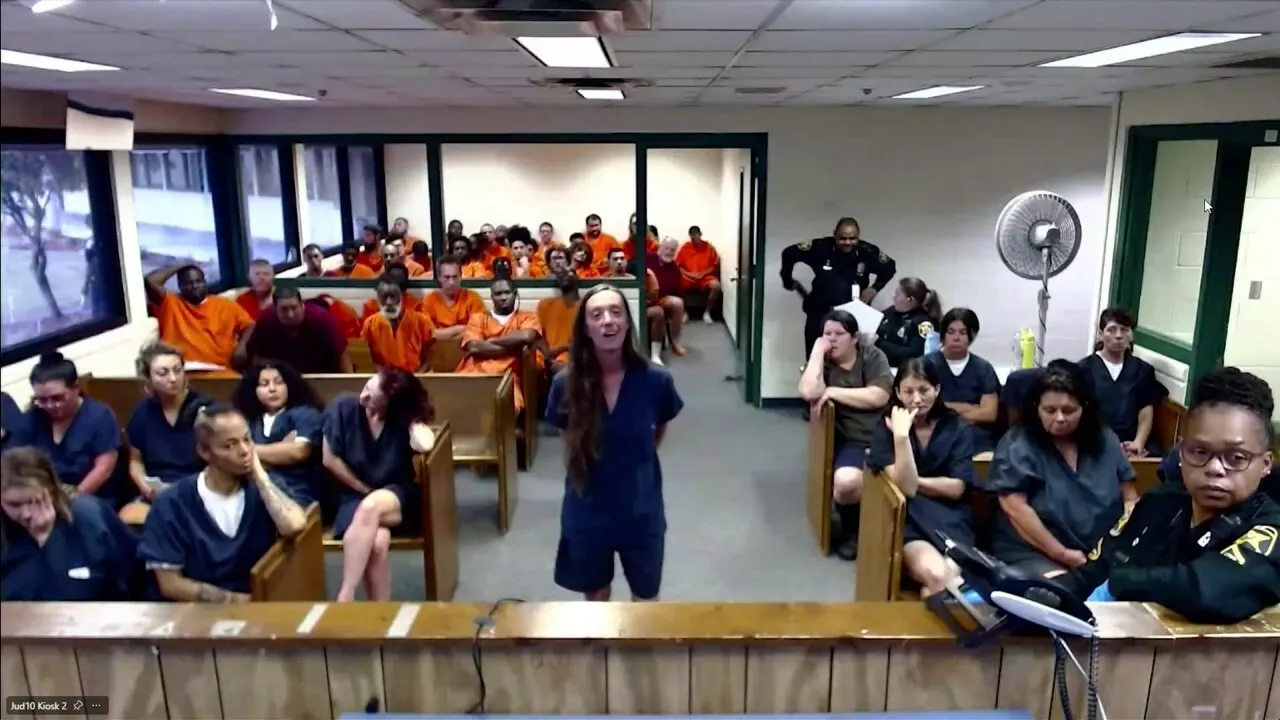
Victoria Johnson, a 30-year-old woman from Winter Haven, found herself in the spotlight after what authorities described as a pattern of disregard for the law, culminating in her arrest on Thursday. Charged with leaving the scene of a wreck resulting in death, serious bodily injury, tampering with evidence, driving without a license causing a fatality, and providing false information to police, Johnson’s story unfolded like a cautionary tale of poor choices and escalating consequences. Her first court appearance on Friday, conducted via video conference, was a bizarre spectacle that left onlookers and officials stunned. As the judge somberly read the charges, outlining the tragic death of an 8-year-old boy and the grave injury to a 10-year-old, Johnson shook her head in apparent disbelief. Then, inexplicably, she laughed—a reaction that seemed out of place in the gravity of the moment, almost as if her mind had disconnected from the reality of her actions. “I wasn’t even in the car,” she muttered afterward, her voice betraying a mix of denial and desperation, perhaps a defense mechanism for someone overwhelmed by the weight of accusations. The judge, maintaining composure, reminded her not to discuss the case facts, then inquired about securing an attorney for a Saturday continuance. Johnson’s response was telling: “I don’t know which one is better,” hinting at her confusion and lack of guidance in navigating a legal system that must have felt alien and unforgiving. The judge offered to appoint a public defender, to which she replied, “Yes, please,” signaling a shift from defiance to reliance on the system. Beneath her nonchalant facade, one might wonder about the pain or substance-induced haze that could lead a person to such detachment. Johnson’s attorney later noted this was a “tragic, terrible accident,” downplaying intent but acknowledging the devastation left in its wake, encouraging readers to reflect on how addiction or recklessness can turn ordinary people into perpetrators of heartbreak.
A Night of Poor Decisions and Elusive Truths
Delving into the hours before the crash, Johnson’s evening painted a picture of aimless wandering tainted by bad choices, human weaknesses that many might relate to in quieter moments of regret. That night, she admitted to deputies that she had used methamphetamine earlier, a stimulant that can cloud judgment and fuel impulsive behavior, driving her to roam the roads near her home for about 20 minutes to “relax” while listening to music. Her circle of acquaintances pulled her into a spiral: after the incident, she met Corey Stewart at a Circle K convenience store in Winter Haven, where he took over driving her dark blue 2009 Hyundai Santa Fe—named the alleged vehicle—to a house where they used more meth, followed by an ill-fated fishing trip at a nearby pond. Johnson, aware her driver’s license was suspended from a prior DUI arrest, confessed she knew she shouldn’t be behind the wheel, yet she allowed it to happen, as if tempting fate. The next day, she escalated matters by reporting her SUV stolen, a claim that unraveled under scrutiny when Stewart was spotted driving it, leading to a standoff at a residence where he refused to exit. The vehicle’s condition told a story: damaged in ways consistent with a pedestrian strike, missing parts, and possible biological traces that corroborated witness accounts. This web of deception suggested panic rather than malice, a young woman perhaps terrified of the repercussions of her drug-fueled night, fabricating stories to cover tracks. Stewart became a key figure, the one she allegedly gave the car to “to get rid of,” implicating him in potential tampering. Johnson’s life emerged as one of struggles—prior DUI convictions casting long shadows, probation violations, and a probation hold that kept her without bond in another case from January. It’s easy to humanize this: she might have been battling inner demons, seeking escape through substances, only to spiral into a nightmare that claimed a child’s life, forcing reflection on how fractured personal lives can intersect tragically with innocent communities.
Piecing Together the Evidence Trail
Investigators from the Polk County Sheriff’s Office worked methodically, their dedication a testament to the pursuit of truth amidst chaos. The 911 calls were the starting point, alerting deputies to the Boys struck on Crystal Beach Road during the church event, their tiny forms near the crosswalk a haunting image from survivor recollections. The SUV, matching witnesses’ descriptions of a dark mid-sized vehicle, left behind fragments—lower vehicle parts that hinted at the force of impact. Surveillance video was crucial, capturing not just the northbound car but audio of something being hit, a chilling confirmation before the vehicle abruptly turned east. Johnson’s initial story shifted under pressure: first claiming theft the night before, then admitting she loaned it to Stewart, and finally conceding she thought she might have “hit someone.” Her descriptions aligned suspiciously with the crash site, just 2.8 miles from her home, raising brows about selective memory. When deputies confronted her, they spotted Stewart in the driver’s seat, leading to the pursuit and search that revealed the vehicle’s battered state. Stewart’s refusal to cooperate added layers, perhaps out of loyalty or fear, painting him as a reluctant accomplice. This investigative dance wasn’t just procedural; it mirrored the human cost, with each lead pushing closer to accountability while families mourned. The public defender’s comment that it seemed an unintentional accident—but fueled by Johnson’s impaired state—highlighted gray areas in culpability, reminding us that even with evidence, cases like these bleed into moral waters. Deputies, seasoned in hit-and-runs, likely drew on similar tragedies, echoing other headlines of reckless drivers evading justice, striving for a resolution that restores some semblance of fairness to those left grieving.
Legal Proceedings and a Controversial Bond
In the courtroom, emotions ran high as Johnson’s fate hung in the balance, her public defender appointed swiftly by the judge’s offer. The attorney addressed the media, stating, “This was, in fact, a tragic, terrible accident, but upon my reading of the affidavit, it doesn’t really seem that anything she did to cause the accident.” This defense sparked debate, suggesting recklessness over intent, a nuance that families of the victim might find hard to swallow, feeling justice should weigh heavier on negligence that ends lives. The judge set her bond at $100,000, a figure reflecting the severity of charges involving a child’s death and serious injury, yet not insurmountable for those with support. However, in a twist, Johnson’s probation violation from the January DUI case resulted in her being held without bond in that separate matter, compounding her legal woes and symbolizing a pattern of recidivism. This decision underscored how prior convictions can trap individuals, turning minor infractions into inescapable cycles. The hearing’s video format added an impersonal layer, perhaps stripping away the pathos of in-person testimony, where tears and pleas might soften some perspectives. Families clinging to hope for justice likely saw the bond as a lenient escape, fostering frustration and a sense of inequality, especially comparing to other high-profile cases linked in the story, like repeat offenders or illegal immigrants with drunken driving histories causing fatalities. Johnson’s role as a repeat offender—entering restricted waters despite suspension—emphasized themes of personal accountability, prompting readers to ponder systemic flaws in halting such patterns. As proceedings continued, the public defender’s appointed status meant a battle ahead, navigating evidence of drug use and flight as mitigating factors or exacerbating ones, all while the victim’s community sought closure through the courts.
Broader Reflections on Reckless Acts and Community Loss
This case stirred ripples beyond Winter Haven, resonating with national headlines of similar tragedies: a repeat street racer clocking 106 mph, mowing down an EMT after prior fatal crashes; an illegal immigrant with DUI priors suspected in another boy’s death; or smugglers at 100 mph ending lives in Texas. These parallels paint a mosaic of societal wounds, where speed, impairment, and evasion claimed young lives, from an 8-year-old boy here to a college soccer player and his girlfriend elsewhere. Victoria Johnson’s story humanizes the chaos of addiction, poor judgment, and the impulse to flee—behaviors that dismantle families and erode trust in communities. Neighbors and parents in Winter Haven now cross roads with heightened caution, the church where the event occurred holding vigils for the lost child, their faith tested by unanswered whys. The boy’s memory lingers as a symbol of vulnerability, his broken femur and skull fractures evoking empathy for resilience in the surviving 10-year-old, whose recovery symbolizes hope amid despair. Johnson’s laughter in court, though shocking, might stem from shock-induced dissonance, a psychological shield against horror, encouraging understanding of human fragility. Yet, it also invites scrutiny: how does society balance rehabilitation against punishment for those who endanger innocents? Advocates for reform might push for better mental health support in legal systems, preventing repeat offenses like Johnson’s probation snafu. Communities mourn collectively, not just the direct victims but the erosion of safety, making each negligent act a shared loss. In echoing cases, lessons emerge—stricter enforcement on impaired driving, cultural shifts away from evasion—ensuring such heartbreaks prompt change. Ultimately, this tragedy urges reflection: behind charges are people whose choices ripple outward, demanding compassion tempered by justice, so futures aren’t stolen by recklessness. As investigations continue, the human cost reverberates, a call to empathy and action that bonds us all.