



Wisconsin Teen Pleads Guilty to Killing Parents, Planned Presidential Assassination
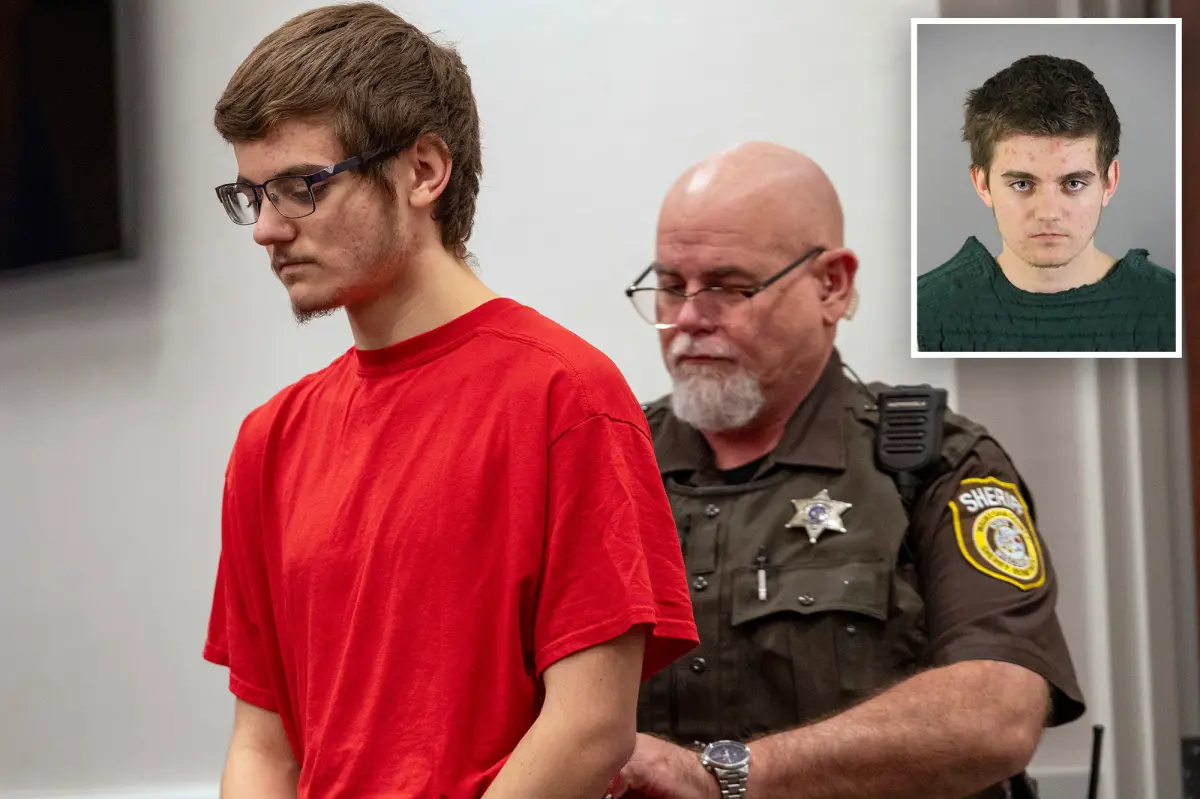
In a chilling admission of guilt that sent ripples through the Waukesha County courtroom, 18-year-old Nikita Casap pleaded guilty to the first-degree intentional homicide of his mother and stepfather. The young man visibly trembled as he stood before Judge Ralph Ramirez, acknowledging his actions with a series of subdued “Yes, your honor” responses. This case, which has shocked the local Wisconsin community, reveals a disturbing tale that goes beyond domestic violence—extending into an alleged plot against the highest office in the nation. According to federal investigators, Casap’s motivations weren’t merely born from family conflict but were part of a calculated plan to fund an assassination attempt on then-President Donald Trump and potentially overthrow the U.S. government. The guilty plea represents just the beginning of a legal journey that could see the teenager spending the remainder of his life behind bars, with sentencing scheduled for March 5.
The gruesome details of the case paint a portrait of premeditated violence and disturbing aftermath. Investigators believe Casap murdered his stepfather, Donald Mayer, and his mother, Tatiana Casap, in their Waukesha home around February 11 of last year. Perhaps most disturbingly, authorities report that the teenager continued to live in the home with his parents’ decomposing bodies for several weeks before finally fleeing. This period of cohabitation with his victims suggests a level of detachment that prosecutors will likely emphasize during sentencing. Before leaving, Casap methodically gathered approximately $14,000 in cash, jewelry, passports, his stepfather’s firearm, and even took the family dog before departing in his stepfather’s SUV. His cross-country escape ended on February 28 when law enforcement apprehended him during a routine traffic stop in Kansas, bringing to an end a crime spree that had begun weeks earlier but had roots that stretched back much further.
What transformed this case from a tragic family homicide into something potentially more sinister was the discovery of Casap’s apparent political motivations. A federal search warrant revealed that the teenager had authored what investigators described as a “manifesto” calling for the assassination of President Trump. More concerning to authorities was evidence suggesting Casap wasn’t acting entirely alone—the warrant indicated he had communicated with others about his intentions to kill the president and participate in overthrowing the American government. Federal officials believe the murders of his parents weren’t simply acts of family violence but rather calculated steps in a larger plan, providing Casap with “the financial means and autonomy necessary to carrying out his plan.” These findings suggest the teenager viewed the homicides as merely instrumental—a funding mechanism for what he perceived as a larger political mission.
Digital evidence collected from Casap’s cell phone revealed communications that further illuminated his apparent intentions to flee the country after committing the murders. Investigators discovered messages from the month preceding the killings in which Casap inquired about how long he would need to hide before potentially relocating to Ukraine. In one particularly incriminating exchange, he asked an unidentified Russian-speaking individual, “So, while in Ukraine, I’ll be able to live a normal life? Even if it’s found out I did it?” These messages not only demonstrate premeditation but suggest connections to individuals outside the United States who may have been aware of his plans. Federal officials also accused Casap of purchasing drones and explosives in preparation for his alleged plot, though the full extent of his preparations and potential co-conspirators remains unclear in public records. The international dimension of his communications adds a layer of complexity to a case that spans both state murder charges and federal national security concerns.
As part of a plea agreement, prosecutors dropped seven additional charges against Casap, including counts of hiding a corpse and theft. Despite this reduction in charges, the teenager still faces the most severe penalties available in the Wisconsin criminal justice system. Each homicide count carries a mandatory life sentence, though Judge Ramirez retains discretion regarding parole eligibility. The judge could potentially make Casap eligible for parole after serving 20 years on each count, but District Attorney Lesli Boese has made her position clear—she intends to argue against any possibility of parole. Speaking to reporters outside the courthouse, Boese emphasized that her primary goal was ensuring Casap accepted responsibility for his parents’ deaths, and she believes that two mandatory life sentences constitute appropriate punishment for his actions. Her characterization of the defendant as a “danger to the community” signals the prosecution’s intent to seek the maximum possible punishment.
The Casap case stands as a disturbing example of how domestic violence can intersect with broader ideological extremism. While the murders themselves represent a profound tragedy—two lives cut short by someone they raised—the alleged motivations behind them point to concerning radicalization that transcends family conflict. What began as an investigation into missing persons and then homicide evolved into a case with potential national security implications. As Casap awaits sentencing in March, both the local community and security agencies will continue to examine how an 18-year-old Wisconsin resident allegedly developed plans that extended from familial homicide to presidential assassination. The case serves as a somber reminder of how personal grievances and extremist ideologies can combine with devastating consequences, leaving two parents dead and a young man potentially facing the remainder of his life in prison. For the families affected and the community at large, the guilty plea may provide some measure of closure, but the broader questions about radicalization and violence it raises remain troublingly unanswered.