





Federal Agents Faced Hostile Protesters During Tucson Fraud Investigation
A routine search warrant execution in Tucson, Arizona turned into a tense standoff when protesters surrounded federal agents at a local Mexican restaurant, temporarily trapping them in a parking lot. This incident, occurring at Taco Giro on North Grande Avenue, highlighted the increasingly contentious atmosphere surrounding immigration enforcement operations in border states. What began as a coordinated multi-agency investigation into tax and immigration violations quickly became a flashpoint for community tensions, raising questions about the intersection of law enforcement duties and public protest rights.
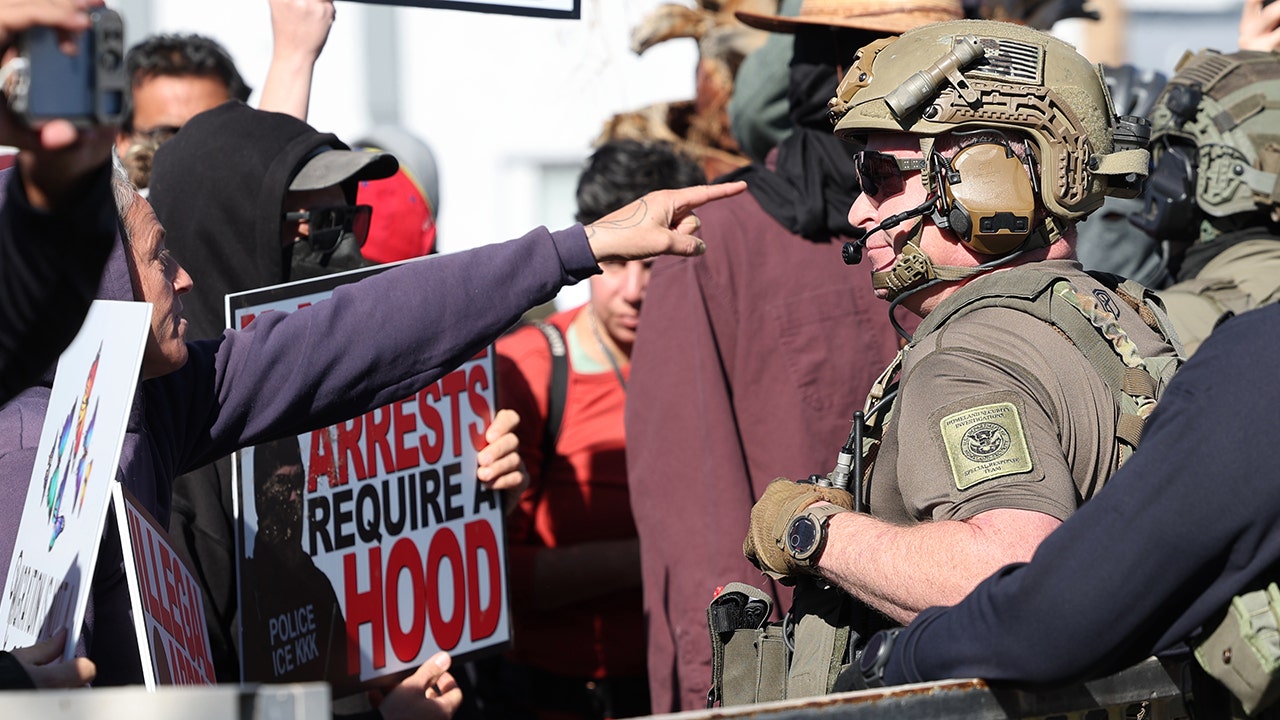
The morning operation started around 9 a.m. when agents from ICE Homeland Security Investigations, IRS Criminal Investigation, and other federal partners arrived at the restaurant before its opening hours. They were executing one of 16 search warrants across southern Arizona as part of what officials described as a “years-long investigation.” Within an hour, word spread through community networks, and a crowd of protesters—estimated between 100 and 200 people—gathered outside the restaurant. Many carried identical signs reading “illegal arrests require a hood” while chanting “Go home ICE” and other slogans. The rapid mobilization of protesters suggests well-established community alert networks that monitor law enforcement activities, particularly those involving immigration authorities in areas with significant immigrant populations.
The situation escalated dramatically when a smaller group of approximately twelve more confrontational protesters took direct action. Someone threw a bottle at an ICE vehicle, and another protester used a bicycle lock to secure the gate of the parking lot where federal agents were working, effectively trapping them inside. This deliberate act of obstruction crossed the line from protected speech into potential criminal interference with law enforcement operations. The agents, finding themselves surrounded by hostile protesters and physically prevented from leaving, faced a dangerous situation that required tactical response measures. Federal authorities ultimately deployed flash-bang devices and pepper spray to disperse the crowd and arrested at least two individuals from among the protesters.
Authorities eventually used a saw to cut through the bicycle lock, allowing the agents to exit the parking lot in their vehicles amidst jeers from the remaining protesters. Smoke lingered in the air as the law enforcement convoy departed the scene. Meanwhile, agents were also seen conducting operations at a nearby residence, where they took multiple individuals into custody. Photos captured men in handcuffs being placed into government vehicles, suggesting that despite the protest interruption, the underlying investigation proceeded with several arrests. An ICE spokesperson confirmed that “multiple individuals are in custody” as part of the operation, though detailed information about those arrested and specific charges wasn’t immediately available.
The Tucson incident reflects a pattern of increasingly confrontational responses to immigration enforcement actions across the country. Similar protests have occurred in cities like Portland and New York, where demonstrators have physically challenged ICE operations through various means. These confrontations illustrate the deeply polarized perspectives on immigration enforcement in America. For protesters, these actions represent resistance against what they view as unjust enforcement policies affecting vulnerable communities. For law enforcement, such interference creates dangerous conditions that complicate their ability to carry out lawfully authorized operations targeting specific criminal activities, in this case alleged tax and immigration fraud.
This episode highlights several ongoing tensions in American society: the balance between legitimate protest and unlawful obstruction, the challenges facing immigration enforcement agencies amid politically charged debates, and the complex relationship between federal authorities and communities with significant immigrant populations. While federal officials emphasized that this operation targeted specific criminal violations rather than representing a general immigration enforcement action, the public reaction demonstrates how deeply immigration-related law enforcement activities affect community perceptions and trigger emotional responses. As authorities promised more information would be forthcoming about the underlying investigation, both supporters and critics of immigration enforcement will likely scrutinize the details to support their respective positions in a debate that continues to divide the nation.