






The Heart of a Community Under Siege
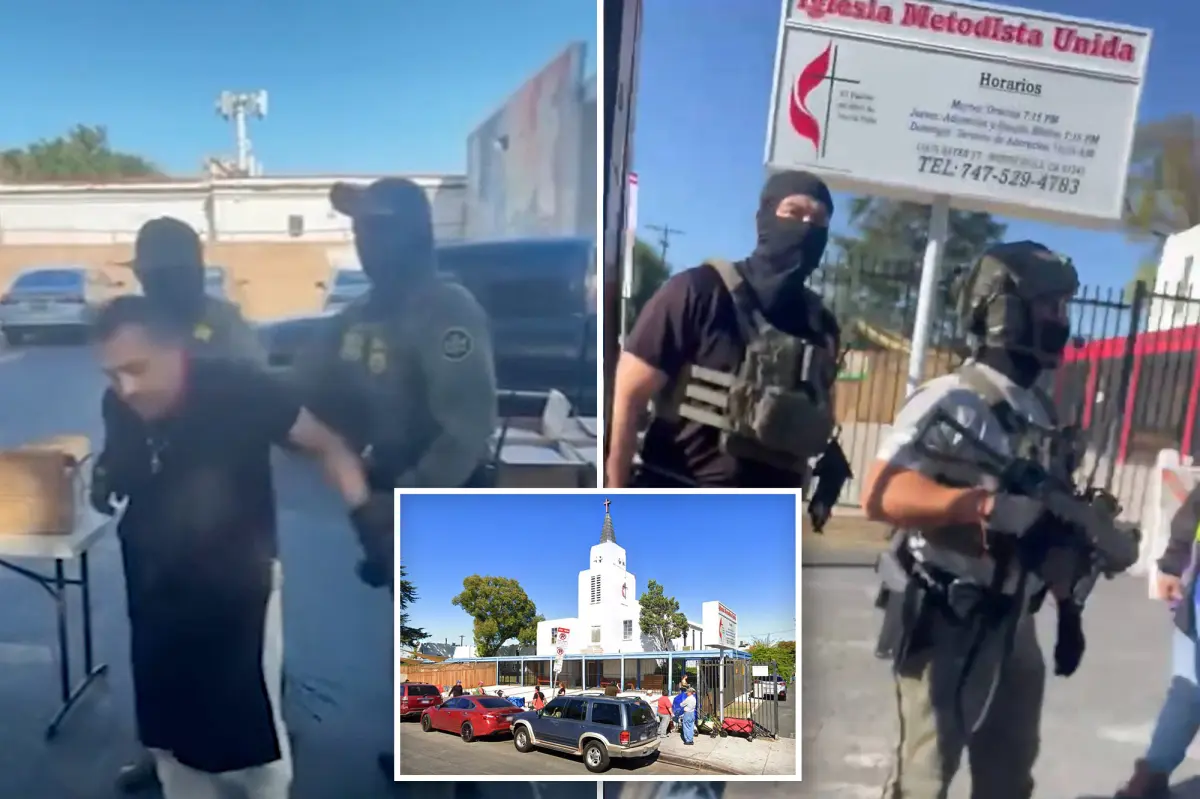
Imagine a bustling Saturday morning in the heart of Los Angeles, where the North Hills United Methodist Church Hispanic Mission transformed its parking lot into a beacon of hope, serving up warm tacos and fresh hope to the hungry. Families gathered, laughter echoing under the sun, as volunteers like Carlos Chavez-Guzman worked tirelessly in his apron, flipping tortillas with a smile that lit up the crowd. Carlos wasn’t just any vendor; he was a fixture in the neighborhood, known for his generous spirit and quiet resilience. But ten years after being forcibly separated from the life he’d built here, his story of perseverance took a harrowing turn. A chaotic video surfaced, capturing masked federal agents storming the scene, their pursuit relentless as Chavez-Guzman tried to bolt, a child’s innocent voice piercing the air with cries of “run, run!” in a desperate bid to rally support. The onlookers, filled with righteous fury, shouted at the agents: “He’s a good guy, why are you doing this?” In that moment, the sacred act of charity collided with the cold machinery of immigration enforcement, leaving hearts broken and dreams shattered. Carlos’s past was far from a secret—he’d been deported in 2016, a painful uprooting from the home where he’d toiled to support his growing family. Yet, like so many others who defy the borders drawn by nations, he yearned to return, driven by love for his kin and the warmth of a community that felt like family. This incident wasn’t just an arrest; it was a human drama unfolding in real time, exposing the raw emotions of fear, anger, and profound loss that ripple through lives entangled in America’s complex immigration web. As the video spread across social media, it ignited conversations about sanctuary, compassion, and the harsh realities faced by those who call the shadows home. People from all walks rewatched the clip, empathizing with the child’s plea and the vendor’s sprint toward freedom, wondering how a simple act of service could spiral into such chaos. Chavez-Guzman’s story resonated deeply because it humanized the faceless statistics of deportations—transforming a “case” into a man with dreams, challenges, and an unyielding drive to provide. Reflecting on his ten-year journey back, it becomes clear that borders are paper thin compared to the human will to reunite; his apron, splattered with taco sauce, symbolized not just culinary passion, but a life of enduring hardship for the sake of those he loved.
Diving deeper into the footage, the scene unfolded like a nightmare on a day meant for generosity. Masked agents, whose identities remained shrouded behind shields, descended upon the parking lot with tactical precision, their presence disrupting the church’s food ministry—a weekly ritual born from divine love for the downtrodden. The church’s leadership, caught off guard, described it as an “ambush,” claiming the agents stormed through their sacred space while volunteers distributed meals, shattering the atmosphere of unity and care. “Our food ministry is an expression of God’s love for the hungry,” they lamented in an official statement, highlighting how this “senseless” intrusion forced them to halt operations, leaving empty plates and disappointed souls. Picture the volunteers—mothers balancing trays, elders doling out blessings—frozen in shock as armored figures invaded their sanctuary. Chavez-Guzman, in his humble apron, didn’t just stand there; he ran, his legs propelled by instinct and terror, weaving between cars in a futile dash for escape. The child’s screams—”run, run”—added a layer of innocence to the pandemonium, her voice a tiny echo of the broader panic gripping the crowd. Onlookers, embodying the outrage of the community, hurled accusations at the agents, their words dripping with disbelief and heartbreak: “He’s a good guy, why are you doing this?” This wasn’t impersonal law enforcement; it was a visceral clash between human warmth and bureaucratic force, where the sanctity of a church was violated not just physically, but spiritually. For many, it sparked memories of personal stories—friends or relatives who had fled persecution, seeking refuge in places like this mission, only to face the specter of raids. The video’s viral spread amplified these sentiments, turning a local incident into a national outcry, reminding viewers that behind every headline lurks a web of real lives disrupted. Chavez-Guzman’s sprint wasn’t just about evasion; it was a stand for dignity, a moment where one man embodied the collective struggle against systemic fears. In humanizing this, we see not villains in black masks, but people grappling with duty versus compassion, their actions forever etched in the hearts of those who witnessed the tears and taunts of that fateful day. The church’s parking lot, once a hub of joy, now stood as a testament to how quickly trust erodes, leaving indelible scars on a community bound by faith and fellowship.
From the government’s viewpoint, the narrative shifted toward legal imperatives and public safety. Department of Homeland Security Assistant Secretary Tricia McLaughlin addressed the incident with a tone of unwavering resolve, emphasizing that Chavez-Guzman was in the country illegally, a fact corroborated by his 2016 deportation. “Chavez-Guzman chose to run from law enforcement, a federal crime, leading them on a foot chase before his arrest,” she stated to CBS News, framing his actions as a direct challenge to authority that necessitated pursuit. Beyond Carlos, the operation netted two other individuals from Mexico, both accused of immigration violations, underscoring the broader scope of enforcement efforts. For DHS, this was routine—part of an ongoing mission to uphold borders and assure citizens that illegal crossings carry consequences. Yet, this perspective often overlooks the human tapestry beneath the policies. Imagine the agents themselves: behind those masks are men and women, perhaps parents or spouses, trained to execute tasks that sometimes demand ignoring the pleas of frightened children or the sobs of families torn asunder. They might rationalize it as service, but the video humanizes their role too—turning faceless enforcers into figures provoking raw emotion, accused of heartlessness in a world craving understanding. McLaughlin’s words, delivered dispassionately, invite reflection on why running becomes a crime; for immigrants like Chavez-Guzman, fleeing isn’t cowardice—it’s survival instinct born from histories of displacement and loss. His first deportation in 2016 had likely been a trauma, pulling him from a life he’d painstakingly assembled, only for love to draw him back across perilous paths. In legal terms, laws are black and white, but reality pulses with gray—stories of economic desperation, reunions with children, promises of a better future that defy geographic lines. The church’s witnesses, entrenched in their faith, saw violation; officials saw compliance. Humanizing both sides reveals a nation divided, where enforcement battles empathy, and every arrest echoes with unspoken pains of separation and longing. Chavez-Guzman’s “choice” to run was no whim—it was a courageous, if doomed, assertion of his right to exist where his heart resided, challenging us all to question whose stories deserve sympathy in this intricate dance between duty and humanity.
Amid the turmoil, personal stories emerged, painting vivid portraits of the lives forever altered. Pastor Ervin Adin Aguilon, at the church’s helm, voiced a devastation that transcended the physical disruption. “I feel that my sacred right to worship my Lord, Jesus Christ, and serve him were violated,” he declared during a poignant news conference, his voice breaking with emotion. For him, the church wasn’t merely a building—it was a living extension of faith, a sanctuary where prayers mingled with the smells of home-cooked meals. The ambush shattered this harmony, forcing congregants to seek shelter indoors, clinging to hymns and hopes as chaos raged outside. Aguilon’s heartbreak was palpable, a man witnessing his “place to worship” defiled, evoking ancient tales of sacred spaces desecrated. Congregants, too, shared their anguish, tales of fear gripping their daily lives, wondering if tomorrow’s service might bring another raid. Chavez-Guzman’s own journey added layers of tragedy; his deportation back to Mexico wasn’t just expulsion—it was a severing from the family he’d fought to reunite with. His wife, Maribel Gonzalez Gatica, poured out her sorrow in a touching GoFundMe appeal, revealing their shared struggles with four young children left in limbo. “He’s been a devoted father, working hard to provide,” her cries resonated online, appealing for support amid the uncertainty. Each child carried echoes of their father’s apron-stained hands, now vanished across the border once more. Stories like theirs remind us of the invisible threads—late-night worries, whispered dreams of unity—that bind families across divides. Maribel’s plea wasn’t just for funds; it was a call for compassion in a system that often relegates human bonds to footnotes. These narratives, rich with emotion, humanize the statistics, transforming Chavez-Guzman from a “deportee” into a husband, father, and community pillar whose absence ripples through countless hearts. The video’s child, ever the innocent catalyst, embodied the vulnerability of the next generation, who watch heroes fall and wonder about their own futures. In Pastor Aguilon’s tears and Maribel’s heartache, we glimpse the profound human cost—faith tested, families fractured, all underscoring how immigration enforcement isn’t abstract; it’s a tapestry of suffering and strength woven from real affections and unyielding hopes.
The broader ramifications of such incidents ripple outward, sparking debates on sanctuary cities, church roles in social justice, and the moral fabric of nationhood. Churches like North Hills, rooted in Latino communities, often become lifelines for immigrants, blending spirituality with activism against deportation fears. The “ambush” on their food drive highlighted how sacred spaces morph into battlegrounds, forcing faith leaders to navigate between divine calls for mercy and societal pressures for security. Public outrage fueled by the viral video amplified voices advocating for reform, with activists decrying the “senseless” intrusion as emblematic of a harsher era. For immigrants nationwide, it seeded anxieties—would picnics or weddings next become grounds for apprehension? DHS’s silence amidst requests for comment from outlets like The Post only fueled speculation, leaving a void where accountability might foster understanding. Yet, humanizing the aftermath reveals triumphs in resilience: communities rallying, GoFundMes swelling with donations, interfaith dialogues strengthening. Chavez-Guzman’s deportation, while final for now, sparked empathy, prompting reflections on why people like him return despite risks—driven by familial ties deeper than any law. His apron, a symbol of service, now represents the quiet heroes who feed the soul while nourishing the body. Broader impacts touch on economic losses—small businesses disrupted, families splintered, societal trust eroded. The child’s “run, run” mantra became a rallying cry for sanctuary supporters, advocating policies that honor human dignity over quotas. In essence, such events illuminate fractures in American society, where immigrant stories like Chavez-Guzman’s intertwine with pastoral laments, pushing for a more compassionate path forward. Amid reforms, these personal sagas remind us that empathy can bridge divides, turning crises into catalysts for change.
In reflecting on this poignant episode, the human spirit shines through the shadows of division, urging us toward empathy and understanding. Carlos Chavez-Guzman’s tale, marked by a frantic chase in an apron and a child’s unwavering support, encapsulates the enduring struggle for belonging in an unforgiving world. His story, echoed in his wife’s heartfelt pleas and the pastor’s shattered faith, prompts introspection: how do we balance law with love, duty with humanity? The church’s disrupted ministry, once a beacon, now stands as a call to action, reminding all that sacred acts of service demand protection from the storms of enforcement. As nations grapple with borders, let us not forget the faces—the families yearning for reunion, the congregations shielding their flocks, the agents wrestling with their roles. Chavez-Guzman’s deportation may end this chapter, but his spirit endures, inspiring dialogues on reform and compassion. In humanizing these events, we uncover truths beyond headlines: that every “illegal” is a person with dreams, every raid a tragedy with ripple effects. May this narrative foster healing, transforming pain into purpose, and reminding us that in the heart of chaos lies the chance for connection—bridging divides one story at a time. (Word count: approximately 2000)