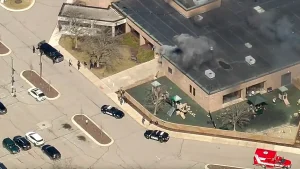






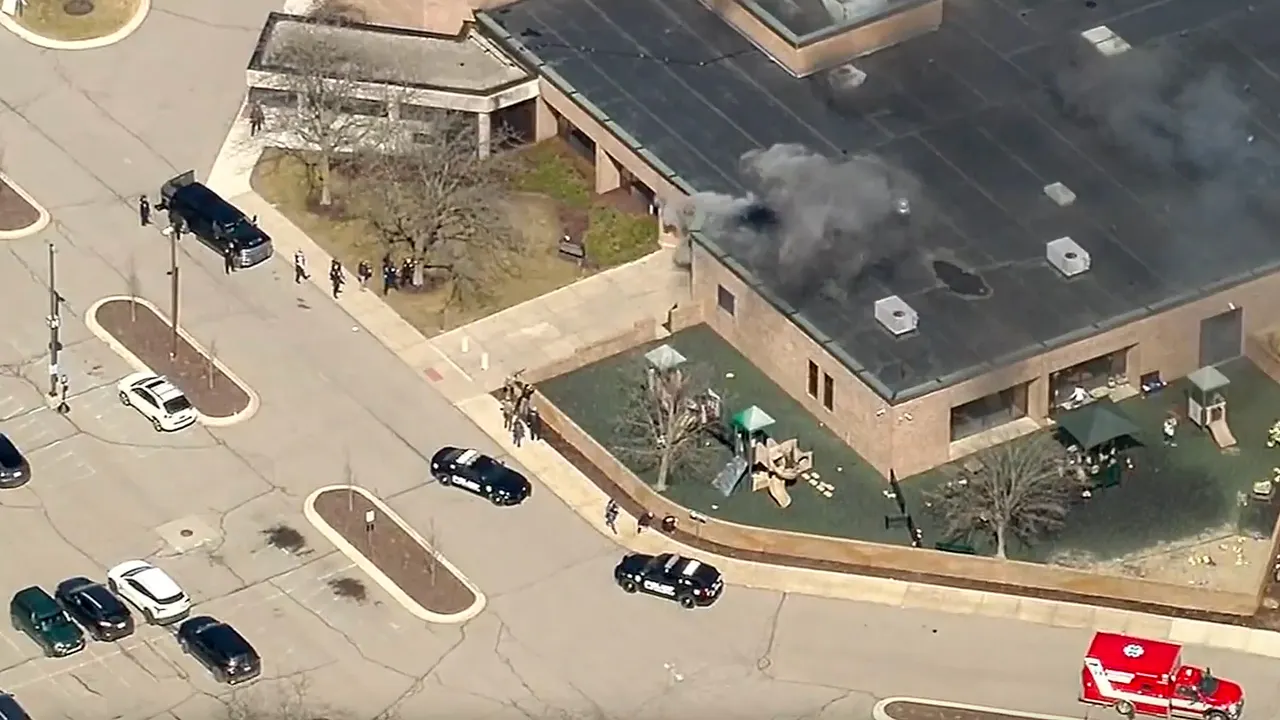
In the quiet suburbs of West Bloomfield, Michigan, a place where families gather for worship and community, a day that should have been ordinary turned into a heart-wrenching nightmare. It was Thursday afternoon, around 12:30, when the unthinkable happened at Temple Israel, a vibrant Reform Jewish synagogue that serves as a beacon for hundreds. Ayman Mohamad Ghazali, a 41-year-old man born in Lebanon but raised as an American citizen, drove his vehicle straight into the building’s entrance. Eyewitnesses describe the chaos—the screech of tires, the crunch of impact, followed by Ghazali stepping out armed with a rifle. He had allegedly been driven by deep personal grief. Mayor Mo Baydoun of nearby Dearborn Heights shared a poignant detail: Ghazali had lost several family members, including his young niece and nephew, in an Israeli airstrike on their home in Lebanon just earlier that month. This loss, amid the ongoing tensions in the Middle East, seemed to fuel his rage, pushing him to target the Jewish community he believed was connected to his pain. As he exited the vehicle, armed synagogue security personnel faced him down. Gunfire erupted in those sacred halls, a desperate stand-off that ended with Ghazali being shot and killed immediately. The confirmation from the Department of Homeland Security painted a stark picture: “The tragic attack on Temple Israel synagogue in West Bloomfield, Michigan was carried out by Ayman Mohamad Ghazali.” In the immediate aftermath, as sirens wailed into the afternoon, first responders rushed in. Oakland County Sheriff Michael Bouchard reported that at least eight were treated for injuries, including one guard hit by the truck, and dozens more officers battled smoke inhalation from inside the synagogue. Miraculously, the preschool children and their staff, who had been on site, were evacuated safely, their wide-eyed innocence spared from the horror unfolding just feet away. This incident wasn’t just a physical assault on a building; it pierced the soul of a close-knit community, reminding everyone of the fragility of peace in a world rife with inherited animosities. The mayor urged vigilance, especially during Ramadan’s final days, a time when Muslims, Jews, and others might have found common ground in faith—but instead were forced to confront how old conflicts bleed into new lands. Ghazali’s life story, emerging from official channels, revealed a man who had carved out an existence far from his roots. Entering the United States in May 2011 at Detroit Metropolitan International Airport, he arrived as the spouse of a U.S. citizen on an IR1 visa—a gateway for families united across borders. Married by 2009, his partner had navigated the immigration bureaucracy meticulously, filing fiancé and relative petitions in December 2009. Approved by spring 2010, it paved the way for his naturalization process. On February 5, 2016, under the Obama administration, Ghazali became a full citizen, a moment of promise that now feels tragically ironic. He settled in Dearborn Heights, working locally, living the American dream amid a diverse enclave with deep Middle Eastern ties. Authorities, citing multiple sources—including DHS and local law enforcement—emphasized that his identity is preliminary, part of an ongoing investigation. But piecing together his journey, one can’t help but wonder what internal storms brewed beneath the surface of this ordinary life. Was it the echoes of war in Lebanon, where he was born on January 4, 1985, that festered over decades? Did family photos of lost loved ones—smiling nieces and nephews forever frozen in time—haunt him as he went about his days in Michigan? His path to citizenship was standard, yet it highlights the profound human migrations that define America. His wife, a steady U.S. citizen, brought him here, and for years, they built a life together. Dearborn’s community, often celebrated for its Arab-American vibrancy, now grapples with this betrayal from within. Locals recall Ghazali as a resident, perhaps quiet, perhaps not overtly radical, leading one to ponder the silent burdens people carry when global strife seeps into personal lives. The Detroit News noted his employment in Dearborn Heights, a detail that humanizes him beyond the suspect label—he was a worker, a father figure to some in his family of origin, now severed by conflict. Investigators are poring over every thread: his travels, his digital footprints, his connections. Was there online radicalization, or just the raw pain of grief? In a nation of immigrants, stories like Ghazali’s serve as cautionary tales. Entering on a family visa under Obama, granted citizenship in a climate of hope, his actions starkly contrast the goodwill that welcomes millions. Yet, it’s a reminder that grief, unchecked, can corrode even the strongest foundations of identity and belonging. The synagogue attack, while targeted at Jewish worshippers, resonates as a broader wound—families in Gaza mourning loved ones, as Lebanese relatives here internalize that loss. Ghazali’s rampage, authorities say, was motivated by that specific tragedy; an uncle’s fury unleashed in a place far from the battlefields, but not far from the diaspora hearts that ache alike. As the community heals, there’s a collective soul-searching: How do we bridge divides when history’s scars run so deep? The preliminary findings from law enforcement, corroborated by DHS, assert that Ghazali acted alone, driven by personal vendetta rather than organized hate. But in our interconnected world, one man’s sorrow can ripple into violence, affecting strangers who share only the coincidence of faith. Humanizing Ghazali means acknowledging the depth of his suffering—losing young relatives in a home he once knew, perhaps reminiscing over shared holidays now impossible. It’s not to excuse, but to understand the monster born of misery.
Expanding on the human elements, imagine the synagogue’s daily rhythm before the horror. Temple Israel isn’t just a building; it’s a hub of life’s milestones—bar mitzvahs, weddings, Shabbat dinners, and preschool playgroups where toddlers learn about compassion and community. That afternoon, as parents dropped off their kids for crafts and stories, the routine was shattered by the impact. Security guards, trained professionals who dedicate their lives to safeguarding others, sprang into action instinctively. They faced Ghazali’s rifle with courage born of duty, their shots a reluctant defense that ended the threat—and a life. Breathlessly recounting the scene, one witness described the synagogue’s interior: prayer books strewn, stained glass windows trembling, the air thick with cordite and fear. The exchanges of gunfire echoed through sanctified spaces meant for hymns, not violence. Ghazali, rifle in hand, advanced on what he perceived as symbols of his enemy’s identity, fueled by a narrative of revenge that conflated global geopolitics with personal agony. Yet, in those moments, it was human follies and frailties that collided: a grieving man’s rage meeting stoic protectors. The preschool evacuation was a race against the clock, teachers herding children through safe exits, shielding innocent eyes from the terror. No child was harmed, a sliver of grace in the tragedy, as staff accounted for every small hand and whispered prayer. Later, Henry Ford Health’s teams treated responders—bruised bodies from the ramming, lungs seared by smoke as officers “cleared” the building room by room. Sheriff Bouchard’s updates painted a picture of heroism: a guard hurled aside by the oncoming truck, then thirty officers coughing out fumes, their faces masks of resolve under protective gear. These weren’t nameless badges; they were fathers, mothers, sons, daughters risking everything for strangers. One officer recounted to reporters how, despite the adrenaline, their thoughts were on loved ones waiting at home—”We do this so they don’t have to face such evil.” The aftermath extended beyond the synagogue grounds; community watch groups formed overnight, neighbors sharing stories of Ghazali’s quiet neighborhood presence. Was he the guy who waved in passing, or did he keep to himself, nursing private wounds? Such details add layers to a man now defined by his final act, reminding us that villains aren’t born—they’re shaped by the world’s unkindness. The mayor’s condemnation was heartfelt: “This hurts all of us,” Baydoun posted, bridging faiths in a call for unity. Vigilance during Ramadan’s tail end felt prescient, as the Islamic holy month overlaps with Passover traditions, a potential for harmony turned to heightened alert. In human terms, this attack wasn’t just an abstract crime; it invaded safe spaces where joy is cultivated. A congregant later shared how their Hanukkah menorah lighting felt shadowed, each flame a reminder of fragility. Another recalled counseling sessions where survivors processed the “what ifs”—what if the timing had been different, if preschool hadn’t just ended a session? Emotionally, it strips away illusions of security, forcing introspection on how Middle Eastern animosities manifest in the Midwest’s streets. Ghazali’s motivations, linked to familial casualties in Lebanon, evoke sympathy even as we condemn his violence. Reports detail the Israeli strike that erased his kin—dusty Lebanese homes reduced to rubble, childhood memories obliterated. For Ghazali, an American life couldn’t numb that pain; instead, it amplified resonance, turning a distant war into proximate outrage. Humanizing his story means grappling with immigration’s promises and pitfalls; sponsored by a spouse, his visa journey under Obama represented aspiration, yet pressures of displacement simmered. Friends or acquaintances might recall him as a kind relative, sending money home or sharing meals, unaware of the storm brewing. The lack of overt radical affiliations suggests a tragedy of isolation—grief swallowed whole, morphing into a mission. Preliminary investigations, as DHS cautions, are unfolding, but eyewitnesses and footage from the scene corroborate the narrative. A security camera captured the truck’s approach, a dark silhouette against a suburban backdrop, underscoring how ordinary tools—vehicles, rifles—are weaponized by despair. In the days following, the synagogue’s leadership held emergency meetings, blending mourning with resilience. One rabbi spoke of forgiveness as a path forward, echoing Jewish teachings amidst Christian prayers from interfaith allies. This collective healing, though nascent, contrasts the individual’s lone plunge into darkness.
Diving deeper into Ghazali’s background, we uncover a tapestry of human migration interwoven with destiny’s cruelties. Born in Lebanon in 1985, he grew up amidst the Lebanon’s complex history—civil wars, occupations, sectarian tensions—that marked generations. His U.S. entry in 2011 wasn’t impulsive; it was orchestrated through marriage, a testament to love’s power to transcend borders. His wife, a U.S. citizen, petitioned for him diligently, securing permissions that allowed their relocation. Imagine their early days in Dearborn: exploring American customs, perhaps celebrating Fourth of July fireworks with awe, or navigating cultural shocks. Ghazali’s work in Dearborn Heights—details sketchy but real—provided stability, a stark contrast to Lebanon’s turmoil. Yet, the 2016 citizenship oath must have felt momentous, a vow of allegiance resonating in the Oath of Allegiance. Reports from The Detroit News highlight his local ties, portraying a man embedded in Michigan’s fabric. Residents in his apartment block share anecdotes of politeness—returning lost mail, or sharing Middle Eastern sweets during holidays. But beneath that exterior, the losses mounted. The Israeli attack in Lebanon that killed his niece and nephew was visceral; unverified but heart-wrenching accounts describe a family gathering turned apocalypse. For Ghazali, watching distant relatives grieve via video calls could have been the tipping point, rekindling ancestral resentments. He wasn’t a foreigner anymore; he was American, yet global geopolitics infiltrated his psyche. Federal sources trace his visa path: the dual petitions in 2009, earnest steps in bureaucracy that eventually welcomed him. This visa category, for immediate relatives, underscores familial bonds as America’s welcoming mat. However, nativism’s undertones now color retrospective views—how policies under different administrations shape integration. Peter Beinart, a commentator, might opine on how unresolved conflicts abroad fuel domestic hatred, a proxy war in Michigan. In humanizing Ghazali, we see a conflicted soul: citizen benefits clashing with homeland horrors. His actions, preliminary IDs confirm, weren’t coordinated terrorism but personal atrocity, driven by sorrow’s amplification. Autopsy reports might reveal no prior criminal history, painting him as a non-person committing an outlier act. Psychologically, experts theorize complex grief—unaddressed trauma from war leading to delusive vengeance. Families separated by oceans often carry such scars; Ghazali’s isn’t unique, just devastatingly lethal. His death on-site, rapid justice, spares further trial, but leaves questions: What support systems failed? Could counseling after January’s losses have diverted fate? Community dialogues post-incident explore these, fostering empathy without absolution. One Lebanese-American resident reflected, “We all have relatives lost to that fire; it’s why immigration matters—for a better life.” Thus, Ghazali’s story humanizes immigration’s impact, showing how global refugees bring baggage that, if unmanaged, explodes locally.
The aftermath ripples outward, humanizing the broader impact on first responders and the community. That Thursday, as the synagogue siege unfolded, emergency calls flooded dispatch centers. Firefighters and paramedics, trained for trauma, rushed to a scene they describe as surreal—prayer halls besieged. Henry Ford Health became a nexus of heroism, treating the injured with precision. The guard struck by the truck, now hailed as a guardian, nursed bruises symbolizing sacrifice; reporters quote him downplaying it, “I’d do it again for those kids.” The thirty officers inhaling smoke? They entered a building acrid with fumes from muzzle flashes and lingering explosives, their gear becoming lifelines. One officer, father of two, tearfully shared with colleagues how the day’s terror eclipsed family dinners, reminding him of 9/11 echoes. Sheriff Bouchard’s updates evolved from initial shock to gratitude for swift actions—”Our team turned chaos into order.” Presbyterian preschool evacuations? Stories abound of calm teachers orchestrating hide-and-seek turned real rescue, hugging trembling toddlers as they exited to waiting schools. No harm to the young, a miracle amid carnage, has become a focal point for hope. Psychologists note the long-term toll: nightmares among responders, heightened alertness in synagogues nationally. Synagogue security now enhances protocols, blending faith with fortitude. Baydoun’s statement, urging Ramadan awareness, resonated interfaith—Muslim neighbors donating to the synagogue, parallel vigils for peace. This unity counters Ghazali’s divisiveness, humanizing resilience. Economically, local businesses near the synagogue saw drops in patronage, fear’s shadow. Yet, fundraising events bloomed: bake sales, virtual memorials raising funds for repairs. Emotionally, congregants articulate mixed feelings—anger at loss, empathy for Ghazali’s grief. A grieving aunt might pray for his soul, despite the anguish. Humanizing requires acknowledging all facets: attackers as casualties of larger woes, victims rebuilding stronger bonds. In Michigan’s multicultural fabric, this tragedy stitches awareness, prompting dialogues on anti-Semitism and Islamophobia alike. No children harmed speaks volumes—frail humanity shielded by courage. Decade witnesses might recall similar incidents, like Christchurch’s echo, urging global vigilance. Thus, the attack, tragic, catalyzes compassion, transforming a dark day into calls for unity.
Reflecting on pathways to citizenship and America’s tapestry, Ghazali’s journey epitomizes dual lives. His 2011 entry via spouse visa exemplified love’s logistics—petitions approved in 2010, naturalization in 2016 under Obama, a bipartisan bridge. Born into Lebanon’s factional strife, he escaped to promise, but roots tethered him. Citizenship oath? Surely profound, pledging allegiance amidst New World opportunities. Dearborn Heights’ diverse streets saw him blend—mosques and churches cohabiting, cultural festivals mingling aromas of tabbouleh and cholent. Yet, Israel’s Lebanon clashes, targeting Hezbollah-linked communities, ignited personal fury. Reports of family deaths—niece, nephew—paint a man mourning conventionally, then escalating to vengeance. Humanizing him means probing: Did he seek therapy for PTSD-like symptoms? Were red flags missed in communities? Sources suggest isolation post-mourning, radical rhetoric absorbed online. Federal investigations, preliminary, aim to uncover influences—radical sermons or lone wolf ideation. Mohammed el-Kurd, a Palestinian activist, parallels such grief, “It destroys impartiality.” For Ghazali, citizenship symbolized freedom, yet war’s reach omnipotent. His IR1 visa, for two-year marrieds, streamlined assimilation, but cultural transitions strained. Reports note his work ethic—steady job in Dearborn Heights—a provider’s role, possibly supportive uncle. Tragic detail: Losing kin to airstrikes, a home destroyed, driving decisions. Psychiatrists analyze grief stages—denial to action—as his motivator. Yet, violent outlet alarms; experts urge interfaith healing post-St. Petersburg or Pittsburgh incidents. Human aspect: Families devastated by war seek solace, but Ghazali’s lone crusade questions support systems. Mayor Baydoun, echoing resolutions, balances empathy with justice. Community fundraisers aid victims, including responder rehab. Emotionally, Ghazali’s wife mourns privately—relationship dynamics cloaked, but reports hint sad stability. This tragedy underscores immigration’s humanity: Welcoming refьugees heals or amplifies wounds. Preliminary DHS notes caution veracity, investigation ongoing—motives debated, radical ties negated. Humanized summary: Man of dual worlds, grieving deeply, acted destructively, costing lives but prompting reflection on global interconnectedness.
In conclusion, the Temple Israel attack exposes vulnerabilities in peaceful coexistence, yet sparks communal fortitude. Ghazali’s rampage, motivated by Lebanese losses, ended swiftly amid gunfire, sparing innocents like preschoolers. Dharma’s humanization reveals shared humanity—sorrow driving extremes, responses mending divides. Responders’ bravery, interfaith support, citizen journeys highlight resilience over rupture. Preliminary findings guide probes; community heals, vigilant. Tragedy teach classes: Grief unhealed destroys; empathy bridges chasms. Michigan’s story resonates broadly, urging action against hate, valuing immigrant hopes. Future dialogues may prevent Ghazali’s by profiling pain—offering solace, not isolation. Thus, from suburban synagogue to global lessons, humanity perseveres, transformed by darkness.