





Florida Teens Arrested in Dangerous “Door Kick Challenge” Gone Wrong
In a concerning development that highlights the potential dangers of viral social media trends, three Florida teenagers found themselves in police custody after participating in the so-called “door kick challenge” or “door knock challenge” that has been spreading rapidly on TikTok. The St. Johns County Sheriff’s Office arrested the youths—one 13-year-old and two 14-year-olds—on November 23, charging them with loitering and prowling after they targeted multiple homes in a neighborhood, leaving at least one front door damaged. This incident serves as a stark reminder of how seemingly harmless social media challenges can quickly escalate into frightening confrontations with serious legal consequences.
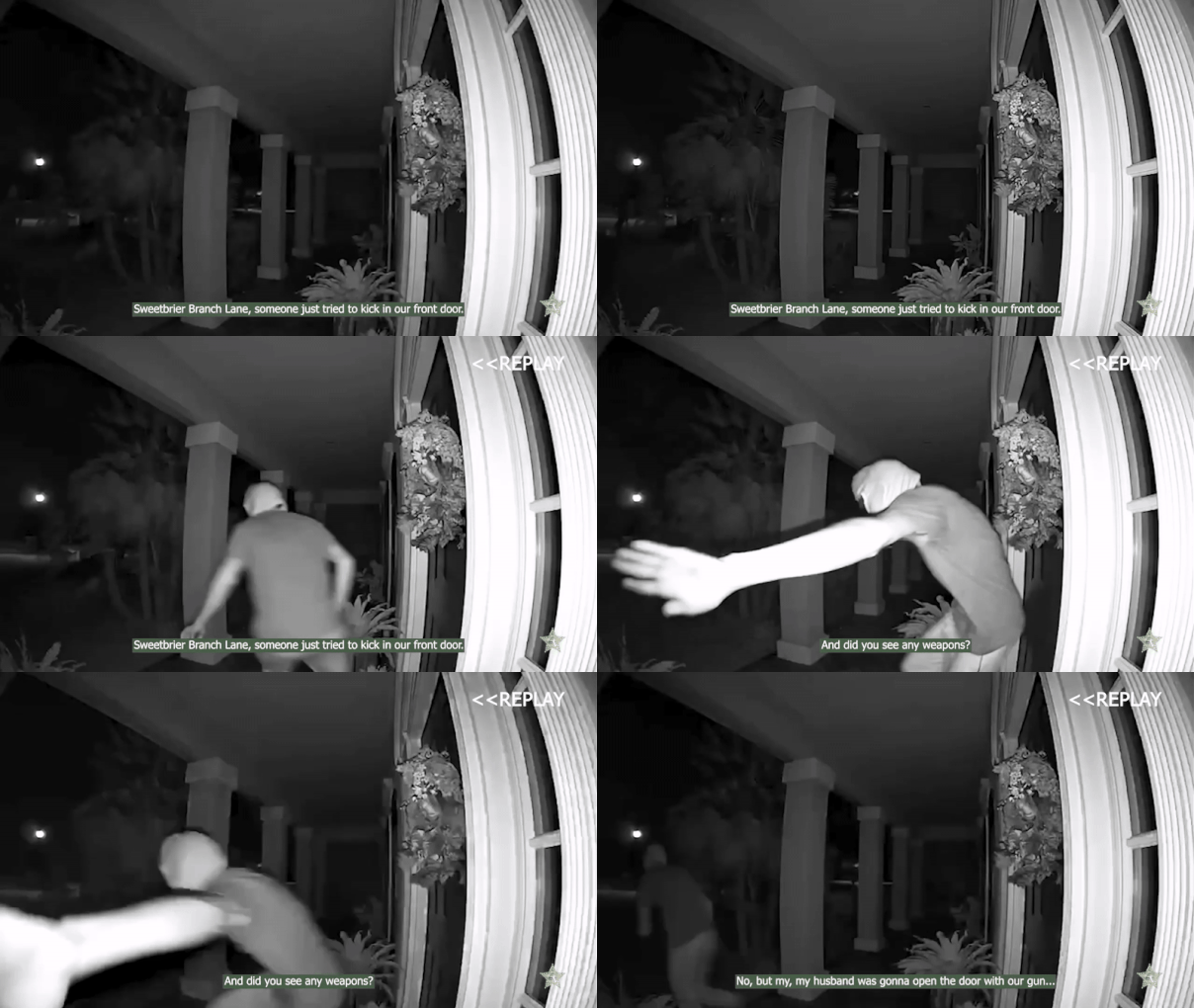
Security camera footage captured the alarming moments of the prank gone wrong, showing the teenagers aggressively kicking at the front door of a frightened homeowner who immediately called 911. In the recorded call, the resident informed police that while the individuals didn’t appear to be armed, her husband had already retrieved his weapon “in case they come back”—underscoring the potentially deadly risk these young pranksters were unwittingly taking. When deputies arrived at the scene, they found the three teenagers dressed in dark clothing and wearing gloves, hiding near the victims’ home, a detail that made their actions appear far more sinister than a simple prank.
The body camera footage from the arrest reveals a sobering interaction between the officers and the teenagers. When questioned about what they were doing, one teen simply admitted they were “just being stupid.” In a moment of blunt reality, a deputy asked them, “You guys want to get shot by a homeowner when you’re kicking their front door, and they think you’re breaking in to kill them? Because it will be justified. They don’t even go to prison and you’re 6 feet under.” This stark warning highlights the grave misunderstanding these young people had about how their actions might be perceived by homeowners who, fearing for their safety, could be legally justified in using deadly force to protect themselves and their families.
While reminiscent of the old-fashioned “ding-dong ditch” prank that many might remember from their youth, the “door kick challenge” represents a dangerous escalation that involves aggressive banging or kicking at doors—often late at night—followed by participants running away before residents can respond. The crucial difference lies in the intensity and aggression of the modern version, which can cause significant property damage and, more importantly, creates a situation that homeowners might reasonably interpret as a home invasion in progress. This misperception is at the heart of why law enforcement agencies across the country have been issuing warnings about the potentially deadly consequences of this particular social media trend.
The St. Johns County Sheriff’s Office didn’t mince words in their statement following the arrests: “This ‘challenge’ is not a harmless prank. As you heard in the audio, the complainants were armed, waiting at the front door to shoot the possible intruder. Participating in this criminal act has serious and possibly life-changing consequences.” They specifically directed a plea to parents and guardians, urging them to talk with their children about the dangers of such behavior and making it clear that the department “will not tolerate any participation in these challenges” and is “prepared to arrest and charge individuals involved, regardless of age.” The message underscores a growing frustration among law enforcement agencies dealing with the real-world consequences of viral internet challenges.
This incident serves as a powerful teaching moment about the disconnect between online trends and real-world consequences. What might seem like entertaining content on TikTok can translate into terrifying moments for unsuspecting homeowners and potentially life-altering legal troubles—or worse—for the participants. As social media continues to influence young people’s behavior in increasingly problematic ways, the responsibility falls not just on teenagers to exercise better judgment, but on parents to stay informed about online trends, platforms to moderate dangerous content, and communities to foster better understanding of how seemingly innocent pranks can be misinterpreted in a world where many homeowners are legitimately concerned about their safety. The Florida arrests stand as a cautionary tale that the line between viral fame and serious trouble is thinner than many young people realize.