





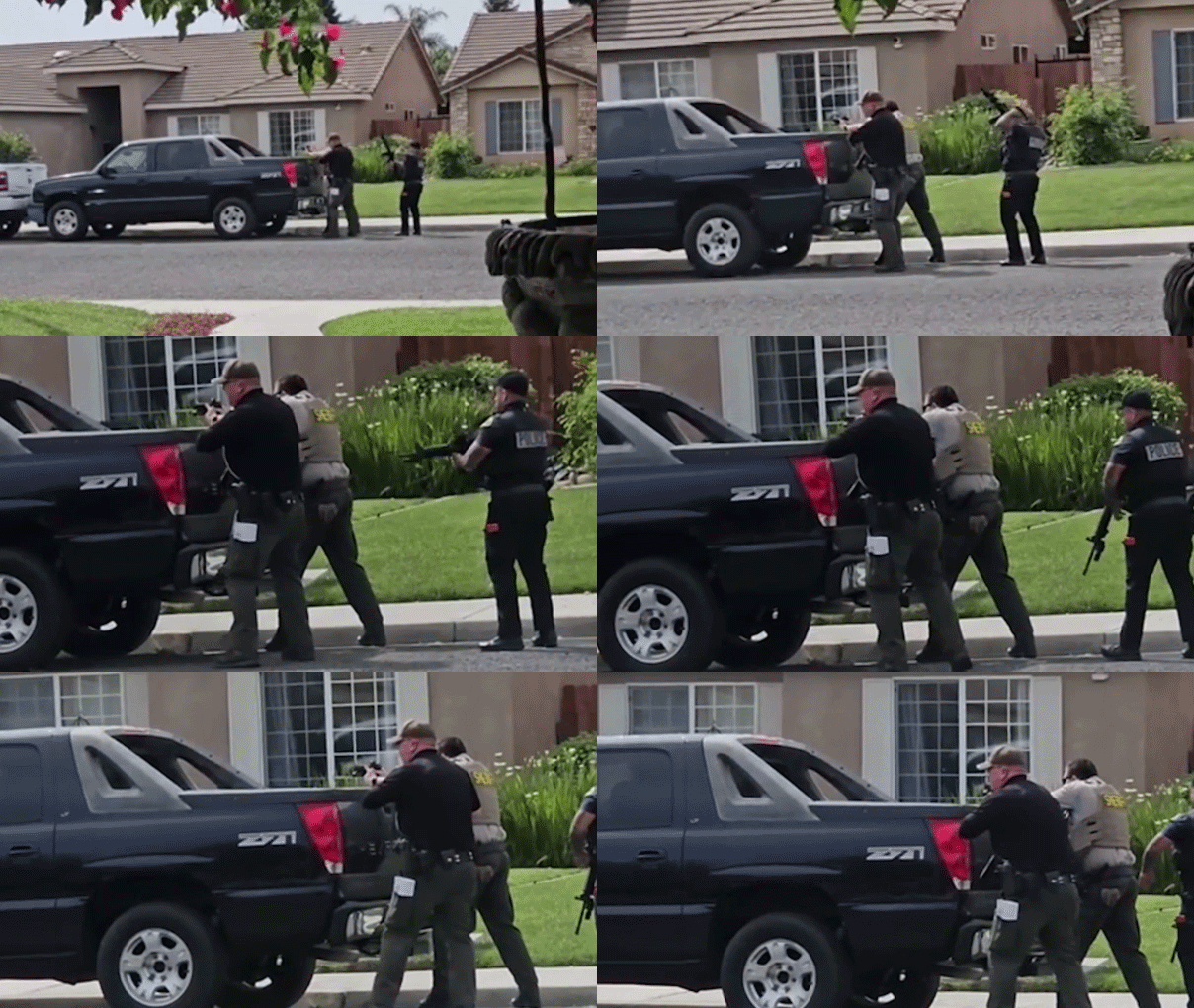
In the quiet suburban streets of Porterville, a central California town known for its close-knit community and sprawling orchards, a seemingly routine day turned into a nightmare of gunfire and heroism. It was just past 10:40 a.m. on a sun-drenched Thursday when the air shattered with the echoes of sirens and shouts. Neighbors, going about their morning routines—brewing coffee, checking emails, or stepping out to collect the newspaper—suddenly found themselves in the middle of a deadly standoff. A man, David Eric Morales, had been holed up in his home, refusing to surrender after allegedly shooting a deputy. Video footage captured by a quick-thinking local, shared with Fox News Digital, paints a chilling picture: officers frantically shouting, “Get down, get down!” as bullets flew and armored vehicles maneuvered through the chaos. The camera shakes slightly, revealing the raw fear on the faces of those nearby, mothers grabbing their children, husbands rushing to shield their families. This wasn’t just a news event; it was a live, terrifying moment for everyday people who’ve always felt safe in their peaceful cul-de-sac, now wondering how such violence could erupt so close to home. The suspect’s resistance dragged on for hours, keeping everyone on edge, as law enforcement from multiple agencies encircled the house, strategizing under the relentless sun. You can imagine the anxiety building among the community—kids kept inside schools, streets blocked off, and whispers of rumors spreading via texts and calls. It’s stories like these that remind us of the fragility of normal life, where a simple eviction notice, as it turned out this was all rooted in, could spiral into a firefight that shakes a whole town to its core. Neighbors recall Morales as mostly reclusive, paying rent late and keeping to himself, but nobody expected the rage that boiled over into gunfire. As the day wore on, the tension mounted, with deputies dodging shots and deploying drones that were promptly taken down. The air filled with the stench of gunpowder and the roar of engines, transforming the idyllic scene into a war zone. People huddled in their homes, peeking through curtains at the tactical teams, feeling a mix of dread and admiration for the officers risking everything. When the end came, it was swift and brutal—a BearCat armored vehicle, that hulking symbol of authority, sealed the suspect’s fate by running him over as he lay firing defiantly on the ground. It leaves you pondering the human cost: a man’s life ended in an instant, his body broken beneath tires in a final act of defiance that met unstoppable force. For the community, the standoff was a stark reminder of the thin line between civility and chaos, where one unhinged individual could upend dozens of lives. The emotional toll on those who witnessed it firsthand is immeasurable, with many left scarred by the screams and silence that followed. Weddings, birthdays, and quiet evenings at home are now tainted by this memory, as neighbors band together to process the trauma, sharing stories around dinner tables, wondering what could have been done differently to prevent such a tragic escalation. The dispatcher who first took the call, perhaps a young woman just starting her shift, might replay the moments endlessly, questioning every decision. And the officers on the ground, their hearts pounding, relying on training to guide them through the gunfire—they’re the unsung heroes thrust into hell without a day’s notice. This incident humanizes the fragility of peace, showing how quickly a personal grudge, like unpaid rent and a looming eviction, can ignite into something far more sinister. It’s not just about the bullets; it’s about broken men and strained systems, where someone like Morales, perhaps battling his own demons in isolation, decided to take a stand that cost lives. Reflecting on it, you can’t help but empathize with the victims’ families and the deputies’ spouses back home, pacing nervously, clutching phones waiting for that dreaded call. The town of Porterville, with its mix of veterans, farmworkers, and young families, embodies the American ethos of resilience, but events like this test that spirit profoundly. As days turn into weeks, the community rallies, organizing vigils and fundraisers, turning grief into collective healing. Yet, the questions linger: How does one person descend into such violence, and how do we ensure it doesn’t happen again? This story of gunfire and armored vehicles isn’t just a headline; it’s a mirror to our society, urging us to cherish the everyday peace we often take for granted, while honoring those who fight to preserve it. In the end, the cul-de-sac that echoed with gunfire will heal, but the scars on hearts will endure, a testament to the raw power of human actions and the enduring hope for compassion.
The heart of this harrowing tale centers on the victim, Deputy Randy Hoppert, a man whose dedication to service defined his short but impactful life. At 11:57 a.m., after being rushed to Sierra View District Hospital, he succumbed to his wounds, leaving behind a grieving family and a department in mourning. Hoppert wasn’t just a badge number; he was a loving husband, perhaps a doting father to young kids he carried on his shoulders, dreaming of their futures. Serving as a Navy corpsman from 2010 to 2015, he brought that military discipline and selfless care into his law enforcement role, joining the Tulare County Sheriff’s Office on January 5, 2020, with a vow to protect. Imagine the pride his parents felt at his graduation from the academy, or the quiet moments when he’d share stories of saving lives at sea, transitioning seamlessly to saving lives on land. On that fateful day, he was doing what deputies do best—enforcing the law with a final eviction notice against Morales, a man 35 days behind on rent. Officers like Hoppert train for worst-case scenarios, but no amount of preparedness shields you from the shock of gunfire tearing through your world. His colleagues describe him as the guy who always had a joke, the first to lend a hand in training drills or community events, embodying the spirit that draws many to these dangerous professions. Now, his absence reverberates through the office, where lockers remain slightly more solemn, and coffee breaks are filled with silence. The community mourns too, with barbecues and parades suddenly feeling incomplete without his laughter. Hoppert’s loss underscores the sacrifices made by those in uniform, men and women who leave their families at dawn, not knowing if they’ll return intact. It’s a poignant reminder of the unseen toll—nights spent apart, holidays missed, all for the promise of safety. His wife, maybe pregnant with their first child or planning an anniversary trip, now faces a future alone, grappling with the “what ifs” that haunt every widow. The Tulare County Chair, Amy Shuklian, voiced the collective sorrow: “We offer our heartfelt sympathies to the family of our fallen Deputy and to the entire Tulare County Sheriff’s Office. This profound loss underscores the inherent risks our first responders brave daily to ensure the safety of our community.” These words, delivered with genuine emotion, speak to the deep respect held for Hoppert, a hero whose name will be etched on memorials and in the hearts of those he saved. Stories emerge of his off-duty heroism—pulling someone from a burning car or comforting a scared child during a call. He was human, flawed yet noble, chased dreams in a uniform that became his second skin. Losing him feels like losing part of the town’s soul, a guardian who smiled through the storm. Politicians praise him in speeches, but it’s the quiet tributes from fellow veterans that hit hardest, sharing bottled-up memories of brotherhood forged in combat. His death amplifies the dialogue on officer safety, pushing for better training and mental health support, yet it can’t erase the void. For his loved ones, every sunrise is bittersweet, a reminder of stolen moments and unfulfilled promises. Hoppert’s life, cut short at its peak, inspires a call to honor such bravery, ensuring his legacy lives on through scholarships for his kids or foundations bearing his name. In this tragedy, we see not just a victim, but a pillar of strength whose light guided others, now extinguished too soon in a horror that touches every American who values freedom. The human element shines through in estimations of his impact—how many lives he saved without fanfare, how his compassion turned potential tragedies into triumphs. Reflecting on Hoppert, one can’t help but feel gratitude mixed with sorrow, recognizing the vast network of lives he touched, from the farmers he helped protect to the deputies he mentored. This isn’t just a passing story; it’s a sobering call to cherish the protectors among us, vulnerable yet unyielding in their duty. As communities across the nation send cards and thoughts, the memory of Deputy Hoppert endures, a beacon of service in a world desperate for heroes. His story urges us to bridge divides, to support law enforcement with empathy, understanding that beneath the badge is a person with dreams, fears, and an unwavering commitment to justice. In essence, Hoppert represents the best of us—selfless, resilient, and profoundly human.
Tulare County Sheriff Mike Boudreaux, a man weathered by years of witnessing the worst humanity has to offer, stood before the cameras at the news conference, his voice steady yet laced with palpable frustration and determination. He painted a vivid picture of the chaos, detailing how Morales, clad in camouflage and lying prone in defiance, continued his barrage even as the end loomed. “The suspect was lying prone on the ground in camouflage clothing, continuing to pose a threat,” Boudreaux recounted, his eyes reflecting the adrenaline-fueled hours that preceded the resolution. It was no easy standoff; Morales had barricaded himself inside, raining fire upon deputies and their vehicles for what felt like an eternity. The sheriff described how the suspect shot down a surveillance drone with chilling accuracy, turned multiple tactical vehicles into perforated targets, and laid in wait, almost anticipating the impending deputies serving that eviction notice. Boudreaux’s blunt words captured the raw emotion of the moment: “Don’t shoot at cops. You shoot at cops, we’re going to run you over. He got run over. He got what he deserved.” This wasn’t empty rhetoric; it was the candid take of a leader protecting his team, echoing the sentiments of officers nationwide who face such life-or-death decisions daily. Imagine Boudreaux’s internal turmoil—urgently assembling SWAT teams, coordinating with neighboring agencies, all while fielding reports of injuries and hoping for a peaceful end that never came. He’s a father figure to his deputies, perhaps with his own family at home worrying, as he navigates the thin line between compassion and unyielding authority. The incident stemmed from a non-paying tenant issue, Morales behind on rent for 35 days, escalating into madness when deputies arrived to enforce the law. It’s a sobering reminder of how everyday evictions can turn deadly in a split second, a flicker of confrontation igniting into gunfire. Boudreaux’s account humanizes the sheriff’s role, showing a man who grapples with the weight of these choices, knowing that each command could mean life or death for his people. Colleagues attest to his leadership—calm under pressure, yet fiercely protective, like a coach guiding his team through a storm. The community’s reliance on him during crises like this is immense, with residents turning to local leaders for reassurance when violence strikes close. Reflecting on Boudreaux’s statement, it highlights the no-nonsense reality of law enforcement, where negotiation fails, and force becomes the final arbiter. He’s not alone in this; analysts note similar cases where suspects’ refusal to surrender forces extreme measures, raising debates on tactics and rights. For Boudreaux, it’s personal—having lost a deputy under his watch, he embodies the quiet burden of command, sleepless nights poring over what-ifs. His words resonate with those who’ve faced aggression firsthand, a rallying cry for justice that cuts through the noise of political divides. Yet, amidst the resilience, there’s vulnerability: the sheriff as a human being, perhaps quietly grieving the officer lost, channeling anger into resolve. Stories from his tenure reveal a dedicated public servant—community outreach, youth programs, all aimed at preventing exactly these horrors. The standoff’s resolution, morbid as it was, underscores the evolution of policing tools like BearCat vehicles, designed for such perils but rarely tested to this extent. Boudreaux’s forthrightness invites empathy, acknowledging that beneath the uniform is someone who’s seen too much, yet remains committed. In this narrative, he’s not just a authority figure but a symbol of steadfast defense, his candidness a bridge to understanding the complexities of public safety. As investigations probe deeper, Boudreaux’s testimony will shape discussions on mental health, eviction laws, and officer protection, inspiring reforms born from tragedy. His personal stake—having to face Hoppert’s family, explaining the incomprehensible—adds layers of emotional depth. Ultimately, Sheriff Boudreaux represents the frontline guardians, humanizing the machinery of justice with his unwavering resolve and heartfelt bluntness. The incident prompts broader reflections on societal fractures, where isolation breeds rage, and how communities must unite to mend them. Through Boudreaux’s eyes, we glimpse the toll on those who enforce laws, their lives intertwined with danger, deserving gratitude and support. His story is one of perseverance, reminding us that true leadership shines brightest in darkness, guiding towns through despair toward healing.
As the dust settled in Porterville, the community grappled with the aftermath of a tragedy that reverberated far beyond the cul-de-sac, touching lives in ways both seen and unseen. Neighbors recounted the surreal experience of sirens piercing the morning calm, turning their quiet routine into an ordeal of knocked-on doors and emergency evacuations. One resident, a longtime local named Maria, described huddling her grandchildren in a back room, whispering prayers as bullets chipped away at parked cars nearby. The emotional scars are deep—kids who now flinch at loud noises, adults questioning the safety of their homes. Volunteering at the scene, community members offered coffee and blankets to exhausted officers, forming impromptu support groups where stories of fear mingled with admiration for the brave. The incident’s ripple effects extend to local businesses; the hardware store owner, Dave, spoke of panic buying guns and locks, reflecting heightened anxieties in a town that once prided itself on trust. Social media buzzed with amateur videos and heartfelt tributes to Deputy Hoppert, humanizing the event through personal anecdotes—friends sharing memories of his goofy smile or his dedication to coaching Little League. Yet, alongside solidarity, debates flared about gun control and mental health support, with some arguing for stricter laws while others defended self-defense rights. Families affected by similar evictions in the area now fear knock-and-talk gone wrong, prompting calls for better tenant protections and intervention programs. The sheriff’s office, under Boudreaux’s guidance, launched support services for deputies, including counseling for trauma, acknowledging the psychological toll that lingers long after the gunfire. Moms’ groups organized fundraisers, turning grief into action, baking pies and knitting scarves for Hoppert’s widow and children. These gestures, small but sincere, underscore the human capacity for kindness amid chaos, rebuilding fractured spirits one conversation at a time. Reflections on Morales paint a portrait of a troubled soul—perhaps battling addiction or unresolved anger, his life ending in tragedy that leaves no winners. Experts point to red flags like unpaid rent signaling deeper crises, urging communities to foster empathy and connection. The standoff serves as a catalyst for dialogue at town halls, where residents air grievances and brainstorm solutions, from neighborhood watch programs to mental health hotlines. Emotionally, it’s empowering for some, a chance to channel collective resilience and honor fallen heroes. Friends and family of Hoppert share untold stories—his love for fishing trips or impromptu sermons at church grills—keeping his memory alive. The broader nation watches, with similar incidents in other states sparking nationwide conversations on police reform and community policing. For Porterville, this is a turning point, strengthening bonds forged in fire, where strangers become allies in remembrance. The human element emerges in acts of bravery: the neighbor who captured that pivotal video, risking exposure to document history. Forgiveness and understanding replace rage in some quarters, as people recognize Morales’ end as a sad culmination of ignored pain. Vigils light candles, memories flow like wine at gatherings, and children draw cards bearing rainbows and heroes. This tragedy humanizes the fragility of our world, urging proactive compassion to prevent future heartbreaks. In essence, the community rises, transformed by loss into a beacon of hope and unity.
Delving deeper into the emotional undercurrents of this devastating event, one can’t ignore the profound impact on families and the intricate web of human connections it disrupts. Deputy Hoppert’s survivors—his wife, young children, and extended kin—now navigate a landscape forever altered by grief, where anniversaries become poignant remembrances rather than celebrations. They might cling to mementos: a uniform hung in the closet, letters from his service days, or vintage records he loved spinning on lazy Sundays. The psychological toll is staggering; nightmares of sirens or sudden starts at unexpected sounds, compounded by the public’s gaze on their private sorrow. Support from organizations like the bere fft law enforcement spouses’ network offers solace, with group sessions where widows share fears of moving forward alone, balancing memories with the demands of single parenthood. For Hoppert’s kids, school counselors help process the loss, turning play into therapy where they draw pictures of their “hero dad” flying to the rescue. On the flip side, Morales’ family endures their own quiet torment—perhaps estranged siblings grappling with regret, questioning how things spiraled so far from normalcy. Reports suggest he isolated himself, his unpaid rent a symptom of larger struggles, leaving loved ones to piece together a puzzle of mental health battles or unspoken grievances. Communities rally, organizing memorial fundraisers where proceeds support causes Hoppert championed, like youth mentorship programs. A local bakery donates cupcakes emblazoned with “In Memory of Randy,” fostering a sense of shared healing. Psychologists note the collective trauma, recommending art therapy or community walkathons to channel energy positively. Hoppert’s Navy background adds layers; veteran buddies attend services, saluting a comrade who transitioned from medical hero to civilian guardian. His service inspired tales of camaraderie, like beach landings or midnight watches, now echoed in stories for his progeny. For those affected, time becomes an ally, albeit slowly, as routines rebuild around absence. Birthdays are bittersweet, holidays shadowed by emptiness, yet resilience shines through—survivors leaning on faith, friends, and newfound passions. This incident prompts reflections on societal support, advocating for better mental health resources to catch crises early. The human cost amplifies calls for dialogue between police and civilians, breaking cycles of mistrust. In mourning, people find strength in vulnerability, sharing stories that mend fractures. Hoppert’s legacy inspires, his sacrifice a reminder to cherish loved ones fiercely. As families heal, networks of empathy expand, turning tragedy into transformative growth. Ultimately, these personal narratives humanize the larger story, emphasizing that behind every headline lie hearts breaking and spirits enduring.
In reflecting on this dark chapter in Porterville’s history, the pursuit of justice and healing becomes a communal journey, emphasizing themes of resilience and introspection that echo across the nation. Investigations continue, with forensic teams piecing together the timeline—bullet trajectories, vehicle damage, and Morales’ final defiance—aiming for closure for Hoppert’s family and accountability for the system. Sheriff Boudreaux promises transparency, releasing updates that humanize the process, acknowledging the deputies’ bravery while pledging reforms to enhance safety protocols. Community leaders like Chair Shuklian advocate for systemic changes: improved eviction mediation to prevent escalations, expanded mental health outreach, and heightened officer training. Sympathy floods in—social media outpourings from strangers, donations crowdfunding counseling for affected families, and vigils drawing hundreds under starry skies. A sense of unity emerges, as diverse groups—farmers, veterans, educators—bond over shared values of protection and peace. Hoppert’s name graces awards and scholarships, ensuring his ethos of service endures. Morales’ past, once shrouded, reveals clues: possible untreated traumas leading to isolation, a cautionary tale of unchecked despair. Experts weigh in on parallels with other standoffs, stressing preventive measures like crisis intervention teams. Emotionally, survivors find solace in rituals—planting trees in honor of Hoppert, compiling scrapbooks of memories. His kin forge ahead, perhaps channeling grief into advocacy for first responder support. The town rebuilds, hosting recovery events like charity runs, where participants share stories of inspiration. Reflections on media coverage highlight sensitivities, urging respectful portrayals that honor victims. Broader implications touch on national debates—gun violence, policing tactics, and community bonds. Yet, hope prevails: innovations like community watch apps bridge gaps, fostering vigilance without paranoia. In this narrative, humanity triumphs—through empathy, reforms, and unbreakable spirit. Porterville stands as a microcosm, resilience personified, urging vigilance and compassion. As time passes, the pain fades, replaced by pride in communal fortitude. Deputy Hoppert’s shadow lingers, a guidepost for safer futures. Ultimately, this tale of tragedy births transformation, a testament to enduring human spirit.