


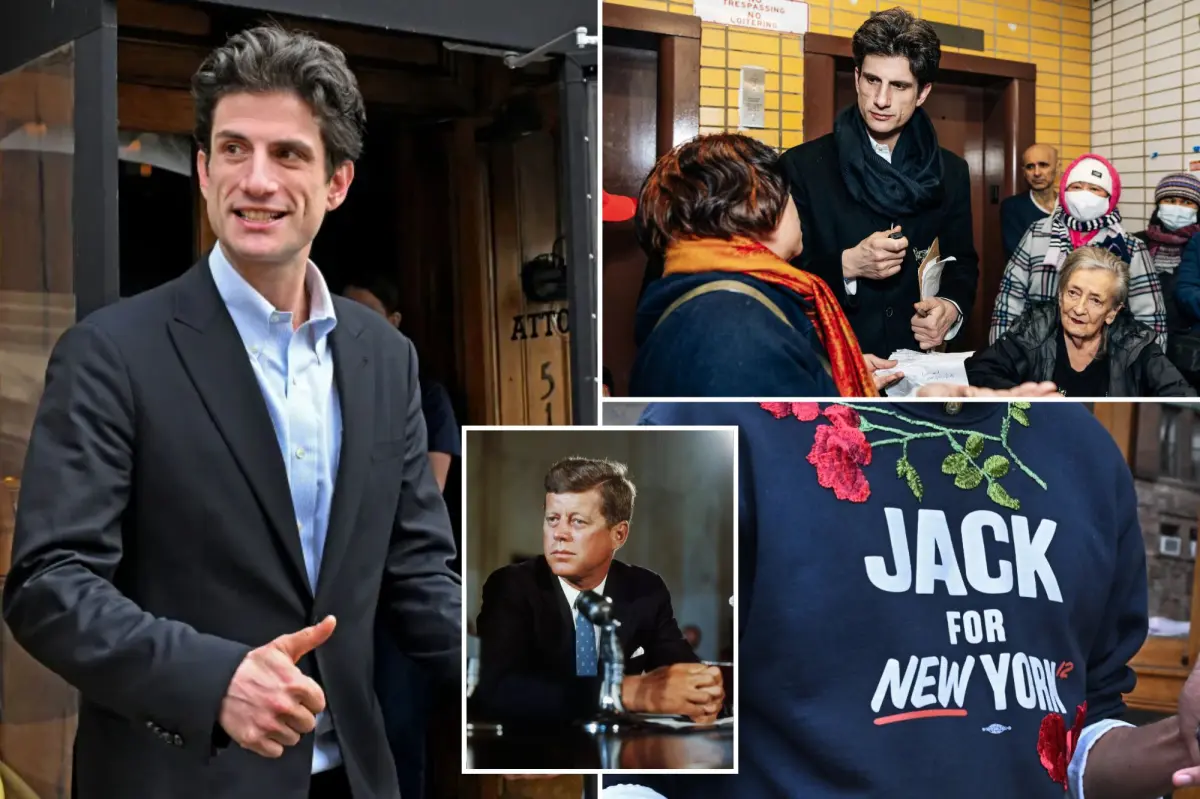
Jack Schlossberg has always lived in the shadow of a legend, but lately, he’s been leaning on that legacy to fuel his dreams of representing New York in Congress. At 33, this sharp-witted grandson of President John F. Kennedy is vying for the Democratic nomination in Manhattan’s 12th Congressional District, a race to replace retiring Rep. Jerrold Nadler. Born and raised in the very neighborhoods he’s hoping to serve—stretching from the bustling West Side to the iconic East Side—Jack’s not just running on his resume; he’s weaving in the family tale of a president who inspired hope in a nation. “Lately, I’ve been doing some reflecting on my grandfather, President John F. Kennedy, and his legacy of hope,” he shared in a heartfelt email blast on March 5, seeking campaign support. It’s not just politics; for Jack, it’s deeply personal. He introduces himself as “Jack, or John Bouvier Kennedy Schlossberg if you want to know the whole thing,” honoring not only his grandfather but his grandmother Jacqueline Bouvier Kennedy Onassis, whose elegant name brings a touch of old-school glamour to his pitches. This isn’t some gimmick—Jack truly believes in channeling that Kennedy spirit to rally people around hope, especially in times when cynicism runs high. Growing up in such a famous family must be a double-edged sword. On one hand, the privileges were there: summers at Hyannis Port, tea in the White House as a kid. But Jack’s life, like many in his position, was marked by profound loss. His grandfather was assassinated in 1963, just two weeks before Jack was born, leaving a void that his parents, John Jr. and Caroline, filled with stories of service and unwavering optimism. Now, as he steps into the political arena, Jack sees this as his chance to honor that. In his campaign launch fundraiser back in November, he was already invoking JFK: “I’m running to represent NY-12 in Congress! This is the district where I was born and raised, and the place that five generations of my family have called home. I’m Jack Schlossberg, and my grandfather, President Kennedy, is my hero.” It’s a love letter to his roots, blending family pride with a call to action. Yet, as any storyteller knows, the best anecdotes come with vivid details that make you feel the moment. Imagine young Jack, inspired by his grandfather’s words, not through firsthand memories, but through black-and-white footage on grainy VHS tapes. In high school, he’d spend hours glued to those speeches, absorbing JFK’s vision of America— not as a ruthless contest, but as a community bound by shared purpose. “He taught us all that politics isn’t about serving yourself — it’s about serving others,” Jack recounts in one of his solicitations, dated March 2. It’s a timeless reminder, especially today, when elected officials often seem more interested in tweets than tendons. Jack’s campaign is bigger than him, he insists; it’s about reigniting that flame for future generations. And let’s be real, who doesn’t get a little emotional when family legacies intersect with bigger dreams? Jack’s mother, Caroline, must feel a swell of pride watching her son carry on, even as she navigates her own quiet advocacy in the arts and human rights. The Schlossberg name itself carries weight—his father, Edwin Schlossberg, an award-winning designer and artist, taught Jack the value of creativity in problem-solving. But it’s JFK who remains the north star, a figure of youthful vigor and progressive boldness, assassinated tragically young, yet lasting forever. Jack’s emails reflect this: they’re not cold pitches for cash, but warm appeals to emotion, urging donors to invest in hope amid uncertainty. One standout plea highlights a personal favorite: JFK’s belief that fighting for hope benefits everyone, not just the fighter. It’s poignant stuff, especially coming from someone who, by all accounts, has lived his life trying to fill those metaphorical shoes. Jack’s no stranger to public life—he’s been involved in youth programs, environmental causes, and even comedy sketches with Conan O’Brien, showing a lighter side amidst the gravity. Yet, running for office in a city as diverse and demanding as Manhattan requires more than charisma; it needs connection. Jack’s approach is to humanize politics, making it feel like a neighborly chat over coffee rather than a distant debate. By sharing bits of his JFK-watching ritual, he’s inviting supporters into his world, reminding them that legacies aren’t just history—they’re feelings. And in a district shaped by immigrants, artists, and innovators, that emotional pull might just resonate. Who knew that an old VHS tape could spark a modern campaign? Jack’s journey shows how personal stories can bridge generations, turning a run for office into a mosaic of motivation and memory. As he builds his team in a competitive primary field, Jack’s bet is that voters will see not just a name, but a kindred spirit striving to honor the past while shaping the future. It’s a heartfelt gamble, one that asks us all to believe in the power of hope, even when grandpa’s not around to say it himself.
But Jack’s not just reminiscing in the abstract; he’s wielding his grandfather’s legacy as a sword against contemporary villains, using it to call out what he sees as disrespect for JFK’s memory. Take his response to Donald Trump’s announcement to rename the Kennedy Center after himself back in March—Jack saw it as a direct assault. In a fiery e-solicitation on March 4, he blasted, “Jack Schlossberg here — candidate for Congress in NY-12. Donald Trump just announced he’s going to rename the Kennedy Center after HIMSELF…This isn’t the first time Trump has tried to erase my grandfather President Kennedy’s legacy, and it won’t be the last.” It’s charged language, tapping into that raw indignation many feel when they perceive an attack on sacred symbols. The Kennedy Center, that majestic hub for arts in Washington, named in honor of JFK and Jackie for their patronage of culture, would become a Trump vanity project? For Jack, it’s personal—a desecration of the hope his grandfather embodied. You’d have to understand the context: Jack’s lived his life honoring that legacy through quiet acts, like volunteering at the Peace Corps (the organization his uncle Bobby helped launch) or advocating for equitable education. Now, with this renaming, it’s like Trump’s trying to overwrite history, much as some say he did with his 1973 cameo in a Playboy spread or his more recent attempts to mythologize his own “accomplishments.” Jack’s email doesn’t just criticize; it rallies. He asks supporters to fund his fight, implying that by electing him, they’ll preserve that light against what he views as the darkness of self-obsession. It’s a clever pivot, blending family reverence with partisan passion. Imagine the emotions bubbling up: frustration at Trump’s bombastic style clashing with JFK’s eloquent humility. John F. Kennedy was the poster boy for the New Frontier—exploring space, battling poverty—while inspiring through words like those in his inaugural: “Ask not what your country can do for you—ask what you can do for your country.” Trump’s moves feel antithetical, like turning a tribute into a trophy. Jack leverages this contrast, painting his campaign as a defender of true American values. But beneath the rhetoric, there’s vulnerability. Jack admits, “I know I have big shoes to fill. In my grandfather’s memory, I’ve led a life of caring about this a lot.” It’s not boasting; it’s humility. He’s poured effort into everything from his work in clean energy startups to mentoring underprivileged kids, all spurred by that JFK spark. And the campaign isn’t solo—his wife, Laura Muñoz, a trailblazing engineer, offers moral support, her own family stories of resilience mirroring Jack’s. Yet, the Trump jab underscores a broader theme: politics isn’t just policy; it’s protecting ideals. Jack’s emails echo this, urging donors to fight for hope not just for themselves, but for each other and the shared future. It’s a call to arms wrapped in nostalgia, reminding folks that in erasing JFK, Trump’s trying to erase possibility itself. Voters in NY-12, home to Broadway theaters and bustling streets where Jackie once strolled, might connect this to their own fights against gentrification or inequality. Jack’s strategy is to personalize the national drama, making Trump’s actions feel like a neighborhood insult. Of course, critics might say it’s all theater, but for Jack, it’s therapy—channeling grief into action. The renaming rumor—eventually disproven, but the point stands—highlights how today’s headlines fuel yesterday’s heroes. Jack’s using it to build momentum, turning outrage into opportunity. If JFK could charm a nation during the Cold War, why not his grandson in a divided America? It’s a bold play, one that humanizes the heir by showing he’s not numb to current events; he’s ignited by them, using his platform to say, “Not on my watch will my grandfather’s dreams be diminished.” This isn’t just campaigning; it’s custodianship of legacy, a son’s oath to keep hope alive amidst chaos.
Delving deeper into Jack’s fundraising tactics, it’s clear he’s crafted a pattern of emotional pitches that keep JFK at the forefront, almost like a recurring character in his story. His emails aren’t one-off blasts; they’re a series of near-identical appeals, each dripping with sincerity and strategic repetition. One recurring theme? The invocation of hope as a guiding star. “In my run to fight for NY-12 in Congress, and just as a person, that’s what I want to focus on. Hope,” he reiterated, tying personal growth to public service. It’s not hollow; Jack’s life has been about investing in that ideal, from his environmental tech ventures to public appearances where he’s effortlessly charismatic, much like his grandfather. Think of it as a modern twist on JFK’s fireside chats, but via email—intimate, direct, and designed to tug at heartstrings. For instance, in several solicitations, he revisits that high school ritual of watching JFK speeches, confessing it shaped his worldview. “He taught us all that politics isn’t about serving yourself — it’s about serving others. When we fight for hope, we’re not just doing it for ourselves, we’re doing it for each other and the future we all have to share.” These lines aren’t improvised; they’re sculpted from deep reflection, making donors feel like confidants in a shared mission. And let’s not forget the full-name flourish—Jack, or John Bouvier Kennedy Schlossberg—a nod to both grandfathers’ sides, adding layers of identity that resonate in New York’s multicultural tapestry. His mother’s influence looms large too; Caroline, the scholarly daughter, raised Jack with a sense of duty, balancing celebrity with substance. Jack’s pitches often acknowledge this web of heritage, noting that “this is bigger than me. It’s bigger than my family’s legacy.” It’s a disarming tactic, admitting privilege while pivoting to collective promise. Fundraisers like these aren’t just about money; they’re about building a community of believers, much like how JFK’s campaigns gobbled up volunteers with dreams of Camelot. Jack extends this by sharing anecdotes that humanize the Kennedys—beyond assassination conspiracies, to the human touch. Picture a young John Kennedy, Jr., somber at his father’s funeral, or Jackie finding solace in art post-tragedy; Jack inherits that resilience, channeling it into positivity. His emails close on a note of progress, urging action against cynicism. In a primary crowded by policy wonks and insiders, Jack’s approach feels refreshing, like turning politics into a family reunion. Voters might see him not as a dynasty heir, but as an everyday guy grappling with big influences, making tough choices on climate action or economic equity backed by that Kennedy hope. Sure, it’s strategic—rakes in funds by evoking sympathy and heroism—but it rings true because Jack lives it. He’s not faking the feel; he’s amplifying it for NY-12’s diverse electorate, from affluent Upper West Siders to East Harlem residents with their own immigrant legacies. By repeating JFK motifs, Jack ensures his campaign isn’t fleeting; it’s a narrative arc, from loss to purpose. It’s empathetic storytelling at its core, inviting donors to become chapters in this ongoing tale of renewal.
Of course, not everyone’s enamored with Jack’s reliance on his grandfather’s luster. Veteran political strategist Hank Sheinkopf isn’t shy about calling it out, labeling the campaign “the dead grandpa campaign” as “outrageous.” In a blunt assessment, Sheinkopf points out the demographics: “You have to be 80 years to remember JFK. It’s not a growing demographic group.” It’s a fair critique—Jack’s pitch might alienate younger voters who don’t share that historical reverence, or even irritate those tired of dynasty politics. Sheinkopf, with decades of New York campaigns under his belt, knows the perils of nostalgia; it can feel outdated, like clinging to a sepia-toned photo in a digital age. For a 33-year-old entering the fray, invoking a man slain before his birth could seem gimmicky, a way to skip earning cred through pure grit. Sheinkopf’s words sting because they’re grounded in reality: electoral math favors issues like housing affordability or healthcare in Manhattan, not 1960s idealism. Jack risks appearing out of touch, especially to millennials and Gen Z who might see JFK as a distant icon, not an emotional anchor. Critics could say it’s lazy fundraising, exploiting tragedy for trinkets—e-blitzes begging for “election dough” framed as honoring the past. And let’s acknowledge the shadows: the Kennedy curse, scandals, and mishaps (from Chappaquiddick to salacious rumors) could taint Jack’s aura. Is he just riding coattails, or proving his mettle? Sheinkopf’s skepticism highlights a broader truth: in politics, authenticity trumps ancestry. Yet, even detractors might soften when realizing Jack’s depth—his education at Yale, his environmental advocacy, his charitable work—suggests substance beyond the surname. Still, the label sticks, portraying Jack as a caricature rather than a contender. Sheinkopf’s not wrong to warn that nostalgia fades; Elizabeth Warren or Alexandria Ocasio-Cortez built power from personal stories, not inherited ones. For Jack, it’s a gamble—alienate some, but inspire others with timeless values. In a city where every block tells a story, his approach could backfire, making him seem entitled rather than earnest. But politics thrives on emotion, so Sheinkopf’s cynicism might just fuel Jack’s fire, pushing him to weave more of his own narrative amid the JFK echoes.
Despite the backlash, Jack Schlossberg stands firm, defending his approach with a warmth and wisdom that reveal his genuine appreciation for intergenerational bonds. “I have two grandfathers — one was president of the United States and the other was president of his temple on the uptown,” he explains casually, referencing Alfred Schlossberg, his father’s father who led his synagogue with quiet devotion. This balance—celebrity and community—grounds Jack, showing he’s not just a one-note act. “The generations who built NYC and the USA deserve to be acknowledged,” he insists, flipping the script on critics. For Jack, mentioning JFK isn’t a ploy; it’s a connector, a way to spark conversations that reveal people’s truths. “I love asking people about their grandparents. That’s when they light up,” he shares, and you can almost hear the smile in his voice. It’s a humanizing touch, transforming politics from a sterile squabble into shared storytelling around kitchen tables. In NY-12’s vibrant streets, where elders share tales of Ellis Island arrivals and young pros chase dreams, Jack’s method taps into universal longing—everyone has heroes, losses, legacies. By praising his temple-president grandpa alongside JFK, he democratizes the reverence, making it relatable. Alfred Schlossberg’s story—impromptu sermons on ethics, community gatherings—mirrors JFK’s impact, proving modesty and influence coexist. Jack’s pitch resonates because it celebrates everyday legacies, not just the glittering ones. When he talks hope from JFK, it’s infused with personal anecdotes: late-night talks with Caroline about duty, or volunteer stints that echo Bobby Kennedy’s spirit. This isn’t denial of criticism; it’s sophistication, acknowledging dimensions while pushing forward. Fundraisers that invoke family feel less about cash and more about kinship, inviting donors to join a web of memories. Jack’s youthful energy adds spice—he’s no stodgy relic, with recent gigs like TEDx talks on innovation. Yet, he values the past as a guide, not a crutch. “In my grandfather’s memory, I’ve led a life of caring about this a lot,” he notes, weaving in his tech background, his passion for sustainability. Voters might see a holistic candidate: ambitious but anchored, flashy but genuine. Connecting via grandparents challenges Sheinkopf’s demographics, appealing to emotion over age. In diverse Manhattan, stories bridge divides—Irish ancestry’s grit for some, synagogue wisdom for others. Jack’s strategy humanizes politics, turning cold primaries into warm exchanges, much like JFK’s mailroom memos became rallying cries. It’s about shared humanity, hoping voters see not a stranger, but a familiar face honoring roots. This defense isn’t defiant; it’s inviting, urging empathy. In doing so, Jack transforms potential weakness into strength, proving legacy can unite, not divide. As the primary heats up, his grandfather’s echo might just be the chorus they all sync to.
Wrapping up Jack’s journey, it’s evident that his campaign is a tapestry of hope spun from heartache and heritage, using JFK as both anchor and amplifier for his congressional aspirations. At its heart, it’s about redemption—transforming a family tragedy into a force for good in NY-12, where Manhattan’s pulse beats with diversity and determination. Jack’s emails, with their poetic invocations of speeches and full-throated defenses against erasure, aren’t mere gimmicks; they’re testaments to a life molded by giants yet driven by personal conviction. “That’s what I want to focus on. Hope,” he repeats like a mantra, embodying JFK’s optimism in ways that feel refreshingly real. Criticism like Sheinkopf’s “dead grandpa” tag underscores the risks, yet Jack counters with relatable tales of his dual grandfathers, proving heritage is a bridge, not a barrier. In a district of dreamers—from Broadway dreamers to startup hustlers—his blend of nostalgia and now inspires, asking voters to believe in legacies that uplift. As he fights in the primary, Jack’s story shines: a man not defined by past glories, but elevating them for present possibilities. It’s a human tale of connection, proving that even in politics’ storms, a grandfather’s hope can light the way forward. With campaigns morphing into movements of memory, Jack’s path reminds us why family stories endure—because they’re ours, too. In the end, his run isn’t just for votes; it’s for validation that JFK’s flame, kindled in loss, warms us all. As June looms, Jack stands poised, a living echo of hope, ready to serve with the grace of generations behind him.