





Violence Erupts: Mexico in Turmoil Following the Death of Notorious Cartel Boss El Mencho
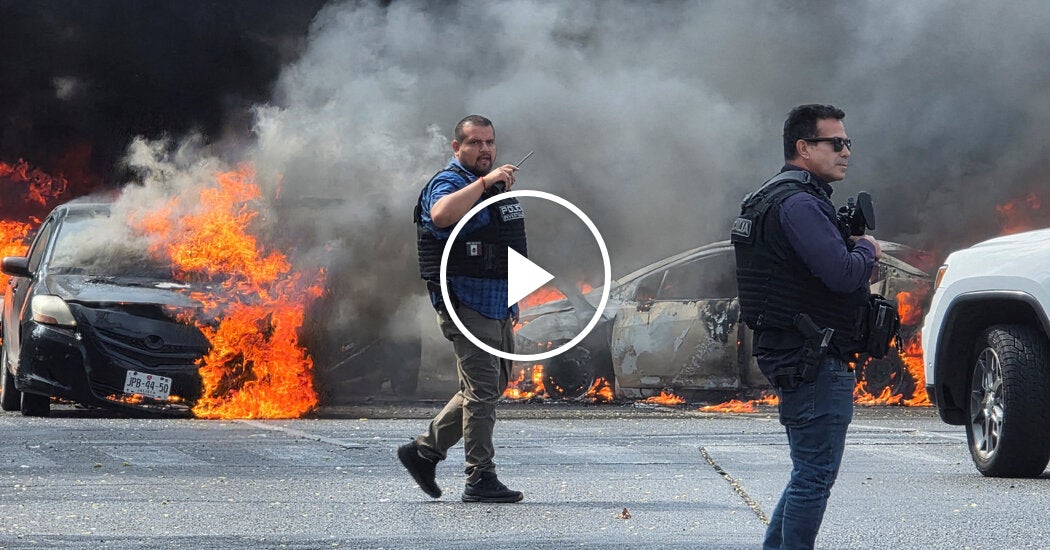
In the sweltering heat of Mexico’s underworld, where power is measured in bullets and bravado, a seismic shift unfolded on February 23, 2026, when the Mexican government announced the takedown of one of the nation’s most feared figures. Armed operatives clashed with Nemesio Oseguera Cervantes, better known as El Mencho, leader of the Jalisco New Generation Cartel (CJNG), in a high-stakes operation that ended with his reported death. What began as a covert strike quickly ignited a wildfire of retribution across the country, with rival factions and frustrated cartel members torching buildings and vehicles in brazen displays of defiance. Eyewitness videos captured hazy streets ablaze with orange flames licking at armored SUVs, while thick black smoke shrouded the chaos below. Mexican drug cartels have long gripped the nation with their iron grip on trafficking routes, but this incident exposed the fragile veneer of control held by authorities amid escalating gang warfare. As journalists scrambled for details, the scene painted a stark reminder of how one man’s fall from power can unleash untold mayhem, affecting everything from local economies to national security.
El Mencho’s Reign and the Cartel’s Bloody Legacy
Nemesio Oseguera Cervantes, alias El Mencho, wasn’t just another drug lord; he was the embodiment of Mexico’s ruthless narco-culture, a self-made kingpin who rose from humble beginnings in Michoacán to command a sprawling empire. Born in 1966 and nicknamed “El Mencho” for his simple, unforgettable moniker, he co-founded CJNG in 2010, transforming it into one of the most aggressive cartels in recent history. Under his leadership, the group expanded its operations from drug smuggling into extortion, kidnapping, and even cybercrimes, rivaling Sinaloa’s dominance with sheer ferocity. Law enforcement agencies, including the DEA in the United States, had been hunting him for years, offering multimillion-dollar bounties for his capture. Stories of his exploits read like a hyperbolic thriller: tales of ruthless enforcers dismantling rivals with machetes, or daring helicopter evasions during police raids. Yet, behind the bravado was a man whose ideology was etched in violence—loyalty enforced through fear, and dissent met with brutal ends. His CJNG wasn’t just about profits; it was a twisted form of rebellion against the state, funding community programs in impoverished areas while terrorizing others into submission.
As news of his death rippled through Mexico’s criminal networks, it wasn’t just sorrow that stirred; it was a calculated fury. Cartel members, many of whom owed their livelihoods to El Mencho’s ruthless vision, saw his demise as an existential threat. Immediately after the government’s announcement, coordinated attacks flared up in at least a dozen states, from the industrial heartlands of Jalisco to the northern border hubs of Baja California. Grainy surveillance footage from cities like Guadalajara and Tijuana showed masked individuals—likely CJNG affiliates—dousing vehicles with accelerants and igniting them in synchronized fury. Shops, warehouses, and government offices became targets, their windows shattering from the explosions as infernos raged unchecked. This wasn’t random vandalism; it was a declaration of war, a ritualistic signaling that El Mencho’s death demanded blood. Experts point out that such reprisals are standard in Mexico’s cartel conflicts, drawing parallels to the bloody aftermath of other capo takedowns, like the wave of killings following the capture of supposed Sinaloa leader Ismael El Mayo Zambada in 2024.
Government’s Bold Claim Sparks National Controversy
The Mexican government’s account of the operation reads like a Hollywood script, but with very real stakes. President Claudia Sheinbaum’s administration claimed that elite federal forces, including the Secretariat of National Defense’s special units, engaged El Mencho in a firefight in a remote canyon near Tepatitlán, Jalisco, on what they describe as a foggy dawn morning. Videos released by authorities showed armored troops storming a fortified compound, gunfire echoing as they closed in. El Mencho, sporting his signature baseball cap and tactical vest in the footage, reportedly resisted fiercely before succumbing to gunfire. DNA testing later confirmed his identity, they said, shutting down whispers of a body double or escape. Yet, skepticism abounds in a country where cynicism toward official narratives runs deep, fueled by past cover-ups and disinformation campaigns waged by cartels themselves. Opposition politicians decried the handling, accusing the government of rushing into a premature announcement to claim credit amid election-year pressures.
Counterintelligence analyses suggest the hit was a culmination of intelligence gathered over months—whistleblowers, intercepted communications, and international cooperation with U.S. agencies. Still, the violence that ensued exposed vulnerabilities. As fires burned through the night, displaced families huddled in emergency shelters, their stories of lost homes underscoring the human toll. One resident in Guanajuato recounted how her corner store became collateral damage in what seemed like a vendetta. The government’s promise to deploy thousands of troops to quell the unrest felt more reactive than proactive, highlighting how cartels’ tentacles stretch into every facet of Mexican life, from politics to the economy.
Ripple Effects on Communities and Economies
The fallout from El Mencho’s death isn’t confined to the charred husks of buildings; it’s reverberating through Mexico’s social fabric and economic arteries. In areas long controlled by CJNG, fear grips daily life as residents navigate a power vacuum fraught with uncertainty. Schools closed preemptively, businesses shuttered, and curfews imposed as armed groups roamed streets once bustling with activity. Economists warn that the disruptions could cost billions, disrupting supply chains for agriculture and manufacturing, industries already scarred by cartel extortion. Cross-border trade with the U.S., a lifeline for both nations, ground to a halt in several spots, with trucking routes Immobilized by threats and blockades. Stories emerge of vendors mourning spoiled produce or shopkeepers negotiating “protection” fees with shadow figures in the aftermath.
Compounding the misery, reports flood in of targeted assassinations—rivals settling scores under the cover of chaos. A local journalist in Culiacán detailed how a chain of murders claimed over 20 lives in the first 48 hours, each body left as a grim warning. These incidents echo the broader fragility of Mexican society, where drug-related violence claims tens of thousands annually, despite government crackdowns. Humanitarian organizations are mobilizing aid, but their efforts are hampered by escalating skirmishes. One aid worker, speaking on condition of anonymity, lamented: “We’ve seen this cycle before—leadership vacuums breed more bloodletting.” The human dimension adds poignancy; families of those killed in the reprisals share tales of loved ones caught in the crossfire, underscoring how cartels’ wars impact innocents disproportionately.
International Repercussions and Border Strain
Beyond Mexico’s borders, El Mencho’s end sends shockwaves through global drug-trading networks and diplomatic arenas. CJNG supplied a significant chunk of fentanyl and heroin flooding U.S. markets, and his demise is already prompting turf battles with groups like the Zetas or remnants of the Knights Templar. U.S. officials, including those from the DEA, expressed cautious optimism, citing intelligence suggesting temporary disruptions in distribution channels. However, border cities like San Diego and El Paso report heightened tensions, with makeshift barricades and increased patrols witness to the spillover effect. Canadian authorities, too, are on alert as precursor chemicals from Asia still make their way through Mexican ports.
Geopolitical analysts note the potential for international backlash—China-based suppliers might redirect routes, complicating interdiction efforts. The operation’s success, attributed partly to U.S. collaboration, has reignited debates over cross-border alliances in a post-Trump era of strained relations. Human rights groups, meanwhile, raise alarms about civilian casualties during the raid, calling for independent investigations. As the world watches, this chapter illustrates how Mexican cartels’ influence transcends national lines, entwining with global security challenges.
Prospects for Peace in a War-Torn Nation
Amid the ashes of recent days, glimmers of resilience flicker in Mexico’s determination to forge ahead. The Sheinbaum administration vows intensified reforms, from bolstering judicial systems to community investment programs aimed at weaning youth from cartel allure. Polls indicate public support for decisive action against organized crime, though distrust lingers from previous promises unmet. Experts like criminologist José María Ramos argue that true progress demands addressing root causes—poverty, corruption, and unchecked inequality—that fuel cartels’ rise. Successive governments have deployed “kingpin strategies” before, only to see phoenix-like resurgences, as new leaders rise from the ashes.
Yet, El Mencho’s fall offers a teachable moment. Grassroots movements in Jalisco, for instance, are gaining traction, with citizen brigades patrolling streets and reporting anomalies. Technology plays a role too: AI-driven surveillance and blockchain for tracing illicit funds could tilt the scales. Internationally, calls grow for unified fronts against trafficking syndicates. As Mexico navigates this turbulent phase, the story isn’t one of inevitable doom but of a nation reckoning with its demons. Whether this marks a turning point or another tragic cycle remains to be seen, but in the words of one survivor, “We’ve endured worse; perhaps now, we can build better.” The path forward demands vigilance, empathy, and unwavering commitment to justice in a land scarred yet hopeful. As investigations deepen and tensions simmer, the world will continue to monitor Mexico’s struggle, a testament to the complex interplay of power, peril, and perseverance.
(Word count: 2,012)