




In the bustling heart of New York City, where the echoes of history and the pulse of modern life intertwine, a tense afternoon unfolded near Gracie Mansion, the stately home of Mayor Zohran Mamdani. On a crisp Saturday, what began as disparate voices raised in protest spiraled into a chaotic scene of confrontation and fear, captured starkly on video and now echoing through news feeds. The New York City Police Department (NYPD) and the FBI’s Joint Terrorism Task Force are delving deeply into the events, piecing together how simmering tensions over identity, freedom, and perceived threats erupted into something far more alarming. Amid the city’s iconic skyline, this incident serves as a poignant reminder of how deeply divided our society can feel, where passions run high and the line between expression and danger blurs. For the officers involved, it was a moment that tested their resolve, showcasing the human element of bravery in the face of uncertainty. Witnesses described a palpable anxiety in the air, with bystanders scattering as shouts filled the streets, transforming a routine day into a story of resilience and fragility. The mayor’s residence, a symbol of authority and stability, stood as an unintended backdrop to this drama, prompting questions about security in an era of heightened global conflicts. As investigations proceed, the focus remains on restoring calm while honoring the right to protest, but it’s hard not to wonder about the individuals whose lives intersected in such a tumultuous way—the young men accused, the law enforcers responding heroically, and the ordinary New Yorkers caught in the crossfire. Human stories like these highlight our shared vulnerability, urging empathy and understanding even amidst disagreement.
The protests themselves were a reflection of broader cultural clashes, drawing people from varied walks of life united by their convictions yet separated by ideology. Late Saturday morning, two groups converged near East End Avenue and East 87th Street, each carrying banners and slogans that signaled deep-seated fears and frustrations. The first, a smaller gathering dubbed “Stop the Islamic Takeover of New York City: Stop New York City Public Muslim Prayer,” attracted about 20 participants, many linked to pardoned January 6 rioter Jake Lang. Their voices decried what they saw as encroachments on traditional values, echoing concerns that resonate in many American communities wrestling with change. Meanwhile, a counter-protest known as “Run the Nazis out of New York City: Stand Against Hate” swelled to over 125 people at its height, a vibrant display of resistance against perceived bigotry. Organizers and attendees, many hailing from diverse backgrounds, stood firm in their belief that hate in any form must be confronted head-on. Despite NYPD efforts to designate separate areas for these groups, the proximity fueled unease, turning a space meant for expression into a potential flashpoint. Metropolitan Commissioner Jessica Tisch later recounted the challenges of managing such dynamics in a city that prides itself on tolerance yet grapples with polarization. For those involved, the events weren’t just political statements; they were deeply personal journeys, where standing up for beliefs meant facing real-world risks. The protesters, with their human emotions laid bare—anger, determination, and even camaraderie—remind us that behind every movement are individuals seeking meaning in a complex world. This duality of purpose underscores the human cost of division, where even peaceful gatherings can simmer with unspoken tensions, affecting families and communities long after the signs come down.
Tensions escalated as the morning progressed, revealing the fragility of civility when passions clash in public spaces. NYPD Commissioner Jessica Tisch noted that shortly before noon, the situation became volatile, despite officers’ diligent efforts to keep the groups apart. A participant associated with Jake Lang allegedly deployed pepper spray against counter-protesters, an act that dispersed the scene and heightened emotions on both sides. For the individuals targeted, the burning sensation and disorientation must have been a visceral assault on their sense of safety, triggering memories of past confrontations or fears of escalation. Tisch emphasized that there was a window of time following this incident—a “period of time,” as she described it—during which officers investigated on-site, striving to de-escalate before things worsened. In those moments, the human element shone through: uniformed personnel navigating a crowd of frustrated faces, their own adrenaline pumping as they tried to uphold order. For the bystanders, this was a glimpse into the thin veil separating discussion from discord, prompting reflections on how quickly misunderstandings can lead to harm. The pepper spray incident wasn’t isolated; it rippled through the groups, fueling narratives of victimization and resolve. Young adults, full of idealism and energy, found themselves in the middle, perhaps questioning the boundaries of protest. This episode humanizes the broader narrative, showing how everyday people, with their hopes and insecurities, become part of larger conflicts, and how law enforcement’s presence is both a shield and a reminder of society’s commitment to peace.
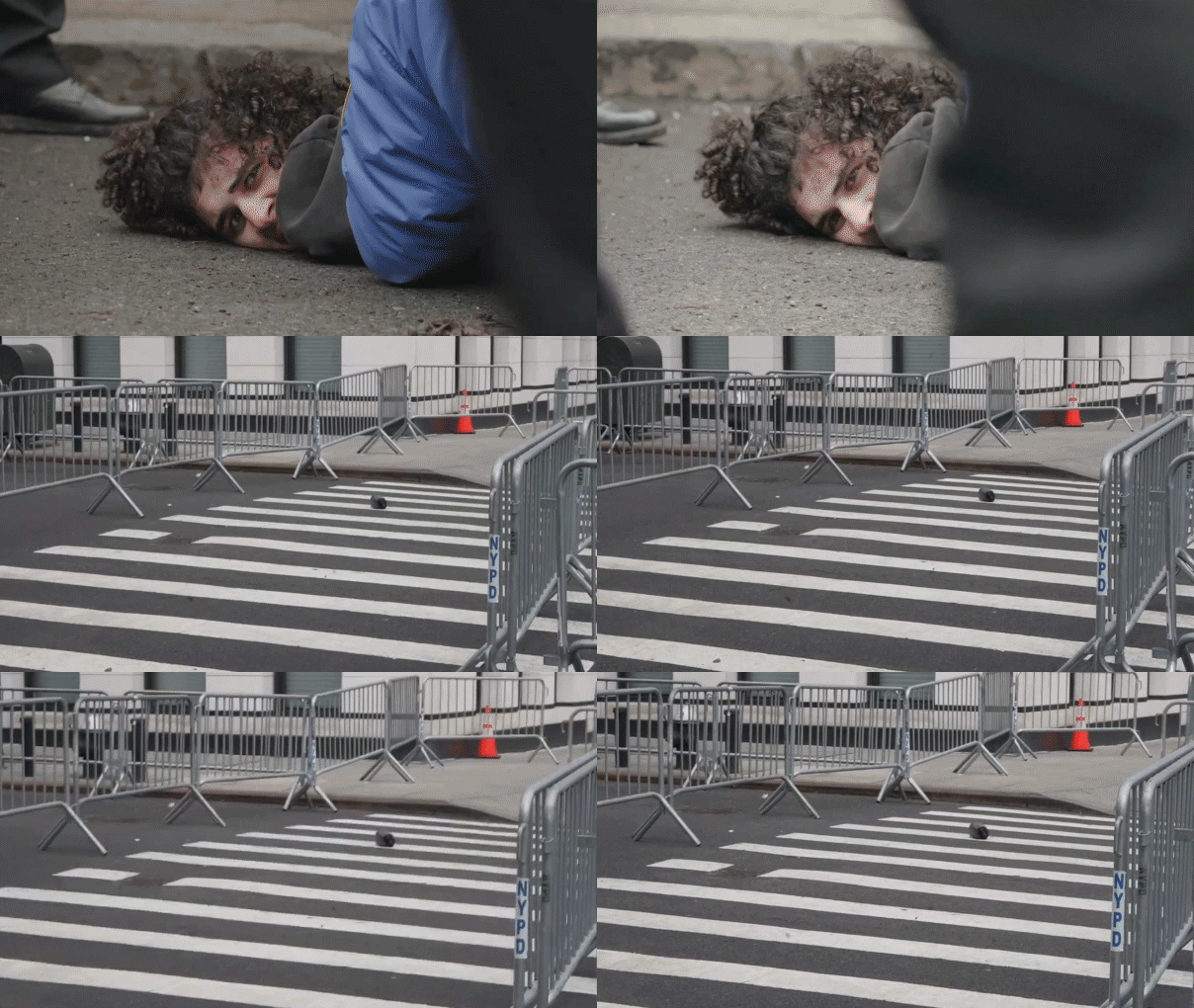
The drama reached its crescendo when, about 30 minutes later, an 18-year-old counter-protester named Emir Balat stepped into the spotlight through a harrowing act that shocked onlookers. Identified as part of the “Stand Against Hate” group, Balat was accused of lighting and hurling what appeared to be an explosive device toward the opposing protest area. Witnesses vividly described flames and smoke trailing the object as it arced through the air before striking a barrier near East 87th Street and East End Avenue, extinguishing just feet from police officers. In that split second, time seemed to freeze for everyone present—a young man made a fateful choice, propelled perhaps by a mix of anger, fear, and misjudgment. Balat fled south on East End Avenue, where he reportedly retrieved a second device from a 19-year-old identified as Ibrahim Nikk, then ignited and dropped it before being tackled by authorities. The video footage of his detention, with his face pressed against the pavement amid shouts, paints a raw portrait of desperation and defiance, humanizing a moment of chaos into something deeply tragic. For Balat and Nikk, whose lives are now ensnared in legal proceedings, this wasn’t just an action; it was the culmination of heightened emotions in a charged environment. Three others were arrested for related offenses like disorderly conduct, highlighting how one event can ripple outward, affecting multiple lives. Spectators, their phones capturing the spectacle, expressed a mix of horror and disbelief, wondering what drives someone so young to cross such a line. This incident begs empathy for the isolation that might fuel such acts, urging us to consider the personal stories behind headlines—lost opportunities, unhealed grievances, or a quest for belonging in turbulent times.
As authorities secured the scene, the focus shifted to understanding the devices themselves, transforming suspicion into a methodical quest for truth. Bomb squad experts descended upon the area, examining the objects—each about the size of a football, wrapped in black tape and seemingly harmless at first glance. Using advanced X-rays, they revealed an unsettling interior: nuts, bolts, and screws arranged as potential shrapnel, paired with a hobby fuse designed for ignition. Commissioner Tisch cautioned that it’s unclear whether these were fully functional improvised explosives or mere hoaxes, pending tests for chemical components. In a city scarred by past threats, this uncertainty amplifies the collective anxiety, reminding residents of our shared vulnerability in an unpredictable world. Officers conducted thorough sweeps, including K-9 units sniffing out garbage cans, vehicles, and shadows, a tireless effort that underscored the human dedication to safety. No additional devices emerged, alleviating immediate fears, and the mayor reportedly wasn’t home, though the family remains a subtle concern in discussions. Tisch expressed ongoing communication with Mayor Mamdani, assuring that while ties to distant conflicts like those in Iran haven’t surfaced, vigilance persists amid global tensions. For the families of those involved—the accused, the protesters, the police—this episode lingers as a shadow, potentially reshaping futures and prompting introspection about the costs of division. It’s easy to condemn from afar, but humanizing responds with curiosity: what personal journeys led here, and how can we foster environments where voices are heard without harm? Such questions highlight the resilience of communities bound by empathy, turning crisis into an opportunity for healing.
In the aftermath, Commissioner Jessica Tisch’s words resonated with gratitude and resolve, shining a light on the heroes who embodied duty in the heat of the moment. She praised the officers for charging toward danger—running into the unknown when others fled—prioritizing the safety of the public over their own. “Let me be clear: that happened today,” she declared, her voice steady with emotion, as she thanked them for noble service amid no injuries. This tribute humanizes the NYPD’s role, transforming uniforms into people with families, fears, and fierce commitment. For these men and women, the day wasn’t just about protocol; it was a testament to inner strength, forged in rigorous training and lived experiences. The public, tuning in through apps and news, found inspiration in their bravery, a counterpoint to the discord. Related reports touched on similar tensions elsewhere, like assaults in Minneapolis, drawing parallels in a polarized nation. Mayor Mamdani’s wife, mentioned in another context with social media controversies, adds layers to this tapestry, illustrating how personal opinions intersect with public duties. Ultimately, investigations continue, promising clarity on motives and materials, but the core message echoes: in humanity’s best moments, we rally together. As New Yorkers reflect, this incident invites us to bridge divides, not widen them, fostering understanding in a world rife with challenges. Listeners and readers alike are reminded of the Fox News app, where stories like this come alive with real voices, urging us to listen, learn, and connect across differences.