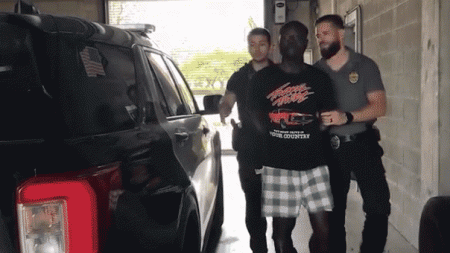



In the quiet suburbs of Ponte Vedra Beach, Florida, just a stone’s throw from the glittering spectacle of the Players Championship, a night that was supposed to be filled with PGA Tour glory turned into a nightmare of senseless violence. On a Friday evening last week, as golf fans mingled and celebrated under the warm Florida sun earlier in the day, tragedy struck outside a nondescript Walgreens store in St. Johns County. Christian Barrios, a man with a troubled past etched into countless criminal records, allegedly crossed the line in the most horrific way imaginable. Eyewitness accounts paint a picture of raw emotion boiling over—Barrios reportedly leaped out of his car in the parking lot, his movements frantic and driven by what can only be assumed was a haze of jealousy or rage. In a heart-wrenching confrontation, he opened fire, ending the lives of his ex-girlfriend and her new partner, two people who were likely just living their everyday lives, perhaps picking up prescriptions or groceries. The scene must have been chaotic, with bystanders scrambling for cover amidst screams and the sharp cracks of gunfire, transforming a routine errand into a blood-soaked standoff. As the dust settled, Barrios didn’t hesitate; he fled in the stolen BMW, leaving behind shattered lives and a community in shock. This wasn’t just a crime; it was a ripple effect that reached into homes, possibly families unaware of the impending danger. The Players Championship, a beacon of athletic excellence and corporate sponsorships, suddenly felt distant from this real-world brutality. Law enforcement sprang into action, initiating an intense manhunt that spanned counties, helicopters buzzing overhead and patrol cars weaving through palm-lined streets. Barrios’ desperation led him to crash the car and vanish into the dense woods, a fugitive on the run, evading capture while the body bags were loaded. As the sun set on Friday, casting long shadows over the forensic teams processing the Walgreens lot, the manhunt intensified, blending the thrill of high-stakes golf with the grim reality of a killer loose, forcing residents to lock their doors a little tighter. Stories like this remind us of the fragility of life, how one moment of unchecked anger can unravel everything. Barrios, with his history haunting him like a shadow, became the face of wrathful betrayal, a man whose ex-partner had moved on, leaving him grappling with loss in the worst possible way. The victims, still unnamed in public reports out of respect for their grieving families, were innocents caught in the crossfire of personal demons. The air around Ponte Vedra must have felt heavier, the usual tourist buzz muted by news alerts pinging on phones. In the end, this incident wasn’t isolated; it humanized the dangers lurking beneath the surface of peaceful communities, prompting reflections on mental health, gun control, and the cycles of violence that plague so many. Neighbors would later share tales of watching news vans crowd the streets, turning a quiet area into a media circus, while inside their homes, fears whispered about what could have been prevented. The championship continued, but for those touched by tragedy, the world tilted off its axis, exposing the stark contrast between elite sports and the raw edges of human suffering.
Christian Barrios wasn’t a stranger to the system; his life, as revealed in court documents and arrest logs, reads like a cautionary tale of repeated brushes with the law, each one pulling him deeper into a quagmire of criminality and despair. At 32 years old, with a staggering 27 arrests under his belt—including charges ranging from theft to assaults—he seemed to be on a path of self-destruction, out on drug probation at the time of the killings, a lifeline that he apparently snapped without hesitation. Probation officers and therapists might have seen warning signs: missed check-ins, substance abuse struggles, maybe unspoken grievances festering from past relationships. Barrios’ story humanizes the broader epidemic of recidivism, where individuals like him cycle through the justice system, each arrest chipping away at opportunities for redemption. On his birthday of all days, amidst what should have been reflections on new beginnings, law enforcement closed in. Nassau County officers, equipped with K-9 units and state-of-the-art surveillance, honed in on his location in the pre-dawn hours of Saturday, the manhunt culminating in a wooded area where Barrios had sought refuge. Imagine the scene: the cool morning breeze carrying the scent of pine, officers advancing cautiously, hearts pounding with the adrenaline of pursuit, each step a reminder of the lives at stake. Barrios, exhausted from his flight, chose surrender over further confrontation, lying prone on the forest floor with arms spread wide, a symbolic act of capitulation that echoed the exhaustion of a man out of options. This moment, captured vividly, evokes pity and frustration—here was someone whose life had spiraled so out of control that his greatest day of the year became one of handcuffs and humiliation. For those monitoring crime stats, Barrios represented the failures in rehabilitation programs, where drug abuse and unchecked anger fuel repeat offenses. His probation status adds layers of tragedy; perhaps counselors had tried to steer him toward therapy or support groups, only for jealousy or unresolved pain to override caution. In deeper dives into such cases, one wonders about Barrios’ upbringing—what environments bred this behavior? Family breakdowns, economic hardships, exposure to violence? Humanizing him doesn’t excuse, but it illuminates the societal cracks that produce individuals like him, prompting calls for better intervention. As Nassau County officials processed him, the weight of his past must have hung heavy, a constellation of missed chances leading to this fateful birthday capture.
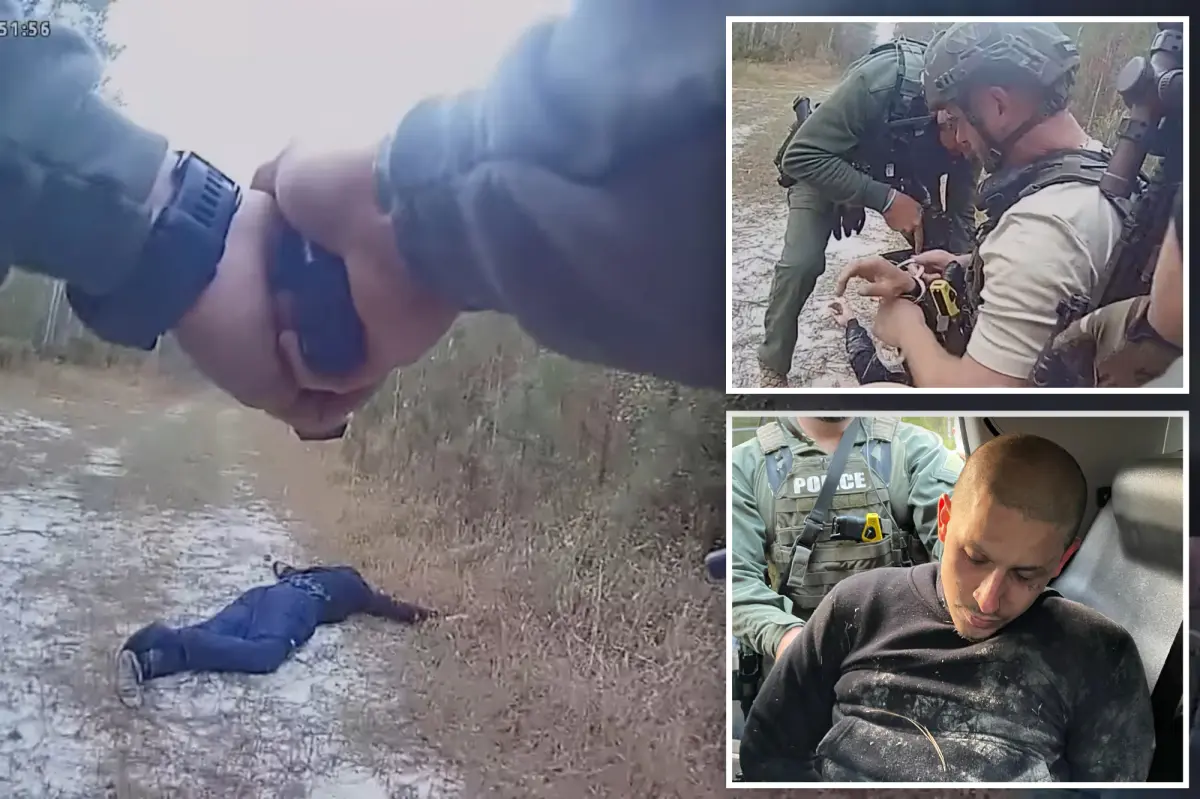
The bodycam footage from that Saturday morning arrest is nothing short of cinematic, a raw, unfiltered glimpse into the tense dance between predator and protector that plays out in America’s law enforcement dramas. Released by the Nassau County Sheriff’s Office on Monday, it begins with officers emerging from their vehicles, flashlight beams cutting through the misty dawn as they surround the wooded perimeter where Barrios awaited. The video captures the humanity in heroism: deputies shouting commands, voices steady yet laced with urgency, their body language a mix of resolve and restraint. Barrios, clad in clothing tattered from his crash and dash through the underbrush, lies face-down on the damp ground, arms outstretched in what appears to be a deliberate posture of submission, palms open as if pleading for mercy. For viewers, it’s a moment that tugs at heartstrings—no dramatic standoff, just a weary man yielding to the inevitable. An officer, gun drawn and unwavering, approaches first, his weapon trained on Barrios’ head in that critical split second, a visual reminder of the life-or-death stakes in fugitive apprehensions. The camera angle shifts slightly, audio picking up the subtle whir of helicopter rotors overhead, underscoring the scale of the operation. Another officer moves in swiftly, cuffing Barrios with the precision born of countless drills, the metallic click of handcuffs sealing his fate around 8 a.m., mere hours after the clock struck his 32nd birthday. This wasn’t a Hollywood chase scene; it was real-life tension, where one wrong move could end tragically. The footage humanizes the officers too—they pat Barrios down, treat him with a strange mix of firmness and care, reading his rights calmly amid the buzz of radios. Watching it, one can’t help but feel the emotional toll: the weight of duty on the deputies’ shoulders, their families waiting at home, wondering if they’ll return. Sheriff Bill Leeper’s words amplify this, explaining their meticulous containment to prevent escape—a decision rooted in safeguarding the public, born from the adrenaline of pursuit. In this clip, time slows, every second revealing the fragility of control, turning an abstract news story into a visceral narrative of accountability and the thin line between justice and vengeance. For those who view it, it sparks reflections on trust in law enforcement, the psychology of surrenders, and the unseen costs of such encounters. Barrios’ passive stance might hint at regret or resignation, a man whose actions had led him here, under the watchful eye of cameras that immortalize his fall from grace.
Officials from both counties involved painted a bleak picture of the aftermath, their statements adding emotional depth to the cold facts of arrest reports and charges. Nassau County Sheriff Bill Leeper, a veteran with stories of his own from decades on the job, spoke solemnly about the hour-long process of corralling Barrios, emphasizing the deliberate care taken to “contain that area so he wouldn’t get away.” His voice carried the weariness of someone who’s seen too many fallouts, humanizing the bureaucratic grind behind high-profile captures. Meanwhile, St. Johns County Sheriff Rob Hardwick expressed visceral revulsion, saying the crime “makes me sick to my stomach,” his words evoking the personal toll on leaders who must confront humanity’s darkest impulses. These men, pillars of their communities, weren’t just citing stats; they were grieving for the victims and wrestling with the “what ifs” that haunt every law enforcement veteran. Barrios, now in custody pending extradition to St. Johns County for probable murder charges, faced immediate hurdles: grand theft of a motor vehicle for the BMW he commandeered, reckless driving that endangered lives during his flight, and charges of driving with a revoked or suspended license—a list that underscored his reckless abandon. Adding insult to injury, he was hit with resisting arrest, a charge likely stemming from his initial dash into the woods, turning a simple handoff into a prolonged pursuit. Humanizing these accusations requires imagining Barrios’ mindset: fueled by post-killing adrenaline, did he lash out instinctively, or was it a calculated ploy to evade justice? For the sheriffs, this case highlighted systemic strains—overstretched resources, the challenge of supporting probation cases, and the emotional scars left on officers who face down armed suspects. Interviews with deputies revealed undercurrents of camaraderie, sharing war stories from the woods, but also moments of reflection on mental health reforms needed in the criminal justice system. The victims’ families, though unnamed, surely echo in these narratives, their losses amplified by public disclosures. In broader society, such statements prompt debates on sentencing, rehabilitation over punishment, and the human cost of crime. Barrios’ extradition looms as a next chapter, where St. Johns County will dissect the evidence, piecing together motives from forensic clues and witness testimonies. Yet, beyond the headlines, these quotes remind us that behind every badge and booking lineup are real people grappling with moral complexities, striving for justice in a world where tragedies like this leave indelible marks on the soul.
Delving deeper into the crime scene at the Walgreens parking lot reveals layers of personal drama that humanize the tragedy, transforming statistics into a poignant tale of love gone horribly wrong. Eyewitnesses and investigators described Barrios as “immediately and frantically” exiting his vehicle, his body language screaming panic as he rushed toward the victims—his ex-girlfriend and her new partner, perhaps caught in a affectionate moment or casual conversation. The confrontation escalated swiftly, gunfire shattering the routine evening, dyes of spent casings littering the asphalt like grim confetti. It’s easy to envision the scene: fluorescent store lights casting eerie shadows, shopping carts abandoned in haste, customers throwing themselves to the ground as bullets ripped through the air. Barrios, allegedly consumed by jealousy, had crossed an unforgivable threshold, his actions fueled by what psychologists might term obsessive insecurity or unresolved heartbreak. In a chilling side note, Barrios reportedly confessed to a friend that law enforcement would “likely kill him” if confronted, revealing a paranoid worldview where authority was as much a threat as his own deeds. This admission humanizes his desperation, painting a portrait of a man isolated by his choices, fearing the very system meant to protect. For the community, especially near the Players Championship, this crime disrupted the festive atmosphere, turning a symbol of elite leisure into a backdrop for grief. The unnamed victims—friends and family pending—become archetypes of innocence lost, their lives cut short in a place meant for mundane errands, not fatal encounters. Barrios’ flight in the BMW, speeding through tranquil neighborhoods, must have instilled terror among locals, sirens wailing as the chase unfolded. Investigators pored over surveillance footage, piecing together timelines, perhaps uncovering texts or calls hinting at brewing conflict. This personal angle adds empathy; was this a premeditated act, or an impulsive eruption? For survivors of domestic violence, such stories resonate, sparking conversations about protective orders and mental health resources. In the aftermath, counseling sessions in Ponte Vedra likely filled with neighbors processing the what-ifs, the near-misses that could have spared lives. Barrios’ actions, while inexcusable, stem from relatable human flaws—anger, betrayal, the sting of rejection—yet magnified into catastrophe. Society grapples with these realities daily, seeking ways to intervene before the guns blaze, ensuring tragedies like this don’t repeat, leaving behind scarred parking lots and forever changed hearts.
Christian Barrios’ prior record, unearthed by diligent journalists from outlets like WJAX-TV, casts a long shadow over the recent atrocities, humanizing the narrative by illustrating a pattern of escalating volatility that culminated in murder. Back in 2020, a horrifying incident saw him allegedly punching a woman who was nine months pregnant, an act of brutality that sent shockwaves and raised alarms about his capacity for harm. Court records reveal a litany of offenses building like a crescendo: assaults, thefts, drug-related charges, each one a missed red flag in a system overwhelmed by case loads. This wasn’t a one-off villain; Barrios embodied the struggles of recidivism, where early interventions might have averted carnage. Imagine the pregnant victim, carrying life and dreams, brutally attacked—her story now interwoven with the Walgreens tragedy, a thread of pain connecting victims across time. Barrios’ 27 arrests paint him as a man lost in cycles of substance abuse and violence, his probation a fragile fence that he vaulted over without remorse. Reflecting on his upbringing, one wonders about absent fathers, economic despair, or untreated traumas that shaped his outbursts. Deputies who handled his arrest likely spoke of the exasperation felt when familiar names cycle through booking, robbing communities of peace. For advocates, this case underscores the need for robust rehabilitation programs, therapy access, and stricter monitoring for probationers. The birthday arrest adds irony—a day for cake and wishes marred by handcuffs, perhaps marking a turning point. In Jacksonville-area communities, residents share anecdotes of living with similar risks, prompting grassroots efforts for crime prevention. Barrios remains jailed, his extradition promising tough scrutiny of his past in St. Johns County courts. While his actions repulse, humanizing them involves acknowledging systemic failures: overcrowded prisons, lack of mental health care, societal judgments on the addicted and angry. Families of the victims will seek justice, closure elusive in the fog of senseless acts. Ultimately, Barrios’ story serves as a mirror for broader issues, urging empathy for prevention over punishment, ensuring fewer birthdays end in blue lights and lifelong regret. This tale of downfall reminds us that behind every headline is a human tragedy, interwoven with hopes for redemption that, in this case, remain painfully out of reach. As Florida heals, conversations about violence prevention gain urgency, transforming isolated crimes into catalysts for change. The woods where he surrendered now whisper lessons learned, a somber reminder that one man’s choices can shatter worlds, leaving echoes in the hearts of all affected.