




Maduro Resurfaces Amid Tensions with Trump Administration
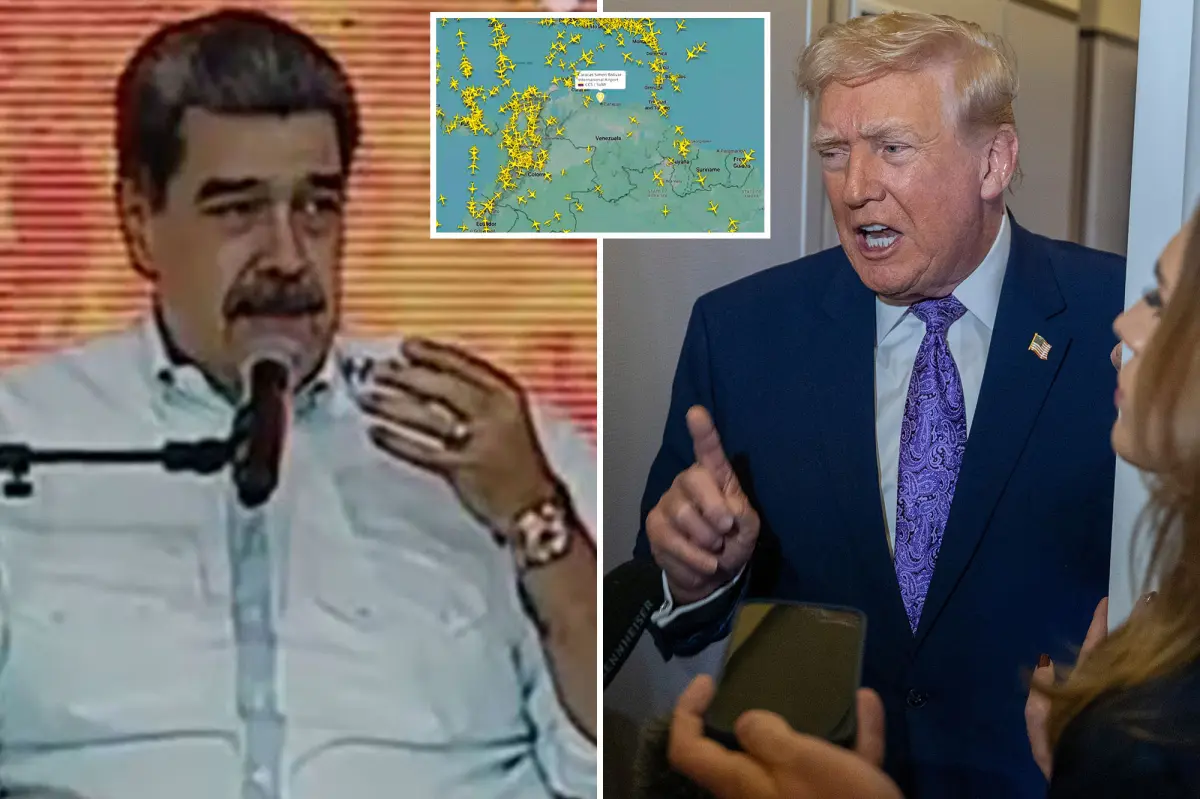
In a surprising turn of events, Venezuelan President Nicolas Maduro made his first public appearance in five days on Sunday, temporarily quelling rumors that he had fled the country under pressure from the United States. The 63-year-old leader was seen at an annual coffee awards ceremony in eastern Caracas, where he confidently led attendees in chanting that Venezuela’s economy was “indestructible, untouchable, unbeatable.” This public showing came after days of speculation about his whereabouts, with his last known appearance being a Wednesday video posted to his Telegram channel showing him driving around the capital city. The timing of his reemergence is particularly notable given recent reports of an ultimatum from U.S. President Donald Trump demanding Maduro’s immediate resignation or face unspecified consequences.
Behind the scenes, diplomatic tensions have reportedly escalated to unprecedented levels. According to the Miami Herald, President Trump offered Maduro, his wife, and son safe passage out of Venezuela if he agreed to step down immediately. The Maduro administration allegedly countered with a proposal to surrender political control while maintaining command of the armed forces, creating a stalemate in negotiations. Sources familiar with these exchanges claim Maduro also requested “global amnesty for any crimes he and his group had committed”—a request that was promptly denied by U.S. officials. This diplomatic chess game underscores the complexity of Venezuela’s political crisis and the high-stakes nature of current U.S.-Venezuela relations, with both sides seemingly unwilling to fully compromise on their core demands.
The legal backdrop to these tensions cannot be ignored. In March 2020, the U.S. Department of Justice indicted Maduro on serious charges including narco-terrorism, conspiracy to import cocaine, and weapons violations. According to the indictment, Maduro allegedly collaborated with dissident members of Colombia’s FARC revolutionary group to traffic narcotics into Central America with the ultimate goal of flooding the United States with cocaine. U.S. authorities claim that Maduro and other high-ranking Venezuelan officials provided FARC drug traffickers with sophisticated weapons including machine guns and rocket launchers, while also granting them safe passage through Venezuelan airspace to transport drugs northward. These allegations paint a picture of state-sponsored drug trafficking that goes well beyond typical corruption charges against foreign leaders.
The U.S. government has progressively increased pressure on Maduro over the years, characterizing him as the leader of the “Cartel de los Soles,” a drug trafficking organization that has allegedly shipped hundreds of tons of cocaine and other illicit substances to American shores since the early 2000s. The Trump administration initially offered a $15 million reward for information leading to Maduro’s capture—a sum that was later increased to $25 million in January and further elevated to $50 million this past August, reflecting the administration’s growing determination to remove him from power. Tensions reached a new height on Saturday when President Trump publicly warned pilots to consider Venezuelan airspace closed, though he cautioned reporters aboard Air Force One not to “read anything into it.” This warning came amid reports that Caracas attempted to contact Washington following Trump’s declaration but received no response, further highlighting the breakdown in diplomatic channels between the two nations.
Direct communication between the two presidents has been confirmed, though details remain sparse. When asked about reports of a conversation with Maduro, Trump acknowledged, “I don’t want to comment on that – the answer is yes,” adding cryptically, “I wouldn’t say it went well or badly. It was a phone call.” The Maduro government has maintained silence regarding this apparent direct exchange, leaving much to speculation about what was discussed or what agreements, if any, were reached. This lack of transparency from both sides has only added to the uncertainty surrounding Venezuela’s immediate political future and the extent of U.S. involvement in pressuring for regime change. The secrecy surrounding these high-level communications suggests that sensitive negotiations may be continuing away from public view, with potentially significant implications for Venezuela’s sovereignty and political landscape.
Recent U.S. military actions have dramatically escalated the situation. Since early September, American forces have conducted nearly two dozen strikes against suspected drug traffickers operating in Venezuela, resulting in more than 80 fatalities. Venezuelan officials confirmed for the first time on Sunday that their citizens were among those killed, with National Assembly leader Jorge Rodríguez publicly condemning the Trump administration for what he characterized as “cold-blooded murder.” In an emotional statement to reporters, Rodríguez emphasized, “Every human being has the right to due process. No human being can be killed in a brutal manner.” These military strikes, coupled with the diplomatic pressure and criminal indictments, represent a multi-faceted approach by the United States to remove Maduro from power—a strategy that combines legal, diplomatic, economic, and now military elements. As both nations appear locked in a dangerous standoff, the Venezuelan people remain caught in the middle of a geopolitical conflict with no clear resolution in sight, facing the dual challenges of political instability and potential violence as the crisis continues to unfold.