

Venezuelans Brace for Uncertainty After U.S. Military Operation Shocks Nation
Political Landscape Upended as Pre-Dawn Raid Captures President Maduro
By James Montgomery | January 4, 2026
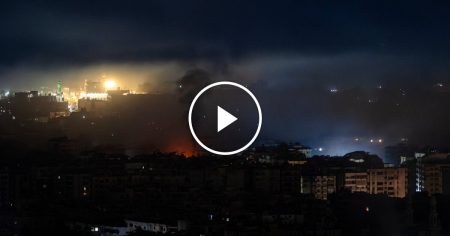
Caracas streets hummed with nervous energy on Sunday as Venezuelans grappled with the stunning aftermath of a U.S. military operation that has fundamentally altered the country’s political landscape. In a pre-dawn raid on Saturday that caught both international observers and local citizens by surprise, American special forces entered Venezuelan territory and seized President Nicolás Maduro, leaving a power vacuum and triggering widespread uncertainty across the South American nation. The unprecedented military action, which the U.S. Department of Defense has described as a “targeted extraction operation,” has sent shockwaves through global diplomatic channels and left ordinary Venezuelans scrambling to prepare for an uncertain future.
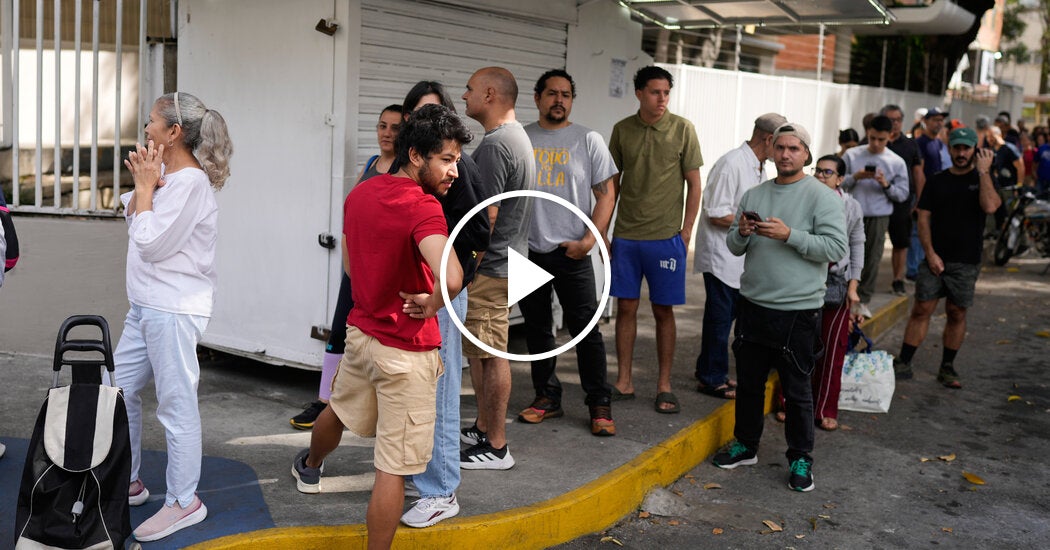
“We don’t know what comes next—that’s the most terrifying part,” said Elena Rodríguez, 42, as she stood in a lengthy queue outside a Caracas supermarket. Like many of her fellow citizens, Rodríguez was stocking up on essentials: rice, flour, cooking oil, and bottled water. “People are afraid of what might happen in the coming days. Will there be violence? Will there be shortages? Nobody knows who’s in charge now.” Across the capital and in major cities throughout Venezuela, similar scenes played out as citizens rushed to secure basic necessities. The unexpected nature of the operation has created a sense of profound insecurity, with many stores seeing their shelves emptied within hours of the news breaking. Outside gas stations, lines of vehicles stretched for blocks as drivers attempted to fill their tanks amidst rumors of potential fuel shortages.
International Reaction and Diplomatic Fallout
The international community has responded with divided reactions to what many nations are characterizing as an extraordinary breach of sovereignty. Russia, China, and Cuba immediately condemned the action as an “act of war” and called for an emergency session of the United Nations Security Council. European Union officials issued a more measured statement expressing “grave concern” over the military intervention while calling for “immediate restoration of democratic processes.” The Organization of American States convened an emergency meeting in Washington, where representatives from Brazil and Mexico led calls for the immediate release of President Maduro, regardless of their past criticisms of his governance.
In Washington, the Biden administration defended the operation as a necessary response to what it termed “credible intelligence regarding imminent threats to regional security.” Secretary of State Antony Blinken, in a hastily arranged press conference, stated that “the Venezuelan people have suffered for too long under a regime that has systematically undermined democratic institutions.” However, he provided few specifics about the nature of the alleged security threat or the legal justification for the military action. When pressed by journalists, Blinken would not confirm Maduro’s current location or whether he would face charges in U.S. courts, saying only that “appropriate legal procedures” were being followed. The diplomatic fallout threatens to isolate the United States from many of its allies and has reinvigorated anti-American sentiment across Latin America, where memories of past U.S. interventions remain vivid.
Economic Implications and Market Reaction
Venezuela’s already fragile economy now faces additional uncertainty following the operation. The Caracas stock exchange suspended trading after initial reports showed a precipitous decline in share values. The bolivar, Venezuela’s national currency, experienced significant volatility in limited unofficial trading, with street exchange rates fluctuating wildly as Venezuelans sought to convert their savings into dollars or other stable currencies. “We’re witnessing a crisis of confidence in real time,” explained Dr. Carlos Mendez, an economist at Central University of Venezuela. “The country’s economic stability, already precarious after years of hyperinflation and mismanagement, now faces an existential threat due to the political uncertainty.”
Global energy markets also responded dramatically to the news, given Venezuela’s position as a major oil producer. Crude oil futures jumped nearly 8% in early trading as investors contemplated potential disruptions to Venezuela’s oil production and exports. Industry analysts noted that while Venezuelan oil output has declined significantly in recent years due to underinvestment and sanctions, any further reduction would impact global supply at a time when markets are already tight. “This creates a perfect storm of uncertainty,” said Maria Sanchez of Global Energy Insights. “Venezuela’s oil infrastructure was already struggling under sanctions and decades of neglect. Now, with leadership in question and potential for civil unrest, we could see production halt entirely in some regions.” The economic ramifications extend beyond Venezuela’s borders, with neighboring countries bracing for potential increases in refugee flows if the situation deteriorates further.
Domestic Power Struggle and Security Concerns
Inside Venezuela, a complex power struggle is already emerging. Vice President Delcy Rodríguez issued a defiant statement from an undisclosed location, declaring herself the legitimate interim leader according to constitutional succession. However, opposition leader Juan Guaidó, recognized by dozens of countries as Venezuela’s legitimate president following disputed elections in 2018, also asserted his claim to lead a transition government. Meanwhile, there are reports that factions within the Venezuelan military are divided, with some units pledging loyalty to Rodríguez while others appear to be awaiting developments before declaring allegiance.
The security situation remains tense but largely calm in the immediate aftermath, with increased military presence visible in major cities. “We’re seeing a cautious approach from most Venezuelans,” noted Antonio Crespo, a political analyst based in Caracas. “There’s widespread fatigue after years of political and economic crisis. People are watching and waiting rather than immediately taking to the streets.” However, Crespo warned that the situation remains highly volatile. “If basic services are disrupted or if there’s a perception that foreign powers are installing a government without popular consent, the calm could quickly evaporate.” Social media platforms have been flooded with conflicting information, prompting concerns about potential misinformation campaigns that could inflame tensions. Some neighborhoods have organized community watches, reflecting citizens’ lack of confidence in formal security structures during the transition period.
Historical Context and Future Prospects
For many observers, the U.S. operation evokes a troubling history of American interventionism in Latin America. Throughout the 20th century, from Guatemala and Chile to Panama and Grenada, the United States frequently intervened militarily to remove governments it perceived as hostile. “This feels like a return to the darkest chapters of U.S.-Latin American relations,” said Dr. Luisa Fernandez, a historian at the University of the Andes. “Many Venezuelans oppose Maduro, but they also oppose foreign military intervention. This action risks undermining legitimate democratic movements by associating them with external interference.”
The path forward remains profoundly unclear. U.S. officials have indicated they plan to support a “democratic transition,” but the specifics of such a process remain undefined. International organizations have called for elections under neutral observation, while emphasizing that Venezuelans themselves must determine their political future. Meanwhile, ordinary citizens continue their daily struggle amidst the extraordinary circumstances. “We’ve endured so much already—the economic collapse, the shortages, the political repression,” reflected Miguel Toro, a teacher in Maracaibo. “Now we face something entirely new. We just want stability and the chance to rebuild our country ourselves.” As night fell over Venezuela on Sunday, the nation stood at a crossroads, its future hanging in the balance as citizens prepared for days of profound uncertainty ahead.