






The Capture of Nicolás Maduro: A Dramatic Turn in U.S.-Venezuela Relations
In a stunning development that has shaken international relations in the Western Hemisphere, Venezuelan leader Nicolás Maduro and his wife, Cilia Flores, were apprehended by U.S. forces and transported to the Metropolitan Detention Center in Brooklyn, New York. The operation, code-named “Absolute Resolve,” marked a dramatic escalation in U.S. policy toward Venezuela and represents the first time in nearly four decades that American military forces have directly removed a Latin American leader from power. The charges against Maduro are severe and wide-ranging, including narco-terrorism conspiracy, cocaine importation conspiracy, and weapons violations against the United States. President Donald Trump shared visual confirmation of the capture, showing Maduro aboard the USS Iwo Jima, though the Venezuelan leader and his wife were not clearly visible when they arrived at Stewart Air National Guard Base in New York aboard a Department of Justice aircraft.
This extraordinary operation did not emerge from a vacuum but followed a series of U.S. military strikes against suspected drug vessels allegedly connected to the Venezuelan regime in Caribbean and Eastern Pacific waters. The American justification for these actions centers on claims that the Maduro regime has been deeply involved in narcotics trafficking, using state resources to facilitate the drug trade while maintaining an iron grip on power despite widespread humanitarian suffering in Venezuela. The Venezuelan government, however, has forcefully rejected these allegations, characterizing the operation as an imperialistic attack designed to seize the country’s rich natural resources, particularly oil and minerals. In a defiant statement, Maduro’s government described the action as an “attempt to impose a colonial war” aimed at destroying Venezuela’s republican government and forcing a “regime change” in partnership with what they termed the “fascist oligarchy.”
The international community has responded with a mixture of celebration, concern, and condemnation. While some Venezuelan expatriate communities broke into spontaneous celebrations upon hearing the news, citizens still in Venezuela reportedly began stockpiling food and essential supplies, fearful of the potential for increased instability following the sudden power vacuum. President Trump has adopted an uncompromising stance, warning that the United States is prepared to launch a “second and much larger attack” if necessary. He emphasized American forces would remain in position until “the proper transition can take place,” suggesting a sustained U.S. military presence in the region. This statement alone has raised significant questions about sovereignty and the future of Venezuelan self-governance.
The historical context of this operation provides both precedent and caution. The last time the United States militarily removed a Latin American leader was in 1989, when Manuel Noriega was ousted from power in Panama. While that operation achieved its immediate objective, it also led to long-term challenges in establishing stable governance, a pattern that many regional experts fear could repeat in Venezuela. The country has already been experiencing severe economic collapse, with hyperinflation, widespread food and medicine shortages, and a massive refugee crisis that has seen millions of Venezuelans flee to neighboring countries. The abrupt removal of Maduro, despite his increasingly authoritarian rule, introduces new uncertainties into an already fragile situation.
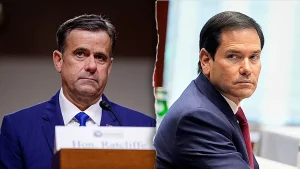
Political reactions within the United States have not fallen neatly along partisan lines. Some House Republican critics have broken with Trump over the operation, questioning both its legality and wisdom. Meanwhile, Senator Marco Rubio issued a warning to Cuba, suggesting they “should be concerned” following the U.S. military’s action against their close ally. This indicates the potential for broader regional consequences as the operation may reshape power dynamics throughout Latin America. The unusual bipartisan fracturing on this issue reflects the complex nature of interventionist foreign policy in the modern era, where traditional hawks and doves sometimes find themselves in unexpected alignments depending on the specific circumstances.
As this situation continues to unfold, several critical questions remain unanswered. How will Venezuela’s military and security forces respond to their leader’s capture? Will there be peaceful democratic transition or violent power struggles? What role will neighboring countries and regional organizations play in shaping Venezuela’s future? And perhaps most importantly, what will be the long-term impact on U.S.-Latin American relations? The capture of Maduro represents a dramatic departure from the diplomatic pressure and economic sanctions that had previously characterized U.S. policy toward Venezuela. Whether this bold military action will lead to improved conditions for the Venezuelan people or further destabilize an already troubled region remains to be seen. What is clear is that with this operation, the United States has reasserted its willingness to use direct military force to remove governments it considers hostile in its hemisphere, a policy approach many thought had been relegated to the Cold War era.