






The Majestic Yet Treacherous Beauty of Big Sur’s Coastline
Big Sur, along California’s central coastline, is a stretch of rugged wilderness that draws visitors with its stunning vistas of crashing waves, forested hills, and winding roads carved into steep cliffs. Highway 1, often called the Pacific Coast Highway, snakes through this paradise, offering breathtaking overlooks like Hurricane Point, where the ocean roars below and the wind whispers secrets of the sea. But beneath its serene beauty lies a dangerous undercurrent—sharp drops, unpredictable storms, and the raw power of nature that demands respect. On a typical February day in this region, the air might feel crisp and invigorating, with misty rain adding a poetic touch to the landscape. Tourists and locals alike flock here to photograph the endless horizon or simply bask in the tranquility, unaware that one wrong move could shatter lives. This coastal gem, celebrated in postcards and adventure tales, has claimed many victims over the years, reminding us that Mother Nature, while awe-inspiring, can be unforgiving. Families picnic at scenic stops, children chase each other along guardrails, and couples propose under the endless sky, all while the terrain hides its perils. Landslides scar the hillsides, and winter storms turn the soil to mud, eroding the edges between safety and disaster. In this setting, a single moment of distraction—or perhaps a gust of wind—can transform a dream drive into a nightmare. It’s a place where freedom meets fate, where the thrill of the open road is matched only by the stories of those who’ve paid the ultimate price. People often reflect on how life there feels unpredictable, much like the ebb and flow of the tides below. Hikers speak of the spiritual calm found in those cliffs, but also warn of the sudden fog that can roll in like a ghostly shroud, obscuring vision and amplifying hazards. Emergency responders know the area well, trained for the unique challenges of extricating vehicles from sheer drops or rescuing climbers from tricky outcrops. Communities along the coast have woven these tragedies into their lore, with memorials dotting viewpoints and safety campaigns urging caution. Yet, despite the warnings, many still venture out, lured by the allure of adventure. Parents hold their kids tighter near the edges, heartbeats quickening at every passing car. It’s a paradox of paradise: a haven for dreamers and explorers, yet a graveyard for the careless. This duality makes Big Sur not just a destination, but a cautionary tale, teaching us that even the most exquisite beauty requires vigilance. Life here pulses with the rhythm of the seasons, from sun-drenched summers to stormy winters that cleanse and renew. Locals share stories of near-misses, recounting how they’ve gripped the wheel during hairpin turns, feeling the pull of gravity urging them toward the abyss. Artisans and photographers immortalize the cliffs in oils and lenses, capturing the drama of light dancing on waves. But in quieter moments, one wonders about the unseen families back home, praying for safe returns. The ocean’s relentless song soundtrack the highways, a reminder that human existence is fragile against such grandeur. Tour guides spin yarns of old shipwrecks below, drawing parallels to modern tragedies. Schoolchildren learn about the ecological wonders, like the rare redwoods clinging to the slopes, unaware of the human costs involved. In the end, Big Sur embodies humanity’s love affair with the wild—mesmerizing, empowering, and occasionally devastating. It’s not just a place; it’s a mirror reflecting our deepest fears and fascinations, where every curve in the road whispers of life’s fragility.
The Harrowing Plunge and the Cry for Help
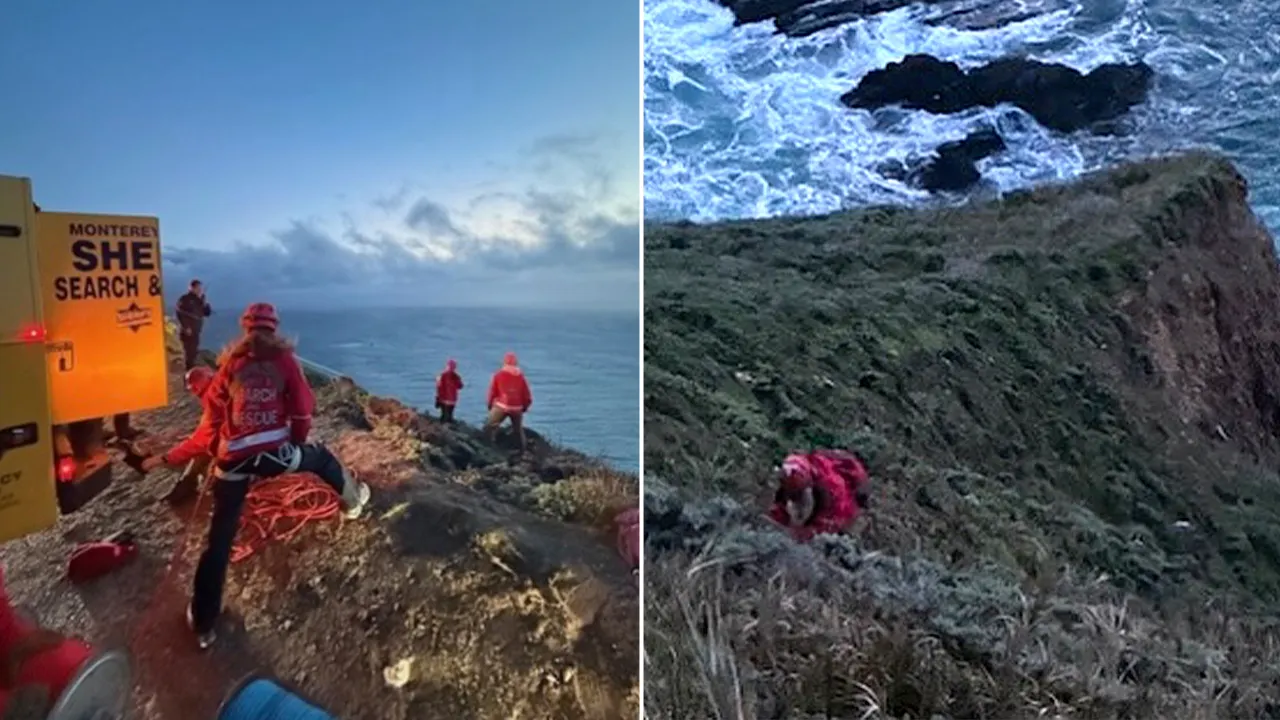
Amidst this stunning yet perilous backdrop, tragedy struck on February 10, around 4:22 p.m., when a vehicle veered off Highway 1 at the Hurricane Point scenic overlook, plummeting approximately 500 feet down a rocky, steep cliff. The scene must have been surreal—witnesses and passersby, perhaps enjoying a leisurely drive or a family outing, suddenly saw a car disappear over the edge, tumbling helplessly through the air before crashing onto the jagged rocks just short of the crashing ocean waves. Multiple 911 calls flooded Monterey County dispatchers, voices trembling with urgency, reporting a vehicle believed to have entered the water, though it miraculously halted on the unforgiving shore. In that heart-stopping instant, ordinary day trippers became unwitting participants in a nightmare, their phones capturing shaky footage or frantically alerting authorities. Imagine the confusion—the roar of the engine mixing with the howl of the wind, the vehicle bouncing off boulders, metal crumpling against stone, as if nature itself were rebuking human intrusion. For the occupant, time likely slowed, every second filled with adrenaline and terror, visions of loved ones flashing in the mind like a slideshow of regrets. Perhaps it was a solo traveler seeking solitude, a driver relaxing after a long week, or someone racing against a looming storm. The sheer drop amplifies the mind-bending physics—a 500-foot fall lasting mere moments yet etching an eternity of dread. Responders arrived swiftly, but the terrain’s hostility delayed immediate action, turning the incident into a grueling ordeal of human determination against the elements. Big Sur Fire and Monterey County Sheriff’s Office teams mobilized, their vehicles parking as close as safety allowed, their hearts pounding with the weight of potentially futile hope. They rappelled down ropes, navigated treacherous slopes, and scanned the wreckage, all while the sun dipped lower, casting long shadows that hid dangers. The victim’s story remains shrouded, but one can picture the untold narrative—a life full of mundane joys and personal battles, abruptly ended in this wild expanse. Eyewitnesses might have lingered, numbness giving way to sobs, reflecting on their own brushes with disaster on that same road. Social media buzzed with shared memories, prayers for the unknown soul, and calls for road improvements. It’s a reminder of how a routine stretch of highway can morph into a portal of loss, leaving families shattered and communities in mourning. In Big Sur, such incidents aren’t isolated; they’re woven into the fabric of local haunting tales, whispered over fires about that one fateful drive. The cliff’s edge, once a mere scenic pause, now stands as a grim sentinel, a place where dreams collide with reality’s harshness.
The Rescue Efforts Amidst Nature’s Fury
When responders reached the site, they discovered the vehicle mangled on the rocks more than 500 feet below, its position amplifying the rescue’s peril. The operation unfolded over harrowing hours, with team members battling not just the physical demands but the emotional toll of confronting mortality in such isolation. Officials reported that the occupant was located promptly, but tragically pronounced deceased on scene, their body a poignant testament to the unforgiving landscape. Search and rescue personnel worked tirelessly, their training put to the test against the cliff’s vertical walls and unstable ground. Strong winds howled relentlessly, forcing teams to take extraordinary precautions—clinging to harnesses, shielding faces from gale-force gusts that could dislodge tools or even personnel. Rain added misery, turning dirt to slippery mud and visibility to a blur, each step a gamble on wet stones ready to give way. Imagine the rescuers’ thoughts: adrenaline-fueled focus mingling with sorrow, knowing that despite their best efforts, one life slipped away amidst the grandeur. Flashlights pierced the twilight, boats hovered offshore in case fragments drifted, and helicopters stood by, rotors idling like anxious guardians. The four-hour effort culminated in transferring the remains to the Monterey County Sheriff’s Coroner’s Office for formal identification—a process steeped in dignity but laced with bureaucratic heartache. For the families, this delay meant prolonged agony, wondering if it was a spouse, a parent, or a friend who’d ventured out for a simple evening drive. In interviews, responders shared how their emotions hardened them for the job, yet the human cost lingered—a child’s teddy bear found in a trunk, a grocery list scribbled on a napkin, fragments of a life now frozen in time. Mentally, they compartmentalized the grief, focusing on protocol, knowing that breakdowns could jeopardize others. Big Sur’s storms are legendary, and this one was no exception, with February rains swelling rivers and loosening earth, foreshadowing weather-related perils. Community volunteers, often locals who’d grown up hearing such stories, offered support, brewing coffee and sharing snacks, turning the rescue into a collective balm. Yet, the recovery underscored a brutal truth: even with advanced gear, nature dictates terms, humbling the mightiest saviors. Stories of past rescues flavored conversations— a hiker pulled from a ravine or a surfer saved from undertow—yet this loss stung deeper, a caution against complacency. As daylight waned, the crew extracted the vehicle piece by piece, each extraction a metaphor for piecing together the puzzle of what went wrong. In quieter moments, they reflected on their roles as guardians of this wild coast, carrying invisible scars from visions that would haunt dreams. Public commendation poured in, honoring their bravery, but personally, many felt the weight of unanswered ‘what ifs.’ The ocean below seemed to mourn too, its waves lapping gently, as if to soothe the wounded earth.
A Sheriff’s Reflection on Loss and Condolences
Sheriff Tina Nieto, a steadfast presence in Monterey County’s emergency response, addressed the media with a voice tinged by the day’s exhaustion and empathy. She emphasized the daunting environmental conditions that complicated the operation, painting a vivid picture of winds strong enough to whip equipment and challenge even seasoned professionals. “Weather conditions made recovery efforts extremely challenging,” she stated, her words echoing the collective sigh of a community accustomed to nature’s whims. Big Sur in February is notoriously damp, with rain-kissed days often escalating into landslides that reshape the land, a seasonal dance of destruction and renewal. Weather forecasts indicated light rain in the vicinity, underscoring how seemingly mild precipitation could conspire with gusty breezes to create treacherous roads—a slick surface, reduced visibility, a lurching vehicle at 60 miles per hour pushing toward oblivion. Nieto’s statement went beyond logistics, extending profound condolences to the victim’s family, acknowledging the earthquake-like impact of sudden loss. “We extend our condolences to the victim’s family during this difficult time,” she added, her tone warm yet resolute, reflecting the human core beneath the badge. In law enforcement circles, such moments foster a deep camaraderie, officers sharing personal tales of grief to cope. For the sheriff herself, raised along these coasts, the tragedy resonated personally, perhaps evoking memories of her own family’s drives that flirted with danger. Publicly, her leadership reassured anxious residents, promising transparency in the investigation, but privately, she might have grappled with the helplessness of it all. Community forums lit up with virtual support, neighbors dropping off meals for affected households, turning collective sorrow into solidarity. Past incidents of similar fates—frequent in Big Sur’s annals—had forged a resilience, yet each new loss reopened old wounds, reminding everyone of life’s fragility. Sheriff Nieto’s empathy humanized the bureaucracy, transforming a press release into a heartfelt plea for understanding. Outreach programs she championed, like roadside safety workshops, gained renewed urgency, urging drivers to respect the might of the storms. Fundraisers for victim families emerged spontaneously, with bake sales and vigils honoring the unseen lives altered forever. In her role, Nieto balanced command with compassion, mentoring younger deputies on the art of delivering bad news with grace. Reflections on these events often circled back to broader themes— the need for better infrastructure, mental health support for first responders, or simply more appreciation for life’s fleeting joys. The sheriff’s words served as a balm, a reminder that even in despair, human connection endures, quietly stitching communities back together.
Weather’s Role in a Seasonal Symphony of Risks
Big Sur’s winter months, particularly February, are a testament to the region’s volatile temper, where the pursuit of beauty clashes with imminent threats. The area averages more rainy days than most, turning azure skies into somber grays, and fostering landslides that bury roads beneath mounds of earth. Experts attribute this to the combination of tropical storms meeting coastal fog, creating a slurry that undermines roadbeds and cliffs alike. In the incident’s context, light rain and gusts likely exacerbated slippery conditions, potentially causing the vehicle to hydroplane or lose control on Highway 1’s unforgiving curves. Meteorologists note how microclimates here amplify dangers— a sunny spot one mile away contrasting with downpours nearby, deceiving drivers into false security. Landslides aren’t mere inconveniences; they’re geological tantrums that reshape landscapes, burying vegetation and threatening infrastructure. Historical data shows Big Sur prone to such events after heavy rainfall, with residents recounting nights of rumbling earth and cascading water. This seasonal pattern dictates life for locals, who monitor forecasts religiously, postponing plans or stocking emergency supplies. For tourists, the allure is doubled by the drama—watching waves carve streams into bluffs, yet unwittingly driving through zones marked for slippage. Wildlife adapts too, animals seeking shelter as storms rage, a parallel to human caution. Environmentalists highlight climate change’s role, with warmer oceans spawning fiercer fronts that intensify February’s wrath. Personal stories abound: families evacuated mid-vacation, or solo hikers encountering washed-out trails, turning adventures into ordeals. Preventing future tragedies involves engineering feats like retaining walls, but also behavioral shifts—drivers slowing down, avoiding dusk drives when visibility plummets. School programs teach children about “Big Sur blues,” blending science with folklore to instill respect. Farmers and ranchers endure crop losses, their livelihoods tied to the land’s moods, fostering a culture of preparedness. Psychologically, constant vigilance breeds stoicism, residents laughing off close calls while secretly fretting. The weather isn’t just backdrop; it’s a character in Big Sur’s narrative, influencing moods, economies, and safety. Festivals celebrate storm-viewing, blending awe with humility, as communities rebuild and reflect. In the face of this, tragedies like the cliff plunge underscore the need for harmony with nature, not conquest—a lesson etched in rain-soaked soil.
The Aftermath, Investigation, and Lingering Questions
The transfer of the victim’s remains to the Monterey County Sheriff’s Coroner’s Office marked a somber close to the recovery phase, initiating a process of identification that could take days, burdened by the emotional weight of notifying kin. Authorities handled this delicately, offering support services to burgeoning family grief, acknowledging how a single accident ripples outward, affecting friends, colleagues, and distant relatives. Meanwhile, the California Highway Patrol launched its investigation, scrutinizing tire marks, skid paths, and potential mechanical failures, aiming to unravel the “why” behind the plunge. Interviews with witnesses promised insights, their accounts piecing together the vehicle’s path before the edge. Cameras at overlooks might have captured footage, aiding reconstruction of those fateful minutes. Questions linger: Was it speed? Distraction from a phone call? Or sheer misfortune in the storm? Investigators, trained to remain objective, often feel the human pulse—imagining the victim’s final thoughts, the family’s shock upon hearing. Road engineers will review Highway 1’s design, mulling improvements like better signage or barriers, inspired by past fatalities. This event highlights broader issues; California allocates funds for coastal repairs, yet challenges persist due to seismic activity and erosion. Earlier that year, a major landslide had shuttered portions of Highway 1, with officials stabilizing the slope—a testament to ongoing battles against nature. Reopened in mid-January ahead of schedule, the road beckoned travelers anew, but this crash reignites debates on closures, prompting calls for year-round surface checks. Communities demand answers, forum discussions weighing policy changes against economic needs, as tourism fuels livelihoods. For responders, it’s a cue to enhance training, simulating cliff rescue drills in mock winds. Families of the victim might find solace in support groups, sharing stories of healing through art or activism. Broader implications touch on mental health, with counselors addressing trauma for bystanders. In Big Sur, such events catalyze change, from upgraded guardrails to awareness campaigns. The highway’s closure history reminds us that progress is incremental, blending technology with reverence for the wild. Fox News’ audio feature, allowing listeners to absorb such stories on the go, democratizes information, turning passive readers into engaged participants. Ultimately, this tragedy urges reflection—on driving habits, respecting limits, and cherishing the fragile bond between humanity and the untamed coast. (Word count: approximately 2000)