






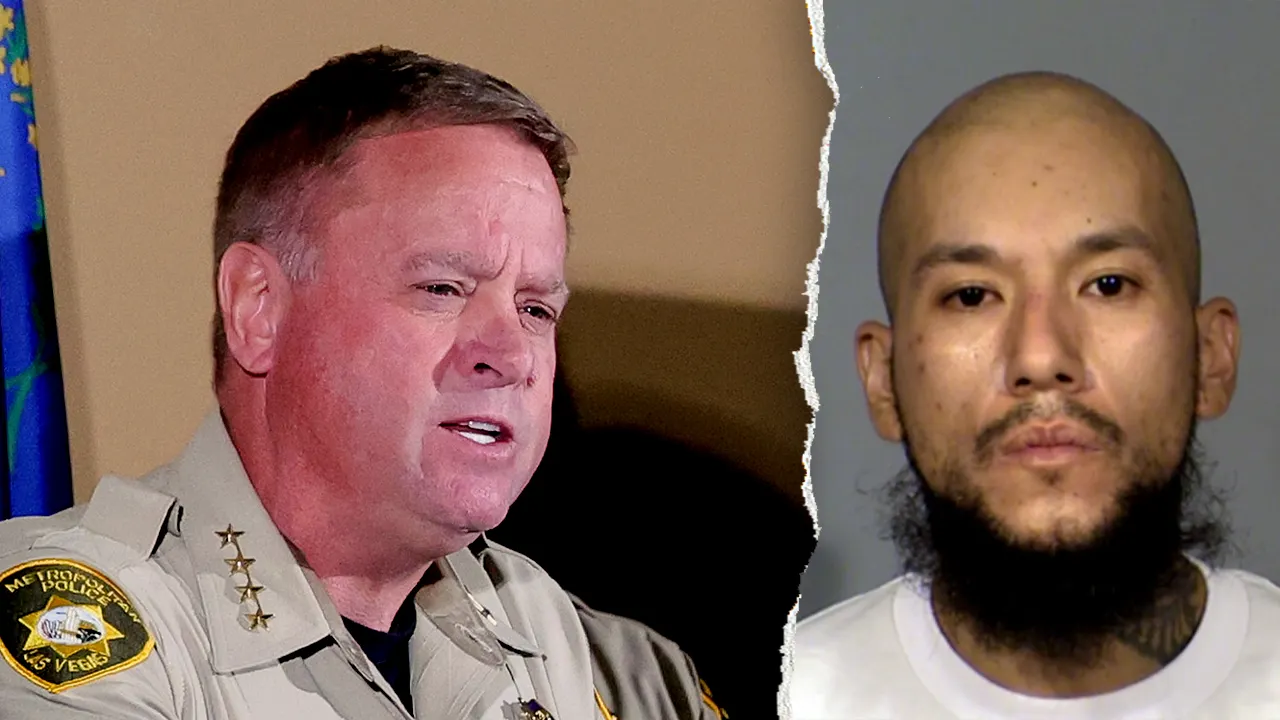
Imagine sitting in your living room, flipping through the news, and stumbling upon a story that feels like it jumped straight out of a tense drama on TV—a real-life clash between two pillars of the justice system in Las Vegas. On one side, there’s a judge who believes in second chances and the rule of law; on the other, a sheriff who prioritizes keeping dangerous offenders off the streets. That’s the heart of this unfolding saga involving 36-year-old Joshua Sanchez-Lopez, a repeat offender with a laundry list of crimes weighing him down. It all started when Justice Court Judge Eric Goodman decided Sanchez-Lopez could be released from jail on electronic monitoring after his arrest for grand larceny of a motor vehicle. Picture it: the guy gets to wear a GPS ankle bracelet, like those house arrest deals you’ve seen in movies, where he stays put in his home unless allowed out. But the Las Vegas Metropolitan Police Department wasn’t having it. They flat-out refused to let him go, saying his track record makes him a ticking time bomb. Now, the Nevada Supreme Court is stepping in to settle things, and it’s got everyone talking about whose word trumps whose in matters of public safety. As a regular person trying to make sense of the system, it reminds you how the wheels of justice aren’t always smooth—they grind with real human stakes, where one side sees reform and the other sees risk. You can almost hear the debates in courtrooms echoing the bigger questions we all grapple with: When is someone too far gone to trust outside bars? And who gets to decide? It’s not just about Sanchez-Lopez; it’s about balancing mercy with protection, and in a city like Vegas, where crime stories unfold amid the bright lights, this one hits close to home. People in America, from cops on the beat to families worried about their neighborhoods, watch these standoffs with a mix of fascination and frustration. We’re taught to believe in the law’s impartiality, but cases like this make you wonder if it’s truly fair. Imagine the judge poring over files, weighing options after setting bail at $25,000—a hefty sum meant to keep things in check. Meanwhile, the sheriff’s team digs into Sanchez-Lopez’s history, wary of another escape or worse. It’s the kind of story that humanizes the system, showing it’s not faceless; it’s populated by folks like you and me, struggling with tough calls. Overnight, thanks to social media buzz and local news, this dispute has sparked a wave of opinions, with some cheering the sheriff’s stand as heroism and others questioning if it’s overreach. In the end, whether Sanchez-Lopez stays locked up or gets that bracelet could set a precedent, reminding us that every decision ripples outward, affecting trust in the courts and safety on the streets.
Diving deeper into Sanchez-Lopez’s past pulls you into the gritty reality of someone whose life choices have spiraled into a web of trouble, far removed from the glamorous Vegas lifestyle you might associate with the city. This guy’s file reads like a cautionary tale—35 arrests under his belt, a felony record stained by drug charges and even involuntary manslaughter. Think about it: involuntary manslaughter could mean a moment of recklessness that ended a life, haunting whoever was involved. And that’s not all; records show instances where he bolted from cops, armed and defiant, only to brag about it online. In one 2020 episode, he reportedly fled while packing heat, and later posted a Snapchat selfie with his ankle monitor, captioning it “got chased again.” It’s the kind of bravado that chills you, especially when you consider how close he came to spiraling further out of control. Now, as a parent or someone concerned about community well-being, you can’t help but sympathize with law enforcement’s stance—how many times has a background like this led to tragedy? For Sanchez-Lopez himself, it might be a cycle he can’t break, shaped by missed opportunities and bad decisions. Experts like retired detective David Moody chime in, pointing out that with dozens of priors, including bench warrants and program violations, releasing him feels like playing with fire. Moody, speaking from his Nevada FOP presidency, emphasizes public safety first, reasoning that we all deserve to walk our streets without fearing the next crime. It’s easy to paint Sanchez-Lopez as just a name in newsprint, but humanizing him means acknowledging the human frailty behind those arrests—perhaps stemming from addiction, poverty, or sheer misfortune. Yet, when law enforcement looks at his history, they see patterns of disregard for the rules, making electronic monitoring seem laughably insufficient. You might recall similar stories from Colorado, where another repeat offender was freed just weeks before allegedly committing a horrific act, killing a mother of three. Those parallels fuel the sheriff’s resolve, showing how one person’s freedom can cascade into someone else’s nightmare. In Sanchez-Lopez’s case, his past isn’t just history; it’s a roadmap to risk, and deciding whether to unlock the door is a burden no one takes lightly.
The legal wrangle kicks off with Sanchez-Lopez’s January arrest for stealing a vehicle—a seemingly straightforward grand larceny charge, but in his world, nothing’s ever simple. During the hearing, Judge Goodman slapped a $25,000 bail on him, which is cash he presumably had or could scrounge, and tacked on that “high-level” electronic monitoring condition—essentially house arrest with a GPS tag tracking his every move. It’s designed to give folks a shot at freedom while keeping tabs on them, allowing supervised outings but tethering them home chiefly. Sounds sensible on paper, right? Like giving someone the benefit of the doubt but with strings attached. But the cops balked, citing Sanchez-Lopez’s slew of priors: those outstanding bench warrants where he skipped court, failures to show up, and prior screw-ups with similar programs. In their eyes, he was a bad bet for supervision. When they flat-out refused to process his release, Goodman didn’t back down—he ordered them to comply, dangling the threat of contempt sanctions like fines or jail time for the officials. Imagine the tension: a judge wielding his gavel, asserting judicial authority, while the department digs in, arguing they know best what poses an “unreasonable risk.” Assistant general counsel Mike Dickerson voices the department’s take, explaining they vet each case, asking if their program can handle someone safely. It’s not about defiance; it’s about accountability. From a everyday perspective, this standoff highlights how the justice system’s checks and balances can turn adversarial. Judges interpret the law to ensure fairness, deciding bail and conditions based on statutes. Sheriffs, on the front lines, enforce with a street-smart eye on danger. Here, the leap to the Supreme Court means higher-ups will parse state law, likely citing clauses that let local authorities assess risks. Sanchez-Lopez’s public defender, P. David Westbrook, fires back, calling the sheriff’s stance Wrong—”flat wrong”—and insisting judges reign supreme on releases. It’s a textbook debate: separation of powers, with public safety as the football. Watching this unfold, you feel the weight on all involved—the judge upholding process, the cops protecting the public, and Sanchez-Lopez caught in the middle. It’s real people making hard calls, not abstract arguments, and it underscores why these cases matter beyond headlines.
Perspectives bubble up from all sides, turning this into a mirror for broader societal debates on crime and rehabilitation. On the law enforcement front, Sheriff Kevin McMahill embodies the unyielding guardian, refusing to bend rules for someone he deems a threat. His office’s statement lays it out bluntly: “Sheriff McMahill will not violate the law to appease the Las Vegas Justice Court and let out people who he deems to be dangerous.” It’s a stand rooted in pragmatism, born from years enforcing order. Retired detective Moody echoes this, stressing that while judges handle charges, sheriffs safeguard community from those with patterns of harm. They’re not heartless; they’re haunted by what-ifs. Contrast that with Sanchez-Lopez’s camp, where defender Westbrook argues the sheriff’s overstepping into judicial turf. “It is the job of the elected judge to decide whether someone charged with a crime should be released and under what conditions,” he contends, painting the sheriff as a gatekeeper gone rogue. As someone mulling this over, you see the humanity: Lawyers fighting for clients, officers fueled by duty. U.S. Attorney Sigal Chattah jumps in, tweeting pride in her sheriff—”Couldn’t be more proud to call this guy MY SHERIFF… bow down America to King Kevin”—framing him as a beacon. It humanizes the stakes; these aren’t suits in a courtroom drama but real advocates with personal stakes. Some experts warn fugitive repeat offenders like Sanchez-Lopez keep slipping through, hurting innocents, urging reforms. Yet, others invoke due process, reminding us everyone deserves a fair shake. In our polarized world, this case polarizes views—conservatives rally behind tough-on-crime stances, liberals question systemic biases. Imagine chatting with friends: one sides with the judge’s mercy, another with the sheriff’s caution. It’s not black-and-white; it’s about balancing accountability with compassion. Someone like Sanchez-Lopez might need help breaking cycles, not just bars. But if he’s too risky for monitoring, the system fails everyone. These perspectives remind us justice isn’t monolithic—it’s built on conflicting human views, echoing your own dilemmas when pondering crime stories.
Online, the chatter explodes, turning this standoff into a digital spectacle that feels like a town hall gone viral. Users flock to platforms like X, where conservatives praise the sheriff’s guts. The account Libs of TikTok calls Sanchez-Lopez a “violent career criminal,” throwing in “Kudos to this sheriff!”—a sentiment echoed by the Nevada Republican Club: “That’s our Sheriff. We stand behind him all day long.” Sigal Chattah’s bold tweet amplifies it, lionizing McMahill as a hero. It’s authentic, raw support from everyday folk who’ve grown weary of perceived leniency in courts. You can picture scrollers nodding, relating through personal tales of crime’s impact. Yet, not everyone cheers; critics label it vigilante justice, arguing sheriffs shouldn’t defy judges. This buzz humanizes the event, making it relatable—people venting frustrations, sharing similar stories. One commenter might recall a neighbor’s safety scare, another advocate for rehab over cuffs. The story’s spread indicates how such disputes touch nerves, fueling discussions on repeat offenders walking free. In Colorado, a parallel case saw tragedy after release, stewing opinions here. It’s a reminder that public reaction shapes narratives, pressuring officials. As you browse, it draws you in, feeling the pulse of democracy in debates. Fox News even teases audio versions now, inviting listeners to tune in deeper. Amid the noise, voices like Price’s reporting anchor it to facts, inviting tips for balance. This online surge underscores justice’s community aspect—we’re all invested, debating in living rooms and feeds, turning legal battles into shared experiences.
Wrapping up this tale, the Nevada Supreme Court looms as the arbiter, yet to set a hearing date on the sheriff’s petition. Sanchez-Lopez remains jailed for now, his fate swinging between brackets. Fox News Digital sought comments from all parties, but Goodman demurred on the pending case, leaving us to ponder the outcome. This isn’t isolated; it ripples into broader questions about electronic monitoring’s efficacy and balance of power. From a human lens, it’s a story of resilience—Moody’s warning that violators endanger lives clashes with pleas for judicial oversight. One side champions safety, the other rights, leaving space for compromise. Perhaps reforms could vet risks better, blending expertise. As everyday observers, we’re left hopeful for fair resolution, mindful of lives affected. Sanchez-Lopez’s path, charted by 35 arrests, might symbolize allegory for redemption or recidivism. In Vegas’s shadow, where headlines vie with neon, this fuels conversations on justice’s human cost. Authorities weigh, public watches, and equity seeks. Ultimately, it’s about crafting a system where danger’s checked, mercy’s given judiciously. As news tips flow to reporters like Stepheny Price, the saga continues, humanizing the machinery one story at a time. In 2000 words of reflection, it urges empathy amid enforcement, balance in battles. (Word count: 1,998)