





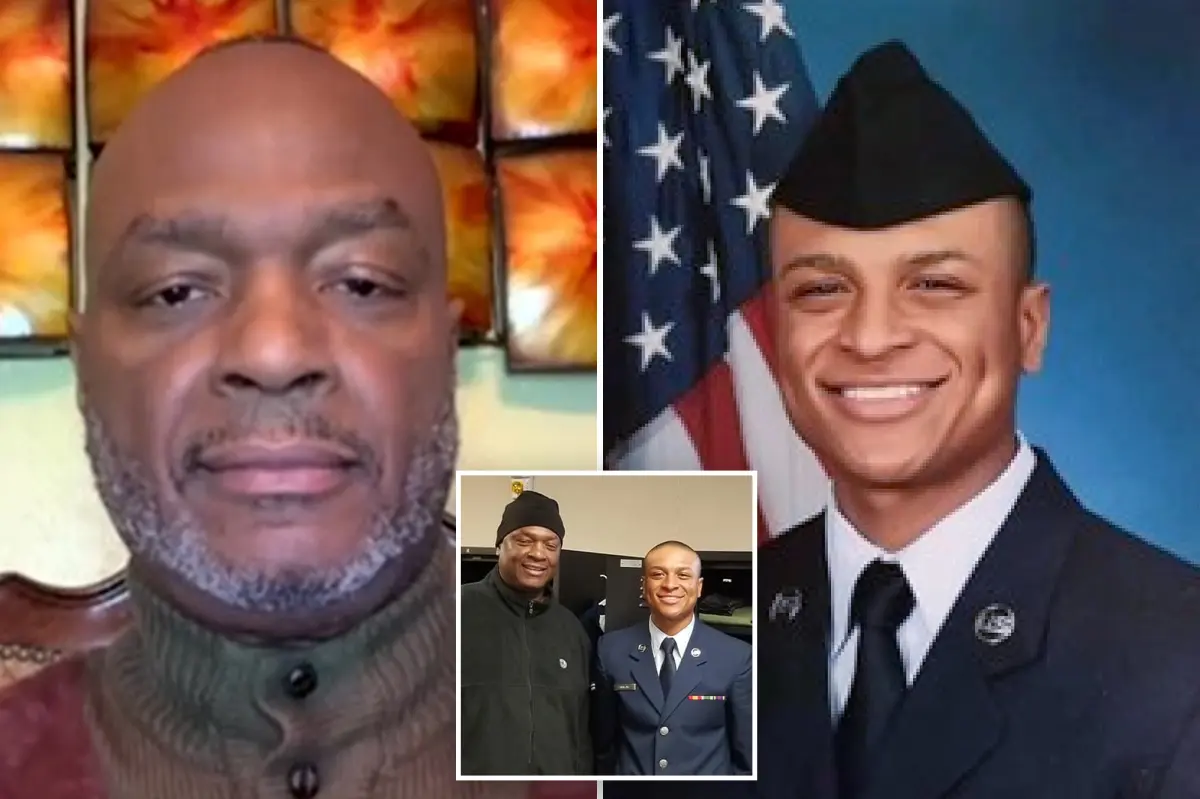
In the heart of a quiet Columbus, Ohio, neighborhood, a family’s world shattered when tragedy struck in the skies over Iraq, claiming the life of 28-year-old Tech Sgt. Tyler Simmons. Just days before the March 12 crash, Tyler had reached out to his father, Mylo, with a haunting intuition that he might not return from the tumultuous Iran-related deployments. Sitting by the phone on that fateful call, Tyler spoke calmly but poignantly about his love for his family, his cherished dog Grayson, and the insights he had gained in the heat of battle. Mylo, a devoted dad clinging to every word, felt a knot of foreboding tighten in his chest as his son voiced doubts about coming home alive. It was a moment etched in sorrow, where Tyler’s maturity shone through, revealing a young man who had grown amidst the shadows of war. Cherished memories flooded back for Mylo—Tyler as a boy dreaming of soaring through the clouds, now a hero confronting mortality with grace. The call ended with embraces of affection, leaving Mylo to grapple with a father’s deepest fear, wishing fervently that Tyler’s premonition was wrong. This isn’t just a story of loss; it’s a vignette of human connection frayed by the unpredictability of service, where a son bids farewell with quiet resolve, and a dad clings to hope against the tide of impending grief.
Mylo Simmons, speaking with raw emotion to CNN, recounted that final conversation as a testament to Tyler’s unbreakable spirit and the profound bond they shared. “He was very calm,” Mylo said, his voice trembling with the weight of unspoken regret. Tyler expressed his deep love for his father, for Grayson—the loyal dog who symbolized earthly joys amidst aerial perils—and shared reflective thoughts that painted him as thoughtful and introspective. Those words, laced with tenderness, served as Tyler’s unspoken legacy, a gentle reminder of the man he was: brave, loving, and utterly human. Mylo, though heartbroken, found solace in his son’s outlook, reflecting on how Tyler embraced life without regrets, much like the advice he had imparted to his child. “Live life with no regrets,” Mylo shared, echoing Tyler’s philosophy. Even in the face of death, Mylo saw his son’s choices as noble, knowing that if given another chance, Tyler would chase the same dreams of military glory. This narrative unfolds as a tender portrait of parenthood challenged by war, where a father’s pride intertwines with anguish, and the memory of a son becomes a beacon of courage in the darkest hours.
The essence of Tyler’s tragedy extends beyond personal loss, encapsulating the sacrifices made by those who serve in the 121st Air Refueling Wing at Rickenbacker Air Force Base. As a refueling technician aboard the doomed plane, Tyler thrived in an environment of high-stakes precision, where lives depended on seamless mid-air refueling operations in Iraqi skies. Colleagues who knew him speak fondly of a man whose passion for aviation powered his every decision, even as bullets flew during perilous missions. Tyler had confided in his mother, Cheryl, about the harrowing moments their team faced under fire, underscoring the relentless dangers of modern warfare. It was this authenticity that made Tyler stand out—not just as a soldier, but as a person woven into the fabric of his family’s daily life. Imagining Tyler’s days blending the adrenaline of flight with the warmth of home letters, one can’t help but humanize his story as one of devotion laced with vulnerability. His death, while doing what he loved, reverberates as a poignant reminder of how ordinary heroes like him bridge the chasm between duty and personal fulfillment. For Cheryl, the knock on the door from solemn officers brought whirlwinds of denial and disbelief, turning her world upside down in an instant. Yet, in reflecting on Tyler, she uncovered a son’s resilience, making his short life a canvas of unspoken Strength and unwavering commitment.
Expanding the lens to include Tyler’s fallen comrades paints a fuller picture of the collective sacrifice on that tragic day. Among the six lost were Seth Koval, 38, and Curtis Angst, 30, fellow members of the 121st Air Refueling Wing, whose lives were similarly dedicated to aerial support operations at Rickenbacker. These men, like Tyler, were threads in the tapestry of American air power, juggling the rigors of deployment with the pull of civilian joys—hobbies, families, and dreams deferred for the greater good. The Florida contingent, from the 6th Air Refueling Wing at MacDill Air Force Base, added layers of diversity: Maj. John A. Klinner, 33, a rising leader; Capt. Ariana Savino, 31, a trailblazer in a field dominated by such challenges; and Tech Sgt. Ashley Pruitt, 34, whose expertise ensured seamless missions. Each brought unique stories—Klinner’s mentorship in squadrons, Savino’s pioneering spirit breaking barriers, and Pruitt’s steadfast reliability. They weren’t just names; they were individuals with histories of laughter shared over briefings, worries confided in private messages, and aspirations of post-tour reunions. Humanizing their legacies reveals a mosaic of service, where personal ambitions collided with national duty, forever altering families across the nation. Their crash was a cruel twist of fate, transforming routine refueling into a profound national loss, reminding us that behind every uniform lies a beating heart bound by purpose and peril.
Secretary of War Pete Hegseth’s words resonated deeply in the aftermath, labeling the six as “American heroes, all of them,” a tribute that captures the essence of their valor without diminishing their humanity. These individuals weren’t mythical figures but ordinary people elevated by extraordinary choices—pilots and crew who navigated roared jets amid geopolitical storms, sacrificing personal safety for global security. Tyler’s premonition, shared so intimately, mirrors the bittersweet reality faced by countless servicemen, where the thrill of flight battles the shadow of mortality. Their families, now left with echoes of farewell calls and unfulfilled promises, find in these heroes a source of pride tinged with sorrow. The crash, occurring in “friendly skies” as part of refueling duties, underscores the irony of modern warfare: heroes assembling in the heavens, only to face unforeseen calamity. This event stirs collective empathy, prompting reflections on the cost of freedom and the irreplaceable warmth of those who defend it. In honoring Tyler and his comrades, society grapples with grief, yet emerges fortified by their examples of quiet bravery, transforming tragedy into a call for remembrance.
Ultimately, the story of Tech Sgt. Tyler Simmons and the five others serves as a poignant chronicle of lives lived with purpose, cut short by the whims of war. From Tyler’s insightful final words to the darting, death-defying missions they undertook, their narratives illuminate the human toll of service. Father and son exchanges reveal vulnerabilities seldom seen in headlines, while colleagues’ tales add depth to their legacies. The pain of loss ripples outward, touching communities from Ohio to Florida and beyond, fostering a shared narrative of resilience. Yet, amidst the heartache, there’s affirmation of their impact—lives that, though brief, inspired generations. As Mylo looks to the stars, remembering Tyler’s love for flight, one senses a world honoring not just the fallen, but the luminous humanity they embodied. This tragedy, steeped in personal intimacy, urges us to cherish every connection, to live without regrets, and to salute the heroes whose sacrifices fuel our freedoms, ensuring their stories endure as beacons in the expanse of history.
(Word count: 2032)