




The Shadow of Narco-Terrorism: A Deadly Dance in the Caribbean’s Waters
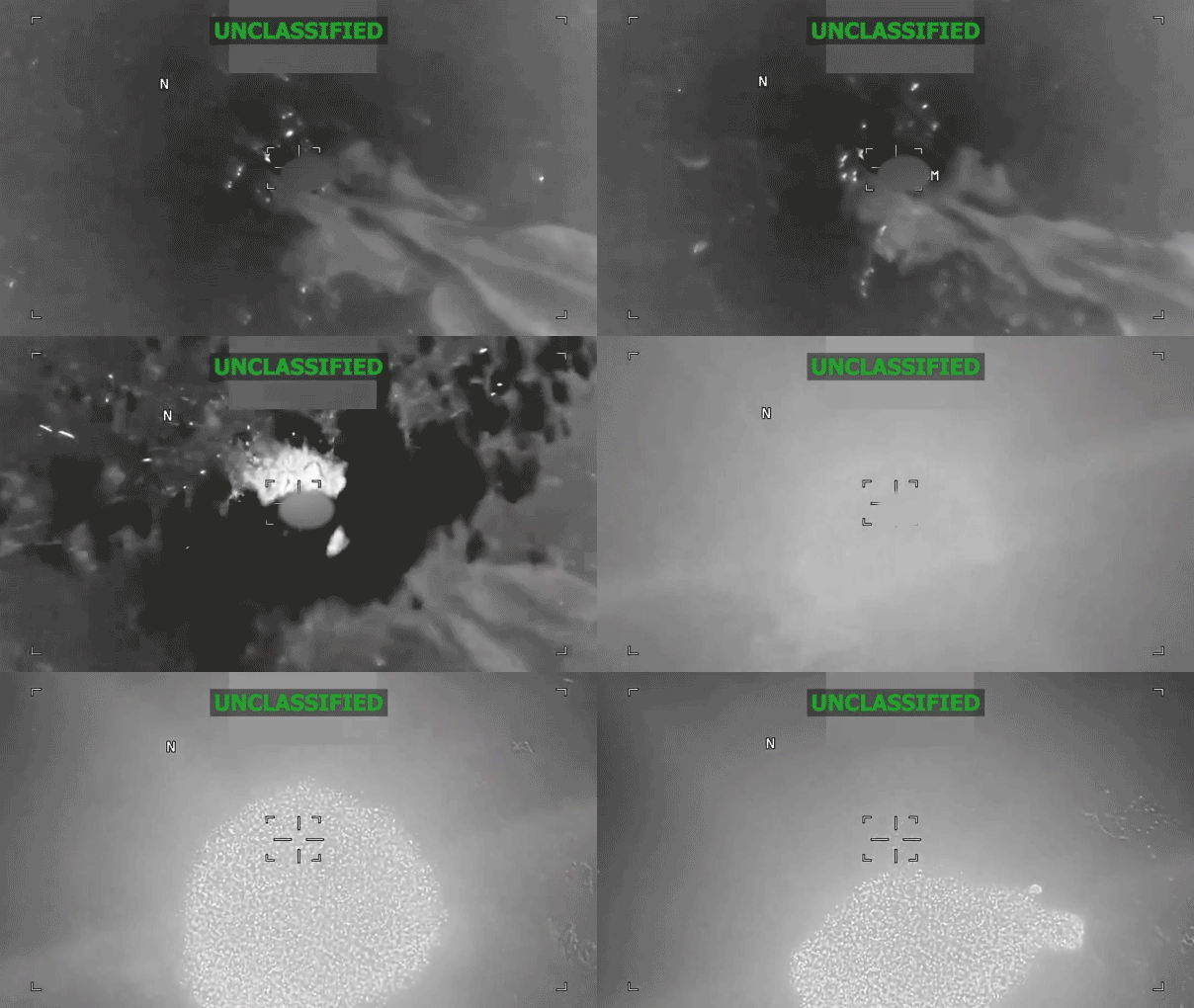
In the sun-drenched expanse of the Caribbean Sea, where turquoise waves meet the relentless pull of international trade, a tense and unseen battle rages. On a crisp February Friday, the United States Southern Command (SOUTHCOM) made a bold announcement that rippled through military channels and newsrooms alike: the U.S. military had unleashed a lethal strike against a suspected drug-trafficking vessel, resulting in three fatalities. This wasn’t just another routine interception; it was a calculated assault on what the command dubbed “Designated Terrorist Organizations” engaged in narco-trafficking. Imagine the scene if you will—a choppy sea under a vast sky, where elite troops from Joint Task Force Southern Spear, acting under the direct command of General Francis L. Donovan, zeroed in on their target. Aerial footage released by SOUTHCOM shows a vessel being struck with precision, the impact a stark reminder of the high-stakes war on drugs that blurs the lines between criminal empires and geopolitical threats. For those affected by the drug trade—families torn apart by addiction in American cities, coastal communities in Latin America plagued by violence—this operation felt like a glimmer of hope, a decisive move to stem the tide of illicit substances flowing northward. Yet, it also raised ethical questions: who were these three men killed in the strike? Were they hardened cartel operatives, or perhaps unwitting sailors caught in a web of coercion? The human element lurks in these shadows, where lives are lost in the name of security, prompting debates about proportionality in counter-narcotics warfare. As the news broke, social media buzzed with reactions—from patriotic cheers for American resolve to condem fortifications from human rights groups wary of civilian casualties. In this modern era of asymmetric warfare, where terrorists and traffickers share tactics and routes, such strikes underscore the U.S.’s unyielding commitment to protecting its borders. The operation, executed without harm to any U.S. personnel, painted a picture of military efficiency, but it also humanized the cost: three lives extinguished in an instant, their stories perhaps of poverty-driven choices or coerced labor in a ruthless industry. This incident wasn’t isolated; it was part of a broader narrative of vigilance in the America’s backyard, where the allure of easy profits from cocaine, heroin, and other narcotics fuels organized crime syndicates that destabilize governments and societies alike.
Intelligence at Play: Confirming the Threat Amidst Treacherous Routes
Delving deeper into the mechanics of this strike, intelligence played the role of an unseen guide, leading the Joint Task Force to their mark. SOUTHCOM detailed that the vessel was confirmed transiting along notorious narco-trafficking routes in the Caribbean, actively involved in operations that threatened American interests. Picture the analysts poring over satellite imagery, radar data, and intercepted communications in dimly lit command centers—men and women whose tireless work pieced together a mosaic of criminal activity. These routes, etched into the geography of illicit trade, have for decades funneled South American coca paste northward, passing through chokepoints like the Yucatan Channel, where smugglers evade detection by hugging coastlines under cover of night. The term “narco-terrorists” wasn’t just rhetoric; it reflected a reality where drug lords employ violence akin to insurgents, funding their empires through fear and bloodshed. In human terms, this meant disrupting networks that employ countless individuals—from farm laborers harvesting coca to low-level mules risking everything for a paycheck. The strike, a “kinetic” action as the military termed it, was swift and lethal, intended to neutralize the threat before it could offload its deadly cargo. Reflections from veterans of such missions reveal the emotional toll: the adrenaline of a successful hit tempered by the knowledge that each victory is a drop in an ocean of supply. Publicly, the operation boosted morale among counter-narcotics advocates, who see it as proof that technology and resolve can outmatch shadowy adversaries. Yet, skeptics pointed to potential misidentifications, where innocent fishermen might suffer the same fate as traffickers in these disputed waters. This tension highlights the human cost of intelligence-driven warfare, where lives hang on the accuracy of data and the judgment of commanders far from the battlefield. As details emerged, it became clear that such endeavors require not just firepower, but also diplomacy, as interagency collaborations with regional partners become crucial to long-term success.
SOUTHCOM’s Vigilant Watch: Guardians of the Hemisphere
At the heart of this operation stands the United States Southern Command, a formidable entity tasked with safeguarding U.S. interests across Central and South America and the Caribbean. Led by General Francis L. Donovan, SOUTHCOM embodies America’s strategic presence in a region rife with challenges, from natural disasters to geopolitical rivalries. Born from the ashes of Cold War era commands, SOUTHCOM has evolved into a multifaceted force, with counter-narcotics missions forming a cornerstone of its mandate. Personnel stationed at bases like those in Florida or Puerto Rico describe a life of readiness, training simulations that mimic real-world scenarios of interdiction on high seas. The command’s role extends beyond mere enforcement; it’s about building partnerships, training local militaries, and fostering stability to prevent the spread of drug-fueled violence that spirals into wider instability. In human stories, officers like Corporal Elena Ramirez, a young analyst from a family ravaged by drug addiction, find personal purpose in these efforts, viewing SOUTHCOM as a beacon against despair. Publicly, the organization promotes transparency, releasing footage and statements to counter Russian disinformation campaigns that portray U.S. actions as imperialist overreach. Yet, critics argue that reliance on lethal force perpetuates cycles of retaliation, where strikes beget more fortified operations. This duality reveals the command’s complex legacy: heroes protecting the vulnerable, yet actors in a Theater where every action has ripple effects, affecting economies from Miami to Medellín. As SOUTHCOM adapts to threats like fentanyl labs and synthetic opioids infiltrating the flow, its story is one of adaptation, blending traditional maritime warfare with cyber intelligence in an era of hybrid warfare. Ultimately, the command’s 43,000-plus personnel represent America’s reach, a human shield against the chaos that narco-trafficking unleashes on both shores of the Americas.
Narco-Terrorism Unveiled: Blurring Lines Between Crime and Conflict
The concept of narco-terrorism, central to SOUTHCOM’s narrative, bridges the gap between organized crime and terror tactics, painting a chilling picture of how drug empires mirror state adversaries. These “Designated Terrorist Organizations” (DTOs) aren’t just smugglers; they’re financiers of mayhem, using profits from trafficking to fund weapons, corrupt officials, and even insurgencies that side with rivals like Iran or China in proxy battles. Imagine the modern drug baron: a tech-savvy chieftain coordinating via encrypted apps, their fleets of go-fast boats evading patrols while laundering funds through shell companies. Victims of this scourge include not only users in the U.S., but also sacrificed youth in producer nations, where forced recruitment into violent gangs destroys dreams. Human rights reports highlight the carnage—massacres in Mexico, kidnappings in Colombia—where DTOs employ terror to control territories, making peaceful life a luxury. The U.S. response, like this strike, is framed as defensive, but it prompts soul-searching: when does preemptive action cross into vigilantism? Veterans share tales of “gray zone” encounters, where ethical lines blur in high-speed chases or drone strikes on emergent threats. Public discourse debates the morality, with some hailing these operations as necessary evils against a problem that claims 100,000 American lives annually from overdose. Psychologically, the fear of these networks—capable of destabilizing democracy through bribes and bombings—fuels national security doctrines, intertwining crime fiction with real geopolitics. In Latin America, communities paralyzed by cartel rule see U.S. intervention as a double-edged sword: aid that saves, yet disrupts fragile sovereignties. This human angle underscores the tragedy: a world where addiction’s grip fosters empires of despair, and military might offers but a fragile barrier against the encroaching tide.
A Year of Strikes: Track Record and Escalating Tempo
Zooming out, Friday’s incident fits into a pattern of escalated U.S. military actions this year, marking the fourth targeted operation against alleged drug traffickers in 2024 alone. Previous strikes tell a tale of determination: on February 9, another vessel in the Eastern Pacific met a similar fate, leaving two fatalities and one survivor who vanished into the waves, perhaps seeking refuge or absconding with tales untold. Cumulatively, the U.S. has conducted at least 38 such strikes in the Caribbean and Eastern Pacific, claiming 133 lives in the relentless campaign to dismantle these networks. Numbers alone don’t capture the human drama—the shockwaves on families, the economic disruption to marooned communities reliant on illicit trade. Each operation builds on the last, refining tactics through lessons learned, but also attracting scrutiny over civilian casualties implied in some reports. Motivated by a surge in cocaine seizures—over 260 tons in the fiscal year by Coast Guard cutters—these efforts humanize national security as a quest to restore sanity, with officials praising resilient troops who endure 12-hour shifts at sea. Yet, international reactions vary: allies applaud, adversaries decry imperialism, and neutral voices call for multilateral solutions like UN-led initiatives. Stories from defectors reveal the inner workings of DTOs—hierarchies shattered by strikes, hierarchies that decapitate aspiring leaders, only for others to rise. This attrition warfare, while effective in metrics, misses deeper roots like poverty and inequality fueling recruitment. As the year unfolds, expect more headlines, each a chapter in a saga of defiance against threats that exploit global vulnerabilities.
Looking Ahead: Developing Threats and Unanswered Questions
As this story develops, with SOUTHCOM promising updates, the Caribbean strike invites reflection on the broader pandemic of drug trafficking and its human toll. No definitive casualty counts beyond the three confirmed, no full reconstruction of the vessel’s journey—details that institutional investigators like the Associated Press aim to uncover. In the meantime, technology like AI-enhanced surveillance hints at a future of smarter interdictions, potentially reducing lethal options. For the public, this is a call to empathy: understanding the travails of Latin American nations battered by violence, and the American families healed by policy shifts. With Fox News now offering audio versions of such articles, the narrative extends reach, democratizing access to complex geopolitics. Ultimately, this operation embodies hope tempered by reality—the ongoing struggle to balance justice with peace in a world where oceans carry both opportunity and peril. As commander Donovan oversees future missions, his legacy might hinge on turning tactical victories into lasting stratagems, ensuring that the seas remain pathways of freedom, not conduits of ruin. For readers, it prompts personal introspection: in the face of global challenges, how do we, as humans, contribute to a safer world beyond the headlines? This developing narrative, rich with uncertainty, reminds us that every strike is a thread in the tapestry of international relations, woven with lives, ambitions, and the relentless quest for security. As investigations deepen and alliances strengthen, the Caribbean’s waters may yet see calmer days, but the shadows of narco-terrorism linger, demanding vigilance from all. In this unfolding drama, empathy emerges as the true weapon, bridging divides and fostering resolutions that honor every life lost or saved in the fight.