


The Remarkable Operation That Led to Maduro’s Capture
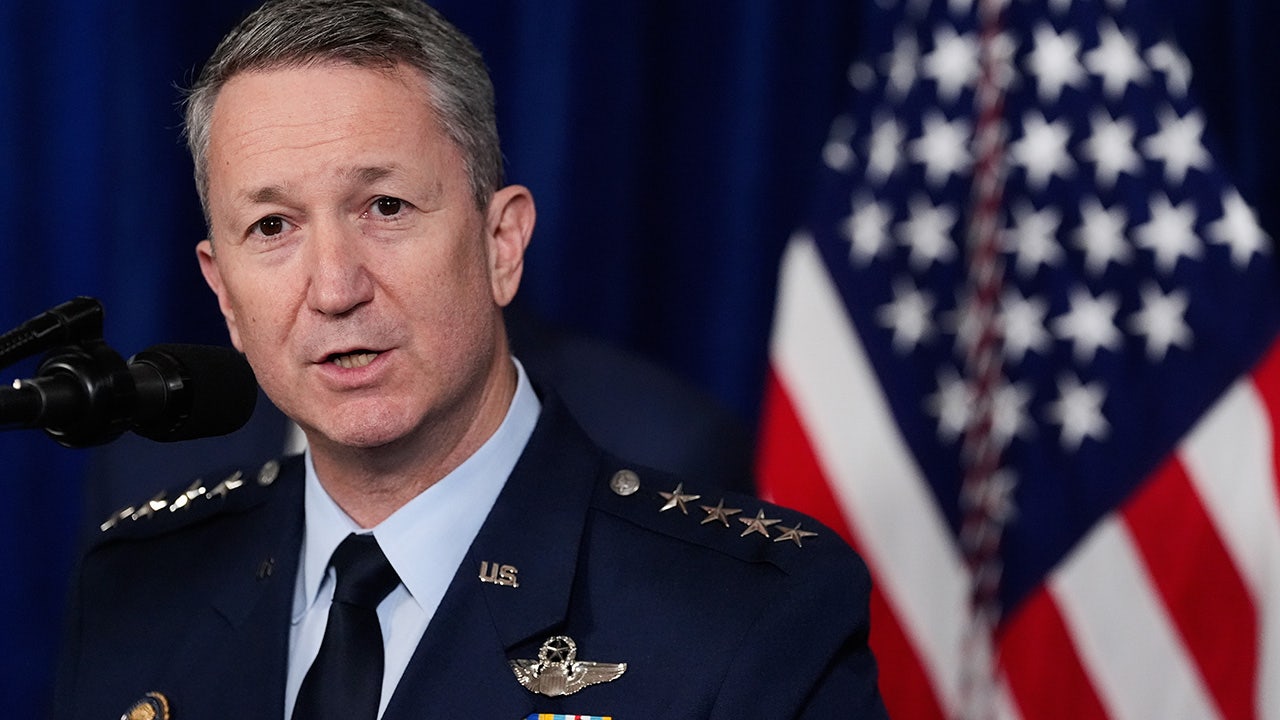
In a stunning display of military precision and international coordination, U.S. forces successfully captured Venezuelan President Nicolás Maduro in what Joint Chiefs General Dan Caine described as “Operation Absolute Resolve.” Speaking alongside President Donald Trump at Mar-a-Lago, Gen. Caine revealed the extraordinary details of this complex mission that unfolded during the early hours of January 2nd. The operation represented months of meticulous planning, culminating in a synchronized effort that showcased America’s unique military capabilities. “It required the utmost of precision and integration within our joint force,” Caine explained, detailing how more than 150 aircraft launched across the Western Hemisphere in close coordination. Their single purpose: to transport an interdiction force into downtown Caracas while maintaining tactical surprise – a feat that demanded navigating through challenging weather conditions including ocean, mountain, and low cloud coverage.
The mission officially began at 10:46 p.m. Eastern Time when President Trump gave the order to proceed, offering words of “Good luck and Godspeed” that were transmitted throughout the joint force. What followed was a remarkable demonstration of military collaboration, with aircraft launching from twenty different bases on land and sea across the hemisphere. The operation brought together service members ranging from 20 to 49 years old, representing various branches of the military and intelligence community. The CIA, National Security Agency, and National Geospatial-Intelligence Agency all played crucial roles in supporting the mission. As helicopters carrying the extraction force – which included law enforcement officers – took off, they maintained an altitude of just 100 feet above water during their approach to Venezuelan shores.
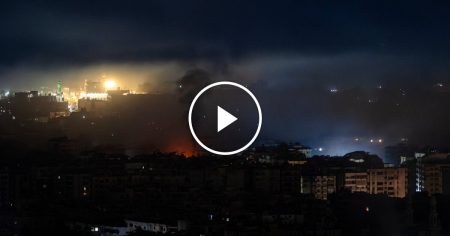
As the operation progressed, the United States employed a sophisticated layering of effects coordinated through Space Command, Cyber Command, and other interagency partners to create a protected pathway for the forces. The extraction team was shielded by an impressive array of aircraft from the Marines, Navy, Air Force, and Air National Guard, including F-22s, F-35s, F-18s, EA-18s, E-2s, B-1 bombers, support aircraft, and remotely piloted drones. This multi-faceted approach proved essential as the forces approached Caracas, where the joint air component methodically disabled Venezuela’s air defense systems to ensure safe passage of the helicopters into the target area. The precision timing of the operation was evident as the team arrived at Maduro’s compound at exactly 1:01 a.m. Eastern Standard Time (2:01 a.m. local time in Caracas).
Upon arrival, the apprehension force descended into Maduro’s compound, moving with what Gen. Caine described as “speed, precision, and discipline.” They quickly isolated the area to ensure both the safety of the ground force and the secure apprehension of the indicted persons. The operation wasn’t without resistance – helicopters came under fire as they arrived at the target area and responded with “overwhelming force in self-defense.” One aircraft was hit but remained operational throughout the remainder of the mission. In what seems to have been a recognition of the overwhelming force arrayed against them, Maduro and his wife “gave up” and were taken into custody by the Justice Department. Remarkably, the operation was completed without any loss of life to U.S. forces.
After securing Maduro and his wife, the extraction force prepared for departure, calling in helicopters for exfiltration while fighter aircraft and remotely piloted drones provided overhead coverage and suppressive fire. Gen. Caine noted that there were “multiple self-defense engagements” as the force withdrew from Venezuela, highlighting the continued danger faced by American personnel throughout the mission. Despite these challenges, the team successfully exfiltrated from Venezuelan territory, reaching the safety of international waters at 3:29 a.m. Eastern Standard Time with the indicted persons aboard. Both Maduro and his wife were transferred to the USS Iwo Jima, marking the successful completion of this extraordinary operation.
The capture of Nicolás Maduro represents a watershed moment in U.S. foreign policy and Latin American politics, demonstrating America’s ability to project power with surgical precision when deemed necessary. The operation has sparked varied reactions across the global stage, with some nations championing the action while others have condemned it as a violation of Venezuelan sovereignty. As Venezuela’s Vice President Delcy Rodriguez – Maduro’s presumed successor – is reportedly in Russia, questions remain about the future governance of Venezuela and how this dramatic development will reshape regional dynamics. While Republican leaders have largely lined up behind President Trump following the successful mission, the international implications and long-term consequences of this bold military action will continue to unfold in the days and weeks ahead. What remains clear is that “Operation Absolute Resolve” will be studied for years to come as an example of the complex, multi-domain operations that define modern military capabilities.