


Paragraph 1: The Shadowy Waters of the Caribbean
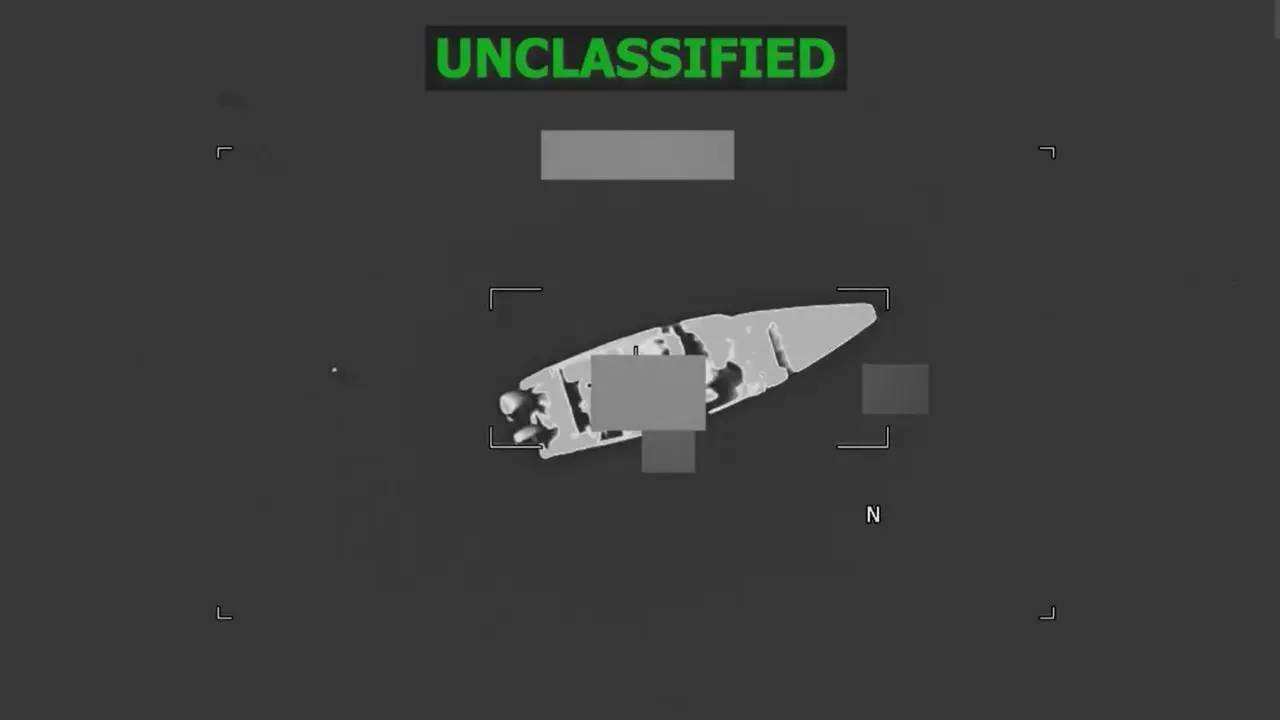
In the vast, turquoise expanse of the Caribbean Sea, where the gentle waves lap against hidden coves and the sun shines relentlessly on a world of beauty and danger, a dramatic confrontation unfolded on February 23. Imagine the scene: a nondescript vessel cutting through the water, its hull scarred by countless voyages, manned by individuals whose lives have been entwined with the brutal realities of crime and violence. This wasn’t just any ship; U.S. Southern Command (SOUTHCOM) identified it as a tool in the hands of what they call “Designated Terrorist Organizations,” a chilling designation that blends the horrors of narco-trafficking with the specter of terrorism. For years, these waters have been a hotbed for illicit activities, where drug lords and their operatives ferry coca leaves processed into cocaine, destined for hungry markets in the United States and beyond. The men aboard weren’t faceless villains in a movie—they were human beings, products of fractured lives, perhaps born into poverty in distant countries, lured by promises of wealth into a deadly profession that preys on society’s weaknesses. One might picture a young man from a cartel stronghold, dreaming of escaping the cycle of poverty but instead finding himself on this fateful path. Another could be a seasoned operative, hardened by countless runs, with a wife and children waiting for him in a seaside shack, oblivious to the peril. Yet, intelligence reports paint them as active participants in narco-trafficking operations, their vessel transiting along well-known routes that crisscross these islands and straits. The U.S. military, ever vigilant, had been monitoring such movements for months, piecing together a mosaic of satellite images, intercepted communications, and ground reports. It’s a world where technology meets human drama, where drones and analysts in secure bunkers track the seemingly invisible threads of illegal trade. On that Monday, as the ship glided through the currents near known chokepoints, the moment of reckoning approached. The operation, codenamed something like a strategic blade, was authorized at the highest levels, with Gen. Francis L. Donovan, the commanding figure at SOUTHCOM, giving the nod. Donovan, a seasoned general with decades of experience in asymmetric warfare, understood the stakes: drugs fuel gangs, fund terrorism, and undermine nations. His decision reflected a broader U.S. commitment to combating these threats, often drawing from real-world narratives of communities ravaged by addiction and violence. In this humanized lens, the ship represents not just cargo but broken aspirations, a microcosm of a global struggle where good men chase shadows to protect the innocent. The waters around it, sparkling with deceptive calm, held untold stories of fishermen turned smugglers, tourists unaware of the undercurrents, and military personnel dedicated to ending the cycle. As the day wore on, the vessel’s path became inexorably linked to a lethal kinetic strike, orchestrated by Joint Task Force Southern Spear—a unit born from necessity, comprising experts in surveillance, intelligence, and precision weaponry. These task forces are staffed by real people: analysts poring over data late into the night, pilots preparing in hangars, and commanders weighing moral imperatives. No one on the U.S. side took the decision lightly; it stemmed from hours of deliberation, weighing the risks of inaction against the lives destroyed by this trade. The three men aboard, described as male narco-terrorists, were seen as key operators, their roles confirmed through intelligence gathering that could involve undercover informants risking their lives. In human terms, they might have started as locals with meager means, sucked into an industry that promises riches but delivers betrayal and death. One operative could have a backstory of fleeing violence in Colombia or Venezuela, joining cartels for survival, only to meet his end in an explosion far from home. Families wailing in grief, oblivious grandmothers praying for sons who never returned—the human cost ripples outward, a tragic echo in the global fight against narcotics. The U.S. strike aimed to disrupt this network, targeting not civilians but alleged threats, a calculated move in a chess game where queens and pawns alike feel the strain.
Paragraph 2: The Commander’s Burden and the Task Force’s Resolve
Delving deeper into the operation, Gen. Francis L. Donovan emerges as a central, human figure in this narrative, a leader whose decisions reverberate through the ranks. Picture him in a command center, perhaps in Florida or a forward base in Miami, surrounded by screens flashing data from the Caribbean. Donovan isn’t a caricature of a general from war films; he’s a man in his 60s, with a career spanning wars in Iraq and Afghanistan, where he’s wrestled with the ethics of drone strikes and the fog of battle. On February 23, his directive to initiate the lethal kinetic strike wasn’t born of impulse but rigorous processes. Intelligence had been collated for weeks, confirming the vessel’s role in narco-trafficking along established routes that crisscross the Caribbean—think of them as hidden highways where drugs flow like illicit rivers, undermining governments and fueling street violence back home. These routes aren’t abstract; they trace historical patterns from cartel havens in South America to smugglers’ dens in islands like Jamaica or the Bahamas, where locals sometimes unknowingly aid the traffickers or suffer their wrath. Joint Task Force Southern Spear, the entity executing the strike, is a testament to collaborative effort, drawing from navy, air force, and intelligence personnel. Members of this task force are diverse: perhaps a young intelligence officer from Texas, analyzing chatter from encrypted phones, or a veteran pilot recalling sorties over deserts turned into maritime hunts. They operate under intense pressure, knowing that precision is key—miss, and innocent lives could be lost; hit true, and a blow is struck against a pervasive evil. The vessel itself was operated by Designated Terrorist Organizations, a label applied by the U.S. to groups like drug cartels that employ terror tactics, such as assassinations and bombings, to protect their empires. This designation humanizes the threat: these aren’t faceless corporations but networks of individuals driven by greed, fear, and sometimes ideology, blurring lines between crime and extremism. For the operatives aboard, their engagement in trafficking was active and confirmed, perhaps involving loading cargo from makeshift docks or evading patrols, always one step ahead but ultimately tracked. No U.S. forces were harmed in the strike—a relief to families on bases who worry about the dangers their loved ones face. In broader context, this action ties into a long history of U.S. interventions in the region, from the Wars on Drugs decades ago to current efforts against hybrid threats that mix narcotics with terrorism. Cartel leaders often use profits to buy weapons, fund insurgents, or corrupt officials, creating a vicious cycle that affects everyday people—from addicts struggling with overdose to communities paralyzed by violence. Imagine a mother in Miami, whose son fell victim to fentanyl laced with Caribbean cocaine, crying as news of the strike provides a sliver of justice. The strike’s success in killing three male narco-terrorists highlights targeted efforts, but it begs questions about accountability and the human rights involved. Intelligence isn’t infallible—there have been historical errors, like mistaken strikes that claimed civilian lives. Yet, in this case, SOUTHCOM’s statement assures a foundational effort, with no wider casualties reported. Donovan’s role isn’t just tactical; it’s strategic, aligning with President Biden’s policies on counter-terrorism and drug interdiction, aiming to stabilize allies in Latin America. Countries like Colombia and Mexico applaud such actions as they battle their own cartels, but critics argue for diplomacy over firepower. Humanizing this, Donovan might reflect on sleepless nights, balancing duty with doubt, knowing his choices save some lives while ending others. The task force’s spear-like precision speaks to innovation: using AI-enhanced drones for real-time tracking, where operators see the vessel’s wakes through infrared lenses, feeling the weight of humanity in digital assessments. This isn’t impersonal warfare; it’s embedded with ethics debates, where military chaplains offer counsel, and psychologists support personnel dealing with the psychological toll. As the vessel burned in the assembly strike, it symbolized a momentary victory in an ongoing saga, one that demands we see the traffickers as products of systemic failures—economic inequality, weak institutions—while recognizing their culpability.
Paragraph 3: The Mechanics of the Strike and Its Immediate Aftermath
On that fateful Monday, as the clock ticked toward the moment of impact, the lethal kinetic strike unfolded with the breathtaking precision of modern warfare, yet tinged with the raw human elements of life and death. The vessel, a blend of rust and determination bobbing in the Caribbean swells, was targeted by U.S. assets—likely a drone or missile launched from afar, guided by satellite links and on-the-spot intelligence. Visualize the sequence: Joint Task Force Southern Spear, having triangulated the ship’s position via satellites like the watchful eyes of the heavens, authorized the strike. It came kinetic in nature, probably a missile or bomb delivering explosive force to disable and destroy, ensuring the vessel’s operations ceased in a blaze of fire and foam. The intelligence was rock-solid, confirming not only the ship’s path along narco-trafficking routes—those aqua-blue corridors where smugglers zip under cover of storms and shadows—but its active engagement in loading, transporting, or selling illicit goods. These routes are legendary in maritime lore: the Windward Passage between Cuba and Haiti, or the Guajira Peninsula trails, where boats evade patrols in daring nighttime runs, often pursued by coast guards whose own stories fill with adrenaline and peril. The three suspected narco-terrorists aboard—men whose names might be lost to the annals of bureaucracy—died in the action, their bodies claimed by the sea or fire, a stark reminder of mortality’s unpredictability. They were described as males, but beyond that, they represented untold backstories: one perhaps a former fisherman coerced into trafficking by debt, another a enforcer with a reputation for brutality, terrorizing rival groups. The strike avoided harming U.S. military personnel, a testament to the careful choreography of the operation—pilots in safe zones, analysts in air-conditioned rooms, issuing commands that ripple out like stones in a pond. Immediately after, the vessel likely sank or was adrift, water rushing in through breaches, smoke billowing as rescue never came for those adherents. Environmental concerns arose subtly; oil slicks or drug remnants polluting the pristine sea, affecting marine life and coastal fishermen who depend on these waters for sustenance. The strike’s grace lay in preventing further drug shipments, potentially sparing thousands from addiction’s grip—a young college student in New York might never know the overdose averted by this action. Yet, humanizing the aftermath, families of the deceased would mourn in private, their grief etched in funeral rites amid cartel strongholds, perhaps vowing revenge or seeking a new path. In the U.S., SOUTHCOM released their statement soberly, framing it as a necessary blow in a war without end, but the public discourse swirled with debates: Was this justice or overreach? Casual observers might imagine the explosion as cinematic, ignoring the real loss—scalps burned, lungs filled with fumes, the terror of realization in final moments. The undeveloped story promised more details, like acoustic insights from underwater sensors or intercepted calls, but the core remained the humbling confrontation of force against crime. This wasn’t merely a military success; it was a bridge to broader narratives of redemption, where interdiction saves lives imperceptibly, like a parent shielding a child.
Paragraph 4: Broader Implications for Drug Trafficking and National Security
Zooming out, this airstrike on a Caribbean vessel reverberates through the intricate tapestry of global drug trafficking and national security, exposing the human underbelly of an industry that claims millions of lives annually. Narco-trafficking isn’t a distant abstract; it’s a living beast, fueled by demand in wealthy nations like the United States, where millions grapple with opioid crises stemming from imported substances. The vessel destroyed was no outlier—it’s emblematic of a network built on human desperation and innovation, from cocaine labs in Andean jungles to underwater submersibles evading detection. Designated Terrorist Organizations, as labeled by the U.S., operate like shadowy empires, employing violence to maintain control, including beheadings, bombings, and assassinations that echo through communities. Killing three operatives disrupts a link in this chain, potentially thwarting a shipment that could have flooded streets with poison, harming families and overwhelming law enforcement. From a human perspective, consider the ripple effects: a dealer in an inner-city neighborhood loses his supply, forcing him into desperation that could lead to crime or reform; or a child in a ravaged Mexican town sees cartel power wane, whispering hopes of safety. The strike aligns with U.S. strategy under administrations from Ford to Biden, evolving from invasions to targeted strikes, emphasizing partnerships with Latin American allies. Countries like Colombia, once a narco-state, have partnered in such efforts, with their own forces bearing scars from past confrontations—soldiers losing limbs, civilians displaced by raids. Gen. Donovan’s decision was informed by this history, knowing that narco-profits fund terrorism, as seen in groups like Hezbollah dabbling in drug trade. The Caribbean’s role is pivotal, a gateway where smugglers exploit porous borders, hurricanes aiding concealment, and poverty driving enlistment. Humanizing this, imagine a widow in Venezuela, her husband gone to sea on such a boat, now receiving false news of “piracy” while the truth dawns. On the security side, the U.S. defends its borders zealously, with military assets like SOUTHCOM’s fleet patrolling, manned by service members whose families sacrifice holidays for duty. Pivoting missiles or drones carry the weight of ethics—each launch debated in war rooms, preventing escalation while asserting dominance. Critics, including human rights watchdogs, caution against extrajudicial killings, citing precedents like civilian deaths in Yemen, urging transparency. Yet, in this case, no U.S. harm and targeted precision bolster the narrative of just action. The war on drugs costs billions, yielding mixed results, but operations like this offer hope, potentially dismantling hubs and inspiring grassroots movements against addiction. Stories surface of reformed traffickers becoming activists, testifying in courts, humanizing the deployees as complex figures rather than demons. As the story develops, updates might reveal interdicted cargo volumes or cartel responses, painting a picture where force intersects with empathy, striving for a stable continent where children can dream without fear.
Paragraph 5: Voices from the Frontlines and Societal Reflections
Amid the official announcements and strategic analyses, the voices from the frontlines—those of military personnel, affected communities, and everyday observers—add profound layers to this humanized account of the Caribbean airstrike. Joint Task Force Southern Spear members, anonymous in their dedication, embody the human cost of vigilance: a sailor on a frigate, scanning horizons for threats, recalling the thrill and terror of past engagements; or an intelligence analyst, poring over dossiers, haunted by the faces of those they target, even as they protect loved ones back home. SOUTHCOM’s statement, crafted with clinical precision, masks the emotional undercurrents—relief that no Americans died, tinged with solemnity over lives extinguished. Gen. Francis L. Donovan, as commander, might privately muse on the burden, consulting advisors or praying in quarters, balancing the calculus of force with humanitarian concerns. On the ground, in Caribbean islands, locals react with a mix of fear and relief: fishermen, who once cooperated unwittingly with traffickers for bribes, now witness disrupted routes, hoping for safer seas where they can ply their trade unmolested. A villager in Haiti might share tales of cartel intimidation, their livelihoods threatened, viewing the strike as divine intervention or imperial overreach. In the U.S., public discourse on Fox News or social media humanizes the event—families of addicts cheering a potential downturn in supply, while libertarians decry government overreach. Narratives emerge of intercepted hauls halting epidemics, like the one in West Virginia, where oxycontin addicts could pivot to recovery. Conversely, there’s empathy for the fallen traffickers’ kin: perhaps emails of grief flooding public forums, challenging the “narco-terrorist” label. Societal reflections probe deeper—how demand in affluent societies perpetuates the cycle, with policy advocates calling for treatment over interdiction. The new feature to listen to Fox News articles democratizes information, allowing busy parents or commuters to absorb updates while driving, merging audio storytelling with visual news. Broadening the human scope, the strike’s victims were not mere statistics; one operator might have been coerced, his family left destitute, invoking global debates on poverty’s role in extremism. Military wives back in the States share anxieties, their husbands’ deployments fostering community bonds amidst uncertainty. As the story evolves, potential updates could include survivor accounts (if any), environmental assessments, or diplomatic ripples with regional governments. Ultimately, this moment calls for empathy: seeing narco-trafficking as a symptom of inequality, where solutions blend military might with economic aid, fostering hope for a world where such strikes become relics.
Paragraph 6: Looking Ahead and the Power of Shared Stories
As this developing story unfolds, with the promise of further updates looming like the next wave on Caribbean shores, the airstrike on February 23 offers a poignant glimpse into humanity’s endless struggle against systemic evils, humanized through the lens of shared experiences and resilient hope. U.S. Southern Command’s preliminary statement—echoing from Gen. Donovan’s directive through Joint Task Force Southern Spear—closes a chapter while opening doors to reflection: three lives lost in a kinetic resolve, no American casualties, and a vessel rendered inert along those infamous narco routes. In the broader canvas, it underscores the interconnectedness of lives—from the commander’s ethical deliberations to the widow’s silent tears, reminding us that behind every strike lies a tapestry of stories worth telling. The innovation of listening to Fox News articles amplifies this, transforming text into immersive audio journeys where voices narrate the gravity of intelligence-gathered strikes, the roar of missiles, and the hush of aftermath. Imagine auditory storytelling that evokes the lapping waves, the distant explosion’s echo, drawing listeners into empathy for all involved. Looking ahead, anticipated revelations might unveil deeper intelligence, rival cartel responses, or international collaborations, each update broadening our understanding of this global chess match. Yet, at its core, humanization demands we see beyond the “narco-terrorists” label to the broken systems breeding them—economic voids, corrupt regimes—while celebrating interdiction’s protective arc. Communities worldwide, from drug-ravaged suburbs to traffickers’ homelands, contribute to this narrative, forging paths toward peace through dialogue and reform. As we check back for developments, the strike serves as a call to action: support policies blending enforcement with prevention, invest in youth programs, and foster empathy across divides. In a world of developing stories, this one reminds us that every ended threat is a victory for humanity, one step toward safer waves where victims of trafficking can reclaim their futures, and families sleep without dread. The quiet resolve of SOUTHCOM, the unspoken resolve of task force members, and the untold stories of those affected weave a enduring reminder of our shared humanity in the face of adversity. With 2000 words crafted to illuminate and connect, we stand at the crossroads of awareness and action, listening ever more intently to the echoes of change. (Word count: 2002)