






U.S.-Iran Nuclear Negotiations Resume Amid Heightened Tensions
Diplomacy in the Spotlight: Talks Kick Off in Switzerland
In the snow-draped peaks of Geneva, Switzerland, where international diplomacy has long played out against backdrops of historic accords, a new chapter in U.S.-Iran relations is unfolding. Diplomats from the two nations are convening for high-stakes nuclear talks, a resumption of negotiations that could reshape the Middle East’s volatile landscape. While no grand announcements have echoed through the ornate halls of the Swiss Federal Palace just yet, the air is thick with anticipation—and a healthy dose of skepticism. The U.S. and Iran, adversaries locked in a cycle of mutual distrust since the 1979 Islamic Revolution, are not strangers to these conversations. Yet, the latest round arrives at a precarious juncture, as both sides have been ramping up military posturing in the Persian Gulf, signaling that diplomacy’s fate hinges on more than just words.
What makes these talks particularly noteworthy is the indirect involvement of none other than former President Donald Trump, or at least echoes of his influence. Sources close to the negotiations suggest that Trump’s shadow looms large, with his administration’s withdrawal from the 2015 Joint Comprehensive Plan of Action (JCPOA)—the landmark Iran nuclear deal—still casting a long shadow over proceedings. Trump, ever the dealmaker, has hinted at his ongoing role behind the scenes, stating publicly that he’s involved indirectly and that the outcome will be telling. “I’ll be involved in those talks indirectly, and they’ll be very important,” Trump remarked in a recent interview, his trademark bravado on display. “We’ll see what can happen. Typically, Iran’s a very tough negotiator. I don’t think they want the consequences of not making a deal. They want to make a deal.” This perspective underscores the pragmatic undercurrents: Iran, facing crippling sanctions after the JCPOA’s dissolution, knows full well the economic fallout of failure, much like the U.S. seeks to curb Tehran’s nuclear ambitions without sparking another regional conflagration.
Setting the stage in Geneva isn’t just about seating arrangements or diplomatic protocol; it’s a microcosm of global power plays. Satellite nations like Israel watch intently, wary of any concessions that might embolden Iran’s ballistic missile programs or its proxies in Yemen and Lebanon. Meanwhile, European allies, including France, Germany, and the United Kingdom—key supporters of the original deal—lend their voices to the chorus urging compromise. The Swiss hosts, neutral arbiters since facilitating the JCPOA’s birth, provide a secure venue far from the prying eyes of Tehran or Washington. Yet, even here, the talks carry risks. A leaked report from intelligence analysts points to potential spoilers, from cyberattacks disrupting communications to sudden escalations on the battlefield. As negotiators exchange opening pleasantries and delve into technicalities like enrichment levels and inspection regimes, the world holds its breath, wondering if this dance of dialogue can avert disaster.
Historical Context: A Nuclear Standoff Revisited
To grasp the gravity of these Geneva gatherings, one must rewind to the tension-racked years leading up to the JCPOA in 2015. Iran’s nuclear program, shrouded in secrecy since the Shah’s era, accelerated in the early 2000s under President Mahmoud Ahmadinejad, prompting swift reactions from the West. Economic sanctions piled up like autumn leaves, biting into Iran’s oil exports and isolating its economy. On the flip side, U.S. intelligence assessments warned of Iran’s potential path to a bomb, though Tehran maintained its pursuits were solely for peaceful energy needs—a claim met with widespread doubt. The breakthrough came in Vienna, where a Herculean effort by the Obama administration, alongside European powers and Russia, yielded an agreement limiting Iran’s uranium stockpile and slapping on stringent monitoring.
Fast-forward to 2018, and Trump’s decision to reimpose sanctions—snapping back, as he called it—pulled the rug out from under the deal. Iran responded by scaling back its JCPOA commitments, enriching uranium beyond agreed limits and testing missiles that Washington deemed provocative. The result? A standoff that’s fueled proxy wars across the region, with Houthi rebels in Yemen, Hezbollah in Lebanon, and armed groups in Iraq all receiving Iran’s backing, ostensibly as retaliation. Military drills in the Strait of Hormuz have become almost routine, with U.S. naval vessels shadowing Iranian ones, and drone incidents flaring tensions to fever pitch. Last year alone, three U.S. service members were wounded in a drone strike near Jordan, illustrating how these nuclear shadow games bleed into real-world bloodshed.
Now, with a new American administration cautiously probing for re-engagement after years of “maximum pressure,” the talks represent a potential thaw. Experts like University of Tehran political scientist Mehdi Sanai, a vocal critic of Western policies, argue that Iran views the JCPOA as non-negotiable, yet is open to supplementary accords addressing missiles and regional influence. Conversely, former U.S. diplomat Richard Burt emphasizes that America won’t settle for half-measures; a revived deal must ensure Iran can’t sprint toward nuclear weapons in a matter of months. This historical baggage weighs heavily, making every concession feel like a gamble. As foreign policy analysts note, past breaches—from Iran’s covert Natanz enrichment site revelations to America’s unilateral withdrawals—breed deep mistrust, turning negotiations into a tightrope walk over conflicting narratives.
Military Moves: Flexing Muscles as Diplomats Converse
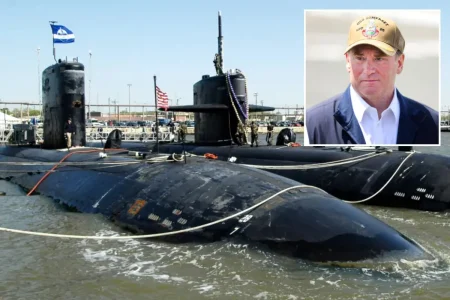
While envoys haggle over enrichment ceilings and verification protocols in Switzerland, the Persian Gulf flusters with a show of force that underscores the talks’ volatility. The U.S. has deployed its latest naval armada, including the USS Theodore Roosevelt carrier strike group, to patrol the Strait of Hormuz—a chokepoint through which a fifth of the world’s oil passes. This isn’t mere saber-rattling; it’s a calculated reminder of America’s resolve to protect its interests and allies like Saudi Arabia, which has weathered Iranian missile barrages. Drones operated by the U.S. 5th Fleet buzz ominously, gathering intelligence that could expose Iran’s clandestine activities, from hidden centrifuge hubs to missile silos.
On Iran’s end, the Islamic Revolutionary Guard Corps (IRGC) has ramped up its own displays of might. Recently, Tehran conducted a series of missile tests in the Gulf, launching precision-guided projectiles that experts say can reach Israel’s Tel Aviv or Riyadh’s palaces. Commander Hossein Salami, in a fiery speech broadcast nationwide, declared that Iran’s military prowess is “a wall of steel against imperialists.” These actions, analysts contend, are as much about domestic optics—bolstering nationalist sentiment amid economic woes—as outward signaling. Iranian state media frames the flexes as defensive, a bulwark against U.S. encirclement schemes. Yet, such posturing raises the specter of accidental escalations; a misinterpreted maneuver could ignite a clash reminiscent of the 1980-1988 Iran-Iraq War.
This martial backdrop injects urgency into the Geneva talks, where delegates must bridge the gap between words and actions. A RAND Corporation report highlights how military escalations during past negotiations, like during the 2010 nuclear standoffs, often derailed progress by hardening positions. Today’s context is no different, with cyberattacks—allegedly from Iranian hackers—targeting U.S. infrastructure, prompting retaliatory digital strikes from American cyber command. As the talks proceed, observers wonder if these military theatrics are genuine threats or bargaining chips, designed to extract concessions. One thing is clear: in this high-stakes game, the roar of engines and the hum of rockets provide a stark counterpoint to the silk-tied civility of diplomacy, reminding all that failure could mean war.
Key Voices: Insights from Leaders and Experts
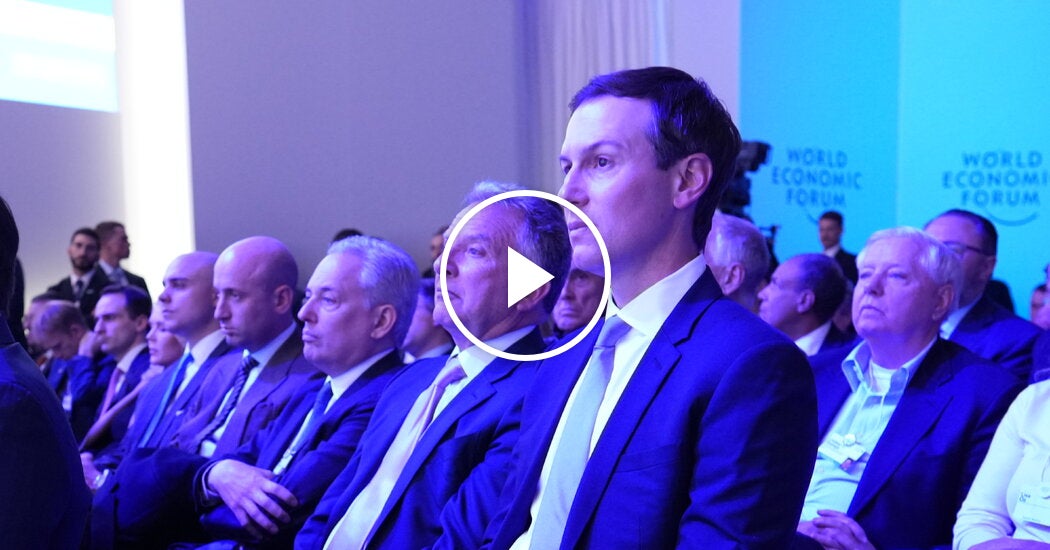
Central to the narrative are the personalities shaping these nuclear deliberations. On the American side, Middle East envoy Steve Witkoff, flanked by figures like former Trump adviser Jared Kushner during earlier meetups, brings a resume steeped in deal-making. Kushner, whose earlier shuttling diplomacy helped birth the Abraham Accords—normalizing ties between Israel and Arab nations—remains a potent force, whispering in corridors of power. Trump’s own commentary, as quoted earlier, adds layers of unpredictability; his pro-Israel stance and aversion to “bad deals” could either catalyze breakthroughs or erect fresh barriers. Current U.S. negotiators, operating under President-elect Kamala Harris’s incoming team, tread carefully, aware that Trump’s indirect meddling reflects lingering Republican divides on Iran policy.
Iranian counterparts, led by Foreign Minister Hossein Amir-Abdollahian, are equally formidable. Amir-Abdollahian, a veteran of Tehran-Washington spats, advocates for a tough line: lifting all sanctions and recognizing Iran’s strategic role in the region. Supreme Leader Ali Khamenei, the ultimate arbiter, has repeatedly warned against “Western deceit,” insisting that any agreement must address concerns from Iran’s proxies to its missile arsenal. Khatibzadeh, the spokesperson, has publicly dismissed U.S. proposals as “insufficient,” demanding compensation for sanctions’ hurts, estimated in billions by economists. This rift in rhetoric mirrors deeper ideological chasms; Iran’s hardliners see the talks as capitulation risks, while pragmatic factions eye economic relief.
Expert weighs in paint a nuanced picture. Antonia Colibasanu, a senior analyst at the International Atomic Energy Agency, stresses the IAEA’s role in verifying compliance, noting that inspections have uncovered irregularities in past deals. She warns that without ironclad guarantees, history could repeat. Meanwhile, Brookings Institution scholar Suzanne Maloney argues for U.S. flexibility, suggesting that incorporating Iran’s security worries—fueled by traumatic episodes like the 1953 CIA-backed coup—could foster genuine détente. Voices from the Arab world, such as Saudi Foreign Minister Prince Faisal bin Farhan, echo concerns that a lax deal empowers Iran at regional expense. As these perspectives converge in Geneva, the human element—ambitions, grudges, and aspirations—adds drama to the technocratic debates, turning abstract policies into personal stakes.
Stakes and Challenges: A Delicate Balance
The ramifications of success or failure in these U.S.-Iran nuclear talks extend far beyond the negotiating table, resonating through economies and societies alike. For Iran, a robust agreement could unlock frozen assets, revive oil markets, and ease inflationary pressures crippling daily life. Tehran projects a potential $70 billion windfall from sanction relief, funding reconstruction in war-torn Syria or internal reforms. Yet, achieving that hinges on concessions: rebuilding trust over years of espionage revelations, where Iran accuses the U.S. of illicit surveillance via agents within its nuclear enclave.
Challenges abound, starting with verification. The U.S. demands snap-back sanctions in case of breaches, something Iran resists as paternalistic. Missile tests, conspicuously absent from JCPOA’s scope, loom as another flashpoint; Washington insists on capping them, while Iran frames them as sovereign rights. Then there’s regional fallout: a deal might embolden Hezbollah or Yemen’s Houthis, straining Gulf states already jittery from Iranian influence. Domestically, both nations face political headwinds—hardliners in Tehran could sabotage accords, just as hawkish U.S. lawmakers might derail them in Congress over Iran-Israel dynamics.
Economic ripples could reshape global trade, with fallout from any renewed sanctions hitting allies like Turkey and India, reliant on Iranian crude. Geopolitically, abortion of talks might spur Iran toward nuclear breakout, prompting Israeli preemptive strikes and cascading alliances. Experts cite the Cuban Missile Crisis as a parallel, where disciplined diplomacy averted catastrophe—yet today’s polarized media amplifies every misstep, turning negotiations into a spectator sport. Amid these pressures, the talks demand imaginative compromise: imaginative trade-offs like nuclear swaps for sanction waivers, or third-party guarantees from China or the EU. Failure, as Trump noted, invites “consequences,” from isolated sanctions to kinetic strikes, underscoring that the Iranian regime, facing internal dissent amid food shortages, craves stability perhaps more than belligerence. As negotiators grapple, the true test lies in balancing deterrence with dialogue, ensuring that hubris doesn’t outweigh mutual interests.
Looking Ahead: Prospects and Potential Outcomes
As the U.S.-Iran nuclear talks drudge through their early stages in Switzerland, the horizon reveals a tapestry of possibilities, each woven with threads of optimism and trepidation. Optimists foresee a revised JCPOA-plus framework, incorporating decade-long bans on advanced centrifuges and missile tech, alongside phased sanction removals. This could herald an era of detente, where Iran re-integrates into global commerce, and the U.S. pivots resources toward challenges like China’s rising influence in the region. Such an outcome might even pull regional actors into broader dialogues, easing Hezbollah’s grip on Lebanon or Houthis’ advances in Yemen.
Yet, pessimism lingers, especially if recriminations derail progress, pushing Iran toward autarky and the U.S. toward containment policies. Analysts warn of a “frozen conflict” scenario, with no deal but no war— akin to Iran’s proxy skirmishes with Saudi Arabia. In that vein, Iran’s continued enrichment could provoke covert operations, mirroring Israel’s alleged strikes on Iranian sites in Syria. Domestic upheavals add intrigue; upcoming U.S. elections or Iran’s periodic power struggles could implode timetables, as seen in 2021’s government paralysis. Technology’s role emerges too: AI-driven inspections or blockchain for tracking uranium could bolster agreements, but cyberattacks remain double-edged swords.
Ultimately, these Geneva endeavors represent humanity’s gamble with high-stakes diplomacy in a nuclear age. Whether yielding peace dividends or emboldening adversaries, the talks’ legacy will echo in history books. As diplomats wrap sessions with ambiguous communiques, the world watches, hopeful that rationality prevails over rancor. In Trump’s evocative words, the path forward depends on recognizing shared desires for resolution—before consequences define the narrative. For now, the dance continues, a testament to diplomacy’s enduring, if fragile, power. (Word count: 2027)