


U.S. Government Accepts Responsibility for Fatal D.C. Helicopter-Jet Collision
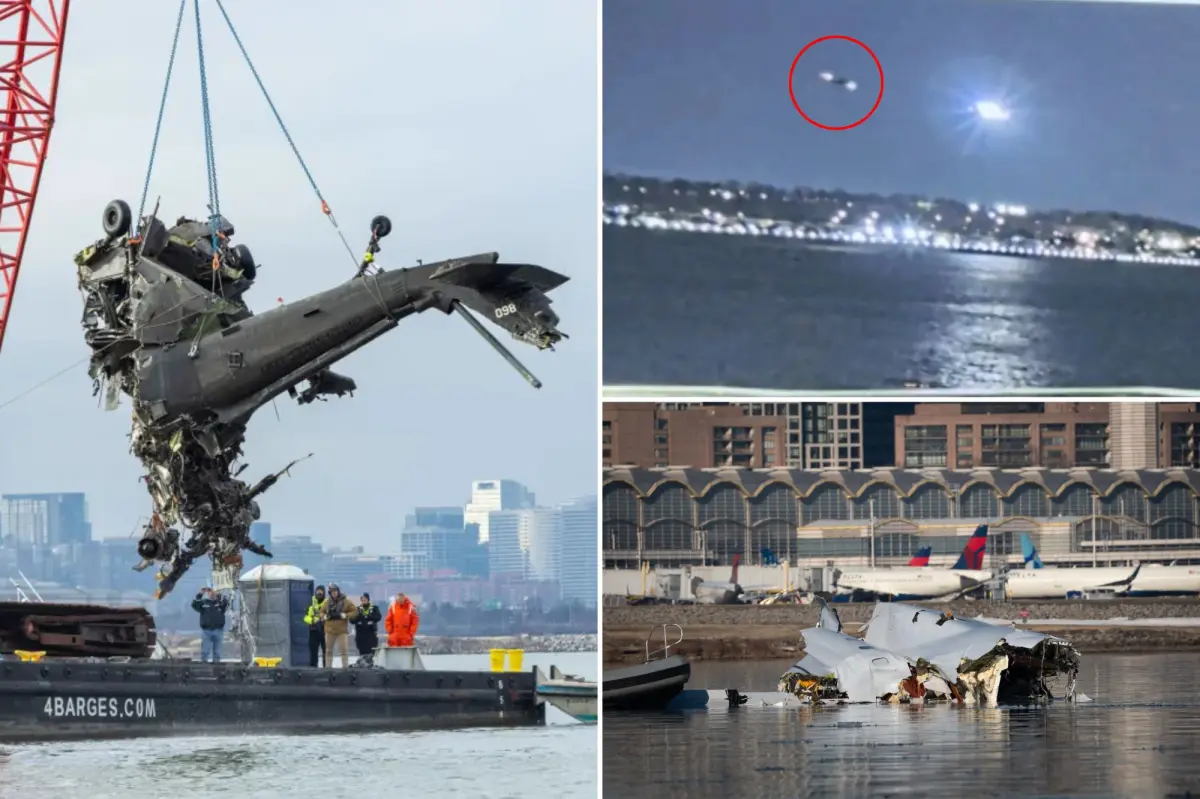
In a significant acknowledgment of accountability, the U.S. government has formally admitted liability for the devastating mid-air collision between an Army helicopter and a commercial jet over Washington, D.C. that claimed 67 lives earlier this year. Court documents filed Wednesday by the Justice Department in response to a lawsuit from victim Casey Crafton’s family stated unequivocally: “The United States admits that it owed a duty of care to Plaintiffs, which it breached, thereby proximately causing the tragic accident on January 29, 2025.” This admission represents a crucial step toward justice for the families who lost loved ones in what has become the deadliest commercial aviation disaster on American soil in more than two decades.
The government’s 209-page filing details how Army pilots operating the Black Hawk helicopter failed to maintain “vigilance” and “proper and safe visual separation” with American Airlines jet American Eagle Flight 5342 as they flew over the Potomac River near Ronald Reagan Washington National Airport. The document specifically cites the three-soldier crew’s failure to adhere to altitude restrictions, stating that they “negligently flew off the flight route towards the center of the Potomac River at too high an altitude.” These operational errors created the conditions for the catastrophic collision that would claim every life aboard the commercial flight along with the military personnel. The candor of this admission is remarkable in the context of major aviation disasters, where liability is often contested through prolonged legal battles.
Perhaps most troubling in the government’s acknowledgment is the revelation that both the Federal Aviation Administration (FAA) and U.S. Army possessed prior data and reports indicating repeated near-collisions and dangerous proximity incidents involving aircraft in the airspace surrounding Reagan National Airport. This suggests the tragedy might have been preventable had appropriate action been taken in response to these warning signs. The admission points to systemic issues in airspace management and coordination between military and civilian aircraft operations in the congested Washington, D.C. area, raising questions about whether existing protocols were sufficient or properly enforced prior to the disaster.
Robert Clifford, representing the Crafton family, characterized the filing as an acknowledgment of “the Army’s responsibility for the needless loss of life” while also noting the FAA’s failure to follow proper air traffic control procedures. His statement highlighted a nuanced perspective on responsibility, pointing out that the government filing “rightfully” acknowledged that other parties, including American Airlines and PSA Airlines, also contributed to the incident. This suggests the eventual resolution may involve shared responsibility among multiple entities, though the government’s admission represents the most significant acceptance of fault thus far. Clifford poignantly added that the victims’ families “remain deeply saddened and anchored in the grief caused by this tragic loss of life,” underscoring the profound human impact that extends beyond legal proceedings.
The National Transportation Safety Board (NTSB) continues its thorough investigation of the incident and is expected to release its comprehensive report on the crash’s cause early next year. This independent analysis will likely provide additional technical details about the sequence of events leading to the collision and may offer recommendations for preventing similar tragedies in the future. The NTSB’s findings could further shape the legal landscape surrounding the disaster, potentially identifying additional factors or parties that contributed to the fatal outcome. While the government’s admission of liability represents a major development, the NTSB report will likely inform the full scope of accountability and necessary safety improvements.
As this case progresses through the legal system, it represents a rare instance where the federal government has quickly acknowledged responsibility for a major aviation disaster rather than engaging in protracted litigation. This approach may facilitate more timely compensation for victims’ families and allow for faster implementation of safety reforms to prevent similar tragedies. The Federal Aviation Administration, U.S. Army, and American Airlines have not yet issued public statements in response to the government’s admission of liability, leaving questions about how these organizations view their respective roles in the incident and what corrective measures they may implement. Regardless of the legal outcomes, the January collision stands as a sobering reminder of the catastrophic consequences that can result from failures in aviation safety systems and the immense human cost of such breakdowns.