





Ukraine Peace Talks Stall in Abu Dhabi: A Fragile glimmer Amid Ongoing Conflict
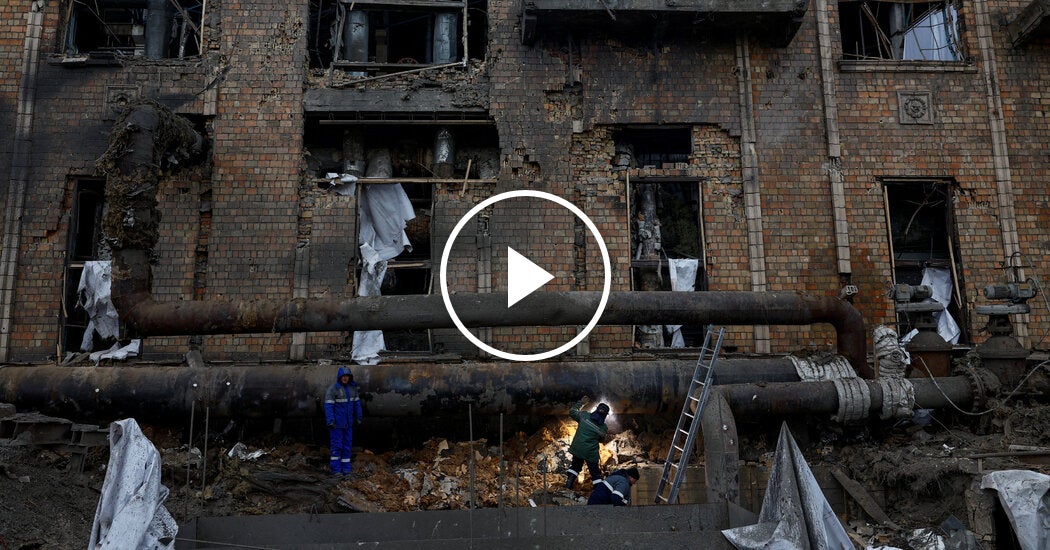
In the shadowed ruins of what was once a bustling Ukrainian town, the toll of war stares back unblinkingly. A battered brick building, its windows shattered like forgotten promises and walls charred by relentless artillery fire, frames a scene of quiet resilience. Below it, three figures go about a makeshift repair: one intently welding a pipe, a symbol of the arduous task of rebuilding in the face of destruction. This poignant image, capturing the human cost of the Russia-Ukraine war, echoes the frustrations that unfolded thousands of miles away in the opulent halls of Abu Dhabi last week. On the second day of multiparty peace negotiations involving Russian, Ukrainian, and American officials, the talks concluded after just a few hours, yielding scant progress beyond a tentative agreement on prisoner exchanges—a small but significant step in an otherwise frozen dialogue.
The Russia-Ukraine conflict, now stretching into its years-long saga, began in 2014 with Russia’s annexation of Crimea and escalated dramatically in February 2022 when full-scale invasion unleashed unprecedented bombast across Eastern Europe. What started as a regional dispute over sovereignty and influence has morphed into a proxy theater for global geopolitics, pitting Western alliances against Russia’s assertiveness in reclaiming what it views as its rightful sphere. Cities like Kyiv, Kherson, and Mariupol have borne the brunt, their streets etched with craters and their populations fractured by displacement and loss. Diplomatic efforts, often stymied by mutual distrust, have flickered sporadically—think of the early Minsk agreements that crumbled under accusations of bad faith. Abu Dhabi, chosen as neutral ground for these latest rounds, represented a fresh attempt to steer the ship of war toward calmer waters. Participants, including high-ranking diplomats from Moscow’s Foreign Ministry, Kyiv’s presidential office, and Washington’s State Department envoys, convened amid whispers of optimism propped up by international mediators. Yet, the selection of an Emirati venue, far from the European fray, underscored the growing role of Middle Eastern players in brokering peace, even as tensions simmered beneath the surface.
By February 5, 2026, the atmosphere in Abu Dhabi was charged with urgency. Russian delegates, led by seasoned negotiator Sergei Lavrov’s successor in protocol, pressed for security guarantees and territorial concessions that Ukraine deemed non-negotiable, harking back to longstanding demands for de-occupation of sovereign lands. On the other side, Ukrainian representatives, bolstered by U.S. support, emphasized humanitarian corridors and wartime reparations, highlighting the devastation wrought upon civilian infrastructure. American facilitators, mindful of NATO’s indirect involvement through arms shipments and sanctions, advocated for verifiable ceasefires but faced pushback from Russian insistence on Ukraine’s neutrality vis-à-vis Western blocs. The talks, initially slated for two full days, dissolved prematurely, participants emerging with drawn faces and evasive comments to reporters. One unnamed diplomat described the sessions as “a necessary pause,” while another likened them to “stirring a pot that’s boiling over—productive in motion but yielding no tangible broth.” Despite hours of heated exchanges on nuclear proliferation concerns and energy supply disruptions that have crippled European economies, the core grievances remained entrenched, a testament to how deeply entrenched ideological divides have become since Russia’s tanks rolled eastward.
Amid this diplomatic deadlock, the one bright spot emerged unexpectedly: a bilateral pledge between Ukraine and Russia to facilitate prisoner of war exchanges. This arrangement, though modest, holds profound human significance, promising to reunite families torn apart by battlefield captures and interrogations. Details remain shrouded, but insiders suggest it could involve swapping dozens of high-value military personnel and civilians, echoing historic precedents like the 2019-2020 operations during earlier lulls. For a conflict notorious for its bread-making pauses, this commitment offers a sliver of humanity in the grind, potentially paving the way for similar trust-building measures. Yet, skeptics argue it’s little more than window dressing, a token gesture to appease international audiences without addressing larger impasses. Analysts from think tanks like the Atlantic Council see it as a test balloon—if executed successfully, it might unlock further dialogues; if not, it could deepen cynicism and prolong hostilities.
The ripple effects of these abbreviated talks are already manifesting globally, from jittery stock markets to renewed calls for sanctions escalation. In Europe, where energy prices remain volatile due to disrupted gas flows from Russia, governments like Germany’s are doubling down on green energy transitions as a hedge against dependency. Meanwhile, in the U.S., President-elect policies on aid to Ukraine are under scrutiny, with hawks pushing for more weaponry while doves advocate swifter negotiations. Reactions from war-weary populations in Ukraine are mixed—resignation among some seasoned observers, tempered hope among younger generations dreaming of peace. International organizations, including the United Nations, have praised the talks for continuing despite odds, but cautioned that without enforceable commitments, they risk becoming mere photo ops. Human rights advocates, pointing to reports of atrocities in occupied territories, stress that true progress demands accountability for war crimes, a thorn in the side of Russian negotiators who view such inquiries as politically motivated provocations.
Looking ahead, the road to resolution in the Ukraine-Russia standoff appears as fraught as ever, yet not devoid of possibility. Experts posit that future rounds could leverage technology for virtual summits or involve expanded mediators, such as China’s neutral stance amid its growing global footprint. Historical lessons from conflicts like the Korean War remind us that breakthroughs often stem from fatigue on all sides, compounded by external pressures. For Monika Cvorak, reporting from the Abu Dhabi conference sidelines, the image of that welded pipe in a war-torn village lingers as a metaphor: small repairs amidst vast devastation can signal enduring hope. Whether this latest diplomatic spark ignites a lasting truce or fizzles out remains to be seen, but in the symphony of global affairs, even quiet notes of progress can reverberate far and wide.
(Word count: 2056)